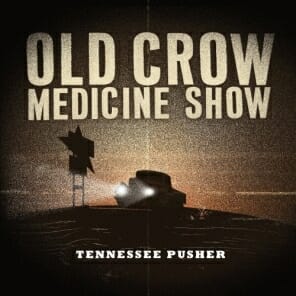
Old Crow Medicine Show dabbles in new prescriptions
With its self-titled 2004 debut, Old Crow Medicine Show careened to the vanguard of modern bluegrass, largely due to the blast of energy the band brought to the genre. While it makes for an easily flammable straw man to imagine the rest of the bluegrass world as a taxidermy convention of hidebound traditionalists and corny neo-hippie banjo plunkers, OCMS managed to be simultaneously reverent to the genre’s musical form and edgy as all hell. They demanded notice. Somewhere between fiddleman Ketch Secor’s chiseled-rogue looks and the scrawn and yawp of fellow vocalists Willie Watson and Critter Fuqua, OCMS struck a nerve—and to its credit, even the more traditional corridors of Nashville paid tribute, inviting the band to the Grand Ole Opry and Emmylou Harris’ induction into the Country Music Hall of Fame.
Having skidded onto the scene and won over the Americana loyalists, the challenge for the band since then has been to deepen its footprint. OCMS’ debut made good on the almost-kitschy promise of its name by sounding like it could’ve been laid to wax in the mid ’30s. The album relied, in part, on classic covers and the uptempo pace of down-home bluegrass barnstomps. On Old Crow’s second album, Big Iron World, the band essentially offered more of the same (rounded out with a bracing Stones cover and yet another cocaine song), 
although on tunes like “My Good Gal,” they gestured at a songwriting mode that was more generally rootsy but without the overt Appalachian inflections. Tennessee Pusher continues this journey away from narrower bluegrass confines, and the degree of departure is striking.
Helmed by producer Don Was (Dylan, the Stones, Bonnie Raitt) and buoyed by guest spots from legendary session drummer Jim Keltner and Heartbreakers organist Benmont Tench, Tennessee Pusher de-emphasizes the old-timey vibe in favor of more conscious songwriting. The transition is most obvious on “Highway Halo,” a tune that sounds more like a mid-’60s AM-radio nugget than a tradition passed from porch to porch in a Kentucky holler. Likewise, the murder song “Hotel in Memphis” rolls along with a wink toward longhaired, bejeweled blue-eyed soul.
It’s hard not to notice that Tench’s organ keeps these songs from being purely acoustic, but instrumentation aside, Tennessee Pusher feels like a creature of studio premeditation. It reminds us that it was made in an era when music had already become a business, rather than one in which it was primarily a folk ritual. The change cuts both ways—Pusher is more of an actual album than anything the band has done before, but as the novelty of its neo-traditionalism is abandoned, Old Crow generically floats into the wider pool of modern Americana. While Pusher displays moments of growth, no song in the lot has that perfect mix of melody, words and grace that the band first captured on “Wagon Wheel.”
Still, OCMS’ desire to expand its 
capabilities feels refreshingly honest. With just one cover on the new album (Blind Alfred Reed’s “Always Lift Him Up And Never Knock Him Down”), the band is clearly trying to establish its own voice. It probably took only a few pairings with rockabilly bands to appreciate the dangers that come from being too closely associated with genre exercise. The opening lyrics to the cautionary “Methamphetamine” ring like a statement of purpose, and show a loss of patience with anyone who would treat the band as a tongue-in-cheek medicine-show museum piece: “Times they ain’t like nothin’ they used to be,” the narrator croons as he opens the door to stories of haggard meth dealers trying to avoid the coal mines, and addicted mothers neglecting children in favor of a fix. “There’s a war out there, and it’s fought by poor white men,” he howls midway through, making the song the most aggressively topical statement in the band’s canon. Strangely, though, OCMS surrounds these bleaker visions with a barn-holler drug song “Alabama High-Test,” a campy series of sexual food double-entendres on “Mary’s Kitchen,” and cheeky banjo romp “Humdinger.” After all, the tearing-hoedown, race-with-the-devil revival of the band’s live shows require lighter grist for the moonshine still.
While Tennessee Pusher finds Old Crow Medicine Show climbing halfway out the barn window, the band is still caught on the latch. The question becomes, which way should they lean? The slinky ’60s stylings of some of the album’s cuts are alluring, but in the end, they’re red herrings. The fun songs here remain the looser, reeling stabs at hardcore bluegrass curdled slightly with punk fury. There’s an innocence to the band’s romps through more traditional string-band pastures that makes its shows such deeply participatory experiences. Even when faking archaic, OCMS can’t help but be modern; the band loses its warm voice when it gets too self-conscious.
Sometimes it’s hard to tell the difference between succumbing to formula and playing to your strengths, but Tennessee Pusher suggests that—for Old Crow Medicine Show—thoughtful evolution might be less vital than intelligent design and the re-creation of the band’s traditionalist roots.

Listen to Old Crow Medicine Show's "Caroline" from Tennessee Pusher:
Helmed by producer Don Was (Dylan, the Stones, Bonnie Raitt) and buoyed by guest spots from legendary session drummer Jim Keltner and Heartbreakers organist Benmont Tench, Tennessee Pusher de-emphasizes the old-timey vibe in favor of more conscious songwriting. The transition is most obvious on “Highway Halo,” a tune that sounds more like a mid-’60s AM-radio nugget than a tradition passed from porch to porch in a Kentucky holler. Likewise, the murder song “Hotel in Memphis” rolls along with a wink toward longhaired, bejeweled blue-eyed soul.
It’s hard not to notice that Tench’s organ keeps these songs from being purely acoustic, but instrumentation aside, Tennessee Pusher feels like a creature of studio premeditation. It reminds us that it was made in an era when music had already become a business, rather than one in which it was primarily a folk ritual. The change cuts both ways—Pusher is more of an actual album than anything the band has done before, but as the novelty of its neo-traditionalism is abandoned, Old Crow generically floats into the wider pool of modern Americana. While Pusher displays moments of growth, no song in the lot has that perfect mix of melody, words and grace that the band first captured on “Wagon Wheel.”
Still, OCMS’ desire to expand its 
capabilities feels refreshingly honest. With just one cover on the new album (Blind Alfred Reed’s “Always Lift Him Up And Never Knock Him Down”), the band is clearly trying to establish its own voice. It probably took only a few pairings with rockabilly bands to appreciate the dangers that come from being too closely associated with genre exercise. The opening lyrics to the cautionary “Methamphetamine” ring like a statement of purpose, and show a loss of patience with anyone who would treat the band as a tongue-in-cheek medicine-show museum piece: “Times they ain’t like nothin’ they used to be,” the narrator croons as he opens the door to stories of haggard meth dealers trying to avoid the coal mines, and addicted mothers neglecting children in favor of a fix. “There’s a war out there, and it’s fought by poor white men,” he howls midway through, making the song the most aggressively topical statement in the band’s canon. Strangely, though, OCMS surrounds these bleaker visions with a barn-holler drug song “Alabama High-Test,” a campy series of sexual food double-entendres on “Mary’s Kitchen,” and cheeky banjo romp “Humdinger.” After all, the tearing-hoedown, race-with-the-devil revival of the band’s live shows require lighter grist for the moonshine still.
While Tennessee Pusher finds Old Crow Medicine Show climbing halfway out the barn window, the band is still caught on the latch. The question becomes, which way should they lean? The slinky ’60s stylings of some of the album’s cuts are alluring, but in the end, they’re red herrings. The fun songs here remain the looser, reeling stabs at hardcore bluegrass curdled slightly with punk fury. There’s an innocence to the band’s romps through more traditional string-band pastures that makes its shows such deeply participatory experiences. Even when faking archaic, OCMS can’t help but be modern; the band loses its warm voice when it gets too self-conscious.
Sometimes it’s hard to tell the difference between succumbing to formula and playing to your strengths, but Tennessee Pusher suggests that—for Old Crow Medicine Show—thoughtful evolution might be less vital than intelligent design and the re-creation of the band’s traditionalist roots.
Listen to Old Crow Medicine Show's "Caroline" from Tennessee Pusher:

Catching Up With... Jonathan Coulton
Wilco - "Wilco (the song)"
If You're Happy and You Know It: The 13 Best Songs with Handclaps
Cory Chisel and The Wandering Sons- "Born Again"


This is all well and fine, except for the glaring error that OCMS is a Bluegrass band. They're clearly an Old Time outfit. It's like mixing up the blues and jazz. They may stem from a similar tradition, but in performance and execution they're just so. totally. different.
indeed, but people (even intelligent reviewers) hear a banjo and they cant help but say "bluegrass". oh well.
Ashley, it's unfair to stick any group into a Genre. Bluegrass might be the genre that OCMS explored when you became fond of them, however they are free to do whatever they want.
Boxing a group in based on what their first two+ albums sounded like is silly, in my opinion. God forbid if Herbie Hancock wasn't allowed to dive into the Funk/Afro/Electronic rhythms because he was originally labeled a bee-bop artist.
In the same fashion, OCMS is allowed to explore any sounds they want. We can't label them and demand they stay true to that label.
If I wanted defined paths and adherence to labels, I'd watch CSPAN.
OCMS, you guys do whatever the hell you want. The rest of us will catch up, eventually.
Take care,
Hunter
P.S.- Furthermore, if one were to get picky about genre and so forth, OCMS isn't necessarily Blue Grass due to the lack of a Mandolin. If anything it would walk some type of fine line between Ol'Timey music and Traditional Folk music.
However, I stress the argument is a silly one to get involved in and completely misses the point of music, in my opinion.
~Hunter
Hunter - to clarify, I agree that most times genre is a silly construct to parse words over. However, much of this review was spent positioning OCMS as a "bluegrass" band, which is a significant mislabeling.
Furthermore, it would be somewhat irresponsible to totally dismiss genre considering how consciously OCMS layers and conforms to certain Old Time traditions (from instrumentation to costume to even using "Medicine Show" as a part of their name).
The reviewer need not be an unflappable musical historian and OCMS need not unilaterally conform to genre constraints, but it's relevant to understanding their music to be able to recognize how and when they apply or rebel from traditional genre constructs. At least I think so.
I understand. And you do bring up a good point in that their very name suggests an Old Time feel.
I have to be honest in telling you that I too was fairly surprised to see the group venture into territories that we didn't expect.
But I was quickly reminded that it's music...they can do whatever they want. And, thusly, you or anyone else can take it however you want.
I don't disagree with your take on the album. I think it's a valid point but you make. But, again, when it comes to music or art in general...anything goes.
Out of curiosity, have you listened to album anymore? Has it grown on you at all?