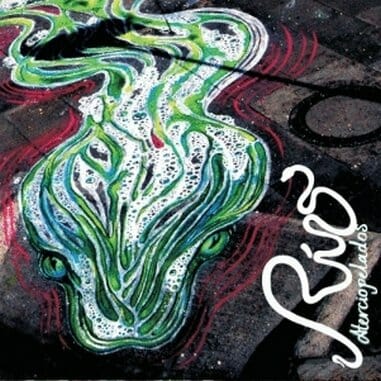
Colombian rock band explores nature on seventh studio album
Over a driving, electronic groove that sounds like updated B-52s minus the cheese factor, Aterciopelados singer Andrea Echeverri goes to the heart and soul of what her band is all about in the song “Bandera” (“Flag”). “Who said that a piece of fabric closes doors and borders?” she sings, in Spanish, about halfway into the group’s new album, Río. It’s classic Aterciopelados, and one of the many highlights of these environmental prayers, songs of peace and odes to motherhood.
The album’s title—River, in English—serves as a metaphor for the unbounded nature of life on Planet Earth. Ignoring boundaries is something Aterciopelados (The Velvety Ones) have long practiced, not just in their lyrics but also in their sonic juxtapositions: hardcore punk with acoustic folk, electronics with traditional Andean instrumentation, metal riffs with ska shuffles. Río, the band’s seventh studio album and another creative peak, begins with the soothing sound of flowing water before the group launches into the polyrhythms of the title song, its poetic lyrics anthropomorphizing the river whose waters run, sing, and dream of becoming clearer and cleaner.
Aterciopelados have become clearer and cleaner, too, in the 15 years since the release of their 1993 debut, Con el Corazón en la Mano (With Heart in Hand). The whiplash punk of that disc found Echeverri shouting and railing about social injustice over gurgling bass, distorted guitars and clattering drums. The band’s sound grew by leaps throughout the ’90s, moving from the jangle pop of 1995’s El Dorado to the dazzling, eclectic art rock of La Pipa de la Paz (The Peace Pipe) in 1996 to the electronic dalliances of 1998’s Caribe Atómico (Atomic Caribbean), which featured cameos from New York avant-rock and jazz guitarists Arto Lindsay and Marc Ribot.
After 2000’s underrated Gozo Poderoso (Powerful Joy), the group went on hiatus, during which time Echeverri birthed her first child, Milagros (Miracles). Four years later, Echeverri returned with her self-titled solo debut, a collection of trip-hop-based folk songs, many focusing on childbirth and motherhood. Guitarist and bassist Hector Buitrago—Echeverri’s musical partner and Aterciopelados’ co-founder—followed the next year with his own solo disc, Conector, an experimental mix of rock and ethnic fusion. The duo returned in 2006 with a new Aterciopelados album, Oye, that combined the Echeverri’s strengths—politically and environmentally charged folk songs—and Buitrago’s maturing experimentation with rock, electronics and traditional ethnic sounds. Although they’d toyed with that combination on previous albums, Oye found them locking in on a consistent sound and vision.
Río continues in this vein, building on the duo’s strengths in songs like “Gratis” (“Free”), fired by a tremolo guitar line with Echeverri singing of earthly things that are purely God-given: rain, wind, fire, waves. Nature is the predominant theme here, each song tied together by the ambient, meditative sound of water. “Hijos de Tigre” (“Children of the Tiger”)—its lyrics using the fiery stripes and predatory nature of the tiger as a symbol for human violence—is the only track that points to the band’s weaker tendencies: a repetitive melody with tempo shifts that offer little sonic payoff. But these shifts work in “Dia Paranormal,” which warns of global warming over an energetic mix of jazzy bass, guitar, flute, percussion and a cacophony of voices shouting in Spanish. “Madre” (“Mother”) begins with deep, primal, tribal drums, a pan flute and native chanting, with Echeverri’s lyrics celebrating femininity, from the macrocosm of Mother Earth to the microcosm of an individual woman’s womb.
Pregnant with her second child, Echeverri sings again of personal motherhood on one of the album’s strongest tracks, “Treboles,” a melodic, guitar-based pop beauty with lyrics that find the singer at home amid flowers, trees and buzzing bees. In “28,” a soothing wash of electronics evolves into a reggae-based ballad featuring guest rapper Gloria “Goyo” Martínez, with Echeverri singing of the new life growing inside her. But the drop-dead highlight of Río is “Ataque de Risa” (“Laugh Attack”), an uplifting children’s song in which Echeverri and daughter Milagros sing together pun-filled lyrics with rhymes (“En vez de una guerra, millones de estrellas / En vez de balas, yo quiero alas”) that don’t translate well to English (“Instead of war, millions of stars / Instead of bullets, I like wings”). The innocent appeal of Milagros’ tiny voice, though, is universal. And so is Aterciopelados’ music, which transcends all language barriers.
Listen to tracks from Río on Aterciopelados’ MySpace page.