
Allison Moorer: Crows

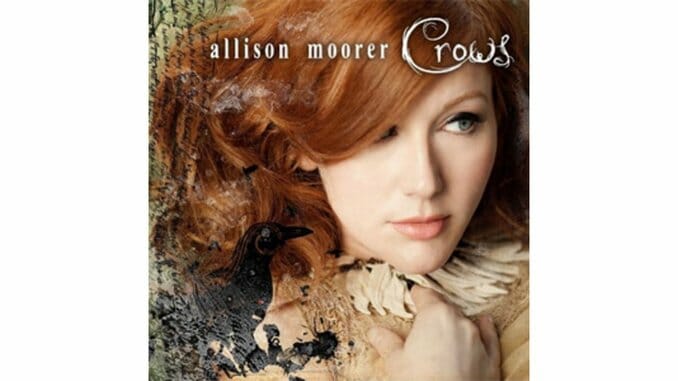
Nothing to crow about: New songs fly in crooked line
There’s something comfortable about crows—their trademark call, that unmistakable silhouette, and the fact that no matter where I reside, they’re always there. I’m no ornithologist, but I think crows are a lot like the men in my life: clever little assholes that win you over with dark humor and reliable comfort. A lot of people have a deep personal association with these vaguely creepy avatars. And perhaps this pandemic of familiarity is why Allison Moorer felt the need to name her new album after the ghost of our collective repose.
The content of Crows may be a little cliché for some to swallow, but you have to appreciate Moorer’s sincerity. She’s a singer/songwriter with a white-knuckled grasp on the theme of these 13 songs: hope. On “Should I Be Concerned,” she questions her stability, asking if she should be left alone, unsupervised with access to a running car and a well-insulated garage. (The gritty guitar sustain that follows seems to answer that question.) After working through her own small group session, she arrives at, “Maybe I just need someone to listen to my story.” It’s a pretty optimistic realization and no small relief.
There’s an anthropomorphic cleverness in the lyrics of “Sorrow (Don’t Come Around),” since we’re never really sure if she’s talking about an ex or the emotion itself: “I gotta turn you away so I can keep this hope alive / You’re tapping on the window but I won’t let you inside / Maybe you’ll give up and find somebody else tonight / I draw the curtains, say a prayer, and turn out the light.” What the words here lack in depth, they make up for in affirmative power.
While Moorer is a better singer than a lyricist, her songwriting is solid, and what she has to offer is genuine. And I get the sense that I’d feel even more connected to her work if I’d shared a seat with her on an airplane, or we went to the same elementary school. Her music suggests a familiarity between her and the listener—but if she was a friend, we might get juicier details. When I hear tracks like “It’s Gonna Feel Good (When It Stops Hurting),” I’m happy to sing along but I’m just as suspicious. The ballad is strong, but how personal is the story? I don’t want to hear generalities about a bad break up; I want to hear the grit. I want to nod, understand and know exactly what she’s dealing with. Tell me how you couldn’t finish the bottom third of your cup of coffee after the miserable breakup phone call. I don’t want to hear about not being able to get out of bed, I want to hear about your boyfriend’s flannel getting grafted to your sheets. Moorer’s iceberg verses beg for such details.
Crows isn’t without merit—Moorer’s voice is beautiful, and the themes are on an emotional canvas that anyone over 13 with a normal amount of chromosomes has experienced, making her album relatable if not particularly memorable. Fittingly, this is exactly how I feel about actual crows. I appreciate them when they’re present, but hardly miss them when they fly out of frame. Like the record, they’re organic background in an otherwise distracted life.
 Keep scrolling for more great stories.