
The Hunger Games by Suzanne Collins
Myth mates with reality TV

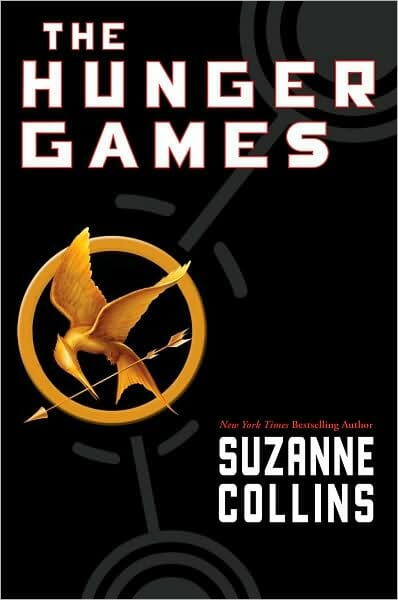
Friends of Edith Hamilton, break out the amphorae, pour the libation, raise the goblets. One of the most famous and frightening of the Greek myths lives on—vividly—in our 21st century literature.
A key component of the megablockwhopperbuster Hunger Games series by Suzanne Collins comes straight from the archetypal mist. (In the event you’ve been wandering a dark labyrinth in past weeks, Catching Fire, based on book two of the Hunger Games trilogy, now plays at a theater near you.)
Collins partly bases her plot on a wild, three-thousand-year-old tale of a half-bull, half-man creature called the Minotaur.
Here’s the myth. Once upon a time, a king named Minos took his throne to rule the island of Crete, south of Greece. Minos asked the God of the Sea, Poseidon, to bless his reign. Poseidon sent Minos a marvelous white bull and commanded the king to sacrifice it in the god’s honor. The offering would bring blessings to Minos and his kingdom.
The animal proved too magnificent. The king decided to keep it as his own. This bull-headed choice by King Minos of course led to trouble.
Poseidon’s anger at Minos for failing to sacrifice the white bull brought a curse—and what a curse! Poseidon caused Minos’s poor wife, the queen, to fall hopelessly in love with the great white bull…so much in love that she had the royal engineer of Crete construct a hollow wooden cow that she lay inside so that the white bull would mate with her. The queen became pregnant and gave birth to a “Minotaur”—a monstrous offspring with the body of a man and the head of a bull.
The Minotaur arrived with an unholy appetite for human flesh.
King Minos, terrified of his step-monster, built a gigantic prison for the Minotaur, a maze known as The Labyrinth. Any person that entered the labyrinth soon found that the bewildering, completely dark passageways started and turned and stopped abruptly. A visitor grew utterly lost. In the dark of the labyrinth, terrible and hungry, the Minotaur eventually hunted down all who entered…and ate them alive.
To feed the Minotaur, King Minos sent a ship with black sails once every nine years to Athens. The black sails came to harvest a crop of Athens’s finest youth, seven young men and seven young women. Chosen by lottery, the unfortunate sons and daughters sailed back to Crete and shuffled forlornly into the labyrinth—Greek cuisine for the Minotaur.
Sound familiar? Here we find the seeds of plot for the The Hunger Games.
After publication in 2008, the Collins book vaulted onto best-seller lists, an instant young-adult classic, one of those books like J.K. Rowling’s that command sales and critical respect at the same time. The Hunger Games spawned two best-seller sequels, the two movies (so far), and publication/distribution to scores of countries for hundreds of millions of readers and viewers. Archery equipment must be selling fast too—the protagonist of the novel, a young woman named Katniss Everdeen, supports her impoverished family by hunting in the woods with a bow and arrow.
For you—yes, you in the labyrinth—here’s the plot of the first of the Hunger Games books.
North America has changed. At some future time, it’s called Panem, a nation comprising an affluent, all-powerful Capitol and 12 districts, each with some specialty like farming or fishing. The book begins in impoverished District 12, known for coal-mining…clearly the part of the U.S. formerly called Appalachia.
The Capitol metes out a cruel punishment to the districts for a failed rebellion in the past. Each year, a lottery selects a girl and a boy in their teens to take part in The Hunger Games, a sort of ultimate reality TV event in which teens must fight to the death in a vast outdoor arena before millions of viewers. These teen “Tributes” do battle using their own unique skills and wiles, and they fight until just one is left.
Imagine American Idol as blood sport, the victorious singers bludgeoning losers to death with electric guitars and mic stands.
Katniss, age 16, volunteers for the Hunger Games to replace her beloved baby sister, Primrose, a 12-year-old unlucky enough to have her name drawn in the lottery. Peeta Mellark, the son of a baker and a childhood friend of Katniss’, has the bad fortune to be chosen as the boy from District 12.
They’re a nice couple of kids, attractive and competent. When televised for the first time, Peeta confesses that he’s had a lifelong crush on Katniss. Is it real? Or is it a ploy to win sympathy from a TV audience that can sponsor gifts on its favorites—gifts such as medicine and weapons and water and food? The hinted love story—the possibility of Cupid’s arrows—does indeed beguile viewers. So does Katniss’ skill with her real bow and arrows.
The Hunger Games prove a bloody business. Day one, 11 of the 24 young people die at the hands of their peers, though Katniss and Peeta survive. Separately, they set up survival operations in their own hidden sections of an immense woodland chosen as this season’s arena. And so the plot unfolds, The Most Dangerous Game in prime time.
The book allows a rare chance to see a new, modern mythology take shape before our very eyes. The phenomenon of the Hunger Games reverberates through the culture, again like the Potter books. Their impact on the millions of youngsters who give in to its influence will reverberate for years.
Why is any book a best-seller? What combination of elements converges to create a page-turning phenomenon irresistible to readers of different ages and even different nations?
The arrow Suzanne Collins shoots into the modern psyche has, I believe, much to do with her vision of this sort of reality TV show that pits live humans—children, no less—in mortal combat.
Is it really such a stretch to imagine that someday, somewhere, we might see human beings hunt one another for our entertainment?
How hard would it be for remote viewers left insensitive to violence by artificial carnage on TV and computer screens and by real-time footage of shock-and-awe and drone strikes to simply think of such a thing as a new kind of diversion, a new video game maybe just a step above mixed martial arts?
Clearly, the idea proved not much of a leap for Collins, who by the way has a long history as a writer for children’s TV, with work at Nickelodeon and on award-winning holiday specials. She also boasts a previous NYT best-selling young-adult book series, The Overland Chronicles, about a kid who falls down a manhole into another world, as Alice once fell down a rabbit hole.
Collins grew up a military brat, went to high school in Birmingham, Ala., at the Alabama School of Fine Arts, where she surely lived out some of the teen memes of which she writes. She later took an MFA from NYU in Dramatic Writing.
Here’s a selection from The Hunger Games. Katniss finds herself up a tree—literally—trapped by other teens who have formed an uneasy coalition to kill off rivals until they must turn on one another. Katniss possesses only a knife at this point, and her chances of survival dwindle by the page. Then she spies something in the tree above her.
It looks about the size of a raccoon, but it hangs from the bottom of a branch, swaying ever so slightly. There’s something else. Among the familiar evening sounds of the woods, my ears register a low hum. Then I know. It’s a wasp next.
Fear shoots through me, but I have enough sense to keep still. After all, I don’t know what kind of wasp lives there. It could be the ordinary leave-us-alone-and-we’ll-leave-you-alone type. But these are the Hunger Games, and ordinary isn’t the norm. More likely they will be one of the Capitol’s mutations, tracker jackers. These killer wasps were spawned in a lab and strategically placed, like land mines, around the districts during the war. Larger than regular wasps, they have a distinctive solid gold body and a sting that raises a lump the size of a plum on contact. Most people can’t tolerate more than a few stings. Some die at once. If you live, the hallucinations brought on by the venom have actually driven people to madness. And there’s another thing, these wasps will hunt down anyone who disturbs their nest and attempt to kill them. That’s where the tracker part of the name comes from.
Paste reader, after passing a long cold night trapped in the tree, facing death in the morning at the hands of the other kids, Katniss becomes not Lord of the Flies…but Lord of the Wasps. Using her knife, she begins sawing off the limb that holds the wasp nest, hoping it will fall below on her enemies.
Here’s another passage:
There’s no sense in putting it off. I take a deep breath, grip the knife handle and bear down as hard as I can. Back, forth, back, forth! The tracker jackers begin to buzz and I hear them coming out. Back, forth, back, forth! A stabbing pain shoots through my knee and I know one has found me and the others will be honing in. Back, forth, back, forth. And just as the knife cuts through, I shove the end of the branch as far away from me as I can. It crashes down through the lower branches, snagging temporarily on a few but then twisting free until it smashes with a thud on the ground. The nest bursts open like an egg, and a furious swarm of tracker jackers takes to the air.
I feel a second sting on the cheek, a third on my neck, and their venom almost immediately makes me woozy. I cling to the tree with one arm while I rip the barbed stingers out of my flesh. Fortunately, only these three tracker jackers had identified me before the nest went down. The rest of the insects have targeted their enemies on the ground.
It’s mayhem. The Careers have woken to a full-scale tracker jacker attack. Peeta and a few others have the sense to drop everything and bolt. I can hear cries of “To the lake! To the lake!” and know they hope to evade the wasps by taking to the water. It must be close if they think they can outdistance the furious insets. Glimmer and another girl, the one from District 4, are not so lucky. They receive multiple stings before they’re even out of my view. Glimmer appears to go completely mad, shrieking and trying to bat the wasps off with her bow, which is pointless. She calls to the others for help but, of course, no one returns. The girl from District 4 staggers out of sight, although I wouldn’t bet on her making it to the lake. I watch Glimmer fall, twitch hysterically around on the ground for a few minutes, and then go stiff.
Much has been made of the violence in The Hunger Games, and it surely is a violent, bloodthirsty place Collins dreams up, this Panem. But what’s new? Is this kind of story that much different from the one in the myth, that tale of the blood-drunk Minotaur roaring through the dark maze to devour helpless children? Or from the cannibalism implicit in Hansel and Gretel? Or from the giant in the Jack tales that fee-fi-fo-fums as he smells the blood of an Englishman?
Not really. And the suspense engendered by violence and blood-and-guts might be intrinsic to the novel’s success, for the same reason that so many millions buy Call of Duty and see Friday the 13th.
Still, reading is not watching. The page admits reflection and consideration that a video screen fights hard to shut down. That’s one of the sweet ironies in this book, actually. We’re reading about viewing.
The kids in combat in The Hunger Games force us to examine where the heck we really might be headed with entertainment that seems to require more and more shock and sensationalism to raise ratings…and to influence us into buying products of its sponsors.
It also takes us back to the myths, the collective consciousness. The Hunger Games leaves one gravely unsettled. I felt as if I wandered all alone into a pitch-black labyrinth where I heard, now and again, a distant, blood-curdling roar, something coming in the dark.
Then I relaxed.
It was just another movie sequel on the way.
Charles McNair published a new novel, Pickett’s Charge, in September. See charlesmcnairauthor.com. He happily serves as Books Editor at Paste.
 Keep scrolling for more great stories.