Release Date: Oct. 16
Director: Spike Jonze
Writers: Spike Jonze, Dave Eggers
Cinematography: Lance Acord
Starring: Max Records, Catherine Keener, James Gandolfini
Studio/run time: Warner Bros./100 min.
A classic paean to childhood imagination fails to turn into an imaginative film
Much like the wild and woolly world of his wolf-costumed protagonist, Max, Maurice Sendak’s Caldecott-winning children’s book, Where the Wild Things Are, became a classic overnight. If only its big-screen adaptation had happened as spontaneously. Five years after director Spike Jonze was hand-picked by the author (after innumerable failed attempts to convert this scantily-worded book into a screenplay), the production became a notoriously knotty one, filled with actor departures (Michelle Williams), personal turmoil (Jonze broke up with the film’s soundtrack composer Karen O., then married and divorced Sofia Coppola in that timeframe), a studio hand-off (Universal to WB), and an extended reshoot a year-plus after it originally wrapped.
As Spike Jonze recently justified to Time Out: “I didn’t set out to make a children’s film – I set out to make a film about childhood.” And in the film’s earliest scenes, the manic mood swings and emotional turbulence of childhood are poignantly rendered. Framed by the kinked black whiskers of his iconic outfit, Max (played by Max Records) veers from ecstasy to blind rage to teary-eyed confusion to tenderness back into violence in the span of a few minutes.
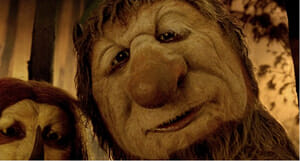
But once he sets sail for the island where the wild things are, we find ourselves burdened with mopey, emotionally needy, and temper tantrum-prone creatures, both human and monstrous. While the creatures—voiced by Gandolfini, Chris Cooper, and Forest Whitaker and created by Jim Henson’s workshops—look remarkable (you can almost smell the musk and mud upon their matted fur), the middle section of the film bogs down. Meandering shots, a plot devoid of conflict, and infantile dialogue justifying violence and abuse among its characters are instead allowed to romp around the screen. Viewers return back to reality with little gained, save that childish adults should scrap that big-budget adaptation of Goodnight Moon now.


I feel that if you would have read Eggers' adaptation prior to seeing the movie, you would be able to pick up on a lot more of the subplot and nonverbal cues that "bogged" you down in the middle. The "romping" was just a pretext for that conflict that you clearly missed - Jones just needed something for the kiddies to focus on...
PASTE, what has happened to your prospective on art and culture these days? The whole tone of your publication has changed so dramatically in the past 18 months that it is hard to believe it's the same magazine.
i think, in the case of this film, you may have missed the point...and missed represented some of the facts about the book and Mr. Spike Jonze. I much preferred the article from the NYTimes: http://www.nytimes.com/2009/09/06/magazine/06jonze-t.html?pagewanted=1
and according to his own mouth Sendak loves the film...which is enough for me.
Respectfully, I think this review misses the point of the movie. The dialogue is "infantile" because the wild things are the voices in Max's life as he hears, interprets and re-voices them. The wild things misinterpret, babble, shout, destroy, and cry because that's what children do. The catharsis that comes when Max realizes he can't control his world even when he is king leads him back home to the one relationship he needs most.
Devoid of conflict? I honestly don't know what film Mr. Beta thinks he saw, but the one I saw is filled with conflict. What an incredible metaphor for marriage, family, divorce, and the collateral damage left behind. I've seen this complaint in other reviews, that the film lacks emotion. As a husband and parent, I was devastated by this film. Jonze and Eggers have written a nuanced story about the victims of troubled families, something every kid can understand (though not at Max's age) and every adult fears may happen. In a country in which so many marriages end in divorce, this film speaks to many.
I hope you read these comments Andy because quite a few of them are right on. I have a hard time believing that you didn't catch on to all the nuances provided by the Wild Things' embodiments of the different elements of Max's character and life. Taking into consideration that Max's journey is an imaginary one and therefore taking place inside his own head, I found it remarkable the way that Jonze and Eggers captured both the simplicity (the Wild Things live a relatively care-free life on the island) and complexity (each monster represents an aspect of Max's life) of a child's thought process. And what I love best about the film's story is that nothing significant is contrived beyond what could be seen in the subtext of Sendak's original illustrations. A brilliant adaptation.
It's true what people are saying about this movie being for adults; more specifically, it will be easier to sit through this movie if you are an adult who has consumed large amounts of alcohol before entering the theater