
A Vicious Central Performance Almost Saves Clunky Sleepwalking Horror Dream Eater

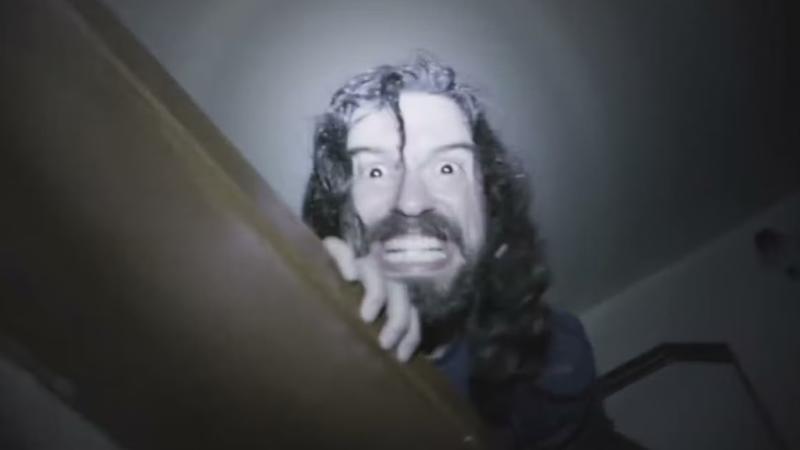
When people refer to low-budget indie horror as a breeding ground for upcoming talent and mixed-bag total packages, it’s films like Dream Eater they’re thinking about. The second film released under the banner of Eli Roth’s independent studio The Horror Section, Dream Eater is drawing heavily on the combined abilities of a trifecta of creatives–Jay Drakulic, Alex Lee Williams and Mallory Drumm–as its combined directors, writers and star performers. And the simple truth is that these three simply seem far more comfortable in some facets of their all-encompassing gig than others, resulting in a film that is impressive in some of its dimensions and clearly lacking in others. On one hand, we have a fantastic central performance, supported by solid direction, decent visuals and sound design, a creepy atmosphere and an effective relationship metaphor. But at the same time, the film is simultaneously being hamstrung by a screenplay that fails to render believable character relationships, falling back on painfully clunky exposition, wooden supporting performances and infuriating character behavior. You get the sense that the trio of filmmakers might be better off figuring out which parts of the filmmaking process they excel at, rather than attempting to spread themselves so thin.
Dream Eater is the story of domestic partners Alex and Mallory–you can’t help but think of Paranormal Activity with the found footage format and the performers using their own first names–who are dealing with the emergence of frightening and violent sleepwalking episodes from Alex as he approaches his 30th birthday. After an “accident” in which Alex badly injures himself–we hear the panicked 911 call in the film’s opening moments–the duo decide to head up to a remote, snow-blanketed cabin in the Laurentian Mountains outside Montreal, where documentarian Mallory sets up a wide array of cameras (both handheld and static) to document further sleepwalking episodes. The film lampshades its obvious Shining parallels as well as they pull up in the driveway, with Alex literally observing that “it’s like our very own Overlook” as they drive up. Would that Dream Eater could have had the courage to be as confidently opaque and mysterious as Kubrick’s haunted house classic, instead of becoming guilelessly direct by its end.
To begin with, must we even point out that it’s probably not a great idea for someone with recent violent sleepwalking episodes, and potential suicidal ideation, to be brought to a remote wilderness site, far from any help or medical attention? Dream Eater barely attempts to offer any kind of justification for the trip as an idea, beyond the vague concept of it being “restful” for Alex. There is perhaps a narrative thread here about the idea of Mallory being an opportunist who would think to use her boyfriend’s condition as fodder for an upcoming documentary, but the film doesn’t engage with this critique in any real way. It has far bigger and more pressing unaddressed problems in the day-to-day relationship between this pair.
Put simply, Dream Eater fails spectacularly in establishing the bond or strength of its central romantic relationship, especially to the level necessary to justify the actions and commitment of a woman who is willing to go through hell for her partner. Alex’s characterization is consistent, at least–he’s your classic stubborn cinematic male, right down to little tropes like refusing to make two trips to carry luggage to the car. He is, in a couple of words, a lot–one of those button-pressing, snarky jokesters who can never turn it off or get real, always turning every opportunity for openness into a bawdy quip. Told not to touch the cake in the fridge until his pending birthday, he replies with the following: “Cake or ass, Mallory. I’m eating one of them tonight.” This kind of attitude, irritatingly juvenile though it might be, might make logical sense if Mallory was characterized as being at all charmed by it, but she instead typically seems mortified by Alex’s basic personality even before he’s begun manifesting terrifying nocturnal attributes on a nightly basis. We simply never get any sense of how these two personalities are meant to mesh together in happier times, and the relationship between the two would need to be much better in order to justify the lengths that Mallory ultimately goes to in her attempts to cope with the immense bizarrity and terror of the situation. These two aren’t even married! When Mallory pleads at one point in the third act that “I can’t lose you,” you want to assure the woman–don’t worry honey, you’re going to meet a significantly better guy than this in short order.
Not to be overshadowed, though, is the legitimately impressive central performance of Alex Lee Williams in particular as the somnambulistic and deeply worrisome boyfriend. He may be written with an aggressively irritating personality, but Williams genuinely excels in the physical performance of this character, particularly in channeling the nightly voyages of a “sleepwalking” man who is ambulatory and responsive, but simply checked out of his own consciousness, moving with the trepidation of a lost child. He has this eerie way of clearing his eyes of any flash of humanity, of allowing his face to become a void, which is really quite unsettling. When he eventually unleashes animal aggression, Williams is effectively frightening; it’s a powerhouse performance for a low-budget horror two-hander. Drumm, in comparison, is at a disadvantage in that she’s so often a voice trapped behind the handheld camera, endlessly repeating iterations of “Alex, wake up,” and “Alex, come back to bed.” Her performance only becomes more stilted and aware of itself as the film goes on, particularly during a series of video calls with “parasomnia” experts that quickly and clunkily turn into expository dumps where you simply have an authority explaining “Yeah, he’s got a demon; here’s its name and everything about it.” How did they convince themselves that codifying all these facts about the monster would somehow make the monster more effective rather than less? It’s difficult to fathom.
As Alex’s nightly episodes worsen, Dream Eater’s screenplay runs into another roadblock as it can’t figure out how to have its characters address any of what has been happening. Alex, despite being presented with footage of himself acting like a raving lunatic on a nightly basis, seems almost entirely unconcerned about the implications of what he might do while in such a state. At least one can attempt to make an argument that he’s being influenced by encroaching possession, but there’s no such dodge for the character of Mallory, who simply continues going to sleep every night next to a guy who keeps transforming into a psychotic beast every time he closes his eyes. Even after Mallory thwarts another one of Alex’s attempts to mangle himself, there’s somehow not even a suggestion here that she will immediately get him out of this secluded cabin, or get herself to safety; not even when it’s become abundantly clear that for his own safety her boyfriend desperately needs to be tied to the freaking bed and pumped full of drugs so he can’t engage in more acts of violence. A more cohesive screenplay would invent reasons for why the pair are unable to leave/refuse to leave throughout, or at least have its characters rationalize the choices to each other. Here, they merely behave as if self-preservation is an entirely foreign concept–later in the day that Alex attempts to harm himself, they’re both draining wine glasses and cracking jokes about what happened. It undercuts any attempt to take them seriously.
That’s a shame, because there is an effective subtext here, but one that is simply being grossly overstepped. Dream Eater distills the relationship fear that a domestic partner could be capable of becoming a different person at any moment; that you could wake up one morning and not recognize the face or soul of the person laying across from you, the person you ostensibly love. Mallory’s seeming reticence to do anything about the clear threat in front of her is perhaps commentary on the fear and reluctance of women to address or sever negative relationships; a tragic depiction of a lack of self-worth in a woman who doesn’t think she can do better even when her partner is in the process of becoming a demonic host. This should be, in other words, an easy call for the lady to make. But even if you subscribe to that interpretation of Dream Eater, the filmmakers should still have a rationale at the ready when you’re not even at the halfway mark yet and the entire audience is imploring “But why don’t they just leave, though?”
Though its found footage horror bonafides are fairly strong, with classic jump scare deployments and the strength of Williams’ unhinged physicality, Dream Eater simply doesn’t have enough substance to get past the most rote line of questioning. With growing repetition, it continues going through the sleepwalking motions, squandering its stronger elements. Where it might have become a nightmare you couldn’t shake, the film ultimately vanishes in the mundane light of dawn.
Directors: Jay Drakulic, Mallory Drumm, Alex Lee Williams
Writers: Jay Drakulic, Mallory Drumm, Alex Lee Williams
Stars: Alex Lee Williams, Mallory Drumm, Robin Akimbo
Release date: Oct. 24, 2025
Jim Vorel is Paste’s Movies editor and resident genre geek. You can follow him on Twitter or on Bluesky for more film writing.
 Keep scrolling for more great stories.