
The Voice of Hind Rajab Is a Groundbreaking but Ultimately Futile Docudrama

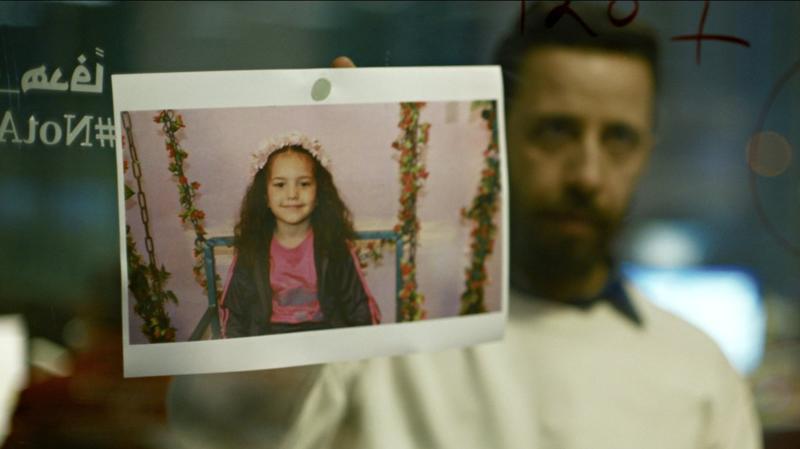
Few films have been plagued with such complex questions of morality and ethics as Kaouther Ben Hania’s The Voice of Hind Rajab. Told from the perspective of the aid workers who answered the now-infamous emergency call, the docudrama recreates the horrific final hour in the life of 5-year-old Hind Rajab, a Palestinian child killed alongside her family two paramedics on Jan. 29, 2024 when the car she was sheltering in was shelled by Israeli forces during their invasion of the Gaza Strip. In her final moments, Hind repeatedly begged volunteers at the Palestine Red Crescent Society to send help that would never be allowed to reach her.
It’s a deeply harrowing film, and Ben Hania has been open about her intentions with it: to amplify Hind’s voice and highlight the suffering of Palestinian children. But as she blurs the line between documentary and drama, the film’s purpose gets muddied. The 70-minute audio recording of Hind’s emergency call, documented by the PRCS, forms the basis of this film. It’s a bold move—the audio will be familiar to anyone who witnessed the murder play out over social media when the PRCS shared the recordings in an act of desperation. The sound of Hind’s frightened voice is no less jarring. We watch as the volunteers are contacted by someone claiming that his family–the Hamadas–are trapped in a car just 40 meters from their home in northern Gaza. Lead dispatcher Omar Alqam (Motaz Malhees) connects with a young girl, who says they are surrounded by tanks. We hear the sound of bullets, children screaming, and then the call cuts out. Omar sits frozen in shock, repeatedly calling out to a voice that doesn’t respond.
When Omar’s call is next connected, we’re told that what we’re about to hear is the actual recording of Hind’s call. Through the tinny sound of the speaker comes a small voice, high-pitched in youth and fear: “Stay with me,” she begs. Hind herself is only ever shown through home videos and photographs; it is her disembodied voice that haunts the film, and the sound is heart-stopping. When we’re watching the actors recite their lines, we can almost fool ourselves into believing this story is fiction, but Ben Hania pulls the rug from under us by weaving in audio and footage of the actual aid workers handling the call, forcing us to reckon with the horrific truth. It’s an effective tool in cutting through the false safety of a dramatic reenactment.
Each minute is more gut-wrenching than the last. Coordinator Mahdi Aljamal (Amer Hlehel) spends much of the film debating whether he should risk more lives in order to save one child—he knows that paramedics will be targeted by the Israeli military and must make an impossible decision. Later, when PRCS supervisor Rana Faqih (Saja Kilani) tries to suggest that the six corpses surrounding Hind are simply resting, Hind’s furious little voice breaks through: “I said they’re dead! They’re all dead! My whole family.” The true extent of what happened would not be confirmed until 12 days later, when the Israeli army withdrew their troops from the area, allowing the PRCS to discover the wreckage of the Hamadas’ car with 355 bullets fired upon it.
Film festival screenings are usually lively with chatter; this was a much more somber affair. When the film ended, the press room in London exited in complete silence and afterward, I was left with a pervading sense of hopelessness. We had watched this film and cried our tears, and still, just 15 minutes away, peaceful protestors in Westminster were being arrested for holding cards that read “I oppose the genocide. I stand with Palestine Action.” (Palestine Action, a non-violent direct action group, were controversially proscribed as a terrorist organization by the UK government in July 2025). The film had forced us to bear witness, but it felt futile in the face of governments still providing cover for what human rights organizations and experts in the field have declared a genocide.
There’s also the question of how this film functions in Hollywood, where it still currently doesn’t have a distributor. For someone like Brad Pitt, who attached himself as an executive producer ahead of the film’s Venice premiere but has otherwise kept silent on the issue, a producing credit works like a get out of jail free card, an easy way to rebuff any claims of indifference on his part. For audiences, Ben Hania claimed that she felt it important to make The Voice of Hind Rajab as a means of connecting with people who would otherwise scroll away from a post on social media. I propose that the people unmoved by actual images of devastation are highly unlikely to be moved by a dramatic reenactment.
Nevertheless, it feels somewhat disrespectful to debate the merits of a film that is playing an archival role at this truly horrific moment in history. Just this month, The Guardian listed the names of 18,457 children killed in Gaza since October 2023, and a Lancet study estimated that 55,000 children are acutely malnourished. The difficult truth is that there’s only so much we can do as citizens, and Ben Hania did all she could as a filmmaker to bring awareness to this suffering. When presenting The Voice of Hind Rajab at the Venice Film Festival, where it won the Grand Jury Prize and a 24-minute standing ovation, she asserted that the people of Palestine don’t need to see a movie—”They need our help.” The question of how helpful this film is beyond “raising awareness” remains up in the air.
Hind’s legacy will be carried not just by this film, but by the brave student protestors who faced violence at the hands of the NYPD when they occupied Columbia’s famed Hamilton Hall and renamed it Hind’s Hall in her honor, and by those who take to the streets facing arrest every week for condemning our governments’ complicity in this genocide. Most of all, it will be carried by her surviving family, her mother and brother, who are still trapped in Gaza with no sign of escape. Crucially, this film was made with the consent of Hind’s mother, Wissam Hamada, whose devastating testimony closes it. As we watch her kneel down to gently caress a small body wrapped in white shroud, one can’t help but reflect on how many times we’ve seen this very image—a Palestinian mother’s grief captured on camera—and how many more times we’ll see it long after this film is over.
There’s no doubt that The Voice of Hind Rajab is a devastating and groundbreaking piece of cinema that achieves its goal of raising awareness about the plight of Palestinian children living under siege. But after years of documentaries that have captured the brutality of life under occupation without the farce of drama, and in the face of relentless bombardment from an Israeli state that refuses to abide by the terms of a ceasefire, raising awareness just doesn’t feel like enough. Like Ben Hania said, the people of Palestine don’t need us to make movies about them—they need our help.
Director: Kaouther Ben Hania
Writer: Kaouther Ben Hania
Stars: Amer Hlehel, Clara Khoury, Motaz Malhees, Saja Kilani
Release date: TBD
Nadira Begum is a freelance film critic and culture writer based in the UK. To see her talk endlessly about film, TV, and her love of vampires, you can follow her on Twitter (@nadirawrites) or Instagram (@iamnadirabegum).
 Keep scrolling for more great stories.