
American Football’s eleventh-hour Music Hall of Williamsburg show just felt right
The Midwest emo veterans’ surprise set at the storied Brooklyn venue on July 7 was emotional, indeed.
Photo by Alexa Viscius
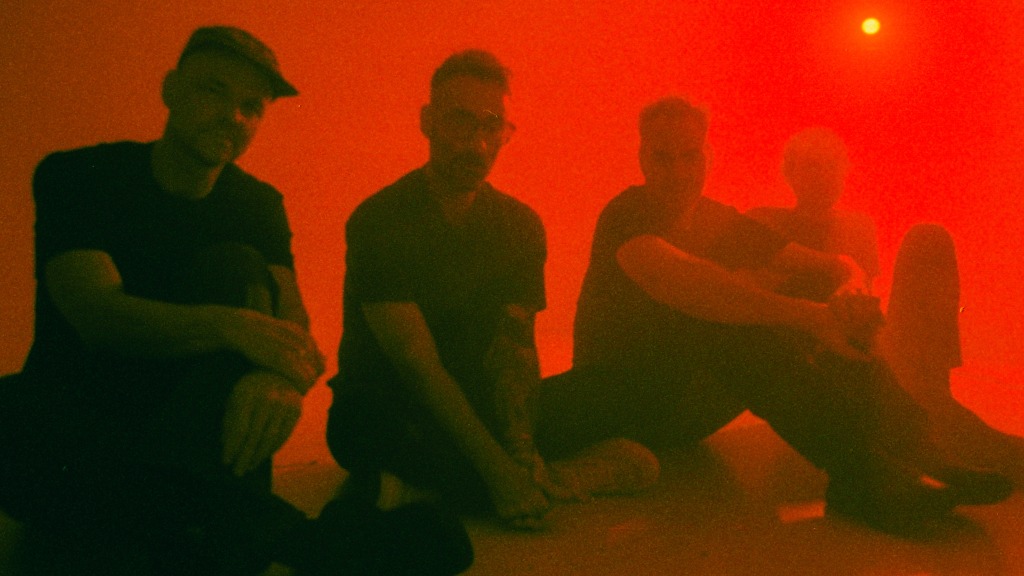
Music Hall of Williamsburg doesn’t bear quite as much historical significance as some other New York City rock clubs, and now, there’s a strong chance it never will. Late last year, news broke that the 650-capacity (and reliably good-sounding) venue near North Brooklyn’s waterfront would be losing its lease at the end of 2026. Its fate remains vague, but this isn’t the first time the space has come up against major changes: Before it was renovated and reopened in 2007, 66 North 6th Street was known as Northsix, made iconic by one notorious scene in Linklater’s School of Rock and some of the last shows Elliott Smith performed in his lifetime. American Football were inactive during the Northsix reign, but Mike and Nate Kinsella did perform there while members of Joan of Arc.
In recent years, Music Hall of Williamsburg has become a hotspot for secret and surprise shows from artists who can fill arenas—Harry Styles, for one, played a one-off gig there just a couple of weeks before the pandemic shut everything down. Now, I get the sense that MHOW is trying its best to go out with a bang, hosting gigs by chart-toppers like Sombr and Mumford & Sons just hours after being announced. I did not attend those, but on June 26, I received an email informing me that American Football—fresh off the release of their fourth self-titled album—would be playing at Music Hall of Williamsburg on July 7, just two nights before their main New York City show at the much larger Brooklyn Paramount.
First up was a peppy opening set from Brooklyn’s own fantasy of a broken heart, the charming art-pop band led by Water From Your Eyes touring members Al Nardo and Bailey Wollowitz: “I missed out on tickets to the Paramount show, so this is really exciting,” Wollowitz told the crowd between songs. After the house lights dimmed to cue the headliners, bassist Nate Kinsella emerged on his own to play the droning first notes of LP4 opener “Man Overboard,” followed shortly by drummer/trumpeter Steve Lamos. Frontman Mike Kinsella, guitarist Steve Holmes, and a few additional backing members soon joined them. I found the splintered-off walk-outs curious: they emphasized the post-rock roots of American Football that their emo context often overshadows, but the seemingly innocuous moment also echoed the tensions among the band members that led to LP4.
In Grayson Haver Currin’s excellent, lengthy GQ profile on American Football from March, Lamos detailed his decision to leave the band in 2020. He hadn’t been getting along with Mike Kinsella, and alcohol use strained those tensions even further: Lamos was sober while Mike was not, apparently to the concern of all his loved ones. I didn’t know this about American Football when I saw them for the first time in 2024 at Las Vegas’ nostalgia-swamped Best Friends Forever festival. Part of me worried that some personal dissonance would become apparent onstage at Music Hall, a much smaller stage where moods and offhand remarks are more likely to be detected. But Lamos nailed each intricate drum line, his facial expressions animated as ever, while Mike easily took on the role of the relaxed but composed frontman. Their fifteen-song set, a mix of old and new in mostly reverse-chronological order, lulled me into a trance so blissful I was almost caught off guard when “Never Meant” began.
In this trance I pondered American Football’s fascinating legacy, how their college-kid beginnings helped launch an entire moment that’ll outlive them. I noticed tons of young people in the crowd, taking 0.5x selfies and sucking face between gulps of Twisted Tea, brushing elbows with Gen X-ers in T-shirts for bands those kids would probably find uncool. I thought about how LP4’s guest collaborators included Zoomer shoegaze torchbearer Wisp, Turnstile’s millennial vocalist Brendan Yates, and Caithlin De Marrais of Wisconsin trio Rainer Maria, who, along with American Football, are among the reasons we associate “emo” with the Midwest. Few artists have pulled off multigenerational appeal as well as American Football; it took seeing them in a small, storied venue with an uncertain future for me to really make sense of it all.
All of the restrained emotion in American Football’s set reached a boiling point with the final song, LP4 single “Bad Moons,” which features some of the most transparently bleak lyrics Mike Kinsella has recorded. Appropriately, as he leaned into its looping outro—“I poured my drinks in the dark / I explored new kinks in the dark / I found every vein in the dark / I hid my shame in the dark”—he took his mic off its stand and doubled over as he belted, a moment of understated exuberance that seemed to act as a gentle reminder to anyone who’s listening that he’s still here, that he’s alive.
Abby Jones is a contributor to Paste whose writing has also appeared in Pitchfork, Stereogum, and more. She lives in Brooklyn. Follow her on X (@abbyfjones_) or email her at [email protected].
 Keep scrolling for more great stories.