
12 new albums to stream this week
The new albums from Flea, Snail Mail, and Irreversible Entanglements should be at the top of your queue today. Tap in and find a new obsession.
Photo of Flea by Gus Van Sant

Paste is the place to kick off each and every New Music Friday. We follow our regular roundups of the best new songs by highlighting the most compelling new records you need to hear. Find the best new albums of the week below.
Charlie Puth: Whatever’s Clever!
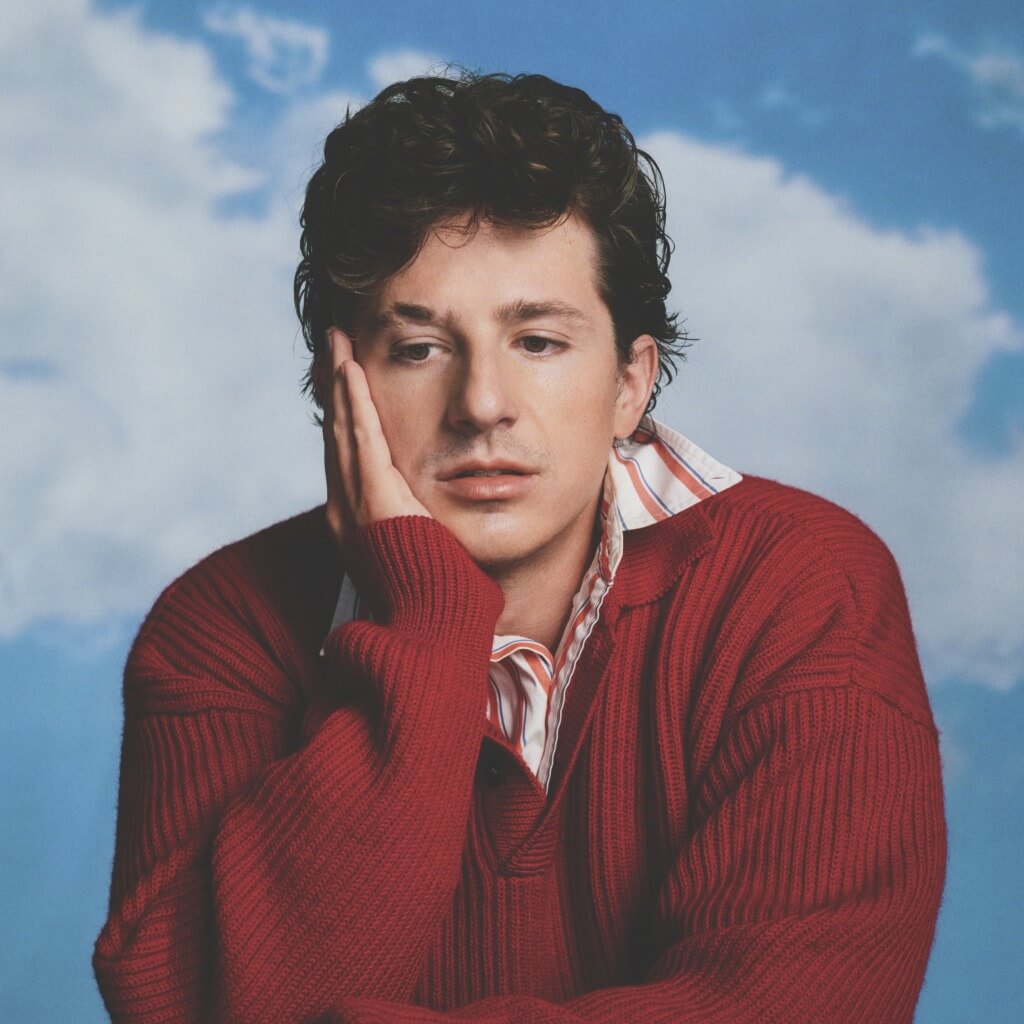 Though Charlie Puth still clings to the comfort of pop tropes, there’s a looser, more open-hearted and confident energy on Whatever’s Clever! that suggests he’s getting a lot better at finding a niche that suits his heart-on-his-sleeve sensibility and attuning it to where he’s currently at in life. Rather than fixate on the intense weight of responsibilities that come with being a parent, Puth embraces assuming such a role with an engaging optimism, going so far as to animate his fourth album with the lush, soothing, dad-core soundscape of late ‘80s/early ‘90s pop. There’s twinkly keyboard glides (“Changes”), funky bass (“Beat Yourself Up”), lounge jazz (“Don’t Meet Your Heroes”), gurgling synths (the excellent, Ravyn Lenae-featuring bop “New Jersey”), and tons of saxophone, some of which is provided by the maestro himself Kenny G (“Cry”). While the stylistic pasticheness might seem a bit one-note and played out, Puth’s sincerity and lack of pretension ultimately shine through, especially with help from megaproducer hitmaker BloodPop, whose versatile touch supplies Whatever’s Clever! with an accessible, invigorating charm. —Sam Rosenberg [Atlantic]
Charlotte Cornfield: Hurts Like Hell
 Those familiar with Charlotte Cornfield won’t be surprised that she returns to the stages, lofts, and bars of the Toronto music scene as a setting for several of her songs on Hurts Like Hell. It’s a world she knows and clearly finds ripe with characters and inspiration. The country-tinged “Lost Leader” catches up with a fallen frontman trapped in a lifestyle that once celebrated him but now drains him and holds him back. In the final stanza, Cornfield shifts POV to one of his diehard fans, disenchanted by the pathetic figure her hero’s been reduced to since going it alone. “Squiddd,” on the other hand, plays out like a meet-cute ripped from the pages of the missed connections section. Guitars glisten and Cornfield’s voice nearly cracks as her protagonist timidly recalls falling for a singer in a band named Squiddd “with three d’s.” She ducks out without meeting him that night, a single lyric from one of their songs (“I want to share files with you”) racing through her brain and burning like a vigil candle. You’ll have to listen for yourself to find out if serendipity intervenes on behalf of a shy heart. —Matt Melis [Merge]
Courtney Barnett: Creature of Habit
 Partly inspired by a relocation from Australia to Los Angeles and the closure of Milk! Records, the label she co-founded in 2012, Creature of Habit finds Courtney Barnett amid some major life changes. Atop Zach Dawes’ gritty bassline and Stella Mogzawa’s rollicking drums, opening track “Stay in Your Lane” lashes out at well-meaning advisors who think they know what’s best, even if its narrator is caught in a bout of self-sabotage. “Gotta get this off my chest / This never would have happened if I stayed in my lane / stayed the same way,” she sings, regretting having tried something new in the face of undesirable results. On the following “Wonder,” unbridled paranoia has never sounded so breezy, thanks to light-on-their-feet performances from Barnett, multi-instrumentalist Mogzawa, and bassist Andrew Sloane. Go-to indie producer John Congleton also adds to the levity with his crisp, airy mixing job. Creature of Habit is largely an album about how doubt can keep us contained, how we form habits as a way of achieving comfort, staving off fear, and ensuring bare-minimum survival, sometimes all at once. But when we create for ourselves a new habitat, such as departing Australia for Los Angeles, that shift can be jarring, and our behaviors are called into question when everything once moved mindlessly as various components of our daily routine. Ironically, Barnett treads well-worn ground in her exploration of these ideas. Nothing here feels unfamiliar; every song remains well within Barnett’s comfort zone of the jangly indie rock she has been making for over a decade. —Grant Sharples [Mom+Pop/Fiction]
Fcukers: Ӧ
 Ö (pronounced “oo!”) builds off the UK garage, reggae, house, and pop influences that first resonated with Fcukers’ fanbase on Baggy$$. There’s an inherent simplicity to the title that mirrors Wise and Lewis’s no-frills approach to the project, but I was left questioning if the combination of their swift ascent and expanding industry network (like teaming up with producer Kenneth Blume (FKA as Kenny Beats), whose most recent work includes Geese’s Getting Killed) would result in a record that possesses the same brightness and intricacies as the Baggy$$ tracks. How much weight can they actually carry on a full length? Where is the line between fucking around and actually finding out? The album is framed as “a night out,” a kind of bell-curve setup that builds up to and down from one multi-song peak. Opener “Beatback” is the brash introduction to set the tone, as if to say, “Where there is Fcukers, there is the beat.” “L.U.C.K.Y.” and “Butterflies” are the anticipation, or pregame, if you will. “if you wanna party come over to my house” and “Play Me” hit an early high BPM peak, while the sauntering swagger of “Shake It Up” and “I Like It Like That” carries that buzz into the record’s back half. Fcukers strike a balance between genre-bending intrigue and nostalgic, simple hooks. As straightforward as the single “I Like It Like That” is lyrically (see: “I like it like that / ‘Cause I like it like that”), Wise’s blasé falsetto adds a late-2000s dance-pop essence to the prechorus (“I need your love, can I be that?”) that’s remnant of early Zedd, while the dubby, reggaeton flair differentiates it from its influences. —Cassidy Sollazzo [Ninja Tune]
Flea: Honora
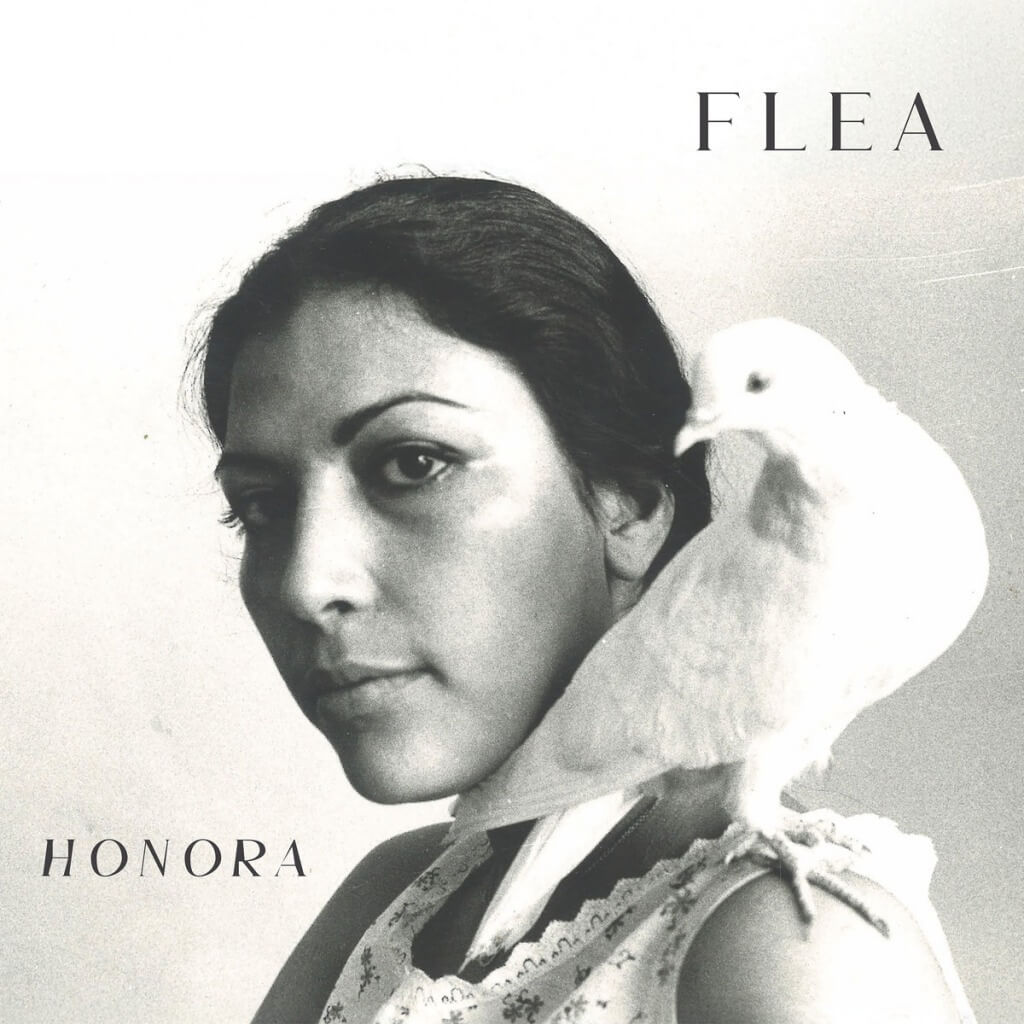 For someone who’s spent nearly half a century anchoring one of the loudest bands on the planet, Flea has taken his time getting around to a proper solo album. That wait ends today with Honora, his first full-length record under his own name—and a sharp left turn away from funk-punk bombast toward jazz, trumpet, and intimate ensemble playing. Flea went back to his roots for this one. Before he ever picked up the bass, he played the trumpet. His first memory of music is the very one that kindled his love for jazz. As the Red Hot Chili Peppers grew in popularity, Flea found himself playing the trumpet less and less, but that doesn’t mean he stopped thinking about it; he even told a friend back in 1991, “I want to make an instrumental record with deep hypnotic grooves, trippy melodies layered on top, meditations on a groove.” But as he realized recently, he’s nearing his 60s—so if not now, when? Hence the creation of Honora, which was named after a member of Flea’s family and composed and arranged entirely by Flea, who plays trumpet and bass across the album’s ten tracks. The sessions brought together an eclectic ensemble spanning modern jazz and experimental rock, including guitarist Jeff Parker, bassist Anna Butterss, drummer Deantoni Parks, and guest vocalists Yorke and Nick Cave, to rework George Clinton, Jimmy Webb, Frank Ocean, and Ann Ronell originals. —Casey Epstein-Gross [Nonesuch]
Irreversible Entanglements: Future Present Past
 The thing about “Don’t Lose Your Head” is that it won’t leave your head. I listened to roughly the first 50 or so seconds before getting a phone call, and it promptly wormed its way into my internal monologue for the next four hours. Talk about irreversibly entangled. Over a lean, brain-massaging groove from drummer Tcheser Holmes and bassist Luke Stewart, the criminally underrated quintet (alongside a smooth feature from MOTHERBOARD) build something closer to a chant than a chorus, repeating that title phrase—“Don’t lose your head / Messing with the gods”—until it feels like a spell. The band’s usual free-jazz squall is still there, the sax and trumpet worrying the edges and the textures flickering in and out, but it’s cinched into this tight, head-nodding pocket that makes the song sonically addictive even as Camae Ayewa (of Moor Mother excellence) is talking about execution, persecution, land theft, and liberation. As the track moves, the arrangement keeps shifting in little ways—horn stabs answering the vocal, the rhythm section slipping between swagger and simmer—so the mantra never quite resolves the same way twice, like a protest march seen from different street corners. “Don’t Lose Your Head” functions as both rallying cry and earworm, the kind of fight song that sneaks into your bloodstream and, like all of Future Present Past, stays there, like a mantra, like a prayer. —Casey Epstein-Gross [Impulse!]
King Tuff: MOO
 Kyle Thomas got tired of Los Angeles, as many do, and went back home to Vermont to record MOO. It’s his strongest King Tuff album since The Other, pulled through a tape machine and licked by electrocuted guitar riffs. Shards of noise impale Thomas’ grittiest, grungiest ideas. The warm, Laurel Canyon-y melodies of 2023’s Smalltown Stardust are swapped with Green Mountain crushers covered in oil. But that record isn’t totally absent, bleeding into the softer palettes of “Backroads” and “Unglued.” But “Delusions” and “Twisted on a Train” present a version of Kyle Thomas that’s refreshingly uncorked. “Invisible Ink” is a career-best, and “Landline” sounds like he never left LA. Let MOO be a lesson to any upstart rockers: don’t forget to plug your guitar in. King Tuff at his homespun, spangled best is a hard mark to top. —Matt Mitchell [Thirty Tigers]
Robyn: Sexistential
 Robyn is officially back. It’s been seven, nearly eight years since the Swedish pop icon released Honey, and the wait for a follow-up is officially over. Sexistential comes a handful of months after we received our first transmission from Robyn’s new chapter. In November, she shared the single “Dopamine,” which was our Song of the Week when it dropped. I wrote then, “The 303 notes are frying my brain like sugar in the pan. Robyn’s singing is draped in woozy vocoder, and the shiny, ‘I’m tripping on our chemistry, it’s firing up inside of me’ chorus rummages through my bloodstream like the song’s titular shot of adrenaline… Seven years of silence and her first note back rings like a damn siren.” Now the clock is getting turned back to zero. Sexistential is a product of Robyn “exploring my sensual life,” she says. “It’s such a beautiful kind of sensitive vibration that takes so much work to keep afloat. I feel like the purpose of my life is to stay horny—it doesn’t even have to be about sex, but it’s feeling sensual and attracted to things that I enjoy, and not letting anything take over that.” Pop superproducer Max Martin co-wrote “Talk to Me” with Robyn while Klas Åhlund co-wrote “Sexistential” with her. The latter is Robyn’s ode to André 3000 saying that nobody wants to hear him rap about his colonoscopy. “It was my cue,” she acknowledges. “I have to do this, I have to write a rap about IVF.” But Sexistential can be summed up by this one quote from Robyn: “I feel like the purpose of my life is to stay horny.” —Matt Mitchell [Young]
Sluice: Companion
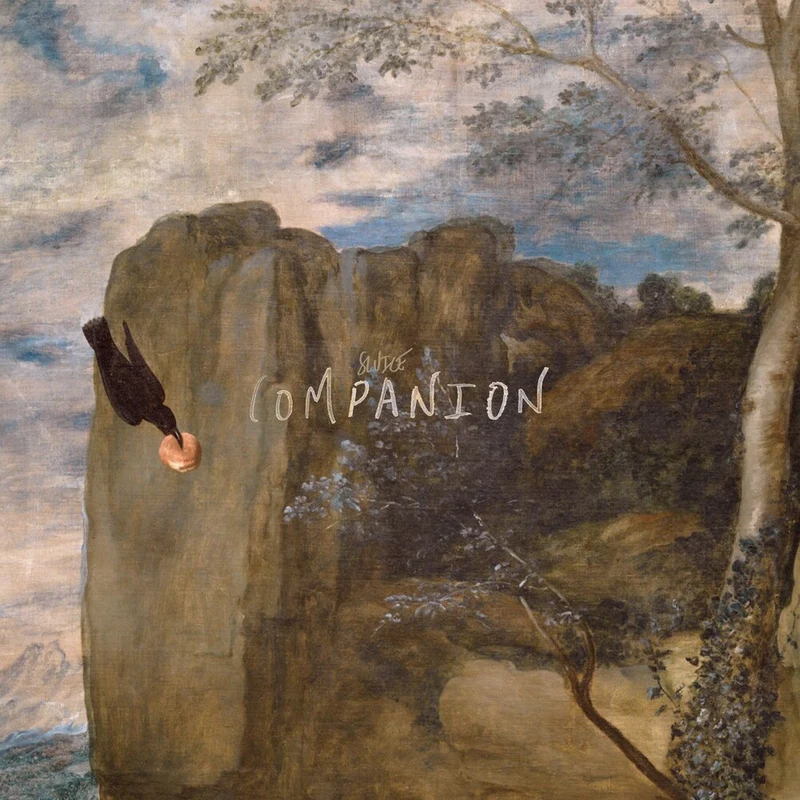 Companion, Sluice’s third album out, is a floaty, melancholic scorcher. The LP carries its listener through wooded valleys and cookie-cutter suburbs, undergirded by an overlapping, intentional arrangement of acoustic and electric strings provided by Oliver Child-Lanning’s bass and Libby Rodenbough’s fiddle. In “Zillow,” likely the preeminent song ever written about real-estate listings, frontman Justin Morris asks, “This pool house cost $500,000 / Where will you live?” in a quavering voice as a soft drumbeat heralds the death of an affordable America, such as it ever was. The haunting, bluesy “WTF” gets anthemic when Morris sighs, “Everything’s so damn hard to do / Should I go back to school?” On the album’s soaring centerpiece, “Unknowing,” a prayer by a Trappist monk is transfigured into a nine-minute meditation on faith-based struggle. In Companion, the illusion of the American dream is treated as just that: an illusion. In “Vegas,” verses coast through the signifiers of modern life: Miley Cyrus, Craigslist, shoddy public transit, the crushing hole where God is supposed to be. That Morris wrote the song while on tour with Angel Olson only adds to the song’s quiet, overwhelming pathos. Who the “companion” is, or if there is one at all, remains obfuscated; perhaps it doesn’t actually matter. Morris’ terse alto does a scary good job at coloring the nihilism of his hollowed country, the promises absent and only the rotted-out space remaining, stretching ahead into infinity. But the record refuses to give up; like the places it travels to. The songs push doggedly forward, looking for something to believe in. —Miranda Wollen [Mtn Laurel Recording Co.]
Snail Mail: Ricochet
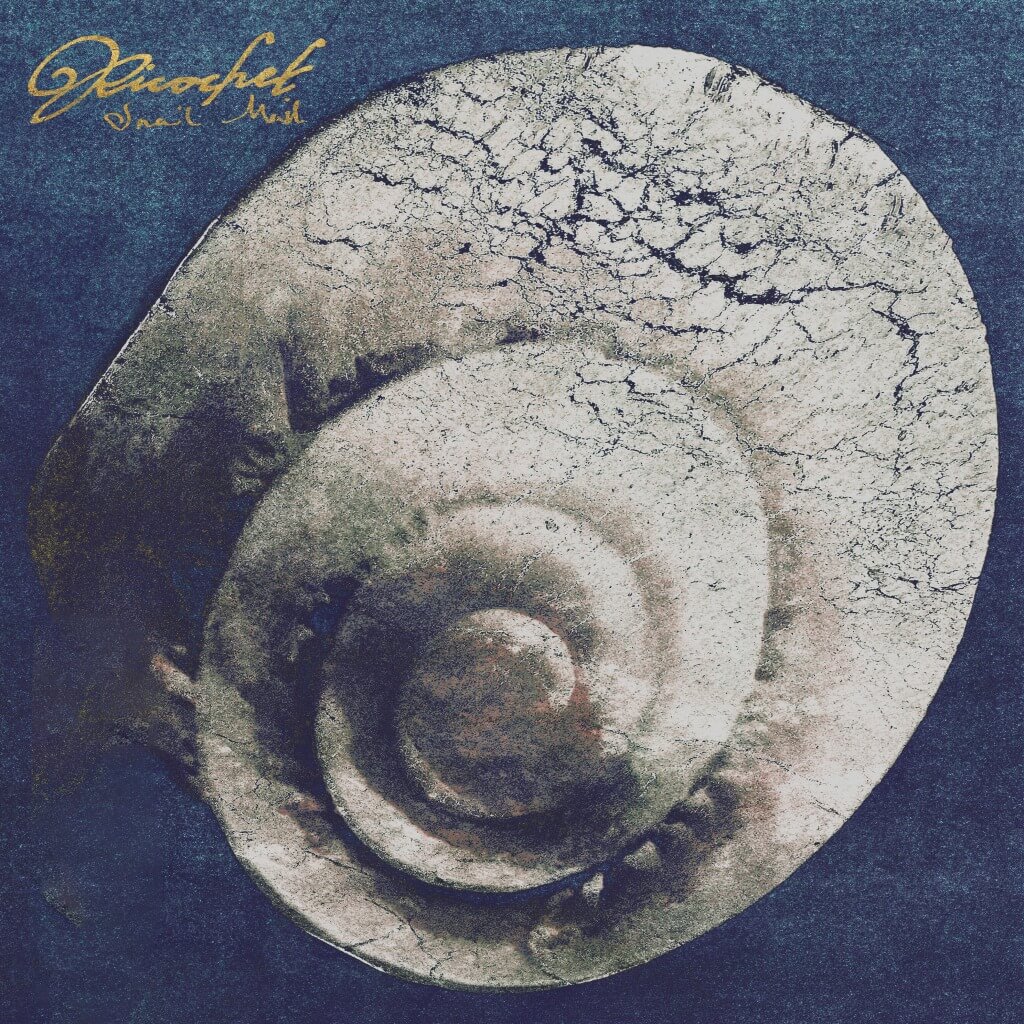 Ricochet is a gorgeous, quietly stunning synthesis of sound and theme, brimming with the energy of a long-lost classic that’s been dug up, dusted off, and given a fresh polish (shoutout to the audio engineers for the crystal clarity of their mixing and mastering here). Its throwback presentation might seem humble and slight on the surface, but it shouldn’t detract from the focused insights and lovely imagery Lindsey Jordan conjures. Throughout Ricochet’s 11 tracks, Jordan and her collaborator, Momma bassist Aron Kobayashi Ritch, hone in on the themes gestured at on “Dead End”—the difficulty of moving on, the profound sadness in realizing some people aren’t meant to be in your life forever, and the unexpected freedom of starting over—with ease and aplomb. As always, Jordan draws poetry from unexpected places: take the excellent opener “Tractor Beam,” which compares the pull of uncertainty to the light emitted from a UFO. The trip-hop-meets-The Sundays “My Maker” also employs a skybound metaphor (“I wanna fly a plane to heaven / Tarry at the airport bar”) to illustrate Jordan’s yearning to escape until she realizes that perhaps reconciliation is possible with the healing property of time’s passage. Jordan mines a lot of wonderfully warm stuff from that idea—not just lyrically but sonically, especially on the rich, orchestral strings of “Light on Our Feet,” the window-rolled-down summer melancholy of “Cruise,” and the rousing, crunchy guitar solo on “Butterfly.” —Sam Rosenberg [Matador]
Stuck: Optimizer
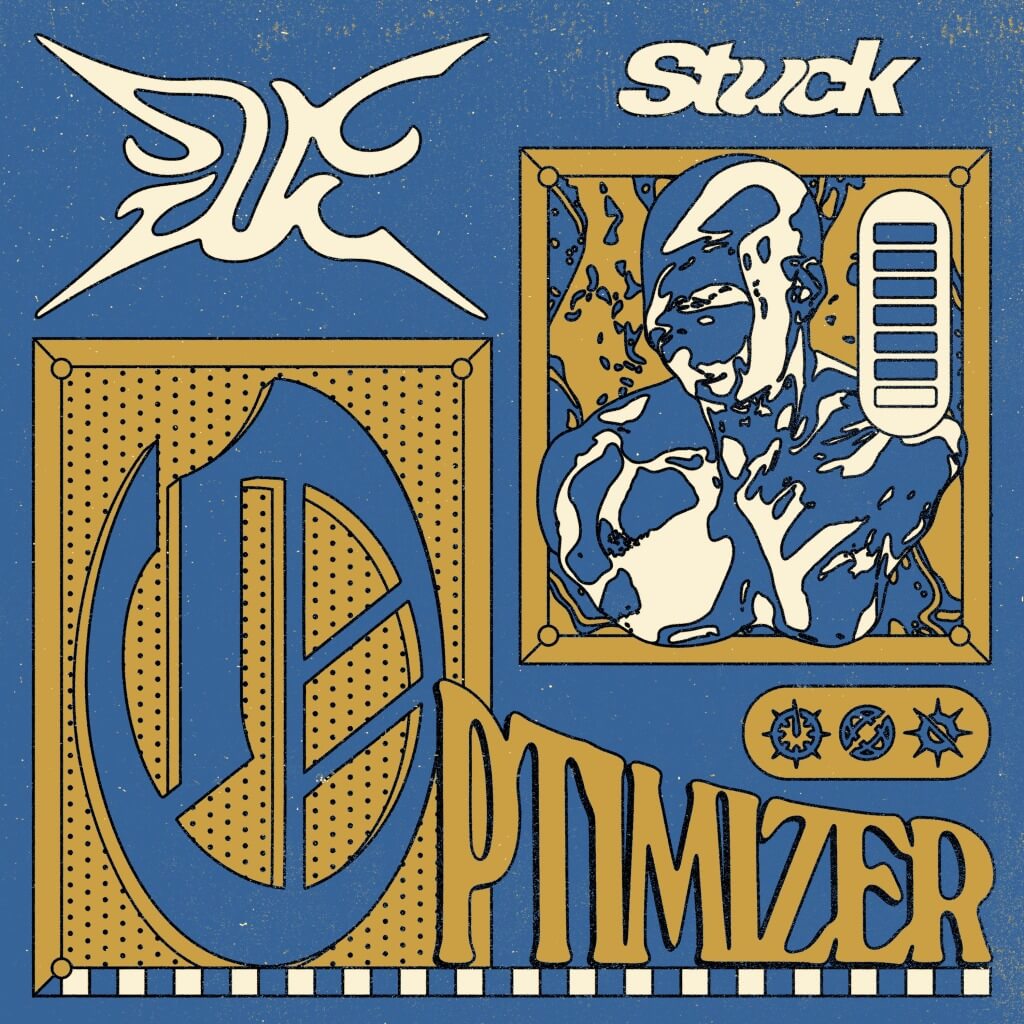 For better or for worse (likely for worse), we are living in the golden age of optimization. Looksmaxxing, grindset culture, SEO-brained careerists, biohackers micro-dosing their way to a better morning routine—a staggering chunk of the internet exists solely to convince you that you are a fixable problem, that the right stack of habits and supplements and productivity hacks will unlock the version of yourself that’s been buffering this whole time. Stuck’s third album makes that promise its title and its target. Take lead single “Instakill”: “I saw an ad online / With a man in his prime / ‘You can change your life / For a limited time.Optimizer doesn’t just observe this stuff from a wry post-punk distance, though—frontman Greg Obis came off the band’s Freak Frequency tour financially gutted, questioning whether building a life around music in a disintegrating industry was a slow-motion act of self-destruction, and as a result, he wound up genuinely susceptible to the Instagram gurus promising transformation for three easy payments. That vulnerability creeps into everything: songs about the emptiness of the manospheric gym-as-identity culture (“Deadlift”), the irony trap that makes sincerity feel like a “Punchline,” and the creeping suspicion that the life you’ve built might be a prison you locked from the inside (“It Isn’t”). Recorded at the late Steve Albini’s Electrical Audio with producer Andrew Oswald, it’s the most physically forceful thing the Chicago trio has made, all blast beats, swelling choruses, synths that actually muscle their way into arrangements. The album’s cover—a “classical statue trapped in buffering hell”—says it all. You can optimize forever. You’re never going to finish loading. —Casey Epstein-Gross [Exploding in Sound]
The New Pornographers: The Former Site Of
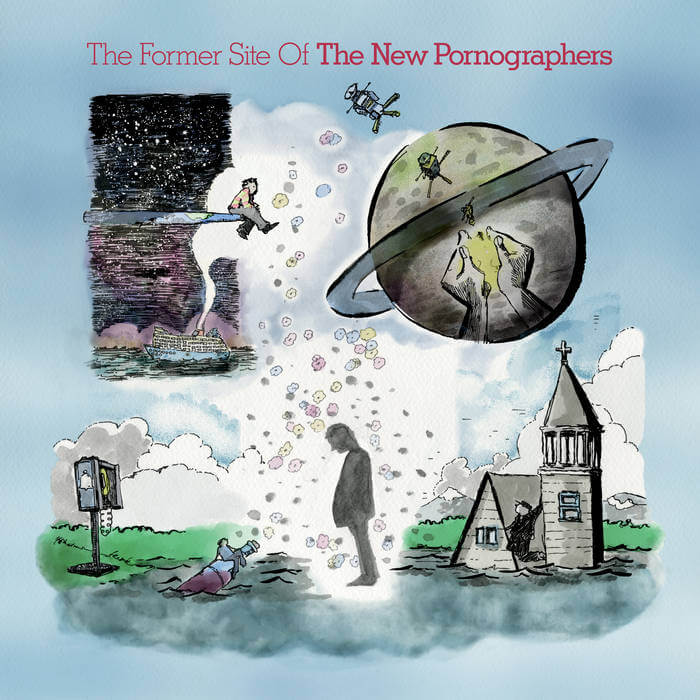 The Former Site Of is all too aware of what most of us are feeling like these days, and rather than acting as a distraction or rebuttal to the state of the world, it invites us to look straight at it—or rather, askance at it via the music, like the sonic equivalent of a George Saunders story. It attempts to find the beauty in the darkness, the solace in the sadness, and the reasons for hope amid the evidence for despair. “Gotta keep those spirits up / while we’re all waiting to be saved,” AC Newman sings on album opener “Great Princess Story,” and by album’s end, if he hasn’t necessarily raised your spirits, he’s done a pretty thorough job of reflecting them back to us in a way that reassures the listener: Hey, don’t forget, you’re not alone in this. Musically, the downbeat mood begins from the jump, with the aforementioned track using mandolin and minor-key harmonizing to tell the story of a passenger stuck on a cruise ship. This is not a happy song, though it has lyrical bite: “Well, at least the drinks are free, as free as a trap can be.” (Each of the ten tracks is purportedly a character study of a different fictional individual in unstable circumstances, though you could be forgiven for assuming they’re all just variations on a lyrical theme: A sane person staring down the current state of the world.) It also introduces a recurring musical theme: the rhythm section thumping in syncopated, stutter-stop time, forsaking the group’s usual four-on-the-floor driving grooves in favor of a sparser feel, almost like Peter Gabriel at his most restrained. —Alex McLevy [Merge]
 Keep scrolling for more great stories.