
The 10 best hidden tracks of the 1990s
In a decade that saw CDs overtake vinyl and cassettes as the dominant commercial format, our favorite artists suddenly had a lot of free space to not only record more ambitious albums but also connect with listeners and reveal a different side of themselves through secret inclusions.

Music fans growing up in the 1990s were far from the first generation to discover that their favorite artists were sending them secret messages. Their parents, no doubt, spent a rainy afternoon or several accidentally shredding their vinyl collections in search of backmasked dispatches from beyond. However, with CDs overtaking vinyl and cassettes as the dominant commercial format by the early Nineties, bands suddenly had a lot of free space to not only record more ambitious albums but also include hidden tracks. Consequently, an entire generation of teenagers can likely remember the first time they stumbled upon a track buried deep in the binary recesses of their latest pickup from FYE or Sam Goody.
In the simplest terms, a “hidden track” is an inclusion on an album that the casual listener won’t detect. It might involve a tactic as rudimentary as not listing the track anywhere on the album cover or liner notes. Usually, artists are more deceptive than that, though. Tracks may be hidden in the second groove of a double-grooved vinyl album or, in the case of compact discs, buried in silence at the end of a song (often the record’s final track) or secretly stashed in the pregap, a CD’s de facto “Track 0,” which requires listeners to manually rewind to find it. Historians have long debated who should be credited as the first modern artist to hide a track on their album. Many consider The Beatles to have been accidental pioneers with the sped-up gibberish found after “A Day in the Life” on 1967’s Sgt. Pepper’s Lonely Hearts Club Band. Other early culprits include The Who, Pink Floyd, and Styx.
However, it’s the spirit behind hidden tracks that captured the imagination of Nineties youth. As listeners, the search for these embedded nuggets became a treasure hunt of sorts—less because what was found was always a great piece of artistry and more because a hidden track felt like a more intimate way to connect to the bands and albums that we loved. Artists embraced the practice as a chance to crack jokes, play elaborate pranks, experiment musically, and even correspond with fans. These discoveries felt personal, like a curtain being drawn that often showed our favorite musicians in a different light. They were an insight into the music, a reward for dedicated listening, and a secret that made us trusted participants in a fuller experience others were missing out on.
Sadly, the advent of streaming would eventually snuff out the magic of hidden tracks in subsequent decades. It made little sense for contemporary artists to hide material when their audiences would be listening on platforms that shine a searchlight on every nook and cranny of content. Also, as classic albums were transferred to streaming services, hidden tracks were often outed with titles and labels, converted into separate tracks, or, worst of all, omitted altogether. If video killed the radio star, then streaming absolutely annihilated the experience of stumbling upon a secret stashed away within a piece of physical media.
In the spirit of music that deserves to be discovered while staring at a bedroom ceiling, slurping on a slushy, and waiting for your crush to ring you on your corded novelty phone shaped like a football or hamburger, here’s a list of ten of the best hidden tracks from the golden decade of secret songs. The only caveat is that we disqualified any recording likely to have been heard elsewhere before listeners discovered it as a hidden track. So, sorry, Jigga. Sorry, “Euro-Trash Girl.” Sorry, theme song from Friends. You just weren’t stealthy enough. Happy hunting.
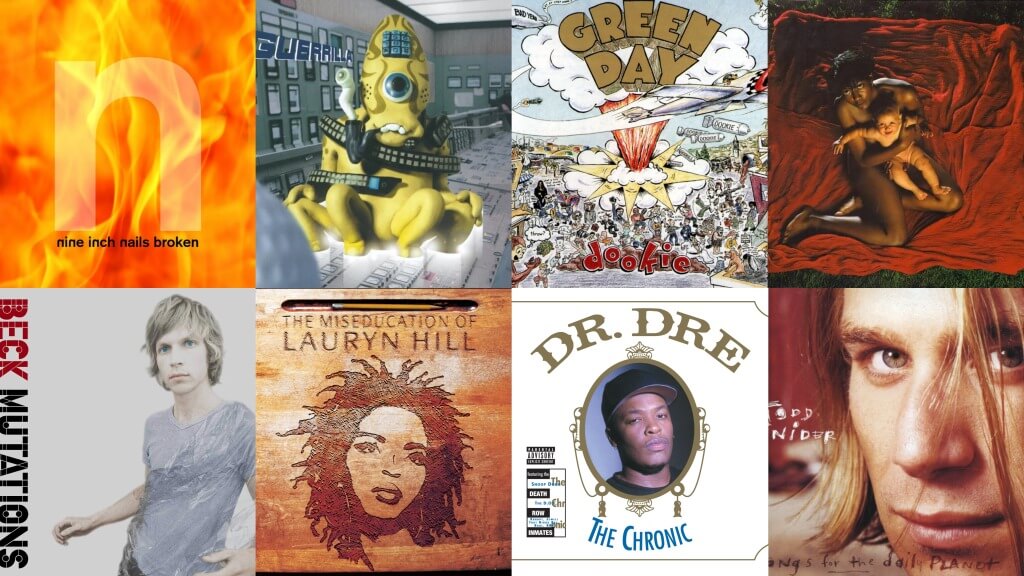
10. Todd Snider: “Talkin’ Seattle Grunge Rock Blues” (Songs for the Daily Planet, 1994)
Hidden tracks taught us that most bands have a sense of humor and can be game for a prank. For instance, you can hear Tool’s Maynard James Keenan singing about his friends fucking La-Z-Boys or Better Than Ezra deliver a maniacal, sauerkraut-induced death metal number fit for Oktoberfest in hell. Stone Temple Pilots bought the rights to a crooning street musician’s tune to act as a secret infomercial for Purple, and the boys from Mudhoney yanked our udders by making the hidden track on My Brother the Cow the entire album played backwards. However, no one delivered more genuine yucks with a Nineties hidden track than Todd Snider. The late alt-country wiseacre scored a minor radio hit with his satirical “Talkin’ Seattle Grunge Rock Blues,” a hilarious, good-natured skewering of all things grunge and “alternative.” It’s a reminder that comedy is best left to actual comedians… and Todd Snider.
9. Super Furry Animals: “The Citizen’s Band” (Guerrilla, 1999)
You can’t make this list without talking about Super Furry Animals. The on-again, off-again Welsh rock outfit led by Gruff Rhys made it a habit in the late Nineties of letting some of their best songs hibernate as hidden tracks. Even more clandestine was the fact that the band didn’t go the normal route of burying songs after vast seas of silence at the end of tracks. Instead, they stowed these spoils away in the pregaps of albums, meaning listeners had to make like Blockbuster and manually rewind (or “seek” backwards) in order to detect and play them. As a result, 1998’s Out Spaced actually blasts off nearly five minutes sooner than some realize with the trippily beautiful instrumental “Spaced Out.” The band would top themselves a year later when they squirreled away true opener “The Citizen’s Band” in the pregap of modern masterpiece Guerrilla. While the secret’s long been out on this crescendoing ode to CB culture, you have to wonder how many listeners have owned the album for years and still haven’t received the transmission. Over and out, good buddy.
8. The Afghan Whigs: “Miles Iz Ded” (Congregation, 1992)
The Afghan Whigs were always a bit out of step with the Nineties alt-rock scene. A rock band more influenced by soul and R&B than metal or punk, Greg Dulli’s Cincinnati-born outfit musically strutted with a smoothness and cocksure swagger as they contended with more complex, if not darker, feelings (desire, betrayal, and guilt) than most of their angsty, disenchanted contemporaries. The group’s third record, 1992’s Congregation, often gets tapped as the cauldron in which all the disparate elements that make the Whigs unique began to simmer and finally boil over—and nowhere more so than on closing hidden track “Miles Iz Ded.” Inspired by graffiti tagged after the death of jazz legend Miles Davis, Dulli broods (“Crawled inside your mind / And got my hands into your pants”) and slobbers (“Don’t forget the alcohol / Oh baby, oh baby”) on the manic track in a manner that suddenly makes the Whigs feel dangerous, capable of inflicting real pain, and prone to slavishly succumbing to their passions and demons. It’s the first anguished step toward 1993’s debauched revelation, Gentlemen. Oh, baby.
7. Beck: “Diamond Bollocks” (Mutations, 1998)
1996’s Odelay shook up the alt-rock airwaves like few other albums across the decade. After teasing listeners with glimpses of greatness on 1994’s Mellow Gold and slacker anthem “Loser,” it felt like the anti-folkie (with the help of the Dust Brothers) had finally arrived at an amalgamated sound all his own. So, when Beck then followed up the massive success of Odelay with the quieter, somberer Mutations, some listeners groaned. Forget for a second the irony of complaining that a record called Mutations (or flash-forward: Sea Change) sounded different. If the grumblers had made it to “Diamond Bollocks,” looming at the album’s end, they might have found their missing link. The hidden cut unfurls like a sprawling, fragmented symphony of gorgeous harmonies, deconstructionist static, and sampled mayhem. It’s a minor masterpiece and a reminder to our former Nineties selves that trying to cram Beck into any one box is akin to nailing him inside a coffin.
6. Tindersticks feat. Isabella Rossellini: “A Marriage Made in Heaven” (Curtains, 1997)
Tindersticks will be by far the most obscure band on this list. The English chamber pop outfit made their mark by combining frontman Stuart A. Staples’ low, bass croon (there’s a touch of Nick Cave there) with lush, sweeping orchestral arrangements in songs depicting the nuanced complexities of relationships. Their work has been vital to the films of French director Claire Denis, and Americans have probably heard their most popular song, “Tiny Tears,” from its use as the soundtrack to Tony’s depression in The Sopranos. Tucked away at the end of their third studio effort, 1997’s Curtains, this orchestral remake pits Staples alongside actress Isabella Rossellini in a romance between a singer and actress (perfect casting!) that blurs performance and reality. Staples’ resonant croon creates a captivating union with Rossellini’s hushed, delicate tones, a marriage that flourishes as their backing hastens and swells with a flurry of strings and horns. This hidden track reminds us that something mysterious and beautiful can be waiting behind any billowing curtain.
5. Nine Inch Nails: “Physical (You’re So)” (Broken, 1992)
Nine Inch Nails’ Broken EP spins like a scathing, self-loathing middle finger directed at the brass at TVT Records, the label that put out the band’s 1989 hit debut, Pretty Hate Machine. After execs insisted that NIN double down on that album’s synthpop style, Trent Reznor opted to go rogue with producer Flood and secretly make the heaviest fuck-you of a record he could as he sought an exit. Nowhere do we hear that rebellious rage more directly than on the band’s grinding, recoiling cover of English rockers Adam and the Ants’ “Physical (You’re So).” Initially included in the States on a bonus disc along with a rework of Pigface’s “Suck,” most fans would come to know the song as the first of two hidden tracks that proceed to pulverize any remaining debris left in the proper EP’s path of destruction. On a cheerier note, Broken would be the first angry steps towards the game-changing industrial metal sound driving NIN’s landmark 1994 album, The Downward Spiral, and TVT CEO Steve Gottlieb would forever be immortalized by Reznor’s whispers (“Eat your heart out, Steve”) during the grating opening salvo of “Physical.”
4. Green Day: “All by Myself” (Dookie, 1994)
The draconian rules of listmaking prohibit us from including more than one song about an admirer (read: stalker) taking their passion (read: obsession) to breaking-and-entering levels. While Alanis Morissette’s hidden a capella track “Your House” scores points for vocals, storytelling, and turning her crush’s bedroom into a day spa, we have to give the unlikely nod to Green Day drummer Tré Cool’s pipsqueak singing and clumsy strumming on “All by Myself” for sheer iconicness. This 90-second ditty, allegedly inspired by Cool’s mom delivering him dinner while he was secretly pleasuring himself (ya know, all by himself), popped so many cherries as the first hidden track that ‘90s kids ever happened upon. To know about this secret song and be able to sing it on the spot proved a lunchroom currency greater than PB&J with the crusts cut off or the last chocolate milk. Three decades later, it remains a nostalgic setlist interlude that finds Cool ironically recalling his lonely boyhood hijinks as crowds of thousands sing along.
3. Dr. Dre: “Bitches Ain’t Shit” (The Chronic, 1992)
No, we didn’t forget about Dre. And that’s kind of the point. You can’t talk about West Coast rap or Nineties hip-hop in general without spending a chunk of time on Dr. Dre. 1992’s The Chronic proved the former N.W.A member could go it alone, established his influential G-funk production style, and introduced the masses to Snoop Dogg. And yet, “Bitches Ain’t Shit,” a hidden track on the original release, makes us hesitate because it not only takes us back to a golden age in hip-hop but also to a time when the artform’s depictions of violence and bars steeped in misogyny started to raise questions. Even several of the artists involved admit it’s not a message for today but rather a snapshot of a time, place, and mindset. That introspection goes a long way in allowing us to still dig this classic track for its Funkadelic bass riff and mic relay between a stable of early Death Row talent, including the final word from singer Jewell, dubbed “The First Lady of Death Row Records.” Today, it spins more like a throwback that reminds us just how far women have come in hip-hop and beyond.
2. Lauryn Hill: “Can’t Take My Eyes Off You” (The Miseducation of Lauryn Hill, 1998)
Nobody in the Nineties knew their way around a cover quite like Ms. Lauryn Hill. As a Fugee, she cemented herself not only as a formidable emcee but as one of the most compelling vocalists of the decade with her singing on the group’s hip-hop, reggae-infused smash revival of Roberta Flack’s “Killing Me Softly.” That performance opened up countless possibilities for her solo debut, 1998’s The Miseducation of Lauryn Hill, including yet another step into the past. At eight months pregnant, the singer famously knocked out her transformative take on “Can’t Take My Eyes Off You,” a classic made famous by no less than Frankie Valli and Diana Ross. While it’s true that Hill’s beat-driven rendition with her signature cadences originally appeared in the 1997 film Conspiracy Theory and was subsequently ripped and blown up by radio before her debut arrived, no listener in their right mind would have complained when this surprise turned up at the end of Miseducation. Because it was the first chance to own the song on any official release, we’re going to take our eyes off our own rule for just a moment.
1. Nirvana: “Endless, Nameless” (Nevermind, 1991)
In hindsight, trying to hide anything on the most popular album of the Nineties by the most iconic band of that era seems like a fool’s errand. At the time, however, Nirvana had to believe that not many listeners would actually make it through ten gaping minutes of silence to discover “Endless, Nameless.” And god help those who did. What began as a frustrated, cathartic purge after failed attempts to nail a take of “Lithium” has since become arguably the most famous (or infamous?) hidden track in modern history. The song—more of a jam, really—consists of nearly seven minutes of frontman Kurt Cobain screeching single words and short phrases over every ounce of abrasive, distorted chaos the Seattle trio can muster.
Here’s the thing, though. The mayhem slowly begins to find a shape, each filthy, debauched convulsion somehow becoming as memorable as a sing-along chorus or a classic hook. The band had managed to transform something angry and visceral into something disturbingly beautiful. Nirvana would go on to play the song live dozens of times, usually ending in a pile of guitar and drum kit debris onstage. “Endless, Nameless” made such an impact that even “Weird Al” Yankovic hid a six-second tribute at the end of his 1992 Nirvana-indebted record, Off the Deep End. You know that you’ve truly made it when “Weird Al” parodies your hidden tracks.
 Keep scrolling for more great stories.