
Brennan Wedl promised her life to music
The Best of What’s Next: Inquire within if you like Sheryl Crow singing punk songs, growing up Catholic in the Midwest, transcontinental DIY heroes, and queer Geminis.
Photos by Blaire Beamer
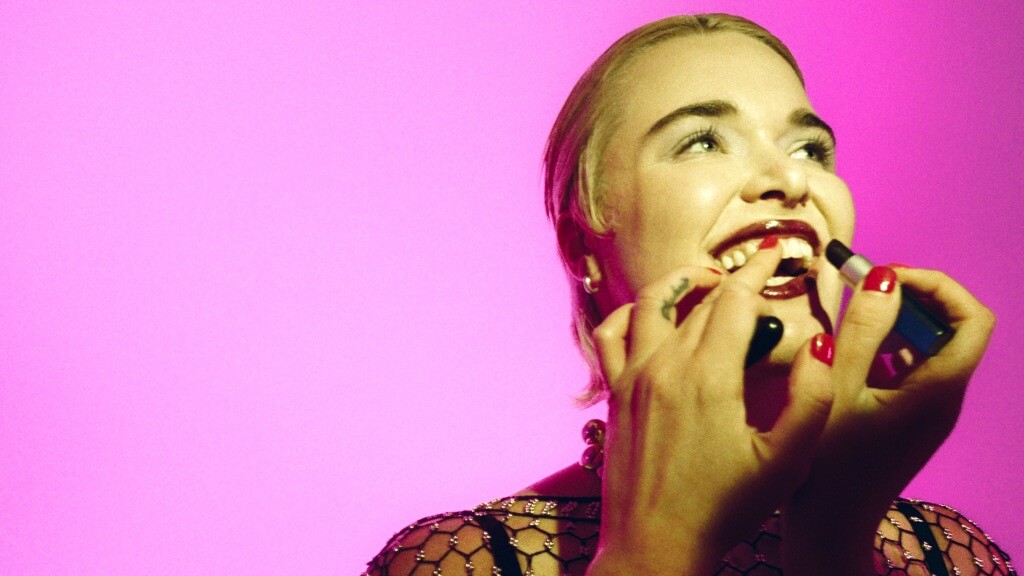
It’s funny how you meet people. In 2018, my friends and I passed around playlists in sacred dorm room rituals. I came across one with the Dazey and the Scouts song “Wet” on one of them. We instantly worshipped the band’s Maggot EP and its riot grrrl lyrics, surf-punk riffs, and girl-group harmonies. We didn’t know that Lea Jaffe, Brennan Wedl, and Otto Klammer and her bandmates were also college kids like us. But by then, the Boston trio had already called it quits, playing their final show two months earlier as Palehound’s opening act. No band is ever really “finished” anymore, though—not when TikTok can launch any obscure or forgotten song into outer space. “Wet” found its audience this decade in lip-syncers and queer creators on the platform, and their content made Dazey and the Scouts so popular that a limited vinyl re-release of Maggot sold out immediately in 2021.
In a Talkhouse interview with Lily Seabird, Wedl hinted that Dazey and the Scouts were still active. “Well,” she chuckles when I ask her to elaborate, “we have a pretty active group chat. A lot of stickers made from photos.” But the ten-year anniversary of Maggot is coming up fast, and though all three live in different cities now (Wedl in Nashville, Jaffe in New York, and Klammer still in Boston), they’ve been talking about how they want to celebrate. Mostly, Wedl’s just been reminiscing about what the three of them built in such a short period of time: “Seeing myself in them, sharing music and pretty unfiltered thoughts and feelings as eighteen-year-olds… Being in a musical collaboration at such a beautiful time of life, feeling like you’re in ‘discovery mode’, and sharing that with people who understood where you were coming from and could volley it back really quickly… We didn’t start out thinking, ‘This is going to be a forever band.’ It was more like, ‘This is what we’re doing right now, and it feels great, and let’s have fun.’ Our goal was to explore rock music and make it our own. That was a really tender aspect of it.”
Fast-forward to 2025 and I found myself sitting with Wedl at Paste’s South by Southwest event, taking her portrait after her indoor show. I didn’t know she was in Dazey and the Scouts, because none of us cared about band member names in those dorm room days. I was merely a fan of her solo material, and I practically begged our team to put her on the bill. I didn’t care which stage. I needed to hear “Scorpio” live, and I had a hunch that everyone else did, too. You can’t technically “sell out” an indoor set at a SXSW show, but I don’t think there was a spot to stand in that room when she was on. “I’m going to make you the Best of What’s Next when the record’s done,” I told Wedl then. She looked forward to us meeting up again.
Wedl’s first instrument was the violin, but after her teacher stopped doing lessons at her school, she joined some friends in learning guitar. “I had always written songs and sang them around the house,” Wedl remembers, “but I started guitar then and just kept going.” Her first guitar teacher came to one of her shows opening for Waxahatchee and MJ Lenderman in April. “[He] really taught me that, if you’re having fun with it, then the discipline will come,” she says. “If you’re enjoying what you’re doing, you’re going to want to practice more.” She’s even applied that philosophy to songwriting, wanting to “approach music with the devotion of a monk” like Leonard Cohen, because it’s fun and sexy. Wedl says she needs to be invested in whatever she’s writing about, or, at least, find its edge—even if she’s just doing exercises for herself. “I want there to be whimsy in there, something that’s serving the fifth grade guitar player who was just starting out. Something needs to be in it for her, too, because she brings the mysticism.”
Her uncle Chris was an influence, too. He’s a commercial photographer by day, but would always jam with Wedl after she started playing guitar. They started a family band together, picking up gigs around major holidays, and that’s where Wedl worked out her first stage-fright nerves and learned how to take requests. “Uncle Chris was an adult in my life who was doing a creative career and doing well, and I was like, ‘Okay, that’s possible.’”
After Dazey and the Scouts went on hiatus, Wedl moved from Boston to Nashville and made Jersey Devil and Holy Water Branch, two singer-songwriter, Americana-tinged records that, truthfully, sound pretty faraway from where she’s at now: a Sheryl Crow-meets-Poly Styrene forecaster with a roadworn heart. “What do you think you got right on those albums?” I ask her. Confessional songwriting, she says, adding, “I grew up Catholic, and you have to tell the priest your sins, and he doesn’t judge you—or so they say. I found songwriting, especially on Jersey Devil, to be that version of confession for me.” That version of Wedl was fearless in putting her sins to paper and “looking for absolution or penance” by releasing the songs. Eight years later, she’s stayed true to that vulnerability, though it can get squirrely sometimes. “I’m happy I wasn’t scared to say what was really on my mind, unfiltered.”
Nashville is Wedl’s home now, but Boston still rents a big room in her heart. “When we work together, great things are possible,” she says of her scene there. “I was shown, time and time again, that we can really influence each other and help each other when we cheer for each other and we want our friends to win.” It’s not the full picture of the Boston music community, but Wedl’s experience was always collaborative, before the Great Scott was turned into a Taco Bell Cantina. “There were a lot of band members in multiple bands. People were going to shows. People were going out. Everybody was eager to see music. It was a beautiful time for that.”
They call Nashville a ten-year town, though TikTok has probably made it more like a five-year town. “It’s been quite Saturnian down here,” Wedl laughs. “There’s a sense of collaboration here, too, where, if you want to go for it, you go to Dino’s, you get a hamburger, you sit down, and you talk about it.” A lot of people there are doing some version of what Wedl is doing, and there’s a camaraderie in that. Your coworkers at your day-jobs are musicians. “I’ve played shows with coworkers, bosses, people I’ve met at the YMCA,” she adds. “It can be very cute, very kind. It’s been good to me so far.” She was curious about everything at the beginning, trying on a bunch of hats. Wedl tried commercial country co-songwriting, which she says required her to leave her insecurities at the door and be okay with hearing “no.” Now, she finds more joy in writing songs with friends in their home studios, and a few of those songs wound up on Brennan Wedl. “I think it works best for me when I approach it through friendship rather than through a mindset of ‘we’re going to the top with this one.’”
The rollout for Brennan Wedl began in 2024, when Wedl started sharing singles like “2 Dollar Pistol,” “Fake Cowboy,” and the aforementioned “Scorpio”—none of which sound alike. That was intentional. “I try not to write the same song twice,” she says. “Maybe in the future I’ll have an album where I do the exact reverse of it, but I’m a Gemini. I love the hats. I’m not trying to jump around genres. I’m trying to have a throughline, and that is the emotion.” Those singles were a good litmus test for connecting with people and playing live. It was empowering for Wedl, even if she never stays anywhere for too long. “Kudzu” didn’t make the record, because Wedl felt like it “wasn’t part of the world I’m working in now,” but it’s always going to show up in her live sets.
Snail Mail’s Lindsey Jordan is a presence is felt on Brennan Wedl. She brings unmistakable guitar chops to “Pretty Little Fantasy” and “Tasmanian Devil.” The tone is fairly incredible on the latter. Wedl says there was very little brainstorming or direction. “She came over one afternoon, when we had maybe four more days of tracking left out of ten,” Wedl remembers. “The feeling of the album was really there. We played her a few songs, and Brad was like, ‘Do you want to play some?’ And she said, ‘I mean, yeah.’ We started with ‘Tasmanian Devil,’ and she did that lead line. It completely reframes the song in a way that speaks to the improvisational nature of her playing. She came in and did some magic.”
Jordan also helped get Wedl’s music in front of Waxahatchee’s Katie Crutchfield, texting her the song “I Wanna Be Your TV.” After “2 Dollar Pistol” dropped, Crutchfield shouted Wedl out on a Nashville radio show. A few DMs and emails later and they were hanging out at Homestate in Los Angeles. “Katie is such a timeless creative force,” Wedl beams. “To be in that orbit is endlessly inspiring.” Crutchfield was in the crowd during Wedl’s Paste set a year ago, singing and swaying along.
Wedl co-produced her new album with Crutchfield and indie super-producer Brad Cook. They brought an X-factor to the album, Wedl says: cohesion. “They were able to see my blind spots and identify things that were in the garden but weren’t getting the water they needed. They were in the garden with me, putting their gloves on and going through the dirt and helping me make a bouquet.” Wedl needed people like that, people who encouraged her to plunge deeper into her songwriting psyche. “They really saw me.” Wedl has coined her work as “grunge-try,” harnessing all her sides: punk, Americana, blues, and country. Crutchfield and Cook listened to her earlier works and wanted to marry those together. “It’s important to be very clear about what you want out of a recording,” Wedl says. “We spent a lot of time before tracking making sure we were all on the same page. We weren’t making a country album. We weren’t making a rock album. We were making something that could be all those things. I love to rock. I really do. But, sometimes, I don’t give enough credit to the quieter parts of my musicality.”
It’s one thing to say, “I want to make this album for you,” but Crutchfield and Cook also said, “We want you to play these songs on the road with us,” inviting Wedl to open for them on their recent national tour with MJ Lenderman. For a month, she workshopped her boldest work to new audiences, telling stories about the Midwest and Boston and Nashville in-between expertly sequenced confessionals. “I became fascinated by the difference between someone’s speaking voice and their singing voice,” she says. “I’ve always loved hearing artists talk. I’ve also fallen in love with Neil Young’s live albums because he’s constantly going off on tangents and making people laugh. I think storytelling adds another layer to the live show. I have a lot I want to share. You can personalize the experience. Make it one-of-one.” I ask her how monumental that gesture from Crutchfield and Cook was, and she doesn’t hesitate to call it priceless. “It’s instilled so many life lessons. One of the biggest ones is that I have this confidence in my thoughts and feelings more so than ever. It showed me that life itself can be a creative act.”
Almost seven years have passed since Wedl released Holy Water Branch. “How did you find the patience to let this record come when it was truly ready?” I ask her, thinking about our current music culture, which puts so much value in instant gratification. “That’s been the affirmation on the sticky note on my bathroom mirror for the last seven years: trust the timing,” she says, before clarifying: “I have not been patient. I think it’s been factors beyond my control, and maybe divine factors too, saying, ‘We’re going to kick this down the road a bit, or you’re going to have a mental breakdown.’ Life was happening, and I was growing and learning—gathering the intel to be prepared for this.” Wedl reveals to me that, if these opportunities had happened to her in her early twenties, she’s not sure she would have had the tools to be mentally okay with them. She’s spent this decade of her life working on self-preservation, preserving that spirit of her fifth-grade self learning to play guitar. COVID was definitely a factor, but she quickly figured out that listening to her body, her mind, and her spirit mattered more than what the industry might have expected from her.
Spirituality has always been a big part of Wedl’s life and her music. One of the first things she revealed about herself in our interview was that she was brought up Catholic, which was a major theme on Holy Water Branch especially. Now, it’s become an unbridled, unapologetic trust in her shadow—in the things that used to be sins when she was little. “I think becoming friends with the God of my own design—influenced by paganism and Catholicism—has really helped me take charge of my life. It’s helped me dream and helped me learn that the fruits are most delicious when everybody gets to eat them.” The community part of organized religion—the gathering—is now the central guiding force in her creative soul. “We’re gathering at concerts. We’re gathering in studios. We’re gathering to rehearse. Life is a big question mark, and I think together we get a lot more clarity when we talk about the harder, necessary things… when we’re able to use our talents for good, to bring the light in.”
So what we’re presented with is Brennan Wedl, a punchy, unfiltered album about Wedl’s time growing up in a religious Minnesota household and then being a touring musician in her twenties. Technically it’ll never be her debut album, but I’d say this is the version of Brennan Wedl I’ve been waiting to meet. “This feels like who I am right now,” she affirms. “My songs in the past… they have felt like who I am, but I think I was bouncing around to the next thing. I don’t want to dismiss those past albums as not being something I want to stamp my name on, but this one feels different. There’s a rebirth.”
Years ago, Wedl said music was like a spouse to her. The marriage is still good, though they’re “definitely in an open relationship” now. She’s promised her life to music and signed many real and spiritual contracts around it. Not every day is sexy or romantic, but it’s real. “And, honestly, that’s the kind of marriage I want: something steady, something for the long haul—for better or worse,” she admits. “Right now, we’re constantly rediscovering each other. That’s where the butterflies come from. That’s where it starts feeling like dating again. Cute and fuzzy. Right now? It’s cute.”
Brennan Wedl is out August 21 on ANTI-.
Matt Mitchell is Paste‘s Editor-in-Chief. They live in Los Angeles.
 Keep scrolling for more great stories.