
Burial’s debut introduced a spectre
Released on this day in 2006, Burial provides a fully realized introduction to William Bevan’s electronic fingerprint: pummeling, gnarled textures and disorienting processing.

With minimal frills, William Bevan probes the malaise of urban existence. Beneath the alias Burial, the reclusive South London artist has fused two-step rhythms and gloomy ambience for twenty years. Skittering drums, pitch-shifted R&B vocals, and delicate synthesizers permeate rain streaked foley. “If I’m making a tune sitting in my room with a cup of tea, I’m not making a tune about sitting in my room with a cup of tea, it’s like I’m out there somewhere,” he told Blackdown. With zero live performances; a handful of curtailed interviews; and a few bleary photos, Bevan is a North Star for hauntologists and hermetic producers alike.
Bevan grew up in the prime of hardcore and jungle, shown Goldie, El-B, and Dillinja by his older brother. Operating with the rudimentary Sony Sound Forge software pushes Burial in a gridless, visually guided direction. He has cited a motion tracker from the Alien franchise as inspiration, and samples video game ammunition as percussion. “It’s like people after a club and they’re sitting around or playing Playstation and stuff, still listening to the echo of their night out in their heads,” he mused to FACT Magazine. “Or when you walk down the stairs into a club and you start hearing the music, but there’s people talking around you and the music mixes itself in with real life. I like that sound. It’s like a memory of a tune.” His formula is steeped in intentional wonkiness—cinematic, albeit gritty.
The flagship Burial album is 2007’s Untrue. Establishing the framework for outsider dance attitude, it was declared Resident Advisor’s top record of the century so far; the melancholy avatar on its sleeve has sparked extensive memes, chat forums, and stylistic imitators. But Bevan’s dense catalog is packed with essentials, ranging from the Four Tet and Thom Yorke collaboration Her Revolution / His Rope to the euphoric Phoneglow / Eyes Go Blank. He traces a path from damp atmospheres to crackly garage.
I discovered Burial as a sophomore in high school, gigging in DIY acts and infatuated with buzz bands. Trapped in the Washington, D.C. suburbs, Bevan’s crinkles and warbled hooks complimented the oppressiveness of East Coast winter. At first, I considered it sacrilege to fall into a realm generated on a laptop. “Archangel,” “In McDonalds,” and “Stolen Dog” kept me captivated, helping surface merit in a genre I had initially misperceived as lazy. I peeled the “Drum Machines Have No Soul” sticker from my mirror and purchased a MIDI controller.
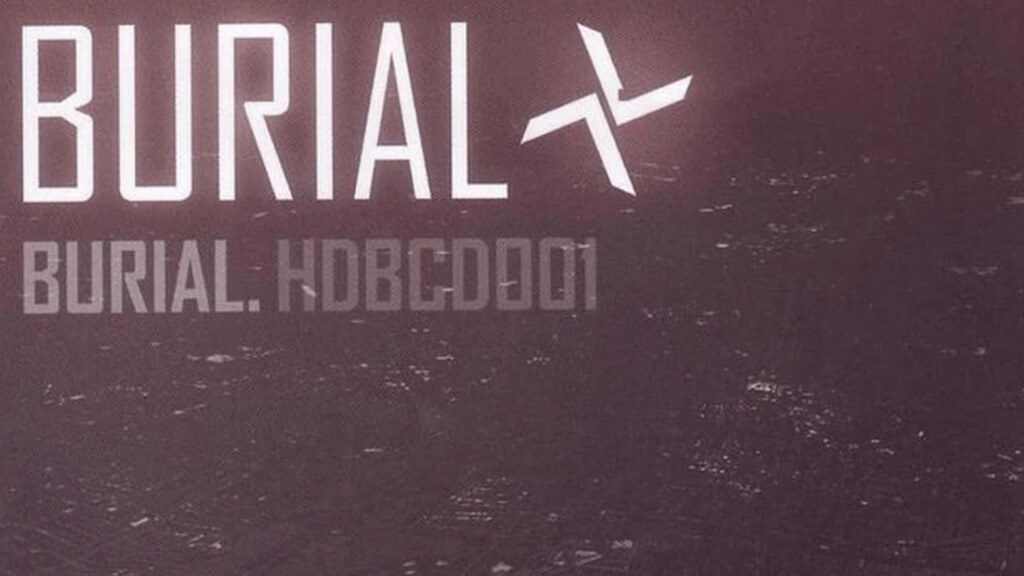
From the aerial skyline on the cover to its choppy beat placement, Burial’s 2006 self-titled debut provides a fully realized introduction to Bevan’s fingerprint. Issued by Kode9’s venerated Hyperdub, it was originally lumped in with the nascent dubstep boom. “Spaceape,” “Wounder”, and “U Hurt Me” are pummeling, incorporating gnarled textures and disorienting processing. Two decades on, though, Burial largely feels removed from the orbit of Night Slugs, Tectonic, and FWD>>. Where those bass institutions uplifted crude propulsion, this is comparably lithe—tricky to weave into a DJ set.
The names of the pieces on Burial convey dejection without teetering into angst. It transports me to a suave, cloudy metropolis—similar to the Brooklyn I inhabit at twenty-eight, yet with a sumptuousness baked into the decay. “Broken Home” finds a lopsided groove supporting a voice snippet from Sizzla. On the amorphous “Night Bus,” an angelic pad is smudged by water droplets and silvery reverb. “Gutted” blends spectral hi-hats and romantic singing. “Pirates” flirts with brashness, until glistening timbres pull things toward the mist. It seems beamed from a rusted scrapyard, known only by ghosts and vagrants.
Before Burial’s identity was revealed in 2008, rumors circulated that Bevan was secretly Four Tet, The Bug, or Basic Channel. In spite of the widespread popularity that followed, his mystique still rings authentic. This glum universe is too immersive to be anyone else’s detour. “I’ve never been to a festival. Never been to a rave in a field. Never been to a big warehouse, never been to an illegal party, just clubs and playing tunes indoors or whatever. I heard about it, dreamed about it,” Bevan told cultural theorist Mark Fisher in The Wire Magazine. As latter-day electronic favorites—think PLO Man, Two Shell, and Tracey—embrace shadowiness, Bevan’s blueprint is influencing trends in 2026. Imagining bustle through a veil of solitude, Burial remains an ironclad thesis.
Ted Davis is a New York City-based writer and musician. He writes Bandcamp Daily’s monthly ambient column and launched a monthly electronic music round up, called Crossing Wires, for Stereogum. His additional work has been published in NPR Music, Pitchfork, Rolling Stone, and elsewhere.
 Keep scrolling for more great stories.