
Chanel Beads balances the real and unreal on Your Day Will Come
Shane Lavers’ second album with the same title renders standard pop songwriting into arcane, intoxicating configurations.

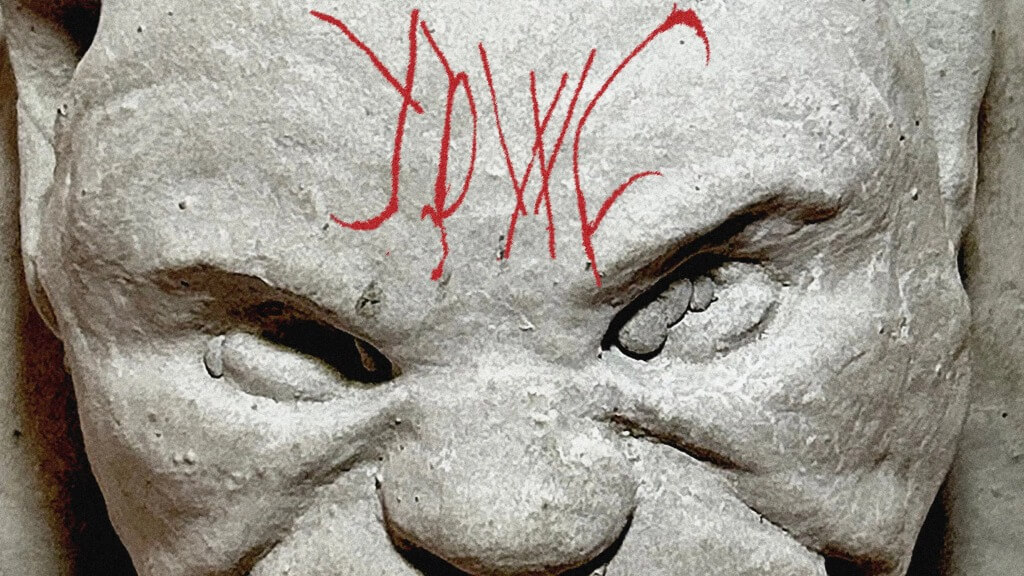
Chanel Beads’ music sounds familiar, yet it also seems to come from another plane. It’s the kind of sound you’d expect to faintly filter out of the narrow slit in the Backrooms basement: eerie yet conventional, ethereal yet tactile, real and unreal at once. Recognizable objects pass you by as you wade down hallway after hallway, but their layout and structure seem foreign. This is the dichotomous tension that animates Shane Lavers’ project. Like a lucid dream, everything feels knowable, but you’re aware that it could all turn to dust in an instant, abiding by a logic of its own accord, the illusion forever broken.
Namely, Your Day Will Come, the second album from Chanel Beads (and the second one with that exact title), concerns itself with the surreal forms that everyday forces can take. Once again aided by vocalist-guitarist Mary McGrory and violinist Zachary Paul, Lavers renders standard pop songwriting into arcane, intoxicating configurations. Similar to how Mk.gee can sound like someone listening to Frank Ocean from several rooms away, Lavers’ songs have earworm qualities that nevertheless unsettle. They’re sprinkled with both easily hummable melodies and disquieting undertones.
The aptly titled “Opening in the Gate” is a tidy microcosm of Chanel Beads’ hypnotic intangibility. It begins with a jarring, in-the-red scream, which disappears just as quickly, gone in a split second, ushering in Paul’s plucked violin and Lavers’ choral synth pads. Mari Rubio plays the pedal steel as if it’s another instrument entirely, with a foreboding drone that converges with the swelling wash of noise burbling underneath the surface. “Twenty cockroaches in the concrete,” Lavers whispers, unfurling the full breadth of his voice in the next line: “You said it’s a cold spring / Warmer underneath my feet.” It’s like we’re watching Lavers on the side of the titular gate, beckoning us to join him on the other side, coaxing us with a whisper and sickly sweet melody like he’s a mermaid in Homer’s Odyssey.
Late-album highlight “Drunk Stupid in the Structure” describes exactly what it feels like to experience the world that Lavers has constructed. A slightly out-of-tune guitar picks away as McGrory’s heavenly voice and Lavers’ swooning synths lose themselves in the other’s thrall. Meanwhile, Lavers waxes philosophical on how it feels “like a ghost is near / nothing real is true.” The penultimate “Boss” opens with a whispered omen that “your day will come,” yielding to soft piano chords, Paul’s lush violin, and Lavers’ pitch-shifted, Alex G-core vocals. He further indulges his impressionistic pen, comparing himself to the “cold winter sea” and “the brittle mean man” desperate for love.
Some of Lavers’ best writing, however, comes in more pointed examinations of grief and regret. “Tyler Richard” is about a dead person paying a visit to you in your dreams, ultimately laying out the hallucinatory, even Kafkaesque nature that mourning a loved one can assume. “In a dream I wrote a song for you / Don’t let go like they told you to,” Lavers sings in the chorus over glittering keys and some gauzy guitar from Tchad Cousins, AKA urika’s bedroom. At the midway point, screams curdle in a tempest of distortion, but Lavers dispels the night terrors with another verse and chorus, keeping the horror at bay with a piano ostinato and luxe strings.
On “The Coward Forgets His Nightmare,” music plays a more suspect role, and Lavers wonders if making a career out of it was the right path or if he’ll someday come to regret it. He ponders whether it really saved him and if it’s capable of saving others. “Did you think that the music could’ve saved your soul?” he asks, repeatedly finding himself at the same remembrance: “I thought I saw you smiling in all my memories.” The tenuousness of memory can be both a balm and a betrayal, comforting in its falsehoods as we fabricate the reality we wish had happened rather than a more harrowing truth.
Unreliability, in its own bizarre way, can mitigate the pain the “real world” throws at us. To bring it back to Backrooms, it’s akin to feeling like you truly belong amid its randomly generated warrens, disquieting banality, and fluorescent-lit entropy. Still, becoming tethered to an illusion is an intrinsic danger. You can forget whether you’re in a dream or a nightmare, and the key is knowing the difference, where that diaphanous line is drawn. “We all have our loops. Our habits. Behaviors that keep us walking in circles,” Dr. Mary Kline tells Clark near the beginning of the film. “[I]t’s the neural pathway of least resistance… It’s the one that kept you safe when you were a child… And now, as an adult, you’re still stuck right where you started.” Was music the right path for Shane Lavers? On Your Day Will Come, he’s asking himself that, but baked into the vast tapestries of sound, its canny balance between real and unreal, lies the answer. [Jagjaguwar]
Grant Sharples is a writer, journalist, critic, and musician. His work has also appeared in Interview Magazine, Uproxx, Pitchfork, Stereogum, The Ringer, NME, and other publications. He lives in Kansas City. You can follow him everywhere @grantsharpies.
 Keep scrolling for more great stories.