
The imagined odyssey of Fastball’s “The Way” opened the door to another world
Alt-Rock Dept: The hit rock song was once a pleasant radio melody, then it became a fond memory, and then it slowly evolved into a beautiful and idealized look at how we choose to live.

Alt-Rock Dept. is author Niko Stratis’ essay series about working at a grocery store in the mid-Nineties and the radio songs that filled every aisle and stockroom.
I believe everyone has a favorite donut, though there are some who will never admit it. I’m certain there are those who believe they are beyond such things, and there are others who are undecided, and in the middle remain us. There are even those who believe that your favorite donut says something about you, an answer that reflects your taste and your desires and place in the world. Your favorite donut says everything about you, only it says nothing at all. I have an answer for myself, and when pressed for it I will respond with caveats because, like so many matters of taste, I feel like my answer is an imperfect reflection of me. I am often answering hollow questions in preparation of judgement, because there are weights on my spirit placed there in all my formative days.
This is a shared truth across mediums, and when I pivot to talking about music I want you to know this is a tether—that this theory transcends what borders remain between cultural divides. It’s the same with music as it is with donuts, it’s just that the answer becomes bigger. Where a favorite donut is a singular idea, songs are a broader truth. Favorites demand context, genre, and place. There are some from the recent past, and there are favorites from our youth, and each one is just as true as the other.
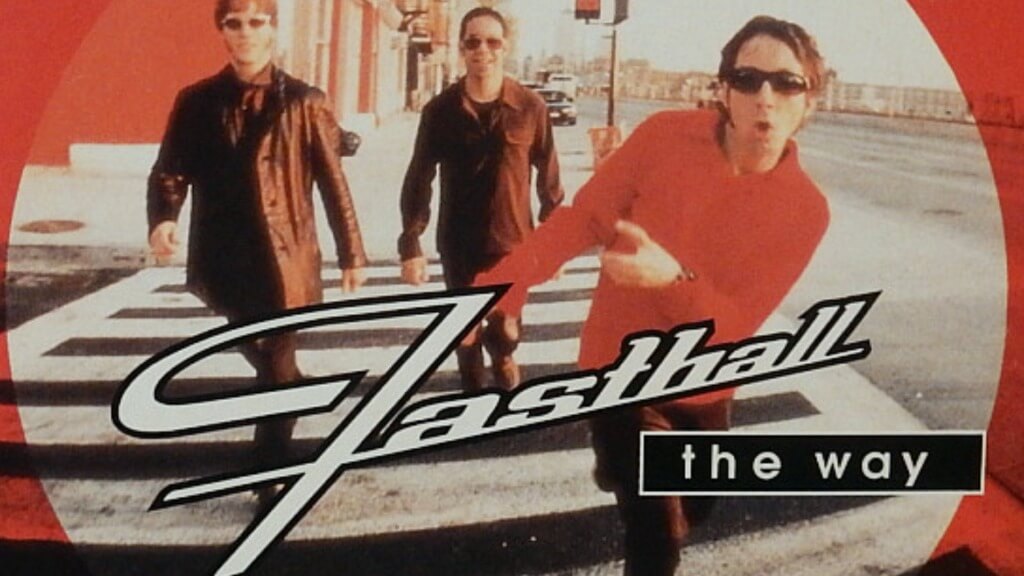
So then if we’re sharing truths, I’ll tell you that “The Way” by Fastball is one of my favorite songs, though I know this is a stone tossed in a lake. The ripples from its impact are buoyant and they are boisterous just as quickly as they push back on the centre of their creation. There are certainly enough people with shared sentiment that the song became a hit, just as there are ardent haters, and those who have never heard the song at all. Where once it was a ubiquitous part of any interaction with daytime radio, it has retreated from mainstream context. “The Way” became a historical artifact around which we can gather our stories and shared history and remember all lost and fading days.
In 1998, when the song hit the radio, I was working in the bakery department at the Food Fair. I had turned sixteen, which meant I could borrow the family car—a used 1995 Mazda Protege with a half-destroyed bumper from when my mom backed into my dad’s work truck in the driveway one winter—to drive to work on weekends. There are few things more freeing to a life trapped in a small town than a driver’s license and car keys on the hook by the door, and when my supervisor asked if I could handle the weekend responsibilities of the bakery, I jumped at the chance. Driving to work created a new cherished ritual. No longer would I be burdened by waiting to be driven by someone or running after a missed bus. I was made the mistress of my fate and all my destinations, and the added workload meant I had a reason to need the car and all its boundless freedom. When my tires hit the road and mingled with the early morning traffic, it was as if I had become a drop of blood rushing with so many others to the heart of the world, each of us certain we would get where we needed if we trusted the journey ahead.
I know there is a story that tells the tale within “The Way,” only I didn’t know it at the time. I heard it first on the floor of the grocery store, as I’m sure so many of us did, and for a while it was simply there. Another song in another stream of songs that played throughout and behind us over the span of a day. As if prepared for its position as a stop on the dial, “The Way” opens with a dial searching for a signal. We hear snapshots of dialogue, and a brief second of Jewel’s “Foolish Game” before the song comes into focus. Tony Scalzo, Fastball lead singer, opens the story with a hint of rhythm in his voice—“they made up their minds, and they started packing”—before the song opens itself to a melody. A guitar with a swept strumming pattern played in shuffling time, a rhythm I’m sure is owed to the influence of the Tejano sound of the bands Texan origins.
The story then is of an older couple, Lela and Raymond Howard from Texas—one with Alzheimer’s and another recovering from brain surgery—who had packed and piled into their car and left home to drive to a festival they would never arrive at: their bodies found in the car in a ravine days later, a great distance away from where they had ever intended to be. Scalzo had employed a trick that worked for the Beatles, open a newspaper and look for a story that can become a song. When he read about the Howards, they had not yet been located. They were still off somewhere, exploring together maybe, or lost and searching together, and so he wrote optimistically around their imagined odyssey.
On weekends in the bakery department, my task was to prepare the donuts we sold on impulse shelves, next to the sliced bread and across from an island of French loaves slowly turning stale in preparation for becoming garlic bread. Preparing the donuts was simple enough, as it only required me to lie just a little. We didn’t bake anything, rather I went to the Tim Hortons down the street, grabbed the racks of donuts we had a standing pre-order for, and drove them back over to our store. We put them out on our shelves and sold them for $0.15 more than the MSRP. My days started with this nothing task, one that only asked that I had a car, and I had the desire to be in it going anywhere at all.
Every Saturday and Sunday I would repeat the path of my labors, journeying from home to the Tim Hortons then to the store. I knew the road, and I knew where I had to go, and only occasionally would I veer off it and only occasionally would I sneak a donut for myself from the racks cooling slowly in the back of a shared ’95 Mazda. That I know about the story of the Howards now only makes “The Way” more vibrant and real. In Scalzo’s telling, they were old, but not yet withered, and were choosing life on their own final terms. They were journeying off somewhere that no one but them knew, and claiming what might be their final story for themselves. Recalling when they were young, and when they were so alive, and finding joy in that. You can almost imagine the sun drawing lines across their faces as they smiled into each other’s eyes, facing what unknowns lay ahead together. The Howards died in tragedy, but that is not to preclude them from ever having lived, and this I believe is the beauty and magic of the song. This is what makes it a favorite, that evolves and grows with time and compounding memories.
I think if you are trying to paint a portrait of what a grocery store in the mid-Nineties looked like, and if you were trying to give it the air and ambience it demands to be made fully real, you would be required to have a speaker playing “The Way” somewhere in the tableau. It’s foundational in that way, as if a song was a keystone, as if the automatic doors sliding open to grant entry were a grand archway to another world. The stories we tell from within are unlike any that we share from anywhere else, which is not to say they’re perfect, just that they are real and ever changing. One day all these little nothing things will mean more than they ever could have, as time evolves our taste and memories and shifts how we see the world.
I love “The Way” for how its story has changed for me over time. Once, the song was just a pleasant melody played in perfect sequence between alt-rock and R&B songs on the radio. Then it became a fond memory, and then it slowly evolved into something more: a beautiful and idealized look at how we choose to live, even and especially if we believe we might be making our last and final choices. The vision of the road as offering freedom, and choosing life even as it runs from death. A song that reminds me of the past, lets me remember its soft and kinder days, and helps as I recall where I began building a life surrounded by chosen truths.
A favorite anything is subjective, as all manners of taste are. To some they’re important, and to others they’re everything in the world. I can’t help but care a little when I tell people what I like and listen for their passive judgment. In Canada, and being of a certain vintage, I will often say that I love a Dutchie or an apple fritter, the old-person donuts they used to sell at Tim Hortons, and which we used to sell for slightly more at the store I worked at two blocks away. It’s not a perfect donut, but it’s tied to a place for me, and it reminds me of all that I have been and all that I will try to remember as time robs me of faces and names and people, as I’m wandering off somewhere without ever going the way.
Niko Stratis is a former smoker and an award-losing (and winning) writer. She is the author of the critically-acclaimed book The Dad Rock That Made Me a Woman, and the newsletter Anxiety Shark. She once came 2nd in a Chicken McNugget eating competition, but that was a long time ago. She is a cancer, and she lives in Toronto.
Listen to Fastball’s Daytrotter Session here and watch their most recent Paste Session below.
 Keep scrolling for more great stories.