
Fire-Toolz’s Lavender Networks is blissfully unclassifiable
For Chicago polymath Angel Marcloid, it seems like our perception of genre is merely a distraction.

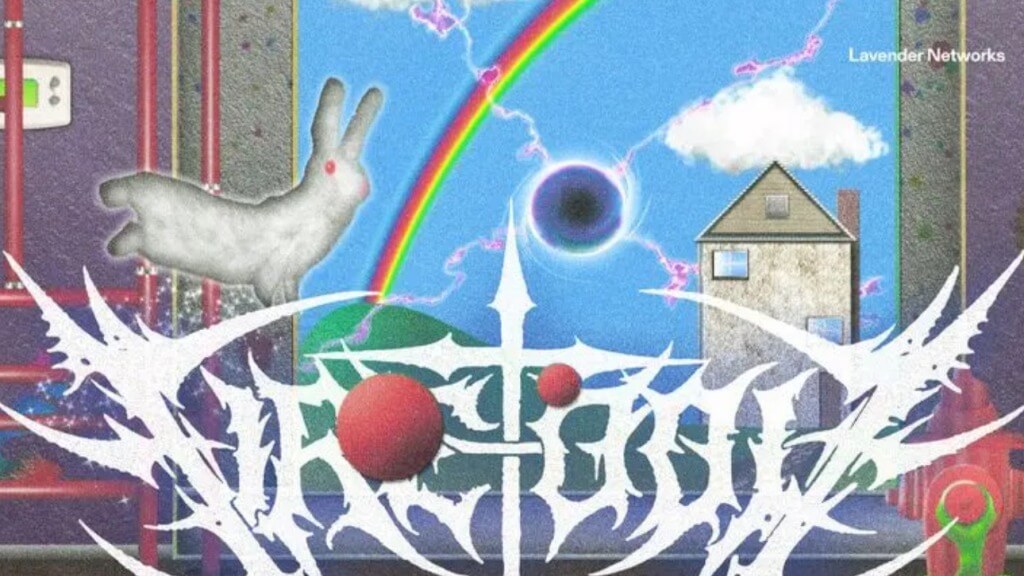
You don’t have to savor music with your tongue in cheek. You can be equally, genuinely moved by a Paula Abdul hook, a Def Leppard riff, and a Mozart piano concerto. There are no guilty pleasures, only pleasures—and the dizzying sound world of Chicago’s Fire-Toolz, including the reliably dynamic Lavender Networks, seems to preach that wisdom. At first, you may encounter the project’s extreme polarities of sound—the fusion of icy synthwave and brutal metalcore, of virtuosic prog and skeletal New Age—and respond with something approaching laughter, marveling at the audacity of these creative choices. But across a hall-of-mirrors catalog that’s now expanded to fourteen-plus albums and EPs, composer-producer Angel Marcloid has treated every tone as holy.
“Sometimes when people become cool, it is seen as uncool to like things that aren’t seen as authentically cool,” she told Off Shelf in 2023. “But then, when those apparently cool people reach actual, real, ultimate cool, which is catalyzed by humility, honesty and self-actualization… then you discover an authentic, heartfelt connection with Christopher Cross, Kenny Loggins, Winger, Richard Marx, Starship, and Kenny G.” (In a previous editorial life, I created a whole-ass interview series where artists defended the albums other people hate, and Marcolid spoke with admirable reverence about Rush’s underrated 1987 LP, Hold Your Fire.) Certain guitar styles and drum machines cyclically go out of fashion, but pure expression is impervious to trends—just like Fire-Toolz at its mind-melting best.
Lavender Networks, Marcloid’s debut for the lauded experimental label Warp, continues to delight in the vivid frictions—in harsh/clean vocals, in timbres and textures that rarely appear in the same song—that have anchored much of her past work. “Quintessential Fixed Width Unfoldment” shows the full sonic range: literal whispers to brutal screams, electro-metal drums and distorted riffs to flute-like synths and gooey electronics. For the right kind of listener, it’s thrilling to know any instrument might creep into your headphones. The song’s umbrella is big enough here to weave in guest vocals from electronic artist Brothertiger, brooding art-pop songwriter Zola Jesus, and mystical folkie Nailah Hunter—and make them all feel like natural collaborators.
Every other song is filled with similar delights, blurring electronic and acoustic, organic and synthetic, jarring and soothing: On “Kiss The Bladed Cat, Find Ways To Stretch Time,” demonic shrieks are balanced with horror-movie synths, tick-tock electronic beats, and what sounds like the supple glide of a fretless bass. “The Ocean Gratitude Cylinder Peace Necklace Lemonade Flying Free” pairs blast beats and vintage metal riffs with dissonant synths and some tasty smooth-jazz sax. Marcloid is willing to follow any musical idea to its logical endpoint: to craft the perfect vocal balance for the glitchy and atmospheric “And Where Is The Heart? I’ve Searched My Entire Home,” she tracked down Jennifer Holm, a Nashville session musician, after encountering her tranquil voice in a royalty-free ballad from a YouTube video.
But as much as Marcloid loves to play with contrast, two of the album’s centerpieces are the most tonally consistent. “Pleasant Valley Magic Cube Of Holiness,” featuring the daydream coo of Sling Beam, plants its feet in the realm of a neon synth fantasy, while “Dear Robin Bears & Love Cloud ’24” ends the album with a stuttering electronic post-rock climax, as synths twinkling, hi-hats rise out of electronic ash, and chiming clean guitars nod to midwest emo. Something tells me Marcloid isn’t thinking too much, if at all, about these distinctions. Lavender Networks, like so many of her fascinating and unclassifiable albums, sounds like it was born out of a meditative state where our perception of genre is merely a distraction. [Warp]
Ryan Reed is a writer and editor from Knoxville, Tennessee. In addition to Paste, his work has appeared over the years in Rolling Stone, Revolver, The New York Times, Pitchfork, and many other publications.
 Keep scrolling for more great stories.