
Gary Stewart’s revival gets another boost on One Track Mind
Paste Pick: A new compilation of unreleased demos and home recordings from Stewart’s half-decade in Nashville reveals the emergent, adaptable voice of a young Florida transplant scratching out a living on Music City’s songwriting circuit.

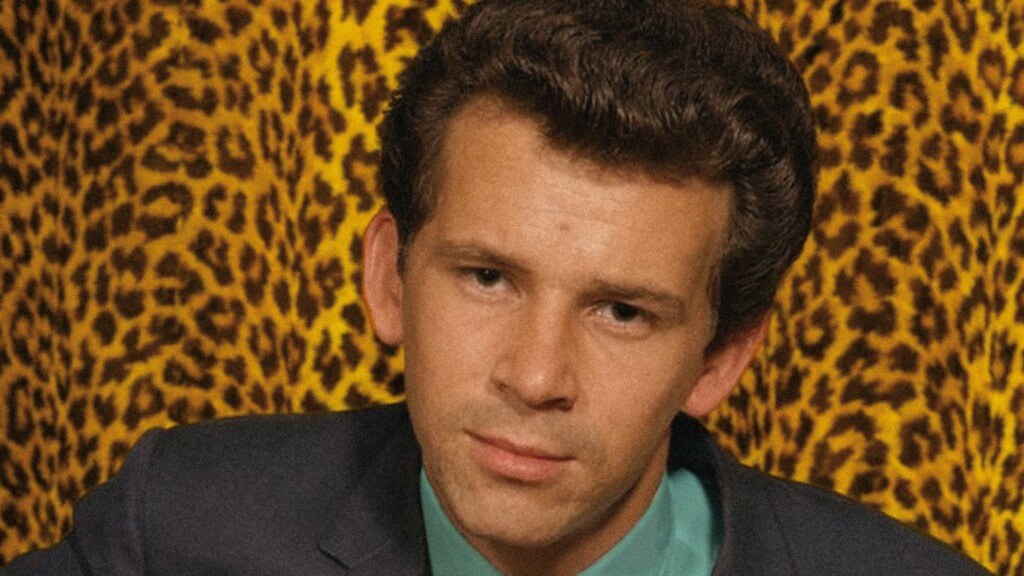
Gary Stewart is having a second life. Thanks to Jimmy McDonough’s definitive biography, I Am From the Honky-Tonks, the Kentucky-born and Florida-bred country singer’s career is enjoying a renaissance more than two decades after his death. Stewart’s third album, 1976’s Steppin’ Out, was finally added to streaming for the first time this April. The band Wednesday recently covered “She’s Actin’ Single (I’m Drinkin’ Double),” and young country artists like Ella Langley and Zach Top are finally championing Stewart onstage—as Top recently told the great Bob Mehr, “Every syllable he sings, he makes you feel it.” Swaggering and soaked in booze, Stewart’s songs should have made him one of country music’s biggest stars, not a recluse snorting speed off album jackets in a blacked-out double-wide on the Treasure Coast.
Fifty years ago, he was arguably the most exciting country singer alive not named Waylon or Willie. His 1975 album Out of Hand is among the genre’s best from that decade, next to Dreaming My Dreams, Phases and Stages, and ¡Viva Terlingua!, and saw its lead single, “She’s Actin’ Single (I’m Drinkin’ Double),” top the U.S. country chart in the same year as crossover gems like John Denver’s “Thank God I’m a Country Boy” and Glen Campbell’s “Rhinestone Cowboy.” Stewart sang about drugs and drink and “dime-store violence” before they destroyed him, using outlaw country archetypes as cultural cudgels, making most barroom bands look like mall acts. But by the time he killed himself in 2003, just a few weeks after his wife Mary Lou Taylor’s sudden death, Stewart wasn’t unknown but largely forgotten.
Stewart’s early life was less mythic than his music: he was the oldest of twelve children and the son of a miner-turned-cockfighter and Avon-lady-turned-coke dealer. He grew up between Kentucky and Florida before leaving school at sixteen and getting married to Mary Lou at seventeen. While working at an airplane factory, Stewart played Okeechobee honky-tonks at night and found his way to Nashville at the encouragement of Mel Tillis. Upon arriving at Music Row in 1965, Stewart taped songs for the Cory label and co-wrote with a local cop named Bill Eldridge. He’d end up in Charley Pride’s Pridesmen band while writing for Cal Smith and Nat Stuckey on the side. Between 1967 and 1972, Stewart made numerous demos for Cedarwood Records but never released anything until 1973, when his cover of the Allman Brothers Band’s “Ramblin’ Man” went to No. 63 on the U.S. country chart.
But those Cedarwood songs are now available, thanks to Delmore Recording Society’s One Track Mind compilation, a release that places Stewart’s earliest works alongside reissue projects from Fred Neil and Karen Dalton. The album is old, borrowed, and blue—excerpts from family friend Tommy Schwartz’s enormous archive of Stewart’s life. There couldn’t be a better summation than this: a portrait of who Stewart was before he became the author of “three-minute soap operas” like “Flat Natural Born Good-Timin’ Man” and “Empty Glass” and had fans in The Clash and Bob Dylan. Several of these recordings, including “Iron Bar Motel” and “Woman Will Tear the Heart Right Out of a Man,” may have convinced Roy Dea to sign Stewart to RCA. The remaining tracks stand out as prized, early-career rarities.
McDonough, talking to the Times, described Stewart’s opinion on recording better than anyone: “It didn’t matter if he was cutting in a big professional studio or sitting in his trailer singing into my tape recorder. His thing was, ‘You’re gonna remember this song for the rest of your life.’” Though One Track Mind is made up of demos and homemade tapes, most if not all of them sound only a mix away from being hits. And considering how central DIY recordings have become in the 2020s, songs like “Big Bad Train” and “Woman Will Tear the Heart Right Out of a Man” have one foot perfectly in the past and another perfectly in the present. The arrangement of “Kings and Queens” has such a strong pop undercurrent that I half-expected The Jordanaires to start harmonizing behind Stewart, just as they later did on Out of Hand. But let’s not overlook the unnamed players who are backing him up here, anonymous session musicians who would have fit comfortably alongside Stewart’s later collaborators, like Pete Drake and Jerry Carrigan.
But despite Stewart surrounding himself with the reliable, vibrating sounds of Nashville, One Track Mind isn’t your mother’s Grand Ole Opry. “Iron Bar Motel” and its story of a car-jacking woman with a .38 handgun marks his transition from countrypolitan standards to the shit-kicker cut-ups he’d later hone on Out of Hand and Your Place or Mine. After “changing partners at the Saturday ball,” a man cuts out Stewart’s heart and steals his girl in “If You Come Back Darling”—but Stewart still begs her to come back, promising a big celebration upon her return. The dessert in “Her Apple Pie” is more than just a treat on the windowsill, and “Living the Life of a Dog” puts Stewart’s wit in boldface when he sings from the perspective of a canine who “get(s) down on all fours when I walk” and runs around with “the coldest noses in town.”
Some of the songs he gave to his Nashville contemporaries—“There’s a Whole Lot About a Woman (A Man Don’t Know)” to Jack Green; “One Track Mind” to Del Reeves—are present, but they remain hitched to Stewart’s register and better for it. On standouts like “Don’t Put A Poor Hand On Me” and “If You Come Back Darling,” he sings with an emotional sleight of hand, convincing you that even heartbreak is a good day. Piano is a protagonist in these songs, and passages of pedal steel lend high and low harmonies to the quiver of Stewart’s high-lonesome tenor. The acetate recording of “The Snuff Queen,” the album’s lowest fidelity recording aside from his trailer demo of “Beautiful River,” suggests that even his most rough-hewn ideas were indicative of a talent Music Row could never fully sustain.
One Track Mind is not just an essential addition to Stewart’s ongoing cultural resurgence, but an excellent sample of his adaptability. The included version of Out of Hand’s “Williamson County” has a psychedelic bent not too distant from what The Byrds were doing around the same time, and I hear echoes of Jerry Reed and David Allan Coe in the fingerstyle blues and chugging snares of “You Can’t Housebreak A Tomcat” or the nightswept organ in “Morbid the Great.” Stewart bucked outlaw fame more than he chased it. He likely never cared about making perfect country-and-Western songs, but One Track Mind reveals how they were spilling out of him anyway.
Above all, this compilation is the voice of a young Florida transplant scratching out a living on Nashville’s songwriting circuit—a place where someone like Stewart could thrive but never love. It’s a genuine country-music artifact that, as McDonough would put it, is “another rabbit coming out of the hat.” Here Stewart doesn’t seem so at odds with the world, nor does he come off as the embittered, anti-industry figure of his later years. Instead, he sings about the sinners and the sweethearts like he’s got timelessness on speed dial, churning out tunes for the barstool warmers and two-steppers alike. As Roy Dea once said, “You get hooked on Stewart. He’s like a damn drug.” [Delmore Recording Society]
Matt Mitchell is Paste‘s Editor-in-Chief. They live in Los Angeles.
 Keep scrolling for more great stories.