
A long talk with Gia Margaret
The Chicago singer, songwriter, and pianist sits down with Paste to discuss rediscovering her voice, the online success of “Hinoki Wood,” working with Dave Bazan and Kurt Vile, the art of sampling, and her phenomenal new album, Singing.
Photos by Rachel Winslow
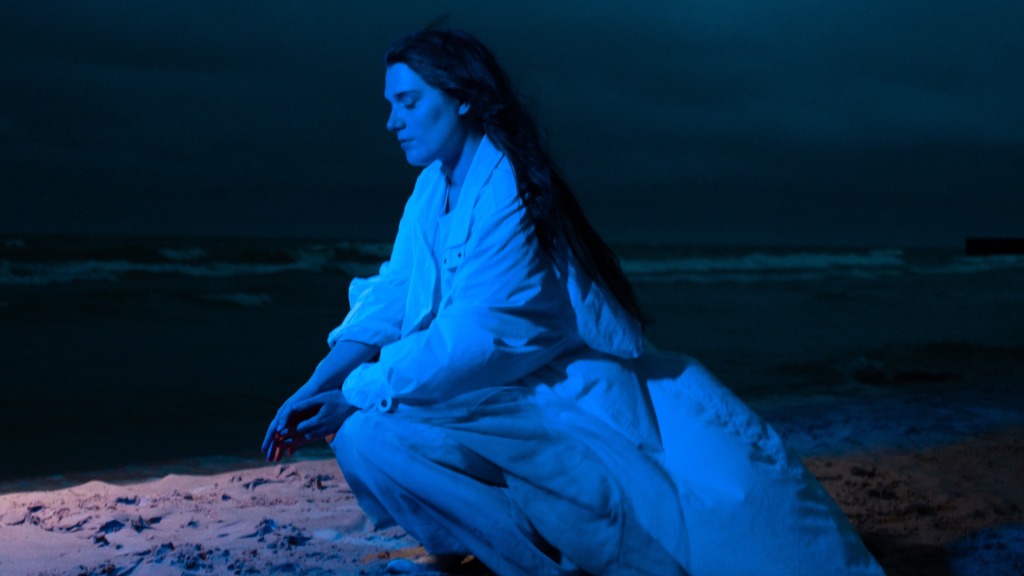
Gia Margaret’s music parallels the sounds in my head. Even in their gentlest strums, her songs feel like graphic miniatures—especially on Singing, her fourth and best album yet. But as the threads of nostalgia unravel across “Everyone Around Me Dancing,” “Alive Inside,” and “Cellular Reverse,” I’m reminded of the impossibility of Margaret’s voice. “There was a time when I really didn’t know if I would sing again,” she prefaced in press materials. After releasing her debut, There’s Always Glimmer, in 2018, the Chicagoan suffered a vocal injury. Unable to sing, she made an ambient record, Mia Gargaret, at the beginning of COVID.
Three years later, Romantic Piano, which I raved about on this very website, took its predecessor’s ambient transmissions and recast Margaret as this decade’s Jon Brion. When I return to those songs, I find her hunched over her piano, wrapped in a 27-minute tapestry of choral voices, airy synths, rickety loops, buggy lullabies, and backyard whispers. Cicada ribs click alongside dial-tone notes in “Hinoki Wood.” Someone walks through a pile of leaves during “Ways of Seeing.” Digital scraps of children playing and baseball cards clipped to bicycle spokes harmonize with a drum machine at the soul of “2017.”
Singing, out tomorrow (April 24) on Jagjaguwar, is Margaret’s first vocal album in almost eight years, and it’s phenomenal—a word I’ve begun using only when I really mean it. This music is not simply a requiem, but a meditation on communication. The songs, written between 2020 and 2025, are rich with detail and powered by reconnection: between Margaret and her voice, Margaret and her teenage self, and Margaret and her collaborators. Frou Frou’s Guy Sigsworth, Stars’ Amy Millan, the Weepies’ Deb Talan, Pedro the Lion’s Dave Bazan, and Philly’s czar of cool Kurt Vile all make appearances in the 12-part tracklist.
But Margaret never fades into the background. She makes callbacks to her previous albums with synth harmonies and ambient interludes but finds respite in the newness of muscular guitar solos, vocal processing, Gregorian chants, turntable scratches, IDM fills, and summery pop origami. Margaret’s singing is as soft and pronounced here as it was on There’s Always Glimmer, and the record ends with her embracing it: “Will you sing me anything? Anything you want!” “Once I healed, there was a lot of internal pressure to come back strong. I didn’t know who I was anymore,” she said. “So [Singing] felt like beginning again, and reconnecting with these very old, old parts of myself.”
Last month, I met with Margaret over Zoom for a long talk about rediscovering her voice, the online success of “Hinoki Wood,” working with Vile and Bazan, the art of sampling during her 10-year career, and Singing. This interview has edited for clarity.
******
Paste Magazine: The prevailing story here seems to be that this is your first “singing” album since 2019, but that’s not totally true, because you did sing on “City Song” three years ago. Did that song open a door for you? How much singing were you doing in 2022-23?
Gia Margaret: Not so much, just here and there. Even when I tracked “City Song,” I was still getting the cobwebs out of my throat, just from being inactive. And then I had all this residual worry that I was gonna hurt my voice again. “City Song” was me tiptoeing into it. By 2023, I was trying to do it more, and I was starting to focus on this record that’s coming out. I was starting to put my head in that place, but things took me way longer than I expected.
What’s the story with your injury?
Mine was frustrating, because it had to do with nerve damage. It was something that doctors couldn’t operate on. You have to wait it out. And I feel like there really isn’t a lot of knowledge around it. Luckily, I found a really great doctor at Northwestern, and he was the one who pointed it out, but I had gone to six or seven specialists who did scans and told me nothing was wrong. But I was in so much pain. It was really frustrating, because it’s something that is harder to find. There’s no quick fix. I was hoping I could just have surgery and move forward, but it was more complicated. It required more patience. That was the hardest part for me, because I just wanted to feel better and be better and continue doing my work. The instrumental stuff filled my time and put way less pressure on my voice, because I wasn’t using it. It forced me to be good to my body. Be good to your body and things will clear up.
Did your doctor think that re-injury was a serious concern?
He was very positive about all the knowledge I was gaining. He said, “It won’t happen again, because you’ll know not to push yourself.” If I couldn’t reach a note, I would push myself to hit the note, especially on tour. That’s where all of this stemmed from, just night after night of overusing [my voice]. Now I know, like, okay, maybe I sing a different note if I’m not feeling it. You work with what you’ve got. I don’t think I would let it get that far again. I wouldn’t be as hard on myself about it. I’m always trying to prevent that kind of thing, because it is such a setback.
How did using a vocoder help recalibrate your singing?
I think the vocoder got me out of my head. It forced me to follow the vibrations of my voice without being hyper-critical of what it was sounding like. Because I hadn’t been singing, I put a lot of pressure on myself to come back strong and sound better than ever. And that’s just not how it works. If you’re not consistently training for a marathon, you’re not going to just go run a marathon. It’s a muscle, you have to work it. But the vocoder got me thinking about melody more. I was less focused on how perfect my pitch was. It helped relax me. And I genuinely like the way vocoders sound. They’re really emotive. I don’t think they get enough credit. The way I use the vocoder isn’t even masking what my voice sounds like. I did it in a way where I honored the freedom the vocoder gave me while blending in my natural voice.
My absolute favorite song of yours is “body.” When I first heard it, I didn’t know about your vocal injury. But with context, that song totally changed. The “your body isn’t a burden” line sampled from an Alan Watts lecture really registers with me. How long would you say it took for you to come to terms with the musician you had to become on Mia Gargaret and Romantic Piano? Do you think those early songs, like “body,” register differently to you now?
Listening to them knowing what I was going through… I’m on the other side of it, and I can look back and see that that person was really just coping. I was trying so hard to make sense of what was happening. But “body” still resonates, because we can all relate to that feeling of having no control over what our body does. And, as we age, we start to notice it more. Gosh, we have to go to the dentist, we have to go to the doctor, we have to keep up with all of these things, and sometimes we do have to adapt to change. But we’re still alive. I empathize with what I was going through, but I feel like the message of that song—and Alan Watts’ lecture—still resonates with me as a person who’s aging. And the voice is constantly changing, too. I wanted to honor that instead of resenting it, or trying to change it.
The last time you recorded an album of songs with vocals, you had recently turned 30. It’s been almost a decade since. How do you navigate the artistic side of getting older? You’re an almost totally different person than you were then in 2018. Did you find yourself wanting to fill in the gaps that, maybe, the instrumental music couldn’t, because some stories couldn’t be conveyed without singing?
Every project has its own life, and I follow my intuition. I don’t feel like I had the urge to say all this stuff I couldn’t say before. I just felt like I was finally ready to say it. It felt like, “Okay, this is what I’m working with right now. These are the feelings that are coming up. I’m gonna follow that.” Even with my first record, I felt that way. I’m always in discovery mode with art and with music, and I hope that doesn’t change as I age. I do think I’m a completely different person than I was when I was 30, but this album honors all those older parts of myself. Coming back to singing felt like coming back to my teenage self, which is why there’s so much nostalgia banked into the record. I started singing for such pure reasons. Sometimes I don’t even know why I did it, because I was such a shy person. When I first started singing, I would wait until my whole family was out of the house, and then I’d go into the basement and lock myself up in a bathroom. I couldn’t believe that I could sing.
I’m interested in the compositional aspect to it, because the instrumental records are so rich and so dense. They sing in their own way. Romantic Piano is such a mountain for me. I love going up to that record, because I think it says a lot about you as an arranger. What’s the most important thing that carried over from Romantic Piano to Singing?
Making Romantic Piano was the hardest thing I’ve ever done as a musician. I always wanted to do it, but I didn’t realize how much of a challenge it would be. I really didn’t want the songs to feel like I sat at a piano and recorded random things, that I was mushing my hands down on the piano. I didn’t want it to feel too ambient and loose. I wanted them to feel like songs. My songwriting background totally informed the way that I approached Romantic Piano. Then, making that record and getting myself through that process and making things sound catchy enough… I wanted people to walk away remembering what the melodies were. Or, I wanted them to walk away remembering the song and not that it was just pretty piano music.
That gave me confidence to go off the deep end with Singing. If there was a small idea that I wanted to explore, I felt more liberated to do it, because I had done it before. In the past, I’ve doubted myself. Instrumental music affirmed that I am a composer, even just within myself. I don’t think I’m the best composer in the world, but it was a real moment where I was like, “Okay, I could continue fully making records even if, for some reason, I don’t have support from a label or I can’t hire other people.” I discovered that I could take on a lot on my own.
I don’t really do the whole “Oh, I liked this song before it was big,” but I was up on “Hinoki Wood” before TikTok got ahold of it. I love that song. It’s one of the prettiest piano compositions I’ve ever heard. It’s also an album opener, which is a statement on its own. Why do you think it landed with so many people? Where did it land for you when you made it?
I felt really surprised by that one. I wrote and was like, “This feels different than anything I’ve ever made, and I can’t figure out why.” I think that song made me feel everything. It feels like being alive. There’s something about it that feels hopeful, but also like a memory that’s kind of heartbreaking. I remember writing it and then, listening back, I could see my entire life up until that point in that song. I think there’s something about it that people can relate to, even though I wasn’t singing any specific lyrics. I had a strong feeling about it.
It’s 90 seconds long and yet there’s this deluge of feelings immediately. I think a lot of people dream of writing a song like that.
Oh, man, that’s so nice. It definitely made me feel a certain way, and that’s what informs what goes on albums and what doesn’t. It’s what makes me feel the most. I write a lot of music that just doesn’t see the light of day. “Hinoki Wood” kept coming up, and that melody was in my skull for the longest time. I was like, “Okay, this means something, even thoug it’s short.” I had a sample that wasn’t approved to be cleared for it and I was like, “Maybe I should just shelve it.” But there was something about it… I felt like it deserved to be out.
How long did it take you to record?
Two hours. It happened pretty fast. There are some songs that take me two years to finish. Sometimes it’ll be all in one sitting. I wrote “Birthday” in 25 minutes. I worked on “Cellular Reverse” for six months, just whittling at it and refining the lyrics.
There are a couple of people on this record that I wanted to highlight. Dave Bazan is here, on “Cellular Reverse.” He was on Romantic Piano, too. How did that connection come about? How big of a Pedro the Lion fan are you?
I would say that I’m probably the biggest Pedro the Lion fan. That was my favorite band when I was 16-20. If anybody wanted to talk about that band, they would talk to me.
You can say 16-38, it’s fine.
[Laughs] I’m still a fan! But there was a time when I was only listening to three bands, and Pedro the Lion was one of them. There’s something in Dave’s voice that touches my heart. It’s so cheesy to say, but sometimes you just hear those voices. The first time I heard Sade, something in my brain chemistry changed. I was six years old, I could not get enough of her. I made my mom get every cassette, every CD she could find. I felt that way with Dave. I heard his voice and I was hooked on his sense of melody. I just lived and breathed that music when I was a teenager, and then I continued to love it as I got older.
Dave reached out to me over the pandemic and I was so confused. I think I’m deeply influenced by Sade. I think I’m deeply influenced by Dave. Maybe he heard something in my music that felt familiar to him, like there’s something about my music that drew him to me. I didn’t actively seek out that friendship. It happened organically. But I like to believe that it all stemmed from me being inspired by him, and that, somehow, informing what I do.
We became fast friends, and it’s a really healthy collaborative relationship. He trusts my choices and vice versa. He initially recorded most of the instruments in “Cellular Reverse,” and it ended up sounding a little more like a traditional rock song. He doesn’t have an ego. I ended up making a bunch of changes and he was so supportive. I kept a lot of the things that he did, but there’s a lot of trust and mutual admiration for each other’s work. Having his voice on my song is surreal to me, even though we’re friends. I’m still just a [Pedro the Lion] head.
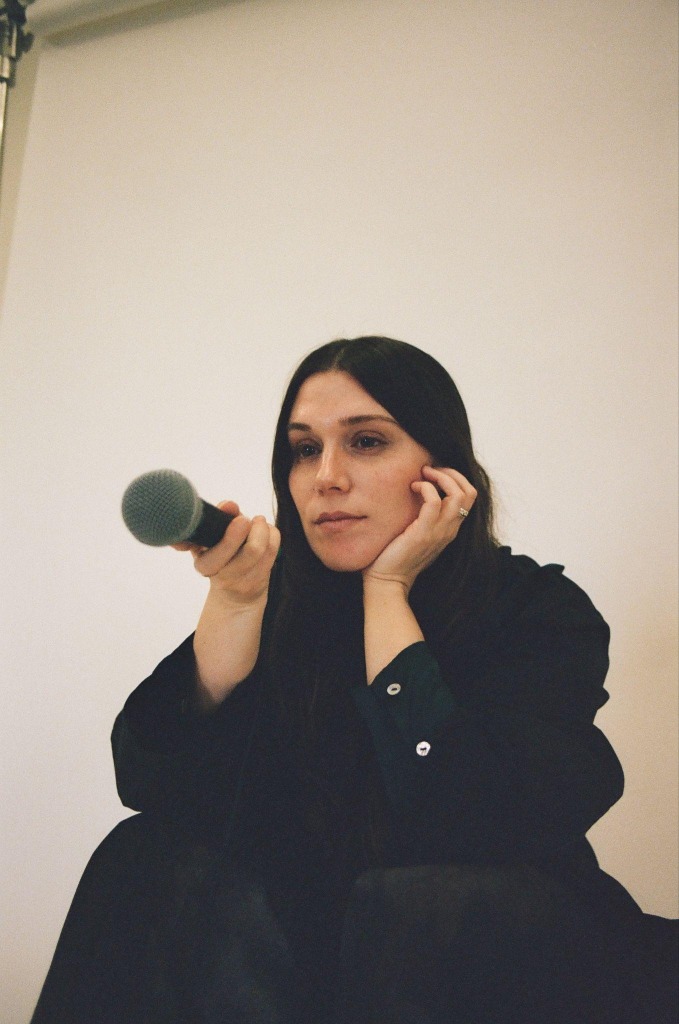
I want to talk about the solo from Kurt Vile on “E-Motion.” We’re going through a guitar solo epidemic. We need more of them in indie music. When did Kurt come into the picture?
I met Kurt through [filmmaker] Lance Bangs. Lance was supposed to make a bunch of videos for Romantic Piano but, for one reason or another, it didn’t happen. But through that, I met Kurt, because Kurt was supposed to be in the video for “Guitar Piece.” The whole video was going to just be him playing guitar to the song I recorded. We became friends, he sent me some pretty nice emails about my music. We’ve never met in real life, but I wrote “E-Motion” and it was like nothing I’ve ever written. I recorded it with my friend Blake [Rhein], and when we made this pretty explosive drum part. In my head, I was seeing someone just shredding the sickest, fattest solo. Like, what a way to end a record!
So I was sitting in my bedroom, thinking, “Who could this be?” And then Kurt popped up. I said, “Oh, Kurt. That would be so sick. It would be like the King of Cool soloing on your record.” I had a feeling he would just say no, but he said yes and made it happen. I love that part so much. He recorded it while he was on tour. When I asked him to do it, he even said, “Yeah, I could do it at soundcheck tomorrow.” He sent me a bunch of passes of him shredding, and I liked how free it felt. “E-Motion” wasn’t something I worked on for months or years. It was something I wrote and, then, in the next couple days, I was in the studio with Blake and my friend Deb Talan drove out to Chicago to record her part. And then Kurt was tracking his solo the day after. I felt really supported by my heroes.
I think “E-Motion” is the most important song that you’ve made. If there’s a button on this part of your life, it’s that. What was it about that song that felt like a finale for Singing?
I wrote it at the end of mixing the record. I thought I was done, and then I wrote this song, and I was like, “Okay, I guess this is how I go out. This is the thing that’s leading me into what’s next.” I don’t know if it will inform what the next record sounds like, but it definitely felt like a segue moment. I felt like it belonged there.
I love that Deb is on this album, and then Guy Sigsworth and Amy Milan. Obviously Singing is about you and your voice, but I love that it’s not the only voice we get to experience. How critical was that for you, to engage not just with yourself and your singing, but with that of others?
It felt really important to my healing. Even when I couldn’t sing, I found such comfort listening to some of these voices. It made the desire to sing stay alive within myself. And I feel so lucky that I get to do that with people I’ve admired for so long. Even at this tage in my career, I’m still like, “Wow, Amy Milan… I used to skip school and listen to Stars.” At 16, I would have never thought that I’d ask her to sing on my song. But she accepted and enthusiastically did it.
There’s a tribute to Ichiko Aoba on Singing. You toured with her previously. I imagine being on that tour and working alongside her left an impact on you. Can you talk about that connection and what felt so right about naming “Ambient for Ichiko” after her?
I wrote the song as an interlude during my set. I wouldn’t have written it had I not been asked to go on her tour. The reason I dedicated it to her is because that whole experience was so helpful in propelling me forward again. Those were my first shows in five years, and I had some rough nights. The second show we played, I was backstage crying. I wasn’t fully confident yet, and I felt so welcomed by Ichiko and by her audiences. She was such a lovely person.
There was a huge language barrier, but I feel like she communicated that she was appreciative that I was there. I’ll never forget that. She inspired me so much, just as a performer. She’s flawless in a way that is also… I feel like musicians are like athletes. There’s an athleticism that you witness with musicians. But with her, it’s just natural talent. I know she probably works really hard and practices, but there was a lightness that went along with the flawlessness of her performance that inspired me. It made me realize that there is room for both. You can be really rehearsed and good at your skill, but you can also be gracious and funny. You can be who you are on stage. What I witnessed with her offstage was what I saw of her onstage. There is a warmth to “Ambient for Ichiko” that reminded me of her, so I decided that it was for her.
Sampling is such a huge part of your work. Obviously “body” stands out. There are found sounds all over Romantic Piano. And then, on Singing, there’s the “How to Speak Italian” CD tutorial in “Rotten Outro.” These voices that are like ghosts around your own. What do you think your relationship to sampling has become since There’s Always Glimmer?
I’ve always loved sampling. Even on the first record, I sampled my mom’s voicemails. I think that found sounds do something to your brain. They sound like memories. I think the way you described them, as feeling like ghosts, is a pretty appropriate way to describe audio recording in general. It’s instant memory. I carry around a little micro cassette recorder with me, and I’m probably very annoying to my friends, because if they say something poignant, I’ll just record them and ask them to repeat it. Sometimes I’ll play it back for them and they’ll think it sounds really cool. But sampling has always been part of what I do. It takes me back to the day that I made the music, and it feels pretty personal. It’s a glimpse into some aspect of my life. That’s for the audience, but it’s mostly for me. I’m making a record of bits of my life.
You’ve spoken in the past about tweaking songs until you get the right feeling, and that’s how you know they’re done. Has that approach changed at all, or do you still run just as fine a comb through your work now that you did on There’s Always Glimmer?
I probably do it even more. I think I may be difficult to work with for that reason, because I definitely hyper-fixate on little details. But I think the music wouldn’t be what it is if I didn’t do that. And I genuinely like to do that. I love recording. For Singing, and for every record, I’m there for every step of it. I don’t just pass something along to someone and tell them to mix it. I’m active in the mixing process, and that makes me listen very closely. It’s my job to do that, and I enjoy it. Sometimes the smallest change can make a world of difference in a mix.
Does fixating on details allow you to be a better musician or maker?
I don’t know if I’m a better musician or a better maker, but it definitely makes me happier with the end product. I don’t want to put anything out that I’m not 100% sure about. I’ve waited years until something was ready. I think that that’s worth it, but I don’t know if it’s making me better. I probably could stand to take some guitar lessons.
When you mentioned the athlete thing earlier, my ears perked up a bit. I do think there’s a certain physicality to singing. I love instrumental music, but you go into another gear with your voice. So, it’s great hearing you sing again. Where do you think it’s meant to take you next?
I think the songs are pushing me to explore different parts of my voice—not just the physical aspect, but lyrically. I want to dig deeper as a lyricist. They’ve always felt secondary to the music. Even when I wrote my first record, it was more about the production of everything than the actual words. Maybe I’ll simplify, have more folk songs—just me and a guitar. Don’t quote me on it, because I never know until I get there, but that’s where I could see myself going next.
Do you think the cobwebs are all gone yet?
No, I think there’s still a few cobwebs in there, for sure. Keeps you honest.
Matt Mitchell is the editor of Paste. They live in Los Angeles.
 Keep scrolling for more great stories.