
COVER STORY | Iceage: On the verge of falling apart, together
Elias Rønnenfelt talks to Paste about moving to stay alive, invoking the “voluptuous” language of Shakespeare, returning to Silent Studio after twelve years, and the Danish quintet’s sixth studio album, For Love of Grace & The Hereafter.
Photos by Alva de Febvre
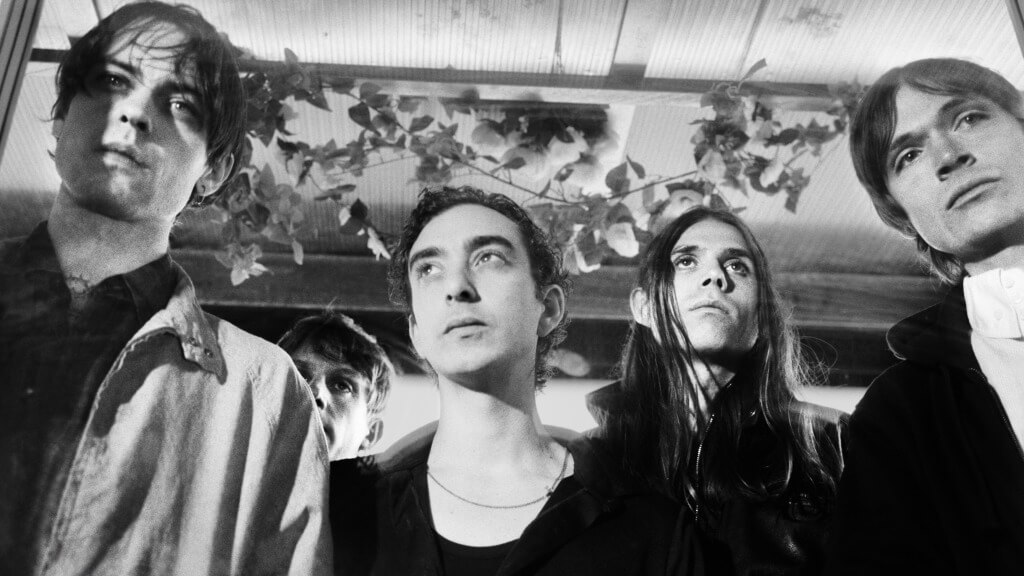
“I think we’re a fucking ideal band,” Elias Rønnenfelt tells me over Zoom on his day off. “It’s a real band.” Iceage has built a reputation of consistency: six studio albums and nearly twenty years together after forming in Copenhagen as teenagers. Their history includes repeated critical acclaim, among them five consecutive “Best New Music” designations from Pitchfork. Since Rønnenfelt, Dan Kjær Nielsen, Johan Surrballe Wieth, Jakob Tvilling Pless, and Casper Morilla joined forces in 2008, what’s survived, as Rønnenfelt puts it, is “the friendship, first and foremost.” Yes, Iceage is a family, but it’s also where instability transforms into longevity. He agrees, “That’s quite a precious thing.” And, as Pless and Wieth forecasted in a Vice interview thirteen years ago, Iceage is about “friendship and enjoying it… for a very long time.”
For Love of Grace & The Hereafter sounds beautiful in the mouth and coming out of the speaker. It’s a mash of love and violence, religious symbols, detuned riffs, a pastoral punk onslaught, and odd pronunciations of “Louisiana” by Rønnenfelt. Compared to 2011’s New Brigade, a volatile tour de force with more blood than overdubs, or the bold, radical romance of 2014’s Plowing Into the Field of Love, Iceage’s sixth studio album is wide-eyed and assured. “No Fear” is a melodic wellspring with Peter Hook basslines; the band’s sugary “ooh-ooh”s in “Ember” underscore just how accessible For Love of Grace & The Hereafter really is. Rønnenfelt says the music needed to be immediate, urgent, and fast, but that nothing’s ever felt too controlled for him and the band—especially on previous records, like Seek Shelter and Beyondless. “They were what they were supposed to be,” he says. “But [For Love of Grace] was an impulse and a desire to launch into that aspect of Iceage’s capabilities.” He concedes that this new record may have been a counterreaction to the groovy expansiveness of Seek Shelter, but seems more certain that it was a reaction to making his relatively minimalist, oft-sublime solo debut, Heavy Glory. “That was very stripped back and balladic, we just wanted to do something that was very to the bone.”
I ask Rønnenfelt what makes his bandmates such a reliable anchor after his solo pursuits, and he corrects me immediately. “You can call it a safety net,” he says, “but it’s a rumbling locomotive of a safety net. We have this ability that, even when we’re driving off the tracks in a very ramshackle way, the machine will always last.” Even when Iceage’s wheels seem like they’re about to fall off, they never do. I attribute it to the band’s entangled way of playing and Rønnenfelt concurs, calling it a “collective hive mind” that can guide any composition into a sound that is historically theirs. But For Love of Grace & The Hereafter doesn’t push Iceage out of its comfort zone so much as find new energy and uncharted territory. Great melody hasn’t dulled their violence; Rønnenfelt and his co-conspirators spend forty-one minutes plunging their fangs into cyanide. “It’s always been ingrained in us that you have to move to stay alive,” he says. “Remaining in something that’s too known doesn’t feel comfortable for us. We need movement. Stillness seems like a prescription for the end.”
Rønnenfelt picked up tricks from working with Peter Peter, Joanna Robertson, and Fauzia on Heavy Glory, but Dean Blunt, who he made Lucre with last year, was especially a lodestar. He says he didn’t have any “legacy” behind him when he was doing his solo records, which is a pretty disputable claim, considering the broad, fifteen-year appeal of Iceage. But I reckon he means it in the sense that writing songs like “No One Else” allowed him to think broader, experiment often, and create faster. His Townes Van Zandt and Spaceman 3 covers were as inviting as Seek Shelter’s Britpop sidequests and Americana tinkerings. Playing music that’s stripped back developed his sense of melody, and even his singing chops. “Anything you ever do adds to the collected mess that is you. Even if it’s songwriting or just sheer living, it all gets sucked in and becomes part of what you create from.”
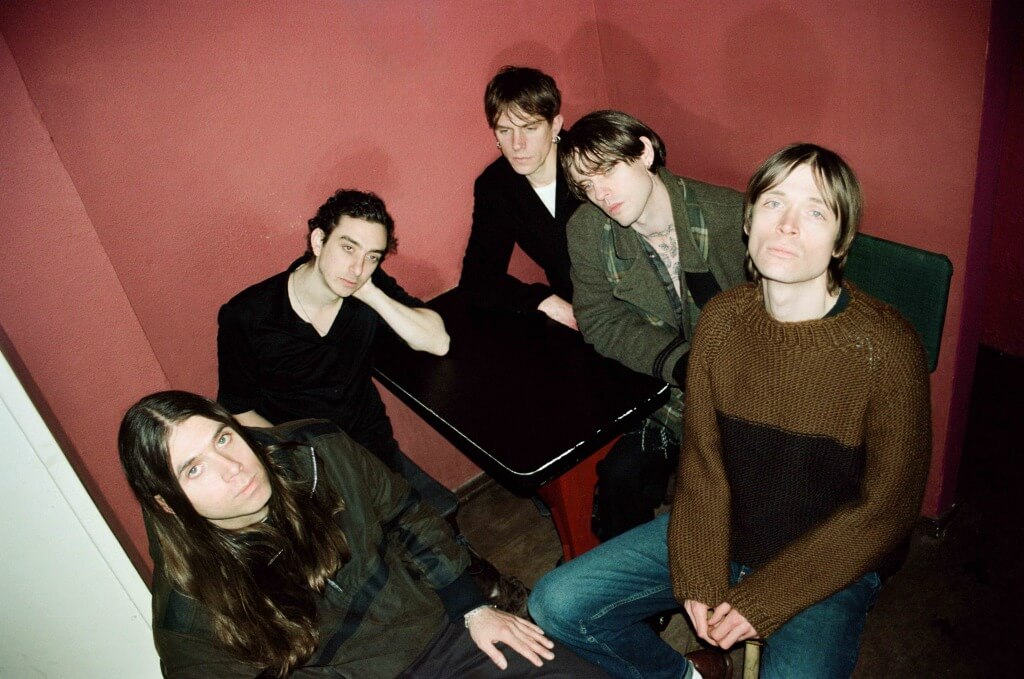
Iceage returned to Silent Studio for the first time since making Plowing Into the Field of Love. “That place is so special to us,” he beams. “It’s this old wooden house on top of a hill in the middle of the woods. Anas, the guy who built it in the seventies, is still there in his little workshop, fiddling around with pliers and whatnot.” Iceage hadn’t set foot in there for twelve years, and when they returned it was “totally intact to our memory,” Rønnenfelt recalls. “There’s something very comforting in places that just sit there. You can leave them for a decade and they’re right as you left them.” That familiarity set the tone. “Doing an Iceage album is quite sacred to us. It’s not something you just shoot off with the flick of a wrist.”
The band didn’t have time to confront or consider what it was in 2014 versus what it is now. They underbooked themselves. Seven days is all they had to track For Love of Grace & The Hereafter, leaving little space for “existential rumination.” But pulling up in the van and unloading their gear, a sense of joy washed over the band, even without an outside producer. “Everybody wanted to be there. Everybody was happy to be sleeping in close quarters. Everybody was smitten with each other’s company.”
Rønnenfelt defines Iceage’s relationship as “traveling down life together, always having each other’s backs.” The controversies the band has gone through—Nazi accusations, selling branded knives at shows, wearing Burzum merch—would sink most of its peers. But the quintet has remained tightly bound in spite of it, a testament to the currency of unity at a time of individuality. In today’s so-called band renaissance, Iceage’s persistence is enviable, though Rønnenfelt and his bandmates have never cared too much about the talk or tendencies of the current moment. “I’ve always thought of us as a bit of an outlier anyway,” he says. “Any type of hype people wanted to paint us with, we just let them talk. I’m trying to write songs and record records. I can’t speak for the times.”
But Iceage has met the times with a predictably great record. In fact, the Danes bum-rushed 2026 with one of their poppiest, tightest hits ever: “Star,” a high-drama pageant of erotic images, sex-and-death decay, blood-red bass tears, and postcard lyrics (“sunlike in the battered sky”). But “Star” is just the beginning. The love songs on For Love of Grace & The Hereafter are just as good as “The Lord’s Favorite” and “Morals,” though Rønnenfelt still doesn’t see them as anything more than “an attempt at expressing the state of things.” His vagueness here doesn’t nix him as one of contemporary rock’s headiest orators. “I love you in an ominous way” is alive in a way that’s totally psychotic.
Rønnenfelt named his second solo album Speak Daggers after a line in act 3, scene 2 of Hamlet. This record’s title, though more devotional, partially comes from the same play, just two scenes later. But “The Hereafter” is something he latched onto because of the motifs scattered across the songs, Rønnenfelt says. “There was a lot of imagery of the sky and clouds and stars, as well as thoughts of an afterlife. You can find yourself in periods and states with their own set of problems and think this is a lasting predicament. But, as you live on, you transcend it and find yourself on different footing.” Rønnenfelt pauses. “It’s good that there can be new lives ahead that you couldn’t have thought of.”
The reference to Hamlet’s “For the Love of Grace” is less philosophical. “I just like Shakespeare’s language,” Rønnenfelt cheekily admits. “It’s so voluptuous and, at times, unnecessarily cruel. It serves up these incredible turns of phrase, it’s like biting into a pop of language.” That idea doesn’t simply justify Rønnenfelt’s fifteen years of great vocabulary, which has become Iceage’s calling card (“adorned in carnal ecstasy, a hazy focus blurs and sharpens sight” remains king), but it lends great context to a line from For Love of Grace & The Hereafter that I haven’t been able to shake, when he sings “get ready for a lifetime of beatings.” I’m not much of a “tell me the meaning of this lyric” guy, but I felt compelled to ask about this one. “Most people who have gone through a bit of life will attest that things are not always going to be easy,” Rønnenfelt graciously explains. “Life has ways of being immeasurably unfair and hard.” “Lifetimes,” then, is a celebration of that—the willingness to face life with all its hardships and faults and continue with “a lifted chin,” despite whatever might come along. “Because things do come along,” Rønnenfelt grins. “That’s life.”
But I keep coming back to Rønnenfelt’s use of the word “ramshackle.” Around the time I began listening to Iceage, he said in an interview that the band sounds like it’s on the verge of falling to pieces. A decade later and that’s still an integral part of how Iceage operates. “And it’s not necessarily voluntary,” Rønnenfelt adds. “When we started out doing shows, we couldn’t really play. Things were very much falling apart. We weren’t playing the same parts of songs, or even the same songs, at the same time. The timbre was going in five different directions.” He carefully considers his next sentence. “Something that should really just fall on the floor and break into a hundred pieces… that was us.” But Iceage’s ability to take something completely dysfunctional and make it last became its thrusting, thrashing force. Things are more stable now, and there’s greater capability in their playing, but at the heart of the band’s sound is still a quivering uncertainty, as Rønnenfelt describes it. “That sounds negative, but it isn’t,” he clarifies. “Everything is always on the verge of falling apart. Nothing stands on its own. Everything takes work. We’re just a band that has this inner collapse, but we carry on.”
For Love of Grace & The Hereafter is out now on Mexican Summer.
Matt Mitchell is the editor of Paste. They live in Los Angeles.
 Keep scrolling for more great stories.