
Kelsey Lu’s haunting chamber-folk reaches for life’s mysteries
So Help Me God is alive and resplendent with cinematic compositions and eclectic collaborations, harnessing these lush soundscapes to explore healing, pain, and faith.

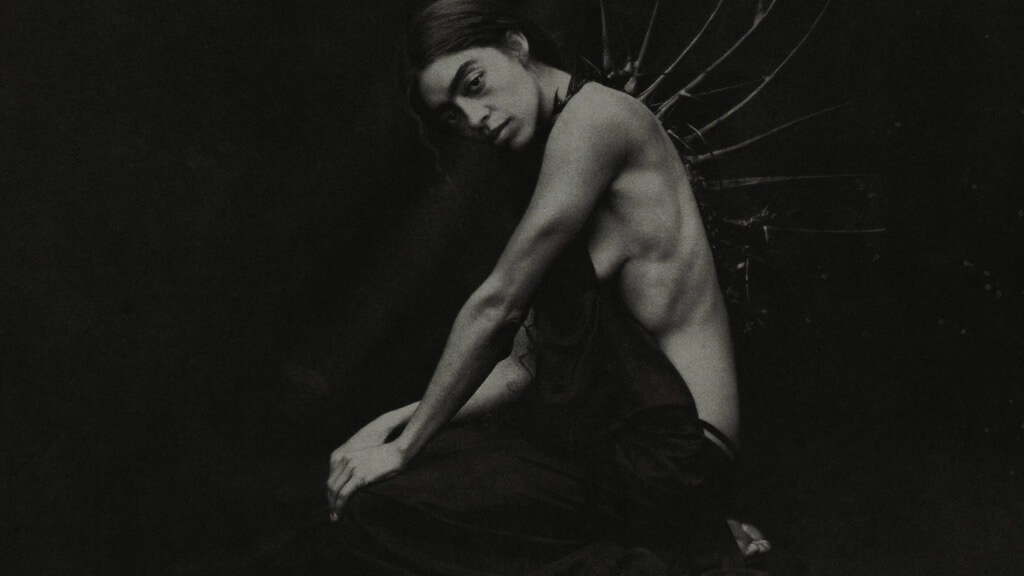
When Kelsey Lu began working on So Help Me God, their first album since 2019’s Blood, they found themselves inspired by the works of Italian artist Caravaggio: lush, dramatic paintings of rot and death, entombed in striking shafts of light and darkness. This harsh interplay—the purest of light, the deepest of shadows—felt like an appropriate starting point for Lu to explore the contradictions that most fascinated them: pain and healing; breaking points and transformations; throaty, guttural cries for help and secret reserves of strength within. The simultaneous hurt and beauty of faith, music, love, and life prove fertile terrain for the experimental cellist.
Raised in North Carolina with a strict Jehovah’s Witness upbringing, Lu fled their family at the age of eighteen. Music helped them escape: they began playing the cello as a young child, and when they eventually left their family, they enrolled at the University of North Carolina School of the Arts to study their instrument. Despite turning their back on a devoutly religious environment, they recorded their debut 2016 EP, aptly titled Church, in a Greenpoint church. Blood pushed Church’s experimental cello compositions towards avant-pop, drawing on glitzy disco melodies, languorous R&B sensibilities, and eclectic chamber-folk fashionings to create a distinctly hybrid sound. Yet, all the same, music also proved to be a source of ache and disappointment: Lu has described their relationship to music as “one of healing and pain”, and during the “seven years of grieving” leading up to So Help Me God, they frequently found themselves at the breaking point of their faith in music, songwriting, and self-love.
It’s these types of tensions that guide the sweeping, cinematic soundscapes of So Help Me God, where sounds and textures frequently collide against each other. On “Portrait of a Lady on Fire” (inspired by the namesake Céline Sciamma film), brooding cello, earthy as the plummeting faces of seaside cliffs, forms the foundation as Lu’s voice descends from above, filling the atmosphere as she intones and cries out for “burning desire”. Synth-pop track “Running to Pain”, meanwhile, continues Lu’s exploration of pain and healing, where she sings: “Runnin’ to pain is it the only way to tame / The demons inside that haunt my mind.” Tiny explosions of synths pop and fizz in the background as Lu’s warbling voice loops and careens through them, as if she were truly running through a fire and sidestepping all the sparks.
Still, for all the self-serious stylings of So Help Me God’s experimental chamber folk, there’s an undeniable element of play beneath these songs, reflected in Lu’s long list of collaborators: producers Jack Antonoff and Yves Rothman, former Sonic Youth bassist Kim Gordon, jazz saxophonist Kamasi Washington, and British singer-songwriter Sampha. Album highlight “Reaper” is a spellbinding, trippy, nearly nine-minute odyssey through life’s mysteries. Lu delivers prophecies like a wandering beatnik musician (“You’re only sinnin’ if Heaven has lost its way / You’re only winnin’ if Heaven is on its way”) yet refuses any easy answers; before long, she drifts off (“Lifted I feel nothin’ now / Take two pills to feel it out”) as a woozy bed of Washington’s sax and Gordon’s guitar lulls us into an uneasy, slippery dreamworld.
So Help Me God is eclectic to its core: there’s the way the album jumps around from genre to genre, from the drum‘n’bass breakbeats of “Only the Lonely” to the blazing, triumphant synth-pop ballad of “Cutting Off the Head of a Ghost”. Then there’s the chameleonic force of Lu’s voice, which can sound anywhere from soulful to spidery, husky to wheedling. On “What Can I Do,” gentle acoustic guitars patter in the background as Lu’s voice soars and warbles, tinged with a slight witchiness; you imagine them as a wizened recluse, rocking on their porch and guarding these secrets of the heart. “Comfort” revels in the lower end of Lu’s tone; when she huffs out “Can’t trust in a man / Who tries to act like my father,” their voice is so gravelly that you can instantly imagine their telling the story over black coffee, a cigarette dangling from the corner of their mouth. And on “Better Than That,” only Lu can make the Gen Z-addled line “Taking the L on this one” sound so doleful and expansive.
“American Sonnet,” though, marks the gem of So Help Me God’s ambitions. Drawn from American poet Wanda Coleman’s American Sonnets, the song depicts a surreal, oozing world where “black things writhe on the ground” and “red things gush from volcanic gaseous tremblings.” Mournful cello notes slash through the air, the classical equivalent of burning rubber. Distorted, muffled static gusts breeze by, as if we’re standing at the edge of the world and all signal has been lost, until the soundscape gives way to what sounds at first like an ominous heartbeat before becoming an undeniable four-on-the-floor club beat. Oh, how terrifying and turbulent and agonizing this world; oh, how it beats on, full of rapturous life and strange beauty. [Dirty Hit]
 Keep scrolling for more great stories.