
COVER STORY | Kevin Morby’s roadside poetry
The musician reflects on collecting highway scenes on tour, crowding songs with his friends and heroes, and finding the magic in a country talking to itself on his new album, Little Wide Open.
Photos by Chantal Anderson
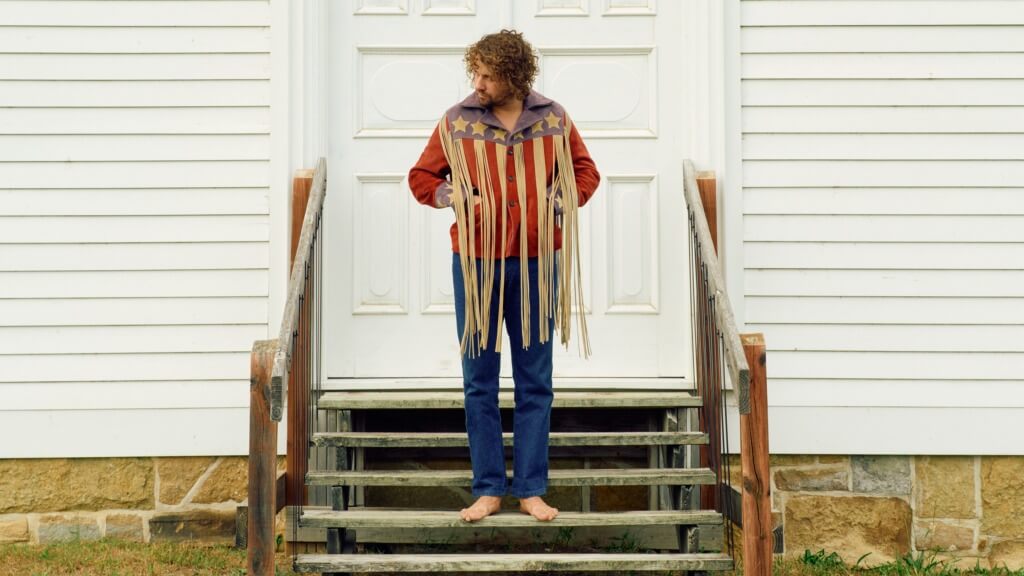
Kevin Morby has lived the Platonic ideal of an indie rockstar life, at least in the sense that he has spent much of it running from death. That is, as Morby put it in a 2020 essay, both the pitfall and the promise of a life on the road: “As long as I remain neither here nor there, but instead somewhere in between, I will remain untouchable, and thus I will remain invincible.” Signing your life over to the industry is a one-way ticket to “The Tunnel,” Morby’s metaphor for the musician’s life. “To win in this game is to simply survive,” he wrote six years ago. “Each day alive is its own success and as far as you’re aware, there are only two ways out and that is to either die, or retire which, by the law of The Tunnel, are one and the same.”
The Texas-born, Minnesota-raised singer-songwriter spent most of his childhood in between panic attacks brought on by an all-consuming fear of death. But then as a teenager—as cliché as it sounds—he found nature and community and music, and, for the first time, his desire to live started to outweigh his dread of dying. While he’d wanted to be a musician since he first heard Third Eye Blind at the ripe age of eight and started playing guitar at ten, he didn’t truly begin actively pursuing the craft until his mid-teens. By sixteen, he was opening for Kimya Dawson at a local bookstore. Soon he’d drop out of high school and drift around Kansas City before buying a one-way Amtrak ticket to New York, much to his parents’ horror. They bought him a can of mace as a going-away present.
It didn’t take long for Morby to fold himself into the New York scene, playing bass for indie act Woods and starting a rock band of his own, The Babies, with his roommate Cassie Ramone. He wrote the first song he felt proud of, a guitar-pop tune called “Meet Me In The City,” later released under The Babies’ name. Not long after, his best friend—Jamie Ewing, a lesser-known local musician who struggled with his friend’s success—passed away from an accidental overdose on the same day that Woods was set to leave for a West Coast tour. Morby made his choice: he missed the funeral, hopping on the plane to Seattle instead. The Tunnel, as always, called louder.
You can’t escape The Tunnel unless you retire or die, but Morby—now thirty-eight, a father-to-be, and one half of indie’s reigning power couple alongside Waxahatchee’s Katie Crutchfield—has perhaps found a third option: slow the race, and add more lanes. He’s still on that road, but it’s no longer just an arena for this impossible battle against time. It’s a home now. And time is a home, too. “If time is a violent driver, then we ride passenger,” as he sings on “All Sinners.” Once you stop desperately trying to outrun time itself, you’ll realize there’s enough room in The Tunnel to build a life and then some. It’s not a vast, endless expanse, sure, but it becomes, at least, a little wide open.
When I talk to Morby over Zoom, he’s in the studio at his and Crutchfield’s ranch, a piano at his back and brightly colored sound panels adorning the walls. The release of his eighth solo album, Little Wide Open, is a month away, so he’s taking a quick breather in the Midwest after the brutal one-two-punch of SXSW (where he hosts an annual baseball game) and a European press tour. There’s something masochistic about the lifestyle, Morby quips. But, at the end of the day, when you’re in the van and the sun dips below the horizon and paints the sky blood-orange, you’re still happy to be doing it. “I’m trying to regain the muscle,” he tells me. “When you go out on tour, you do it so much. You get into the rhythm of it, and then you start to feel there’s no other way of life.”
After COVID-19 forced him to take a sudden, protracted break from the road, Morby began to do some serious re-evaluating—but not enough to keep him from The Tunnel, of course. He released This Is A Photograph and, when everything opened back up, promptly went on tour for years on end. It felt different, though: “I just became acutely aware of how insane it is to travel all the time,” he recalls. “I remember I was on this tour bus that was leaking gas; you could smell the gas fumes as you tried to sleep. And it’s something I wouldn’t have noticed before, but I couldn’t stop thinking about it.” The lifestyle he’d spent half his life inside had gone uncanny, like a word repeated until it stops meaning anything.
That is, in part, where Little Wide Open comes from. A lot of the album’s nostalgia comes from Morby reflecting on his adult life and the fact that most of it has been spent on the road. There’s a vertigo to it: a man turning mid-sprint to find twenty years of asphalt unspooled behind him. For most of Morby’s career, the road has been the engine of his work, the thing that made it possible; on Little Wide Open, the road becomes his subject, too: “100,000 highways all tend to disappear / 100,000 miles an hour, stuck in 7th gear.” He watched the Mad Max films while writing it, finding inspiration not in Brian May’s score but in the films’ underlying fatalism, the way the highway becomes a kind of restless resting place. Some of the demos on Morby’s phone have the movies bleeding in from behind him, his voice ghosting over revving engines and distant screaming. In his words, “a lot of the grief, the mourning, in the record is all centered around the highway.”
Some of that mourning is for the people who rode beside him, and some of it is for the version of himself who didn’t know, or maybe care, how dangerous it was. “Die Young” is a litany of near-misses dressed up as a love song: a Ranger in a ditch at the Louisiana-Texas line, a windshield blown out driving out of Boone one summer afternoon, an Econoline too low on gas. Thank God that we didn’t die young, the refrain keeps insisting, each repetition arriving a little less like gratitude and a little more like a mantra: if we keep saying it, maybe we won’t die. The “young” in the song is curious; Morby is, all things considered, quite young himself. He laughs in acknowledgement, recalling a recent conversation about “Die Young” where someone asked him if he thinks of himself as old. It’s a harder question to answer than it might seem at first blush: “In a way, yes. But also I know that if I told a forty-five-year-old I was old, they’d be like, ‘Shut up.'” Age is strange for everyone, but touring makes it stranger: you do a young person’s job long enough to feel time accrue in the body, without ever hitting those benchmarks of “adulthood”—the nine-to-five, the settling down.
For such a cheerful, affable guy, Morby is an old hand at writing about death. 2014’s excellent “Parade,” featured in an equally excellent episode of Bojack Horseman, includes the chorus: “If I were to die today / Slaughtered in that masquerade / The last thing that you’d hear me say: / Put my body on display in the parade.” He called upon Jim Carroll’s “People Who Died” three years later in “1234,” while “Pearly Gates” imagined what he’d wear on the day of his death. By 2019, Morby decided he didn’t give a shit about dying young on “OMG Rock N Roll.” 2020’s Sundowner mourned the friends that passed, while 2022’s This is a Photograph, written in the wake of a near-death experience of a loved one, celebrated them. Little Wide Open completes the trilogy: grief, elation, then hard-won peace—a mature reappraisal of all of it. “I’ve been learning a lot about my twenties,” he tells me, “a lot about the sort of reckless behavior of me and my friends in that era.” As he wonders in “Field Guide for the Butterflies,” “Is it suicide if I die out chasing thrills? / Or is it just me trying to grow wings?” Thank god, then, that he flew—that he didn’t die young.

YOU CAN CHART MORBY’S WHOLE DISCOGRAPHY by its sense of place: the urban density of Harlem River and City Music, the perennial gravitational pull of the Midwest on Sundowner and This is A Photograph, but Little Wide Open is conspicuously rootless. Like Modest Mouse’s Lonesome Crowded West, the record conjures not towns but the distance between them: the open plain, the highway, the great flat middle that everyone else flies over. And the more time he spends with the finished thing, the more he hears a finality folded into it: these last few records were all written while he lived full-time in middle America, and Little Wide Open is, as the conclusion of this informal trilogy, the sound of him preparing to leave it. “There’s a little bit of a goodbye to the Midwest in its DNA,” Morby says. “With Sundowner, I was aware that I was making my re-entry into the Midwest. This is A Photograph, I was going even further into the soul of America—into Memphis. But here, it’s like, ‘Okay, I love the middle of the country, but I have to change it up. I have to, for lack of a better explanation, move back to a coast.’” He isn’t abandoning it; he and Crutchfield plan to keep the ranch, and they’ll go on splitting time between the two homes. “What I do for a living is so unique, you know? I don’t know anyone in Kansas City who does this,” he admits. “It’s nice to go to L.A., where people understand this lifestyle, but if I was stuck there year-round, I would probably go crazy and have to come back here.”
He made Little Wide Open the way he’s been learning to live: taking the loose, passing stuff from the road and building something that stays. “When I go out into the world, I feel like I just collect all these ideas and these little scenes,” he says. “And then I go home and work on them.” A week here, two there, then back out again, songs left behind like seedlings. “A little song garden,” he offers, trying the phrase on, deciding he likes it. The seeds come from everywhere, and Morby is a devout collector. He produces, on cue, a tiny red notebook—a repository for the stray phrases and overheard lines he hoards like a magpie. He reads a few aloud: two hummingbirds in the grapefruit tree, the highway is a waiting room, Hawaii’s just a shiny little island, three mariachi men walking down the street, a half-remembered Ferlinghetti quote about writing not about reality through rose-colored glasses but about roses through reality’s glasses. “Oh, this is a funny one,” he laughs, holding the page up to the screen. “It says ‘Traditional trap house,’ and then, for some reason, I wrote ‘doggy door in the trap house’ beneath it.” Half the time he can’t recall whether he wrote these lines or simply caught them in the wild, which is rather the point. “All art is found art,” I suggest, and he agrees without hesitation.
As Matisse said through Jordan Peterson’s retelling, there are cathedrals everywhere for those with the eyes to see. Morby finds them everywhere: in a DM inviting him to the launch of QuickTrip’s new fried menu (a one-hour event in Tulsa he was genuinely, agonizingly tempted to make a two-day pilgrimage for); in a janky Wizard of Oz museum two hours west, with its faintly sinister melted-looking dolls; in the 24-hour chapel in Lebanon, Kansas, that seats six and marks the geographic center of the lower forty-eight. This is the “roadside poetry,” as he puts it, that his music is built from—the strange, declarative signage of a country talking to itself. “They’re things that don’t mean much on their own, maybe,” he explains, “but if you experience the words out in the world, if you catch them at the right time, all of a sudden they feel illuminated. You see the magic in them.”
When he finally gathered the garden’s yield and brought it to The National’s Aaron Dessner (who offered to produce the record, much to Morby’s astonishment), Morby requested that the entire album sound like Tom Petty’s “Square One”—“whatever that means,” he laughs. Apart from referencing the sound of later-era Petty and Lucinda Williams’ World Without Tears, his primary studio instinct was the one he’s always had: to bury the songs under everything he could throw at them. “There was a big part of me that was like, ‘Then we’ll put a string section here, and then we’ll throw horns all over this,’” he says. Dessner heard a different record. “He was like, ‘Kevin, you’ve done that, and that stuff is great. But these songs really want to breathe in a certain way. Don’t be afraid of the songs.'” The comment named what Morby hadn’t admitted to himself: the maximalism was a shield. “I was a little self-conscious, because some of these songs are pretty vulnerable, and I kind of wanted to hide them,” he says. Strip away the wall of sound and there’s nowhere left to stand but in the little wide open.
Morby calls it his most personal, most exposing record, which is a striking confession from a writer two decades into their catalog. He’s spent much of his career singing in character—inventing personas, handing himself assignments, taking pride in the oblique angle of approach. Little Wide Open drops the costume, at least mostly. “The older I’ve gotten, I’ve wanted to just sing more straight on, from my own perspective,” he notes, “and I found that I was scared of it.” Part of that fear is structural, and particular to his life: as one half of indie’s reigning duo, he no longer has the luxury of the private love song. “If we write a love song, people know exactly what it’s about,” he says of himself and Crutchfield. “In the past, if I wrote a love song about someone who wasn’t really in the public eye, it could remain private. But with Katie, people are like, ‘Oh, wow, what’s going on in their relationship?'” The vulnerability is doubled: not just emotional exposure, but the forensic kind, where listeners comb the lyrics for biographical breadcrumbs. The marvel of the title track is that it makes a virtue of exactly that dread—humiliate me, fuck me up bad, he sings, daring the exposure, asking to be turned inside out and hung on display even as he admits, a breath later, that he’d rather drift off somewhere nobody knows him.
By now, Morby has learned to read his own fear as a kind of divining rod. “The best things you write will be from an open wound,” he says. The lyric in “Javelin” most cited in critics’ blurbs, my own included—“Am I a has-been? Am I a husband?—was one he initially tried to cut. “I was like, ‘Oh my God, I can’t sing this line. It makes me want to vomit,'” he says, laughing. It’s now the line strangers stop him to praise. He traces the lesson back more than a decade, to a phrase he deemed nonsensical from The Babies (“tried to diss you, but only dismissed you”) that he thought was a mistake until audiences told him otherwise—and again, more recently, with This is A Photograph’s “my tears in a cum rag.” “I see it as a warning sign that something might actually be good if I’m afraid of it,” he says. “I see being afraid of a song as a warning sign that it might actually be good,” he says. There’s a fine and movable line, he allows, between genuine nerve and cheap shock value, and over the years he’s assembled a trusted circle—Dessner foremost among them—to help him find it. But mostly, at this point, he knows it internally. After this long in The Tunnel, it’s something you feel in the bones.
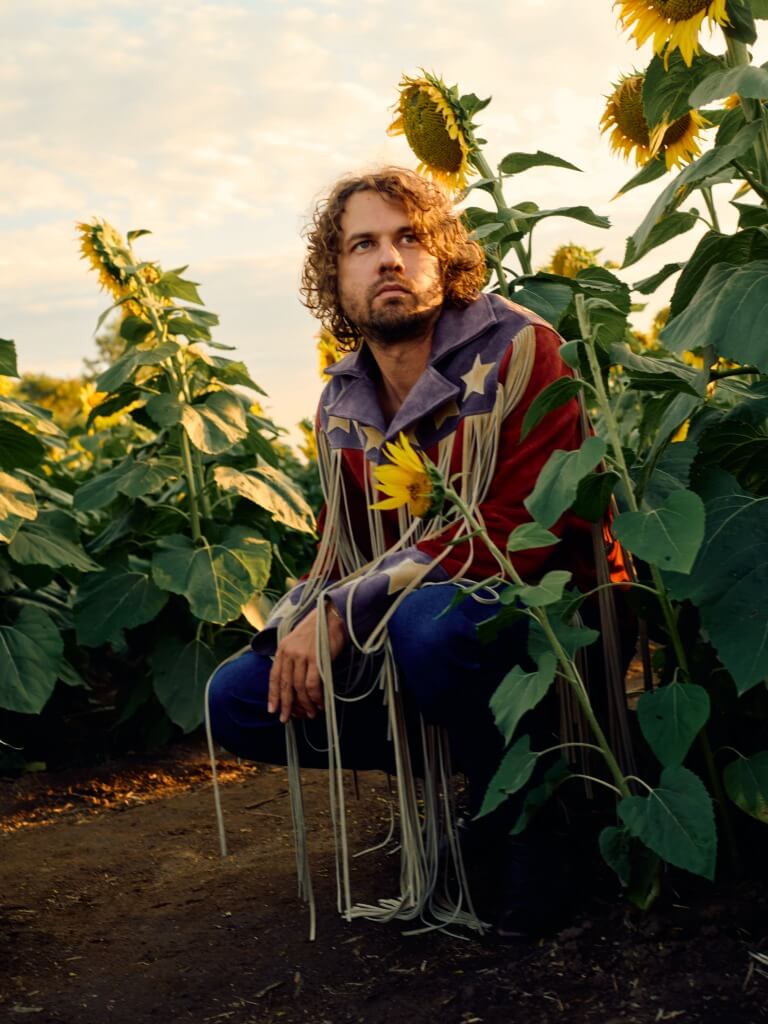
LITTLE WIDE OPEN WAS NEARLY CALLED something else. For the two years he wrote and recorded it, Morby was certain the title would be I Ride Passenger—a rare case of a name arriving early and then refusing, at the eleventh hour, to hold. This last-minute pivot was a first, he says; he always finds a name early on then writes the album around it. But in this case, the song of that name turned out to be “very much just an album track,” he says, while “Little Wide Open” had quietly become “the heartbeat of the record.” The switch came when the album photography landed on his desk and he saw the sunflowers. “It was just like a light bulb,” he exclaims. The phrase itself had been hanging around for a while; he’d already slipped “the little wide” into “Natural Disaster” before writing the title track. It works as both confession and geography: a feeling of exposure, and an affectionate diminutive for the middle of the country. The whole record lives in that duality—taking stock of the sheer vastness and unknowability of everything, and finding, in the smallness of your own part in it, something close to relief.
The album might be preoccupied with empty, open space, but it’s remarkably crowded with friends. Lucinda Williams is only the headline; the album’s margins are full of ringers—Bon Iver’s Justin Vernon surfacing as a tornado siren on “Badlands,” Sylvan Esso’s Amelia Meath and MUNA’s Katie Gavin stacking harmonies, Hand Habits’ Meg Duffy threading guitar through “100,000.” For a man who writes alone, the studio is where the work stops being lonely. “Collaboration feels like getting back in the sandbox,” Morby says. It’s the best feeling in the world, riffing with people you admire until something surprises you. The one rule, though, was that every guest was a first-and-only ask. No understudies, no plan Bs. “If Katie Gavin had said no, I don’t think I would’ve had someone else come fill her role.”
That roll call also serves as a kind of ledger. “The best part is all the memories that surround those touring cycles,” Morby says, reminiscing on the albums of years past. He jokes about often belatedly realizing that certain pivotal shows occurred a decade ago now, and that everyone in the band has since scattered to other projects—not bitterly but in the ordinary drift of a long career. A record, he points out, is exactly what the word says: a document of who you were at a fixed moment, kept past the point where you’d recognize yourself. Mostly, he regards his earlier selves with affection, though he still winces at the shirtless cover of 2019’s Oh My God. “There are moments where I’m like, ‘Well, that’s a crazy thing I did,'” he says, taking the photo choice in stride. “But for the most part, I respect my decisions.” I ask what Harlem River’s Kevin Morby would make of Little Wide Open, and he doesn’t hesitate: “I think he’d be stoked. Maybe a little, ‘Whoa, this is not what I expected.’ But mostly psyched that I’m still doing it, and that I haven’t had a day job yet.”
The flip side of leaving a record of yourself everywhere is that the songs go on without you, and end up in rooms you’d never have pictured. “Harlem River” found an afterlife in yoga and pole-dancing studios across Instagram; it’s soundtracked a car commercial and, more bafflingly, a Victoria’s Secret TV spot. This Is a Photograph turned up in an ad for McDonald’s France, Morby reports, with a mix of bemusement and gratitude; the sync money paid for the gear and the touring when the music couldn’t. He’s clear, though, about which placement he treasures most. “Mavis Staples covering ‘Beautiful Strangers,'” he insists. “That’s certainly the best place my songs ever ended up.”
That’s the wonder of music, really—the way it becomes connective tissue between strangers and loved ones alike, bridging the gap communication leaves in its wake. Morby talks about music the way other people talk about prayer: as a universal language, the one thing that can change a room’s temperature the second it comes through the door. “I think music is the most important thing in the fabric of creation,” he says, and he’s not being cute about it. It’s a belief he’s held since he was eight years old. “It’s the hand of God.” And God sits about where it always has in Morby’s faith: secular and unchurched. The crosses and Christs woven into “Bible Belt” and “All Sinners” are less about belief than inheritance, the vocabulary of growing up in a stretch of country where the billboards preach at you whether you’re listening or not. But Morby’s reverence for the bare fact of being here keeps quietly deepening. “I’m just bowing down to the powers that put us here,” he affirms. “I don’t know who or what that is, but I’m on board. And I’m grateful.”

THE THING ABOUT THE TUNNEL is that it has no end. You might be driving toward a fantasized destination, but you will never reach it. The closer you get, the further away it seems. “You never arrive at the dream,” Morby wrote in that 2020 essay, “but rather ride alongside it, sharing the same space and time for a fleeting moment.” A fleeting moment that is, ironically enough, stretched out into eternity by the act of committing it to song. It’s funny: the point of The Tunnel is endless movement, but the point of a song—the thing all artists enter The Tunnel to create—is to stay put.
Both I and Kevin Morby have long worshipped at the altar of David Berman, forever quoting “Snow Is Falling in Manhattan” verses to anyone who will listen: namely, “Songs build little rooms in time / and housed within the song’s design / is the ghost the host has left behind / to greet and sweep the guest inside, / stoke the fire and sing his lines.” I often reshape it into a question for interviews: I quote it, then ask the artist what their album’s room in time looks like, what the ghost inside it is doing. Kevin Morby was one step ahead of me, though, working his admiration for the late Silver Jews frontman into the second verse of “Die Young”: “Time was moving too fast, I got to missing the past / We will live on forever, babe, with the wind at our backs / Mix your blood with mine, let our songs build rooms in time.”
Little Wide Open’s room in time, Morby decides, is likely owned by a grandmother. Somewhere lived-in and cozy, but open to the outdoors. “It would be a sunny day, and the window would be open,” he muses. “Some drapes blowing in a gentle breeze coming off the plains.” Sunflowers bloom outside; Werther’s Originals sit in a bowl on the coffee table. His songs sprout in the garden outside—he has the time, now, to water them. There’s no race anymore: “Time, please be kind to me / We’re not enemies, though it’d seem,” he sings on “Little Wide Open.” “We share the same dream / To stretch on forever, towards eternity.” That’s all The Tunnel is, in the end: a never-ending road. The pace you move down it is up to you. And for once, Kevin Morby is in no hurry at all.
Little Wide Open is out now on Dead Oceans.
Casey Epstein-Gross is Associate Editor at Paste and is based in New York City. Follow her on X (@epsteingross) or email her at [email protected].
 Keep scrolling for more great stories.