
Lizzo’s comeback statement is muddled on BITCH
The singer’s return to the limelight arrives mean-spirited, out of touch, and woefully inconsistent.

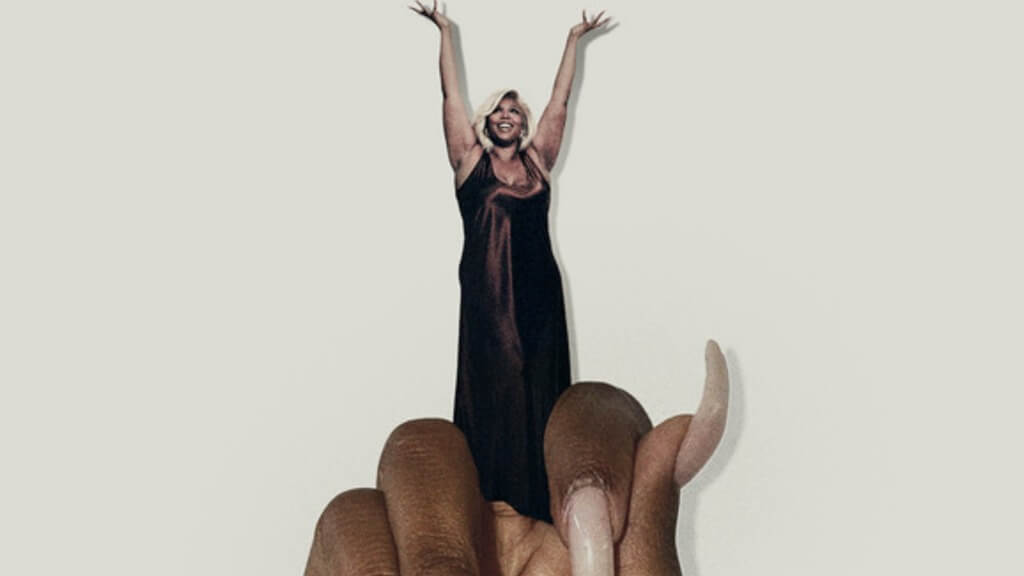
Everyone loves a good comeback story. The once-injured goalie returns with a new knee and double the fire in his belly; the aged actress, long out of work, finally wins that sought-after Oscar. It’s the best of all worlds: you get the schadenfreude of watching a famous person fail, then the absolution of watching them succeed. It’s the reputational equivalent of a feel-good movie, and it’s clearly what Lizzo hoped for by making BITCH, her first album in four years.
The singer, who reached the tippy-top peaks of pop stardom in the late 2010s and early 2020s after the unexpected smash hit of “Truth Hurts,” found her once-squeaky clean public image—a cheerful, flute-wielding, body-positive singer—sullied in 2023 when three of her former tour dancers dropped a damning lawsuit against her. They accused Lizzo and her dance captain of pressuring the dancers to perform sexual acts (some rumors name a specific trick involving a vagina and a banana popularized at the risque nightclub The Box), as well as racially profiled them, unfairly fired them, and, ironically, shamed them for their weight. The allegations—which she still denies—dismantled Lizzo’s self-love guru identity and forced her to step away from the public eye.
On April 12, 2025, Lizzo returned to Saturday Night Live to tease a trio of new songs from her forthcoming album, then titled Love In Real Life. Reactions were, to put it kindly, lukewarm. That year’s mixtape, MY FACE HURTS FROM SMILING, was moderately well-received, but still failed to reach the charts Lizzo had once dominated. Critics and talking heads surmised that her musical sun had set. Still, she steeled herself against the haters. On BITCH, she vowed to prove them wrong.
She does not. BITCH, a 35-minute, 12-track medley of tired, let’s-go-girls dance numbers, vacant pop muzak, and snarling vituperations against an industry that she makes clear has failed her (or, in a less generous lyrical interpretation, those pesky, finger-pointing backup dancers) is trite, lethargic, and, worst of all, obsessed with the self-righteous anger Lizzo clearly still carries against her naysayers. BITCH is pockmarked with played-out tropes and icky filler invectives, as well as a few recordings that belong on the Trolls 2 soundtrack.
The title track interpolates the Meredith Brooks song of the same name into near-oblivion over a grating vocal loop; in it, Lizzo graces us with lyrics like “I lost some followers, it ain’t a loss” and “I’m a mess, I’m a queen, and everything between.” On “Sexy Ladies,” which contains the album’s sole feature by the Uncalled 4 Band, Lizzo recycles yass-girl sentiments à la Katy Kerry’s “Woman’s World” over a thumping bass and a series of cringe-y lyrics, namely “passin’ out tequila, doin’ high fives.” “Goodmorning!,” the album’s closing number, is, at best, one of those aforementioned Trolls 2 songs; in reality, it would fit better in the background of an adult diaper commercial.
The most uncomfortable songs on BITCH are the ones where Lizzo gets mean. On “She Stole My Man,” a stark tonal shift from the girlboss optimism of her earlier days, the artist lashes out at the woman currently with her ex-lover—instead, of course, of directing her complaints at the ex-lover in question. The result sounds close to what I imagine putting Taylor Swift’s Reputation in the dryer until it gets all shrunken and misshapen. Lizzo ad-libs “REGINA GEORGE!” over an Olivia Rodrigo guitar line and repeats “she stole my man, I hate that bitch forever” in the song’s main refrain. Is the derogatory use of “bitch” here a layered commentary on her own album title, or just an example of hastily written thoughtlessness and selective feminism? It feels like the latter.
Similarly, “Too Nice” roasts a former friend based on her finances alone. “It’s always drinks on me, and when we drink we drink expensively,” she scoffs in the song’s opening couplet. “You’d still be workin’ at the mall if it wasn’t for mе” is not a compelling diss, and the song feels suspiciously like it’s directed at the same backup dancers who sued Lizzo in the first place. The power differential doesn’t make her look great, though a flute solo comes as sweet relief. BITCH would have benefited from more flute parts.
The album is not without its bright spots: “Whose Hair Is This” combines swinging, bluesy instrumentals with jokey lyrics and a legitimately satisfying plot twist—a fleeting nod to the lightheartedness that once made the singer so loveable. It’s also a chance for Lizzo to show off her belt, which remains undeniably impressive. “Don’t Make Me Love U” is an inoffensive pastiche of eighties diva balladry that, if not groundbreaking, is charming enough and easy to listen to. “Little Black Cat,” a downbeat dirge about a relationship in freefall, has a catchy chorus and an amusing collection of references to 21st century mysticism. I’d be happy enough to hear it in a supermarket; it would be perfectly serviceable as a filler song on a better album. But that’s what you get with BITCH: it’s not unlistenable, but most of the songs are just fine.
There was a time when I was, if not a Lizzo fan, a Lizzo appreciator; in the acne-filled, side-parted days of high school, “Good as Hell” gave me the confidence to flaunt some truly atrocious Forever 21 tops. In recent years, my family made a joke out of sneaking the ear-assaulting “Phone” onto our playlists at seemingly austere dinners. Though not “good,” per se, the song was undeniably funny. This was Lizzo’s persona when it worked as intended: snappy, unapologetic, confident in herself and urging others to be, too. But on BITCH, that energy wanes, replaced instead by a sense of rote obligation and personal resentment. These two sentiments, even on a less bouncy record than BITCH, do not make a pop album. That lawsuit, it seems, has really gotten under Lizzo’s skin, and three years later it’s become the listener’s cross to bear.
There is a more existential explanation for Lizzo’s continued flop: that the sociopolitical landscape of Woke 1.0 and pussy-hat feminism that allowed Lizzo to initially rise to cultural relevance is no longer. Politically, culturally, and sonically, Lizzo is out of touch on BITCH. Anger has a place in this moment; so, too, does joy. But solipsism does not; the self-pity of a multimillionaire who maybe pressured her dancers into weird sex stuff is of little interest to the listening public. And a hidden plaintiveness seeps through even her more knife-tongued tracks: it is clear throughout that Lizzo wants, more than anything, to be liked again. Unfortunately for the singer, this makes the music a wincing listen.
Lizzo seems to have emerged from her time out of the limelight with the expectation that, with the advent of some braggadocious ad-libs and shameless blame-casting, she would again be received as she was at the heights of her prelapsarian fame. But this is not the case: the air’s energy is different, her public perception has been forever changed, and BITCH didn’t even crack the Billboard 200 after selling just five thousand units in America. If she’s to continue making music with the expectation that it does well in the charts, her work needs to be more thoughtful, more evolved. She has to move on from both the subject matter of her early hits and the resentment that clearly still clouds her everyday life. Lizzo might want to take a page out of her own handbook: sometimes, the truth hurts. [Nice Life/Atlantic]
Miranda Wollen is a staff writer at Paste and is based in New York City. Follow her @mirandakwollen or email her.
 Keep scrolling for more great stories.