
Loraine James is learning to be proud of herself
The British electronic musician discusses why she doesn’t think her new album, Detached from the Rest of You, is her best work, how she’s learning to have fun making music again, and becoming more vocally present.
Photo by Diara Sow
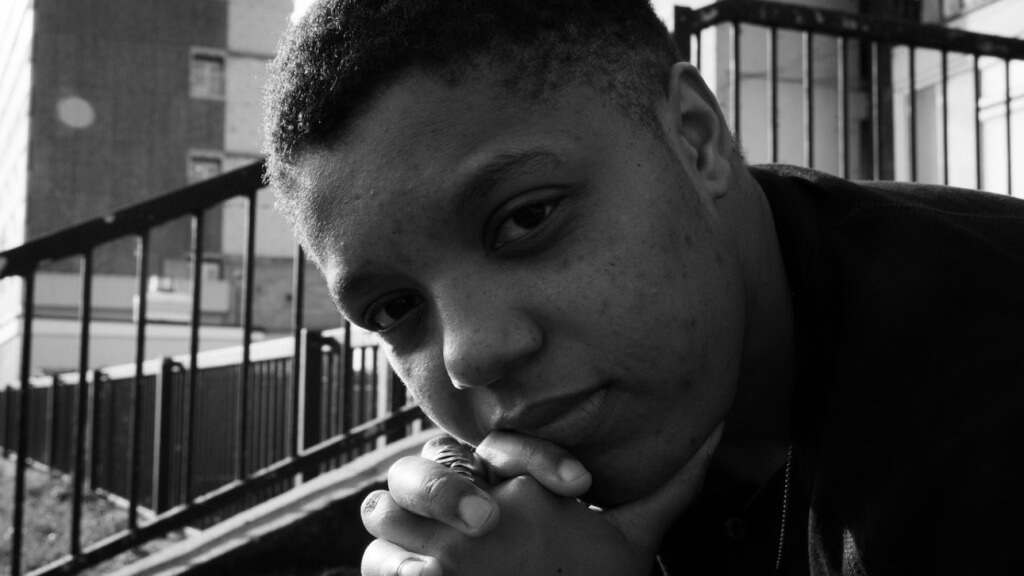
Loraine James doesn’t think her new album is her best work. This is a first for me: in all my years as a music journalist, I’ve never had an artist so plainly tell me that the very album they’re promoting (and speaking to me about) is not, in fact, the best thing they’ve made. In some cases, it rings true, and in others, it doesn’t. But James’ candor is appreciated, as it makes for a refreshingly sincere conversation about her artistry and self-doubt. According to the electronic musician herself, she has yet to top 2023’s Gentle Confrontation, which she was more immediately proud of upon its completion.
James’ dissatisfaction with Detached from the Rest of You, her sixth album under her own name, first comes up when I broach the subject of negative space. Compared to its much clubbier predecessor, Detached sounds icy and distant, like the IDM they probably listen to in the chrome-covered alternate future in that one SpongeBob Squarepants episode. I mention to James that it seems like she’s embracing that sense of negative space far more this time around—she usually reserves her more atmospheric work for her ambient side project, Whatever the Weather. Yet much of this new record feels suffused with a glacial timbre: take the white-noise percussion and high-frequency bleeps and bloops of “Score,” or the melancholy environs of “Flatline,” or the mournful, Rhodes-esque keys of “Peak Again.” Was that, I ask, a deliberate facet of her sound that she wanted to explore further?
“It was just how I felt a lot during making the album,” she says from her London home. “I didn’t have the most fun making the album.” James typically enjoys making music, but this time there was a lot of doubt to overcome. She was in her head, second-guessing and overthinking where the music should go rather than allowing her creative instincts to guide the direction. For her Whatever the Weather albums, there’s less pressure involved. She feels “light and free” making those, she says, but when it comes to releasing music as Loraine James, there’s more uncertainty for her to surmount. “Oh, this is your sixth album,” she remembers thinking to herself. “Now, Loraine, what do you do from this point on?”
Now that the album is finished and she’s begun working on new music, though, the levity she associates with Whatever the Weather has started seeping back into her main project. “I don’t think it’s a bad record at all,” she says of Detached from the Rest of You. “But it definitely isn’t the best thing that I made, which I’m okay with, as well. I’m excited to play it to see how I feel. I think it is always nice on the other side. I definitely feel better about it now than I did deep in it.” There have been previous records of hers, namely 2019’s For You And I and 2021’s Reflection, where her fulfillment had a delayed effect. When she revisits those albums now, she finds herself thinking: “Oh, that wasn’t too bad, actually.”
But that self-doubt manifests itself within Detached’s aloof milieu. “Habits and Patterns” coasts on skeletal minimalism with muted drum machines that freeze to a halt as often as they start back up, as if they’re regaining the willpower to once again enter the sonic field. “Wish I Was Like U” materializes like a faded apparition, its intermittent beeps reminiscent of an EKG. The penultimate, seven-minute “Forever Still (Steel)” takes a hard shift from cataclysmic drums into a subdued IDM-meets-slowcore second half. “I don’t think there’s even one club song on there at all,” James says, laughing a bit. “It is very different and distant in some ways. There aren’t really any fun songs on it. You may like it; you may not. But I’m definitely ready to make stuff that isn’t all miserable.” Right down to the title, Detached from the Rest of You embodies the remove at which James admittedly found herself. She coined its name as she neared the finish line of the album-making process.
“It just sums up how strange I felt making it, and the headspace I’m going into now,” she explains. “I want to leave some of that stuff behind. This album is quite negative. There was a part I just wanted to leave over there. I had this image of my head over there, my body’s over there,” she says, gesturing toward various corners of the room, laughing slightly before ending her thought on a somber note: “It’s been a weird album process.”
When it came time to write lyrics, she had pages and pages of material to draw from, a far cry from the roughly five-words-per-song limit she’d grown accustomed to. “How do we turn this around? / Comparing myself to others / There’s no other / But you know how it goes,” James mutters in the aptly named “The Book of Self Doubt.” On lead single “In a Rut,” featuring Sydney Spann, she sings about feeling stuck, how she’s “in a puddle of mud,” trying to “put these thoughts to pen and paper.” “Seems Like” reads like the internal thoughts of James getting in her own way; her speaking cadence is unenthused and weary: “Some days I think about quitting this whole thing / seems like I sulk in my own shit / Oh Loraine, but where’s the passion? / The passion, is it lasting?” Over trickling synths and gentle washes of pads, the diffidence and distance assume an oxymoronically thunderous quietude.
Much of the record concerns itself with the multiplicity of James’ insecurities, how they branch out from the roots and sprout into different trees that bear various toxic fruits: questioning her prowess as a producer; comparing herself to other artists on the internet; wishing she weren’t so shy and quiet so she could be more charismatic. I tell James that, as a fellow introvert, I can relate to her plight. Music-making and journalism can be good for introverts, in the sense that you can withdraw into your mind to compose your music or write your copy, but both professions also require getting out of your shell, whether that’s playing for a room of strangers or consistently talking to them for reporting. Both fields put introverts into situations where they have to perform, so to speak. “I’ve definitely gotten less shy because of that, but I’m also more aware of how quiet I can be,” she says. “And then, when I look at my friends who can meet someone they’ve never met before and just talk and be charismatic, I’m like… ‘man, I could never.’’”
Large social gatherings are anathema to James, so close collaboration is more her speed. Detached from the Rest of You includes people like Anysia Kym, Miho Hatori of Cibo Matto, Tirzah, and Low’s Alan Sparhawk. When James surrounds herself with like-minded musicians, she’s able to vanquish those lingering doubts by getting out of her head, her room, and “the laptop box,” as she puts it. More specifically, she enjoys when people challenge her and push her out of her comfort zone. She cites working with Hatori and the connection of in-person collaboration as key examples.
“What I learned about Miho is that she does a lot of improv and stuff in New York,” James says. “So the way she makes music is a bit different to me, and it was challenging me in a good way. Those moments are important because, if you don’t meet in person, you lose that. Their input in the room is nice, as well. That track would have ended up different if we didn’t make it in person. She was doing all these crazy, very cool effects on her vocals. If she just sent it to me dry, I would have done something completely different.”
Paradoxically, James’ vocals are more present than they’ve ever been. Maybe it’s because of the sparser instrumentals surrounding her voice, but this is the most forward she has sounded in her music. There’s a discernible melodic hook on “The Book of Self Doubt,” while on closer “See Through,” James’ voice rides over clicks and blips like a majestic bird taking flight through urban decay. She even gives full-on rapping a shot on “Forever Still (Steel).”
“That definitely was a conscious decision to do that,” she admits about letting her voice take up more space in the mix. “I hate hearing my voice, but I’ve also got more used to hearing it at this point, so it doesn’t gross me out as much as it used to.” In her earlier releases, James would deliberately bury her vocals beneath the instruments, but now she’s more self-assured in her singing. The contradiction isn’t lost on her: “It’s a weird feeling, the self-doubt thing, but also in other ways, in terms of lyrically, vocally, I’m growing more confident.”
James’ increased vocal presence is both her greatest point of pride on Detached from the Rest of You and her greatest unburdening. Although she’s quick to tell me about the painstaking process of making this record, she believes it may have been necessary to clear the proverbial obstacle. Maybe it was an impediment she needed to navigate to have fun making music again. These days, James is “less afraid to say what’s on my mind.” She continues: “It’s nice to be more open with myself and with the listener. I’m not afraid to say that. I don’t think this is the best thing. It wasn’t the easiest thing.” She takes a slight pause before tacking on one more thought: “That’s easy for me to say.”
Detached from the Rest of You is out May 8 on Hyperdub.
Grant Sharples is a writer, journalist, and critic. His work has also appeared in Interview, Uproxx, Pitchfork, Stereogum, The Ringer, NME, and other publications. He lives in Kansas City.
 Keep scrolling for more great stories.