
Madonna is loose, limber, and ready to party again on Confessions II
After a string of creative misfires, the pop iconoclast crafts a spry, muscular sequel to her 2005 disco-pop record. Not only does it mark a return to form for her, but it’s also the most alive and present she’s sounded in ages.

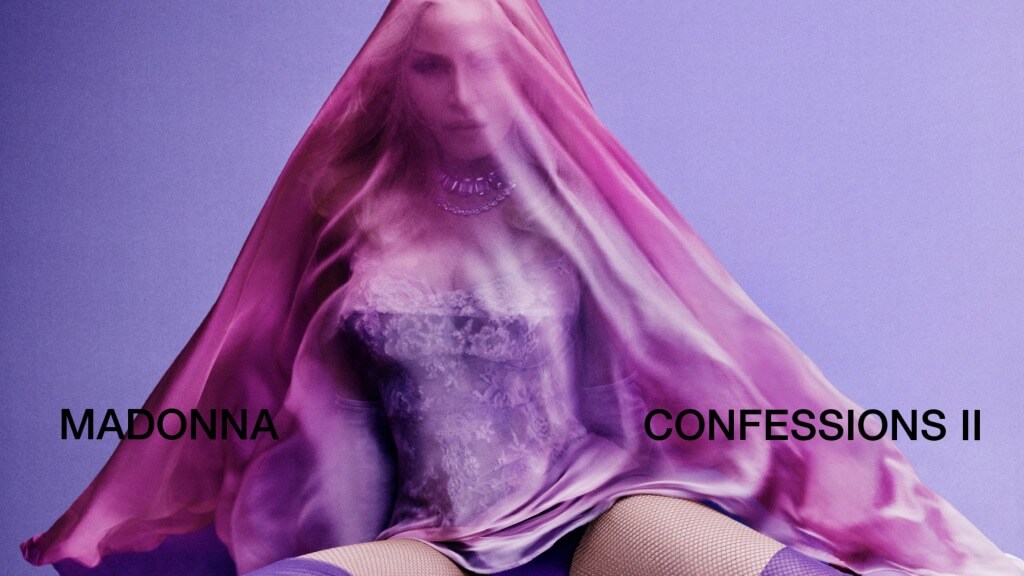
What is the best way to assess a new album by Madonna in the year 2026? With the exception of a bop or two, the pop iconoclast has been past her creative prime for some time now. Her last few records—2012’s MDNA, 2015’s Rebel Heart, and 2019’s Madame X—struggled to match the same level of inventiveness and consistency as the rest of her indelible, versatile discography, but even her most devoted fans know this and still love her regardless. That’s because, apart from her rich legacy and undeniable influence as one of our greatest living entertainers, Madge’s enduring appeal lies in her resilient, rebellious spirit. Despite occasionally being endearingly out of touch and out of step with the zeitgeist, she continues to do what she’s always done and sticks to her own creative vision, even if it’s not the most popular. She is, after all, mother to a lot of our current pop stars, a paradigm of what true originality can look and sound like.
I say this while also acknowledging that her latest and fifteenth album Confessions II is technically a sequel to 2005’s Confessions on a Dancefloor. That LP is also arguably the last time Madge made a truly conceptually and formally interesting record (though it’s worth noting that 2008’s Hard Candy carries a few underrated deep cuts). Coming off 2000’s compellingly experimental Music and 2003’s polarizing-turned-cult favorite American Life, the original Confessions was a hypnotic stream of disco-pop consciousness that gave us the eternal club classic “Hung Up” and reaffirmed Madonna’s status as the Queen of Pop. Confessions II returns to this strand of her multifaceted output, earnestly hearkening back to a time when pop music could be enjoyed and appreciated before the internet bent everyone’s attention to its will.
At first glance, Madonna’s desire to go back to what worked before can be read as a lazy attempt to simply give people what they want, especially in the wake of the ongoing 2000s nostalgia trend that’s dominated and hollowed out our current pop culture landscape. Even I admittedly had some skepticism around this insistent push to Make The Dancefloor Great Again, particularly in light of the album’s amusingly pandering marketing campaign on Grindr. Luckily, Confessions II is neither a simple rehash of its predecessor nor a desperate endeavor to regain cultural relevance. It might not have a song as instantly iconic as “Hung Up,” but there’s undoubtedly more life on it than anything Madonna has made in twenty years.
Collaborating once again with her Confessions co-producer and writer Stuart Price, Madonna works from her pure yet vital desire to get people out of their heads and into their bodies, and does so with confidence and gusto, like the seasoned pro she is. The album is spry and muscular, never overstaying its welcome nor rushing through it thanks to its fluid, aerodynamic production and a visceral, persuasive thesis statement on the importance of bringing life back to nightlife. Though Madonna’s somewhat defensive stance around the record’s core theme may be colored by a slight misunderstanding around certain semi-ironic messaging about the dancefloor being “dead,” her steadfast belief is animated by a valid and urgent fear about our increasingly surveillant and sexless times.
As evidenced by the invasive videographers who populate the equally goofy and gaggy short film for Confessions II, technology and social media have deadened the dancefloor’s libidinal properties and spatial freedom. How can we dance if everyone is watching? Throughout the album, Madonna attempts to offer a few solutions, peppering in reassuring bits of narration like a wise, all-knowing club-kid sage and encouraging us to go to the club with a trusted group of people (“I Feel So Free”), adhere to no thoughts-head empty mantras (“Good for The Soul”), and celebrate the fluidity and individuality of those around you (“Danceteria”).
The third track, “One Step Away,” goes so far as to explicitly address Madonna’s manifesto like it’s a rallying cry. “People think that dance music is superficial / But they’ve got it all wrong,” she purrs over a thumping, throbbing trance-like beat. “The dance floor is not just a place, it’s a threshold / A ritualistic space where movement replaces language.” These lines might seem platitudinous on the surface, but this kind of meaningful intention-setting sets the album apart from the listlessness of her last few efforts. It brings richer thematic and emotional context for Madonna’s conceptual vision, consequently deepening songs that would otherwise be throwaway on their own. “Bring Your Love,” for instance, is a bouncy if slightly rote track with a brief aside from Sabrina Carpenter, but when “One Step Away” transitions into the song, it suddenly transforms into the rousing dialogue between two generations of pop it was meant to be. That very funny “Sabrina… Madonna… I got something I wanna talk about” TikTok meme certainly helps make it stand out as well and, weirdly enough, further adds a metatextual layer to the album by bridging together old ideologies with new modes of self-expression.
As much as Confessions II is an open-hearted passing of the baton, so too is it a subtle yet meaningful ode to Madonna’s own previous work that goes beyond Confessions on a Dancefloor. Traces of the guitar chord progression from “Hollywood” can be heard in the Latin-tinged hook for “Read My Lips.” “Everything” and the Martin Garrix-assisted “Bizarre” conjure the EDM of MDNA and elevate it to a surprisingly refreshing degree. The dramatic trip-hop of “Betrayal” and the Stromae-featuring “My Sins Are My Savior” vaguely recall Erotica, while the electronica breakbeats of “Fragile” echo Ray of Light. The footnotes here are catnip for longtime Madonna fans as much as they are a tantalizing gateway for Madonna novices to seek out their origins.
The album’s best track, “Danceteria,” is Madonna’s freshest, most debaucherous song in what feels like forever. On top of referencing the defunct Manhattan nightclub that gave Madonna her professional start, the song updates the name-dropping breakdown from “Vogue” into an irresistibly catchy homage to club kids, queer icons, music legends, lovers and friends past and present. The song’s music video, which also visually parallels the clip for “Into the Groove,” expands this commemoration of the glamor of celebrity even more, summoning images of gay guys cruising in the bathroom amid the likes of Arca, Shygirl, Kate Moss, Richard E. Grant, and, for some reason, Benedict Cumberbatch. Random and bizarre as this assemblage of characters is, “Danceteria” is nonetheless a vibrant, commanding testament to the wide, varied range of her audience and to how the dancefloor can serve as a neutral playing field for everyone, no matter their background or status.
At times, Madge’s play with self-mythology brings to mind—and please forgive me for invoking one of her previous rivals—Lady Gaga’s MAYHEM, another dance-oriented pop record that reworked the artist’s former impulses into a familiar yet catchy greatest-hits grab-bag template. However, Confessions II marginally eclipses MAYHEM by having a clearer, more affecting agenda in interpreting and expanding on its original text. It manages to keep the party vibes going at an impressively tight pace, gracefully sliding into slinky deep house (“Love Without Words”) and sexually humid techno (“School”) like a gay guy snaking through a busy afters. Then, gradually, the album becomes more personal toward the end, cushioning the thrust of the strutting tunes that came before it with unexpectedly down-to-earth tenderness.
Madonna’s daughter Lourdes (known by her stage name Lola Leon) appears on “The Test,” a more downbeat counterpart to “Bring Your Love” that offers an all-too-rare glimpse inside the fraught dynamics between mother and daughter. The closer “L.E.S. Girl” is even more poignant, slowing the tempo to a gentle lull as Madonna reminisces about her pre-fame life hustling and grinding, and concludes with a straightforward yet disarmingly moving final line: “Everything fades away.” From these final few songs, a more existential theme emerges: Confessions II isn’t just about sanctifying the dancefloor, but ensuring that the next generation of partygoers and pop divas maintain it before we’re all gone for good. Such a sentiment creates a satisfying full-circle moment for someone who started out their career performing at clubs all around New York City and now has the power to command an entire densely populated block.
Confessions II doesn’t necessarily break any new ground, but it doesn’t need to, especially when its creator already did a good chunk of the digging over twenty years ago. In sticking to a simple formula, Madonna brings her longtime passion for dance music front and center, confronting the anxieties around intimacy that dictate our cultural moment with a galvanizing reminder that partying, movement, and community can provide a temporary yet crucial antidote to those problems. [Warner]
Sam Rosenberg is a filmmaker and freelance entertainment writer from Los Angeles with bylines in The Daily Beast, Consequence, AltPress, and Metacritic. You can find him on X @samiamrosenberg.
 Keep scrolling for more great stories.