
Mariah Carey bent the rules on Butterfly without breaking free from them
Time Capsule: Carey’s sixth album is not a perfect record, but that is precisely what makes it so great. It is uneven and occasionally unconvincing, but its flashes of brilliance marked her out from her peers.

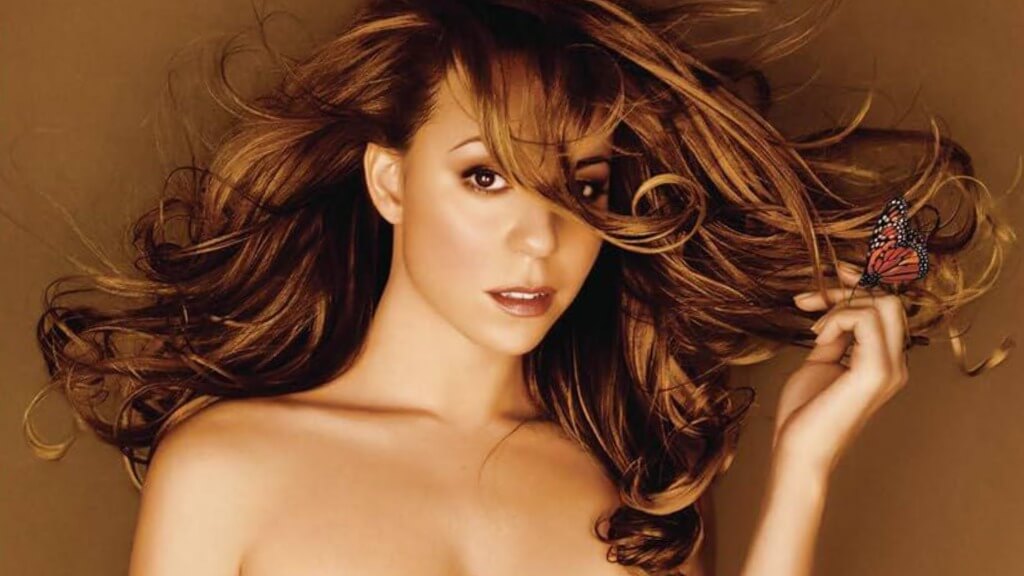
In September 1997, Mariah Carey released her sixth studio album. It was also, in many ways, her first. “[It’s] still my favorite album,” she wrote of Butterfly, which celebrates its thirtieth anniversary next year. “It represents artistic freedom—and freedom in general—for me. A huge personal turning point.” The emphasis on self, even in these two lines, is hard to miss. Butterfly was singular because the album’s sound and structure were produced by a Mariah Carey who was both unfamiliar and startlingly real. “Every sound we make is a bit of autobiography,” writes Anne Carson in her essay The Gender of Sound, “a piece of inside projected to the outside.” Carey had been making autobiographical sounds—and hits—for years, since the release of her self-titled debut in 1990. But it took her five albums to get to the one that she really owned.
When I first came across Butterfly, I was nine years old, looking out of a car window and watching the rain streak across the glass as we drove home from a family dinner. I’d loaded up Mariah Carey’s greatest hits compilation onto my iPod and was listening to each track with studious dedication. I skipped past “Honey” (a great song, but not the vibe when you’re nine and staring sadly out of a car window) and hit on “My All.” It knocked me for six. It didn’t feel like any of the other songs on that compilation, even the other ballads. There was a brooding intensity to it, a real unpacking of the heart. It gave the sense of someone unspooling themselves—projecting, as Carson would say, an inside to the outside. It made me acutely, fiercely sad. It made me loop the song back and start it again.
Butterfly is best understood through two key facts. First, Carey wrote, recorded, and released the album while separated from her husband Tommy Mottola, who was abusive, controlling, and twenty years her senior. He was also the chair of Columbia Records, Carey’s label, and the man who had discovered her and made her a star a decade before. Much has already been written—by Carey herself, among others—about the marriage and how it affected her career. What interests me is not so much the autobiographical element of Butterfly but the duality of Mottola as a figure in Carey’s life. For her, his abuse was both personal and institutional, both inside and outside. It wasn’t just that he locked Carey in their shared house (which she nicknamed “Sing Sing”) and used security cameras to track her every move. It was that there was not a single part of her image or music that he did not conceive or dictate. In many ways, he created Mariah Carey. Breaking away from him involved not just breaking away from a relationship, but from herself.
That’s the first fact. The second is that Mariah Carey is biracial, and she struggled with this consistently, both with her own label and with her audience. When a critic described Carey as “a white singer who has black vocal style” in 1990, he was the rule, not the exception. In general, Carey had been encouraged by her record label (Mottola again) to veer away from hip-hop and R&B, those genres deemed too Black-sounding for mainstream white audiences. She was meant to be a Celine Dion rather than a Janet Jackson—flirting with soul and gospel, but not so much that a white person would have switched radio stations in horror. She behaved. She was chaste, white-passing, and there were no rap verses woven between her vocals. That changed with Butterfly.
The album does grapple consciously with entrapment, but more interesting is how deeply plagued by it it remains, even when ostensibly talking about freedom. There are songs on Butterfly that reflect a kind of Stockholm syndrome-ish interest in the trappings of a genre that both subdued Carey and made her a star. Of the twelve tracks on Butterfly, six are ballads, and only one of them really makes any impact (yes, it’s “My All”—nine-year-old me knew what was up. Those guitar arpeggios are saucy enough to make Babyface jealous). All of them were written with Carey’s longtime writing partner, Walter Afanasieff, who was behind such syrupy hits as “Hero” and “One Sweet Day.” The ballads on Butterfly aren’t awful, but they don’t hold a candle to the hip-hop and R&B influences that Carey had finally allowed to seep into her work. Take, for example, the album’s title track: unable to resist familiar territory, Carey and Afanasieff create a twee ballad about liberation, complete with gospel backing vocals and extended melismas. It promptly pours a bucket of cold water over any smoldering eroticism that the hip-hop-minded “Honey” has just established one song earlier.
So why the ballads? For one thing, Carey knew that they worked. For another, they’re a hard habit to break. The ballad form is addictive in its restrictiveness, a quality it has possessed since its origins, as in the medieval French ballade. Even before its transition into what we know it to be now—the sentimental ballad)—the form relied primarily on a simple formula that made it memorable and easy to dance to: rhythm and repetition. Nowadays, a ballad can more or less still be broken down into the same basic components: verse, chorus, verse two, chorus, bridge, chorus. Simple, limited, and irresistible. Carey, along with the rest of her adult-contemporary peers, had hit on a winning formula. There was no use throwing it out along with everything else.
Carey was also processing her own entrapment in a way many women had done before her: by singing about it. As far back as Greek and Shakespearean tragedy, abused women have suffered through song. The word lament itself derives from the Latin lamentari, meaning “wailing, moaning, weeping”—all words we link to singing, that act of the voice that slips beyond tempered speech. Often ballads take a subject that is not the singer as their focus, dislocating the emotions brought up by loss or soured love, a pattern traceable from jazz torch songs like “Autumn Leaves” and “Willow Weep for Me” all the way to Ann Peebles’ “I Can’t Stand the Rain” or even Lady Gaga’s “Shallow.” To sing directly of one’s pain is too exposing; better to find an object to sing through instead: a willow tree, a river—or perhaps even a butterfly.
That the eponymous butterfly is a thinly veiled metaphor for Carey’s newfound freedom and transformation seems clear. What is up for debate is how successfully ballads like “Whenever You Call” or “Butterfly” actually reflect this. The question is less whether the material deals with freedom from entrapment (it does—hard to hear the lyric “Blindly I imagined I could / Keep you under glass” and think otherwise) and more whether the form itself repeats patterns of entrapment. Because the answer to both is yes, the ballads on Butterfly become both more fascinating and more frustrating. Despite finally being given the space to air her grievances in song, Carey keeps using the forms she was starting to rail against. In so doing, she creates a more accurate picture of what freedom from abuse looks like in reality: a slow, uneven journey. Butterfly was still released under Tommy Mottola’s label; she was still working with old collaborators like Walter Afanaseiff. “It’s Mariah the inconsistent that makes Butterfly so ultimately fascinating and endearing,” wrote Rich Juzwiak, and this still rings true. Gone is the cohesion of Emotions or Mariah Carey: instead, we are gifted something rarer: contradictions and singularity.
And all this without even broaching the centerpiece of the album: its unabashed interest in hip-hop. At last, after years of coy flirtation with the genre—the sly offering of house-inspired “Daydream Interlude (Fantasy Sweet Dub Mix)” at the end of Daydream, the unreleased remix of “Fantasy” that Mottola made her drop—Carey leaned in and embarked on a full-fledged love affair with sampled beats, rap verses, and thudding basslines. Such a move would have been impossible were it not for the several moving parts in Carey’s life that aligned at this moment: divorce from Mottola, conflict with Sony Music (Columbia’s parent label), the growing popularity of the hip-hop movement through artists like Puff Daddy, Missy Elliot (both of whom she collaborated with on Butterfly), and The Notorious B.I.G., and her increased identification not as white-passing, but as biracial.
Before this point, Carey was the perfect artist to have sit on the fence between genres, because she consistently showed how adept she was at evading definition. This came with the territory of being mixed-race: not being white but not being Black enough either. And then, there was what seemed to transcend definition altogether: that voice. “[Studio heads] saw me as having this instrument, and they wanted to get the most use out of it,” Carey said when her relationship with Sony was at its most dire. This much is clear when picking up any of her records. Listening to a song like “Emotions,” which spans over four octaves, Carey’s hesitation around transitioning into hip-hop feels more understandable. The voice was the thing. Focusing on genre, beyond figuring out what sold well, seemed unnecessary. Prior to Butterfly, she had flirted with hip-hop and R&B (on Daydream), but she hadn’t exhibited the gritty urgency of Toni Braxton or the creative imagination of Janet Jackson. But this logic is circular: she hadn’t tried it before, so it felt dangerous to try; because it felt dangerous, she avoided it; because she avoided it, she never developed it. What Butterfly signifies is an attempt to break that cycle, and Carey did it through hip-hop.
With both Carey and hip-hop, the place to start is the lyrics (Carey is the sole credited lyricist on every track on Butterfly). These range from sparse to audaciously complex. Take, as two diametrically opposed examples, “Honey,” the album’s lead single and first track, and “The Roof (Back in Time),” a detailed meditation on the single memory of a romantic rendezvous. The main goal of “Honey,” lyrically, is to accentuate its musical choices. “Oh, oh / Honey got me hooked on you” makes use of alliteration and a simple, sexualized image to leave the rest to the imagination—and to the music production, which, thanks to the efforts of producers Sean Combs (or Puff Daddy) and Q-Tip, is densely layered, with multiple vocal tracks over a piano motif sampled from The World’s Famous Supreme Team’s “Hey DJ” and a bassline from “The Body Rock” by the Treacherous Three. What results is something close to the perfect hip-hop record: catchy, heavy on the bass, simple on the chord progressions, and sexy.
Three tracks later, “The Roof” does much of what “Honey” does. It samples heavily from Mobb Deep’s “Shook Ones (Part II),” is vocally complex, incorporating harmonically layered backing vocals throughout, and builds its foundation on drum patterns. But the lyrics here are also notable, and not just for their vaguely sexual connotations (as is the case with “Honey”):
Every time I feel the need
I envision you caressing me
And go back in time
To relive the splendor of you and I
On the rooftop that rainy night
Here is where Carey really pitches herself as a hip-hop artist—or, at the very least, a pop artist who understands what hip-hop is. Production aside, this is her at her lyrical best, not only because she populates a song with words like “envision” or “liberated” (which she somehow rhymes with “Moët,” a feat that is nothing short of genius), but also in the instinct she shows for lyrical storytelling and its place in hip-hop. “The Roof” tells the story of a specific moment in time; therefore, it is filled with vivid imagery and hyper-specific verbiage. We know the time of year (November), what the weather was like (not yet rainy, only misting), and what Carey and her lover were drinking (Moët—see above). What I am at pains to stress here is that Carey’s newfound artistic freedom is best expressed in a song like “The Roof,” which marries her lyrical ability with powerful hip-hop production, creating a mix of elements that speaks to her own in-betweenness as an artist. If Butterfly is about liberation, this is where it is most fully realized: taking what previously held her back—her mixedness—and turning it into an artistic advantage.
When she inhabits these contradictions, rather than trying to lean too definitively one way or another (see: the ballad form, or her perfectly acceptable but mostly boring cover of Prince’s “The Beautiful Ones”), Carey elevates herself from simply a skilled chanteuse to an artist in her own right. She approaches her lyrical task with a self-aware coquettishness (“So I’m gonna leave my cell phone / Turned on in my purse by the bed/ And before I fall asleep / I guess I’ll just check my machine / Again and again because I’m obsessing on you”) on the excellent “Babydoll,” and a sincerity so overpowering it leaves the listener no choice but to take her deadly seriously: “I’d risk my life / To feel your body next to mine” she cries on “My All.”
What finally settles the question of Butterfly as an album of freedom is, naturally, the vocal ability on show. If lyrics are Carey’s secret weapon, then vocals are surely her most overt, and they shine on Butterfly—not because of their acrobatic feats or displays of sheer energy, as on her earlier efforts, but because of their marked restraint. The seductive, sexualised elements of Butterfly feature a whispering, enchanting tone, but that doesn’t do justice to Carey’s supreme skill here, which is knowing when to hold herself back and when to let rip. “Babydoll,” for example, features moments of breathy, light seduction delivered alongside heart-rending belting: I-iiiii-iii wanna be your ba-a-a-bydoll!
But the tour-de-force is its predecessor: “Breakdown,” featuring Bone Thugs-N-Harmony. Not content to simply offer a counterpoint to the verses of her rapper guests, Carey sets herself on their level, effortlessly cramming multi-syllable words into the restriction of the song’s four-four time: “You called yesterday to basically say / That you care for me but that you’re just not in love / Immediately, I pretended to be / Feeling similarly”—a strict time signature doesn’t stop Carey from being as profusely adverbial as she can, and she stretches the syllables around like Play-Doh. Again, this is where Butterfly shines: not necessarily by doing away with the rules, but actually by making them work for her. It was a trend that took off: a year later, Whitney Houston’s own crossover into Black sound, My Love Is Your Love, was released; later still, albums such as Britney Spears’s Circus were released after picking up on Butterfly’s winning formula: find what restricts you, break it down, make it a hit.
Butterfly is not a perfect record, but that is precisely what makes it so great. It is uneven and occasionally unconvincing. But its flashes of brilliance marked Mariah Carey out from her peers. She was not content to rest on her laurels (and she had a lot—twelve No. 1 hits in six years), but instead insisted on slowly, shakily refining her sound. That Butterfly was Carey’s most inconsistent record is what makes it the most representative of what gaining artistic freedom looks like. It looks, paradoxically, like restraint and limitation; like occasionally moving away from old formulas, then going back to them again. It looks like a woman taking everything that boxed her in—personally and professionally, through genre, sex, and race—and getting her hands all over it.
Mariam Abdel-Razek is a writer and critic based in London. Her writing has previously appeared in The Line of Best Fit, The Tonearm, and Varsity.
 Keep scrolling for more great stories.