
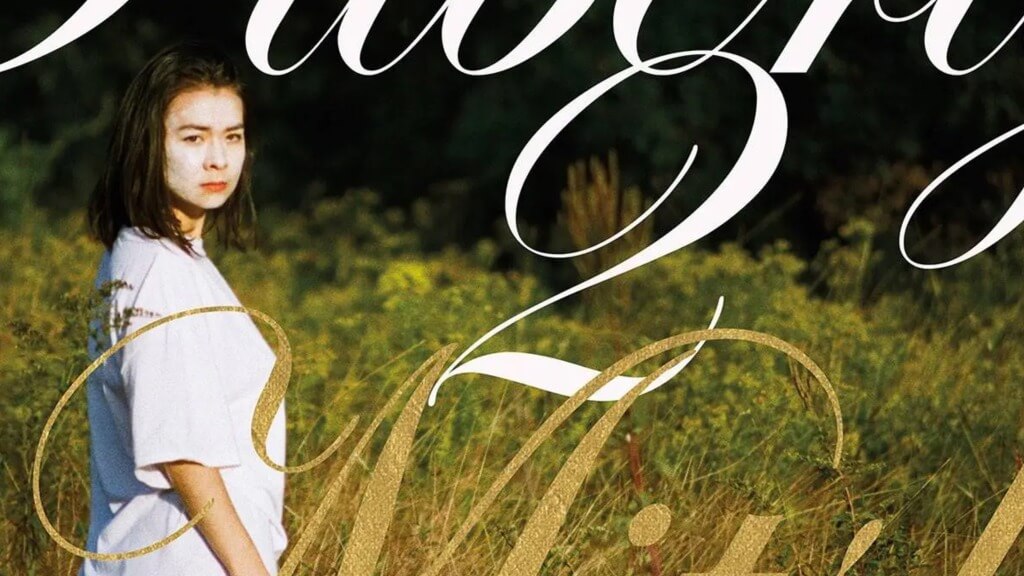
Happiness f*cks you: Ten years of Mitski’s Puberty 2
Released on this day in 2016, Mitski’s fourth album stood out as the perfect coalescence of all her styles: fuzz-lined grunge, wall-of-sound pop, loop-based drone, lonesome folk ballads, single-chorus punk anthems.
Image courtesy of Dead Oceans
I’ll make no more use of it when there’s no more you
Somewhere between a scratched-out line of terrible middle school poetry and a sleepless night that bled into morning with my face plastered to a dorm room floor by sweat and tears, I decided that maybe happiness wasn’t my thing. If this sounds melodramatic or like a self-fulfilling prophecy, you’re right, it was. The times where I felt happy seemed to come in these bright, fleeting bursts that flamed out just as fast as they arrived, and I’d look back on them with suspicion, unable to trust how I’d felt in the moment or separate any past joy from whatever misfortune came after.
Anyone who made me happy was someone I both pitied and feared. I felt sorry for friends and family members for having to love me, guilty for sapping their emotional resources that could have gone to someone more deserving. Part of me wondered whether even the most loyal and loving among them would one day wise up and leave. Sometimes I judged them for not doing that.
Romantic love felt impossible, the idea of entrusting my happiness to someone else—and in turn, being trusted to make that person happy—for an extended period of time. I spent years asking friends in relationships how they could just exist alongside their partner with the knowledge that they would one day either break their heart or die, and I never got a sufficient answer, because what I was really asking was: How do you just accept a good thing into your life and enjoy it without obsessing over when and how you’ll eventually lose it?
Mitski said it better in a press release: “Happiness fucks you.” She said it even better in a song about a one-night stand with happiness personified and the depressive comedown that follows—“I sighed and mumbled to myself, ‘again I have to clean’”—and better still with no words at all, just a subway-rumbling kick drum and a foggy, blaring horn section. A fitting opener for a record that’s all extreme highs and lows, the latter of which always seem to outlast the former.
It’s why the guitar melody on “Dan The Dancer,” the second and most on-the-surface upbeat song on Mitski’s Puberty 2 is in a minor key, and why the titular Dan must remove his hand from the edge of a cliff to hold the hand of his lover. “He liked her more than life itself, I’m sure,” delivered as an offhand comment more than a romantic confession, suggests an emphasis on the desperate quality of Dan’s life rather than devotion to his partner. The moments of reprieve from the daily indignities—depression, failure, fear of abandonment, the endless task of cleaning up the remnants of a messy life—always cast a shadow, never unaware of just how far one can fall when things get too good.
But you know, oh you know, in the quiet he holds / Runs a river that will never find home
2014’s Bury Me At Makeout Creek was the album that made me a Mitski fan, but Puberty 2 was the one that solidified her as the most compelling and singular indie rock artist of the 2010s Bandcamp boom—maybe of the 2010s, full stop. When Be The Cowboy came out in 2018, marking a pivot toward a sleeker, synth-forward sound—which was fantastic in its own right—Puberty 2 retroactively stood out as the perfect coalescence of all the styles she honed on all three records: fuzz-lined grunge, wall-of-sound pop, loop-based drone, lonesome folk ballads, single-chorus punk anthems.
Puberty 2 found me at the perfect time. Roughly between my high school graduation and the start of my freshman year of college, three records dropped that would go on to weave themselves into the emotional and experiential fabric of the four years of my life that followed: Car Seat Headrest’s Teens of Denial, Frank Ocean’s Blonde, and Mitski’s Puberty 2. Each album, in their own way, is about stumbling blindly through the disjointed days and nights of young adulthood—trying to piece together some semblance of self, trying to be something to others that you know you can’t be, making meaning after the moment’s already passed.
On “Once More To See You,” love and joy are fleeting things, no matter how much the aching, sixties girl-group progression makes it clear that Mitski wants nothing more than to linger in the daydream. “I wouldn’t have to scream your name atop of every city in my heart,” she muses. “If I could see you.” She’s not screaming, though—she sounds as serene and suppressed as ever as she speaks these embarrassing desires plainly. It’s the repression that makes giving in to any wanting at all seem like indulgence, and the stagnation of the everyday that necessitates drastic measures.
If “Once More To See You” is mired in the kind of idealistic denial that only works as a coping mechanism when you’re young and depressed, “Fireworks” is a jump into a future that feels like fiction—one in which happiness doesn’t occasionally flash across painfully dull days so much as flatten itself out into a steady, stable rhythm. “One morning this sadness will fossilize,” Mitski promises. “And I will forget how to cry.” But even within her fantasy of evened keels, reliable routines, and emotional stability, a darkness lingers—the suspicion that such a life is only possible through the dulling of all sides.
You’re sent spinning through the cycle of ecstatic highs and miserable lows; You tell yourself “You won’t always feel all of this, someday you’ll strike a balance and make it last;” You wonder, “What if that day never comes?” and then, “What if it does?”
I always want you when I’m finally fine
The “2” in Puberty 2 refers to a second adolescence but it also highlights the way each song in some way involves its narrator being confronted with her own otherness, or oppositeness. No matter where she is, there’s always a nagging feeling that she doesn’t belong there—in that crowd, in that relationship, at that job, on that stage. Regardless of the situation, something always tells her she’s mismatched for it, and that she should be embarrassed for wanting acceptance or thinking she could fit in in the first place.
Nowhere is this more overt than on “Your Best American Girl,” Mitski’s best song and one of the defining rock love songs of the 2010s, one about the failure to fit into someone else’s idea of normalcy. Mitski, a mixed-race Japanese-American woman trying to pursue a music career and a love life in the United States after living in a different city (or country) almost every year during her youth, realizes that her love for this idealized “all-American boy” can’t overcome the cultural differences between the two of them, nor can it bridge the gap between fantasy and reality. It’s her choice to leave—a choice that she doubts while making it: “You’re the one, you’re all I ever wanted / I think I’ll regret this,” she admits, before piercing you through the heart with a searing guitar solo. “Your Best American Girl” is at once doubtful and hopeful—it is not “I don’t deserve this,” but “I can’t have this, and somehow I will learn to be okay with that.”
If “Your Best American Girl” is Mitski making momentary peace with what she can’t have and choosing to walk away from it as unscathed as possible, “I Bet On Losing Dogs” is Mitski digging her heels in. If you can’t win, you might as well lose big. Mitski loses spectacularly. There’s no reward for feeling like shit, but it’s easy to trick yourself into thinking otherwise when you’re desperate to make suffering seem worthwhile. No matter how horrible you feel in the moment, there’s a sick awareness that you’ll miss it once it’s over.
Not happy or sad, just up or down
Something that tends to linger past Puberty 1 into Puberty 2 is the conviction that you yourself are not real, or the obligation to make yourself un-real in order to fit your untenable emotional density into a narrative that’s legible to you and those around you (sometimes also known as telling yourself stories in order to live). There’s a tendency, especially among the Puberty 2-afflicted who consider themselves artists of some kind, to let your inner narrator lead, trusting them to give meaning to all the tumult.
If getting through a job interview takes Herculean strength and you’ve already got so little to lose, why wouldn’t you list “not afraid to die” as a special skill on your resume? When Mitski wails about doing this on “My Body’s Made of Crushed Little Stars”—as her raw, jangly strings threaten to set off sparks—it makes perfect sense, because that’s what Mitski songs do, they make one’s most unstable and self-destructive impulses sound as logical as they do in your head when you’re in the middle of justifying them to yourself, or when you’re already giving into them without thinking.
In college, I got a Bipolar II diagnosis whose accuracy I still doubt to this day. Looking back, I’m not sure if I was ever actually bipolar or if I was just nineteen years old. Sometimes nineteen-year-olds just do stupid things like stay up all night biking around a streetlight-less town or flirt shamelessly with professors and boys whose girlfriends are standing right there or start arguments out of sheer boredom or blow a bunch of money that they don’t have on lavish things—only to spend the following days unable to get out of bed or shower. Clinical language made me feel trapped in a test tube, so I looked to the songs I loved at the time to explain my mental state. I diagnosed myself with being “nineteen and on fire,” and found that every piece of psychotherapeutic language failed where saying “every single night’s a fight with my brain” summed it all up so perfectly. Most words felt inadequate when it came to describing whatever was going on with me, but not the ones in Mitski’s “Thursday Girl,” which explained it in terms so painfully simple that I felt dumb for not coming up with them myself: “Not happy or sad, just up or down, and always bad.”
“Thursday Girl” is a slow oasis between two shreddy, repetitive pop punk songs. It’s the moment to reflect on the impulsive mistakes you’ve made, right before you make them all over again—to the point that you beg for your decisions to be in someone else’s hands as opposed to them being everybody’s problem and nobody’s fault but your own: “Somebody please, tell me no.”
The triptych of “My Body’s Made of Crushed Little Stars,” “Thursday Girl,” and “A Loving Feeling” is propelled by that inner-narrator death-drive, the one that convinces you all the destructive behaviors are worth it if they can produce something great—if you can put on the perfect show, play the role of the brilliant martyr (“My Body’s Made of Crushed Little Stars”), the life of the party (“Thursday Girl”), the easygoing cool girl (“A Loving Feeling”). It’s all method acting. You just have to keep the show going, keep telling the story.
Thinking about my life in terms of narratives and plots was a destructive force as much as it was a lifeline. I believed that if I could get the perfect story out of it—if I could depict my own anguish in the right way—everybody would understand, everybody would empathize, and somehow I would become everybody’s favorite character. It was easier to conceive of being loved like a character than it was to conceive of being loved like a person.
I am the fire and I am the forest and I am a witness watching it
I grew up with the sneaking suspicion that one day I would be rushed to the hospital, whereupon the doctors would discover and swiftly remove the brain tumor I’d had since birth that made me sad and angry and annoying and difficult, and I’d return home the right version of myself, ready to be successful and normal and loved.
Of course, that hasn’t happened yet, and it never will, because it all hinges on the fantasy that personal growth and a “good life” can be achieved through the correction of a singular fatal flaw. This fantasy, like most fantasies, is not capable of containing a person in their entirety.
The title of Puberty 2’s penultimate track, “Crack Baby,” has admittedly, not aged well, but it simmers and stings with that acute sense that you’re going through life missing a piece that everybody else seems to have, and a similarly nameless, shapeless wanting for something that you’re unable to look for. At this point in the record, even the inner narrator who once imbued suffering with meaning has jumped ship. There’s no arc, no progress, just a “long, hard, twenty-year summer vacation” spent searching for something you wouldn’t even recognize if you found it.
“A Burning Hill” makes an uneasy truce with this wanting, this lacking. Something will always be missing from everyone, life will go on anyway, the fire will continue to burn. There’s no story, just each day following the last. And none of those days—at least in my experience—are the one fateful day when everything fixes itself. All a day can do is put more distance between itself and the last bad one. “I’ll go to work and I’ll go to sleep,” Mitski sings, as if it could be so simple. “And I’ll love the littler things.”
Grace Robins-Somerville is a writer from Brooklyn. Her work has appeared in Pitchfork, Stereogum, The Alternative, ANTICS, Marvin, Swim Into The Sound, and her “mostly about music” newsletter, Our Band Could Be Your Wife.
 Keep scrolling for more great stories.