
Pokémon’s first generation still sounds like childhood
The Gen I Green and Red games feel massive but are ultimately as uncomplicated as the digital tones composer Junichi Masuda had at his disposal.

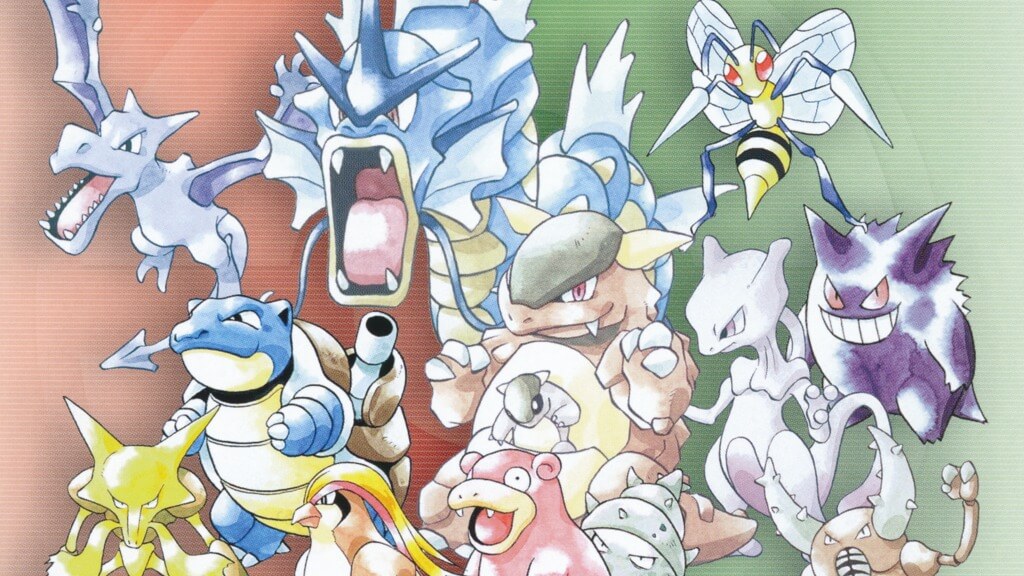
I was once a nostalgic nine-year-old, something that should’ve been impossible—if not for Pokémon. That summer, I found a YouTube channel called Pokémonmusicmaster, which uploaded most of the Pokémon game soundtracks up to 2008. I was born in 2000, and my first Pokémon game was Sapphire; in no way should I have been sobbing to the chiptune music of Pokémon’s first generation (Generation I), whose Green and Red versions were released in Japan for the Game Boy in 1996, and in Western countries two years later as Red and Blue. I didn’t cry because I missed out on Gen I’s Pokémania when the series was at its peak. I didn’t cry because I wanted to go back to “better days”—I was currently living through the “better days,” of course! I cried for the same reason I did when I’d wind up a music box or listen to a nursery rhyme: the simplicity of childhood, among the purest nostalgic yearnings, is best conveyed through its simplest medium.
Pokémon has turned into a series about many things, but during Generation I, it was nothing but a pure embodiment of childhood adventure. Such a straightforward premise made it perfect for the Game Boy’s sound chip, where composer-programmer Junichi Masuda had only four voices—the bleeps and bloops that serve as digital instruments—to use at once on each track. For most ambitious Game Boy games, this is quite the hurdle to overcome: How do you communicate the boundless worlds of the Zelda games with so few—and so restrictive—compositional resources? In the case of an installment like Link’s Awakening, you try your hardest and turn in a pretty good score, but still come nowhere near the depth required to fully embody the lofty scope of the series. It’s a far different case with Pokémon’s Gen I games.
The Gen I games feel massive but are ultimately as uncomplicated as the digital tones Masuda had at his disposal. You play as a ten-year-old setting out on your life’s first adventure alone beyond your hometown—a journey not through a vast kingdom but through a small region comprising residential towns and fields. It’s a tale about ordinary yet monumental experiences for a kid: the thrill of venturing out of the place you call home, meeting and learning about others for the first time, and all the anxiety that comes with facing life’s challenges completely on your own. Masuda’s score sets the magnificent innocence of growing up to music, using the Game Boy’s sound chip’s limited nature to sonically braid childhood simplicity with the monumental scope of wide-eyed discovery.
It’s a feeling that hits as soon as your journey begins—fittingly enough, right in your hometown of Pallet Town. Masuda’s compositional approach to a hometown theme, a place that so commonly serves as a vessel for our childhoods, is a sort of tactical purity. Whereas the fully 4-voiced tracks during the adventure proper feel much more involved, even mature, the 2-voiced Pallet Town (just a melody and countermelody) is a serene lullaby in a stripped-down package—something that could fit right at home in a music box or an ice cream truck. A commenter on the same Pokémonmusicmaster video I watched all those years ago said it better than I could ever say myself: it’s “the national anthem of childhood.”
As you adventure out of Pallet Town into the differently colored towns and cities of the Kanto region, you feel the youthful wonders of growing older minute by minute, route by route. These route themes grow in scope as your adventure progresses, a feeling perfectly conveyed by Masuda’s 4-voice compositions—still ever-so-simple instrumentally but compositionally dense as can be—that capture the spirit of adventure with memorable lead passages gliding over percussion arranged into marching motifs. Route 11’s theme quickly bursts into a luscious march, the top line soaring over staccato drums before transitioning into a gracious cast of looping swells. Some route themes even feature the type of sentimentality typically reserved for pop songwriting, such as Route 4’s final passage, which resolves with a reflective refrain that beautifully contrasts with the mighty main melody.
As incredible as Masuda was at conveying childhood bliss through chiptune’s basic nature, he was just as good at using the style’s restrictions to communicate childhood horror. About halfway into your journey, you reach one of gaming’s greatest and most abrupt tone shifts, Lavender Town. The graveyard town where Pokémon are laid to rest features a song so dour, so unnerving, that it spawned the most famous video game music-based creepypasta, and one of the first creepypastas period. The story claimed that frequencies imperceptible to adults were hidden within Masuda’s already abrasive composition—an atonal, Stravinsky-influenced step-down from pure harsh noise. Hundreds of children who heard these grating, secret frequencies were said to have contracted “Lavender Town Syndrome,” whose lightest symptoms were persistent migraines and depression; at worst, it drove children to commit suicide. The programmed harshness of Lavender Town, its pure digital revulsion, brought the type of horror reserved for Kurosawa films to the desktops of our childhoods. It made digital horror feel plausible, because the impressive track hurts the soul as much as the ears.
As sinister as this internet folktale is, the entirety of Masuda’s score—even at its brightest—is saturated with a haunting allure. When we revisit Generation I’s music, we’re more than likely doing so through second-hand re-uploads widely drawn from the 1997 official soundtrack CD release. For some inscrutable reason, this release washed the entire score in heavy reverb; despite the CD being the most common way to hear these tracks, it’s a different experience from the songs heard in the game itself. Do the comparison yourself—game rip versus soundtrack—and observe the affective difference. Masuda’s bare-bones songwriting and composition are still there, but the emotional density of his beautiful bleeps is even heavier with the addition of a single effect. It’s no wonder why we’re so easily spellbound by Generation I’s childhood nostalgia: we’ve been listening to its ghosts for years.
Criticisms of Generation I’s score might echo those of the games themselves: archaic, technically outclassed by later generations. They’re not without some merit. Masuda was joined by Go Ichinose for Generation II’s score three years later, where the duo retained most of the emotional character of Generation I’s music while maxing out the Game Boy’s compositional capabilities, arguably producing the system’s best score (which even features recompositions of nearly every Generation I track). And you only have to look toward Jane Remover’s sampling on Frailty to observe the palpable charm of Ichinose’s lush Generation 4 and 5 scores on the Nintendo DS. But the Generation 1’s primitive beauty still stands alone as a beacon of childhood wist and a hallmark of memory, a score that acts as a technical and compositional embodiment of innocence, growing up, and the eternal reflections of days gone by. Thirty years later, Generation 1 still sounds like day one of the rest of our lives. It couldn’t sound like anything else.
 Keep scrolling for more great stories.