
Punch Brothers’ all-instrumental prog-grass adventure
Paste Q&A: Chris Thile discusses about his ambitious string band’s new chapter, The Unsung Adventures of Punch Brothers, and why writing songs is like cracking open geodes.

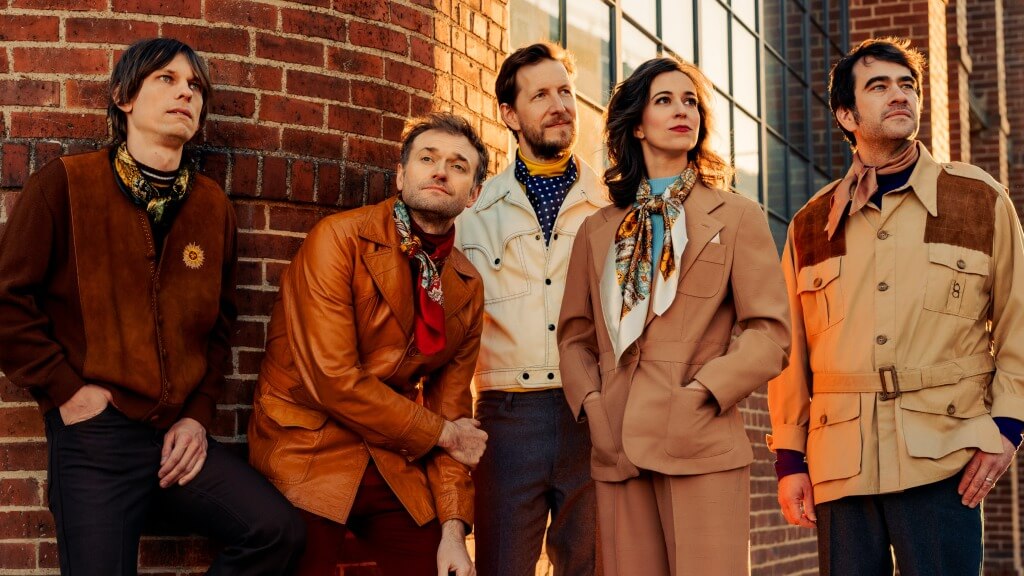
In music, words can only get you so far. There’s a reason so many killer lines were reverse-engineered from gibberish into concrete language. There’s a reason why you can swoon to choruses sung in languages you don’t speak. There’s also a reason why Chris Thile, singer and mandolin virtuoso of string band Punch Brothers, felt comfortable letting go of lyrics—at least temporarily. The band’s first-ever instrumental LP, cleverly titled The Unsung Adventures of Punch Brothers, still feels like a pure reflection of life on an ever-turbulent planet.
“There was something very liberating about expressing my feelings, or impressions, about how it feels to be alive right now, without words,” he tells Paste. “Words are amazing. They, of course, can be wielded abstractly, even if you’re using a language your audience mostly speaks. But there are nooks and crannies that pure music can find in meaning. There was something more precise and beautifully blurry about just using sound this time.”
Maybe it was “avoidance,” he admits. Maybe just “escapism.” Whatever it was, it’s sincere. “I need that pinhole-camera situation to look at the eclipse that is being alive right now,” he adds. “Writing my feelings about what’s going on right now feels like staring directly at the sun, and I can’t do it. But I have very strong feelings about it all, and music—just music, sans English—is a way that I can look at the sun right now.”
Unsung Adventures is as moving and inventive as any of Punch Brothers’ previous six albums—all of which similarly test the limits of traditional acoustic music, using the “righteous ensemble” of mandolin/fiddle/guitar/banjo/upright bass to touch on traditional bluegrass, chamber music, and progressive folk. Tracked during a pair of productive sessions in late 2025, the record feels like a direct extension of a slippery sound they’ve been refining for 20 years—a run highlighted by 2010’s Jon Brion-produced Antifogmatic and 2018’s Grammy-winning All Ashore. Unsung’s all-instrumental framing naturally offers a wider spotlight to his bandmates, from Chris Eldridge’s human-delay chords on “Song of the Water Kelpie (unsung)” to Noam Pikelny’s rubbery prepared-banjo melodies on a “poisoned” reworking of traditional Appalachian tune “June Apple.”
The project also marks another notable new chapter: their first album without co-founding fiddler Gabe Witcher, who left in 2023. Losing a crucial member wasn’t easy, of course, but Thile knew they’d move forward if the right adventurer arrived—and they found the perfect fit in the versatile Brittany Haas. Together, the instrumental format clicked on multiple levels: the pure expression, the challenge of it all, and the momentum of their conceptual variety show, The Energy Curfew Music Hour.
Hours before heading out to his four-day workshop Acousticamp, Thile chatted with Paste about band writing dynamics, covering Bon Iver and Radiohead, and why putting songs together is kind of like cracking open geodes. This interview has been edited for length and clarity.

Paste Magazine: Tell me a little about Acousticamp. I imagine that’s a pretty fulfilling experience, interacting with musicians who are also probably fans.
Chris Thile: I’ve really become fond of this thing. It’s turned into more than I thought it was gonna be. It ends up being a really nice check-in with the whole community. It’s an interesting, constructive way to interact with people who dig what you do. One of the unforeseen aspects of it is how energizing it is to rub shoulders with your audience for a few days in a row—and that’s aside from the instructional music-camp part of it. It’s really informative and actually affects the way I make music the rest of the year.
As a fan, but also as a musician who’s super interested in band dynamics, I’d love to know more about how Punch Brothers actually put songs together. Is it a case-by-case situation? I know an album like All Ashore was written in sequence, which seems to suggest it was pretty collaborative. Of course, for many years, the credits have been split by the five members. That said, I know you often spearhead certain things.
Just one note: All Ashore was conceived as something where the sequence would really matter—that it wouldn’t be thrown together by happenstance after we had all the material recorded, but it wasn’t actually written in sequence. There were little surprises along the way, I’d say. Something about composition, collaborative or not, is that you do have to be careful not to let your own concepts get in the way of what the music actually really means. At the last minute, we were able to not fall prey to that. For the whole process of that record, the first song was this thing called “Eskaton,” but we realized, “It’s just not that good” and took it off the record. [Laughs.] There were certain things that were definitely done or arrived upon out of sequence in terms of the narrative, but we had a concept of where they fit within it.
Roughly speaking, how did it work for the new album?
Going back, your original supposition is totally correct. It’s a different process for every single piece of music I’ve worked on since I realized that every idea deserves to be developed in a unique way. Just like no two people’s pain is the same and the way that they deal with it, the various obstacles they need to surmount—they’re incredibly varied and require incredibly varied work. That’s how [musical] ideas are. At least for a band like Punch, where one of the goals of the band is to try and make music that hasn’t been made before.
Also, I don’t want to hold that up like it’s some superior agenda or anything. It’s not. Some of the most transcendently inventive music has been made within the constraints of what has become traditional song form: ABABCB, out—that kind of thing. Punch, for better or for worse, has a real penchant for the nether regions of musical composition. [Laughs.] It’s really interesting to do that collaboratively. One of the things I love most about the project is figuring out how to navigate the nonlinear aspect of music composition, of that kind of gestural conception and development, where it’s not, “I have this idea for a chorus, and what would be a cool verse to lead up to it?” Then you just write the lyric and the song’s done. It’s like, “What is this little nugget of music that we’ve got?”
I love it when my bandmates show up [to a writing session] with little things, and I get way more excited than when someone says, “Check this out. I’ve got this two-part thing.” Usually what happens then is we deconstruct something and get it back to something that’s really just gesticular. “Here’s a nugget of an idea, and we have to figure out…” It’s almost like geodes. You remember geodes as a kid? You get a little rock, and the rock shop is like, “I promise there’s something in there. You just have to crack it open.” It feels like that to me a lot. Each geode you crack open, you have to shrink yourself down, Honey, I Shrunk the Kids-style, and that geode you just cracked open is like a cave of wonders. You go in there and see what you’ve got and how it wants to turn into a whole world you can share with your fellow human beings. That’s how it feels to me to write in Punch Brothers: Someone shows up with a geode, and then we crack that shit open, shrink ourselves down, and go exploring in it to figure out how we can turn what we’re discovering into a world that other people can traverse similarly.
Next time I show up to band rehearsal with a new riff, I’m gonna say, “I’ve got a geode for you guys. Let’s crack it open and shrink ourselves down. Chris Thile approved this message.”
[Laughs] Yeah, yeah, that’s right!
I know it must have been difficult when Gabe, who’d been there from the beginning, left the band. This isn’t the first time you’ve introduced a new member, so I don’t think anyone would assume you’d stop the band, but I assume it was at least a reflection point to figure out how to move forward.
Oh, for sure. I suppose it was definitely an existential moment. We really feel like we’d found what Punch Brothers was supposed to be when [bassist] Paul [Kowert] joined the band [in 2008]. That quintet is something that will always be etched on my heart. But there was no trace of acrimony, you know? He just needed to be with his family more—God, I need to be with my family more, and I’m trying to figure it out. [Laughs] I could not be more sympathetic to the “why” of it all. I didn’t really think about the band being done—maybe fleetingly. But I need to be part of an ambitious string band. Of course, I have Nickel Creek as well, but that’s such a different kind of project that’s equally dear to me, but it scratches a different kind of itch. Making music with Sara and Sean [Watkins] is the family gathering. You love those people so much, and you’ve been through everything, but you have different kinds of experiences with your immediate family than with, for instance, your friends you chose in college and that you’re still friends with. Those are two very different but very sacred relationships.
It was clear that [we would continue], as long as we could find this new person—because, texturally speaking, I [need] a violinist. It’s those five instruments in my mind: the classic string band. I love treating the American string band like one of the righteous ensembles for music-making, along the lines of a string quartet: two guitars, bass, drums, a symphony, a piano trio in jazz. Those are righteous ensembles that just work. So we needed to find a fiddler, and I knew exactly who I hoped would be up for being found: Brittany. She and I got to work together a lot during [Thile’s radio show] Live From Here, which is another experience, à la Acousticamp, that I’m really grateful for and learned a lot from. I’m actually starting to think about what could be done to revive it, but that’s probably for another interview. But she has, like Gabe, a very versatile, a very pronounced 1-of-1 identity on the violin. You know within two seconds that it’s Brittany Haas playing the fiddle, just like you knew it was Gabe Witcher playing the fiddle. They’re so different that neither could sound like the other if they tried. That was a big deal to me. There are lots of people who could have physically, technically cut the gig. They could have played the material. But I just did not want to feel like I was in a Punch Brothers cover band.
I did wonder if that was important to you. In this case, you avoid the idea of “replacing” someone. You’re just expanding the world.
Yeah, exactly. It’s really just Punch 3.0, with Punch 2.0 being the main Punch for a long time. [Laughs] This kinda feels like Punch 2.0, and pre-Paul was sort of like Proto-Punch. This is a really fun, brave, new world. Making sure that we weren’t just trying to plug Brittany into what Punch had been is part of why we decided to go into the uncharted territory of making an instrumental record. Here’s, weirdly, a thing we haven’t done—you’d think a band like us would have done that, multiple times even. I think that was really cool to do something we’d never done so that we were all in new territory, not just Brittany, to have that instant camaraderie of finding our footing on this new project.
It’s funny you describe it that way—when I first got the press release about this project, I thought, “Wait a second—that’s right. They haven’t done this…”
Yeah, that’s how it felt to us: “Oh, we’ve never done that. Why?” [Laughs]
Writing instrumentally creates such a different dynamic. There’s so much more space to work with, and you aren’t trying to accommodate a vocal. How were you guys feeling as you worked in that way? Did it feel like you were unlocking something new?
Brittany being in the band was a part of the “why” of making an instrumental record—to throw ourselves all into new territory so we didn’t feel alone being in new territory. But also I think, just artistically, for me, as a lyricist, there was something very liberating about expressing my feelings, or impressions, about how it feels to be alive right now, without words. Words are amazing. They, of course, can be wielded abstractly, even if you’re using a language your audience mostly speaks. But the nooks and crannies that pure music can find in meaning felt like the way I wanted to tackle my feelings about being alive right now. There was just something more precise and beautifully blurry about just using sound this time. I suppose it could be perceived as avoidance. [Laughs] And that probably is a component of the gesture—escapism. But also, that’s a sincere gesture. I need that pinhole camera situation to look at the eclipse that is being alive right now. Writing my feelings about what’s going on right now feels like staring directly at the sun, and I can’t do it. But I have very strong feelings about it all, and music—just music, sans English—is a way that I can look at the sun right now. It’s escapist in that way. You don’t look directly at the sun—you look at your pinhole camera. God bless the people out there who are writing words about it.
On the purely practical level, when you have so many gifted technical players, taking words out of the equation simplifies the process to some extent. You don’t have to think steps ahead and say, “Let’s leave space for the vocal there. Is my guitar part too busy?”
That’s interesting. My bandmates have definitely talked about how it’s an interesting experience for them. Usually, certainly parts of lyrics are kind of coming out with everything else that’s happening in terms of the compositional process. Often it feels like spontaneous generation where it’s difficult to say which is coming first. People always say, “Is it music or lyrics first?” Sometimes it’s very difficult to say. Generally speaking, I, at least, as our lyricist, tend to chase the feelings that sound brings me. I do think sound is my primary expression, and often it demands my lyrical engagement—I have words for these sounds. I live for music. Quite literally, I live for it. It unlocks a lot of the feelings that would be impossible to verbally express for me. But often it’s coming so fast. Sometimes a melody that is sung is the geode that we’re cracking, and that’s the first thing that shows up. The band is used to any number of ways for vocals and music to show up. They’re not having to deal with constructing parts that leave room for an eventual vocal. It’s all kind of happening at once, and we’re exploring the geode together, seeing everything in real time.
But what’s really interesting about intentionally keeping vocals at bay is that humans, if they hear the human voice, are gonna focus on that. They sense that they’re being communicated with, especially if it’s in their own language. An interesting exercise is to listen to music that’s being sung in a language you don’t speak. I think you’ll find that you’re noticing more about the instrumental components of that music. For our English speakers, I know that what’s being played, there’s going to be more attention to dole out to what’s being played if there are no vocals. That’s exciting to know. When you have a voice, those musical gestures will often be lyrical in nature—lyrical in the musical sense. Long, sustained notes—that kind of thing. That’s one of the ways you can express yourself on any of these instruments.
What are some examples?
The banjo might get a chance to be lyrical—for instance, on the second gesture of “New Bike.” That’s the kind of thing you might give to a voice, and in fact, that’s a melody I initially conceived for the voice but never developed for one reason or another. This is how writing is to me: I came up with that second gesture for “New Bike” maybe 10 years ago, and that Voice Memo is long gone, but something about “New Bike” freaking brought it roaring back to my mind. It was like, “Oh, I just accidentally wrote the second part of ‘New Bike’ out of sequence by a lot. Putting that on the banjo was really fun. We’ve rarely had Noam play that kind of thing, and that’s the kind of thing that might not have happened if vocals had been involved. Certainly the fiddle is a natural voice replacement, but you don’t have to think of it like, “Who’s going to be the lead singer now that the singer isn’t the lead singer?” You can be chasing different musical centers of attention, which was really fun. For instance, the way that “Saturn Pogo Ball of the Gods” works doesn’t have your traditional “Here’s the melody.” Yet there’s a strong central gesture being displayed or communicated. It’s really fun to free yourself up conceptually. You find yourself inventing new things when you’re in a new situation.
You guys tackled the Bon Iver song “Woods” a few times on your most recent tour, including at the Knoxville date I attended. It was a really beautiful moment—one of many incredible covers you’ve done live and in the studio over the years. I hope you guys record it at some point.
Well, I don’t know! We have three episodes of the show where we go on separate adventures. This whole idea of The Unsung Adventures of Punch Brothers—we decided to take it literally and go on an actual adventure over the course of the show. That’s the version of the show where we disappear into the unexplored woods of wherever we are and perform for the lost civilization of Audacia. That’s why we thought of “Woods.” It’s such a beautiful, haunting mantra of a piece of music. I haven’t thought of recording it yet, but I’m enjoying performing it immensely.
During your solo set at the 2026 Big Ears Festival, you did this incredible intermission game called “Stump This Radiohead Fan.” I was delighted when someone yelled out “Fitter Happier” and you had to improvise your way through a performance of this bizarre sound-effect interlude. Anyway, I hope you revive this game and do it at a Punch Brothers show because that would be insanely fun.
I was doing it all through the [solo] Bach tour, almost like an intermission during that show. I don’t like actual intermission, but I concede that when there’s intense material being presented, it’s nice for the ear to have a break and a little silliness in the form of a fake game show. [Laughs] It’s also a fun exercise for me to see if I can do it—literally any Radiohead song that someone calls out, I have to perform it in some way, even if I don’t know it. Through my intense fandom, I [usually] know most of their stuff well enough to stumble through it at least. With the force of improv, I can get through anything in a way that’s hopefully entertaining. Sometimes someone calls something that I really don’t know. “Fitter Happier”—how do you cover it? Leave it to Big Ears. That’s the first time that one’s been requested, and that was perfect. I was hungry for it. That was a very entertaining exercise—for me, at least.
Ryan Reed is a writer and editor from Knoxville, Tennessee. In addition to Paste, his work has appeared over the years in Rolling Stone, Revolver, The New York Times, Pitchfork, and many other publications.
 Keep scrolling for more great stories.