
Solomun and Skrillex in Ibiza: a supposedly fun thing I actually would do again
Transmissions from an EDM novice's sweaty, six-hour baptism by bass.
Images courtesy of Jonny Rios
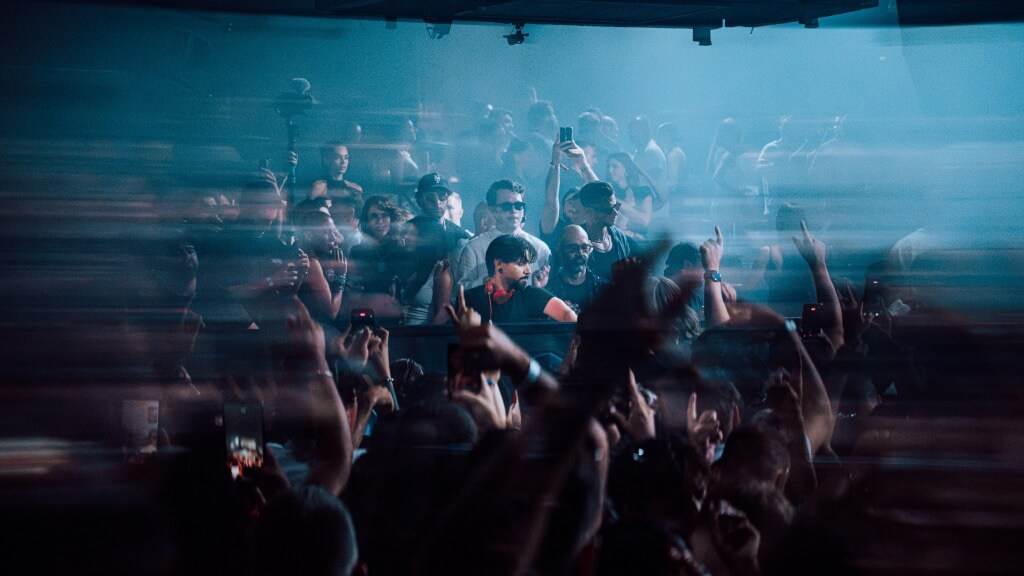
This might just be the summer of Solomun. Well, I suppose every summer is the summer of Solomun, considering the Bosnian-German DJ has had a summer residency at Pacha Ibiza for fourteen years now—but, I’ll be honest, I’m an American and an EDM novice, so last month’s opening of Pacha New York (complete with a set from Solomun, who broke his own decade-old rule about never leaving Europe mid-Ibiza-season to play it) caught my eye more than anything else. Still, attending only the Brooklyn satellite felt a little like visiting the Epcot version of a country; if I was going to do this at all, I figured I ought to go to the source.
To be blunt, I arrived in Ibiza green as could be. Most of my knowledge of the island came from the Popstar: Never Stop Never Stopping parody track “Ibitha” (it taught me how to mispronounce paella), and most of my knowledge of melodic house was gleaned from being blitzed out of my mind at clubs in college. I may or may not have spent much of my life assuming, based on name alone, that Skrillex was a heavy nü-metal band. (In my defense, I wasn’t entirely wrong: before Sonny Moore ever touched a CDJ, he was the shrieking frontman of the screamo outfit From First to Last.) But if I was going to be baptized into dance music, where better than in the spring of holy water itself: Pacha, mother church of the island that invented the modern superclub, with two of the genre’s high priests administering the dunk.
I flew out to see Solomun+1, Pacha’s crown jewel and Solomun’s aforementioned decade-plus summer residency. The premise is right there in the name: one resident (Solomun), one guest (in this case, Skrillex), one night (Sunday). Four days earlier, the pair had released their first-ever single together, “Rumpta,” on Solomun’s Diynamic label. “Rumpta” struts along at 128 BPM, Solomun’s housier warmth threaded through Skrillex’s telltale sharp, surgical drum work; it spent over a year haunting both artists’ sets as an unreleased ID before finally getting a name. The Solomun + Skrillex B2B show, then, would function as a coronation of sorts, celebrating the planetary collision of heavenly bodies long in each other’s orbit.
I knew, obviously, that Ibiza had transformed into a party island over the last several decades. I just don’t think I realized the totalizing extent of it until the plane wheels hit the ground. For better or worse, the whole island seems to have organized itself around the four-on-the-floor kick drum the way company towns once organized around the mill. There were more superclub headliner posters in the airport alone than there are artificial intelligence ads in the entire New York subway system, and that’s really saying something. On the drive to my hotel, a new billboard surfaced every thirty feet: Hï, Ushuaïa, the entire superclub census, each announcing its residencies like campaign promises.
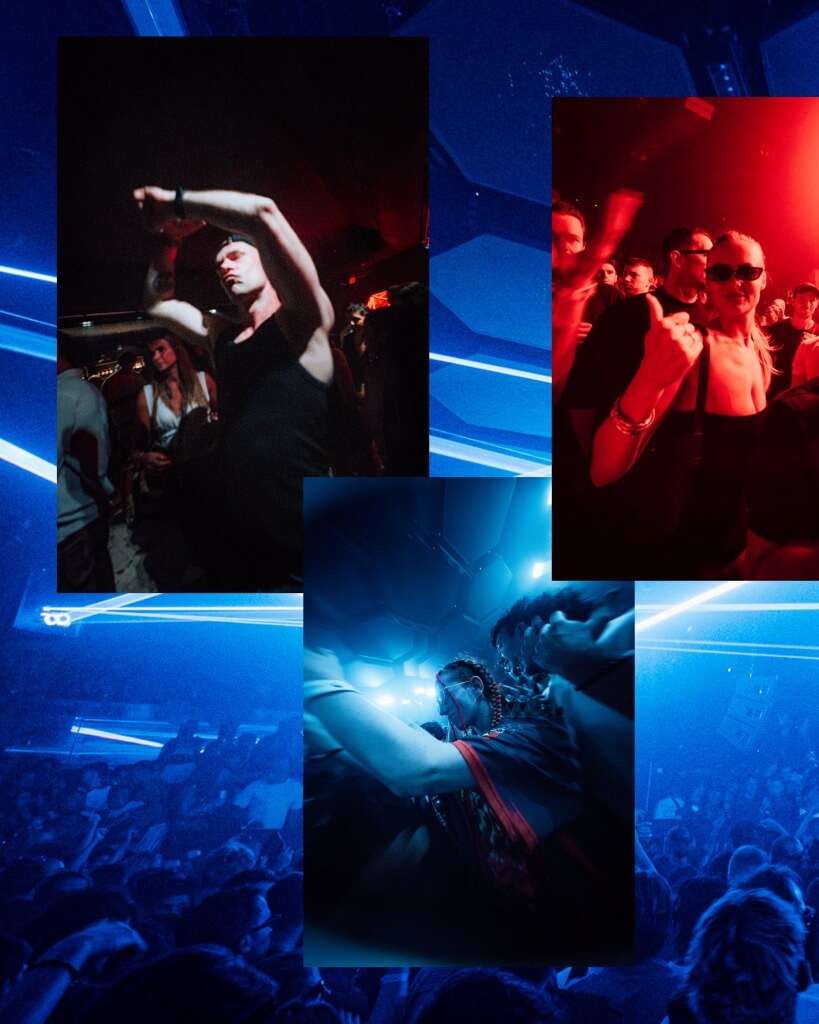
Pacha, for its part, ran the most aggressive campaign of all; after all, incumbents usually do. The club has been here since 1973, a converted farmhouse opened by Ricardo Urgell back when the island’s nightlife amounted to hippies and a record player. Fifty-odd years later, and there are no hippies in sight, just vacationers with lip fillers that probably cost more than my yearly salary, all flocking to Ibiza to cram like sardines in clubs (elbow to elbow with us natural-lipped commoners) to feel the bass pulsing through their bones. It didn’t take long for the club’s near-gravitational pull to make itself known. When I sized up my fellow travelers while waiting for my bag to plop out onto the conveyor belt, I became suddenly suffocated by a superabundance of cherries. Everywhere I looked, Pacha’s signature logo was sewn into shirts, stickered onto suitcases, embroidered on hats. Tourists en route to Ibiza, and they already had their merch.
I’ll admit, I did feel a strange, cheeky superiority as I climbed into the Pacha-branded van called to take me—me!—to Pacha Hotel, which sits directly across the street from the holy grail itself. A sort of guilt-ridden imposter syndrome came hot on that smugness’s heels, though: the people around me had planned this trip for months, built entire European itineraries around one Sunday night; some had been returning to +1 every summer like a family reunion. My EDM knowledge largely topped out at “Bangarang.” What business did I have taking up floor space at their mecca?
There was no answering that question from a hotel room, though, so at 10:30 p.m.—possibly the latest dinner reservation of my adult life, as Spain runs on a clock that American circadian rhythms might consider openly hostile—our little press group sat down to a tasting menu at Pacha Restaurant, the Mediterranean-Japanese fusion spot bolted onto the club. It was all delicious: mini croissants, edamame, artichoke, sushi, chicken, lamb chops, baby squid, a small potato multiverse of truffle fries, sweet potato fries, and mash. The restroom (which boasted vending machines for cigarettes and vapes) was redder than a 2020 TikTok e-boy’s LED-lit bedroom, a giant raised middle-finger statue sitting dead center among the stalls. Massive glass cherries were etched onto the mirrors. I found myself begrudgingly admitting that it was something of a branding masterclass.
Sometime after midnight, we slipped in through the “Pacha Family” entrance—and thank God, because the civilian lines ran down the block—past the outdoor cherries (now Saran-wrapped in black in honor of +1) and a sign capping the room at five thousand souls. The VIP garden was already heaving, even though the main event—Solomun and Skrillex B2B—wouldn’t start for another four hours or so. Everything glowed red and pink and blue, fogged up by smoke machines and Vogue skinny cigs alike. The path backstage ran through an honest-to-god light tunnel: mirrors on all sides, black-and-yellow flashes, Solomun’s name glitching apart and reassembling behind us. At the VIP bar, where a water ran fourteen euros and a Heineken twenty-six, Solomun himself stood at the counter, security detail not far behind. He gives, I learned, very strong handshakes.
Our backstage spot put us directly behind the decks, the knobs and doodads beaming like constellations in the dark of the club. The section filled up rapidly as Landikhan finished his opening set, then parted like the Red Sea for Skrillex when he appeared at a prompt 1 a.m. As he kicked things off with his Four Tet collab “Heartbeat,” I watched hundreds of phones raise in the air like a prayer, eager to snag a clip—and then they went down again, quickly replaced by hands and hands and hands, all writhing and pumping and flailing. It was rather surreal: standing mere feet behind Skrillex—Skrillex! Of Epic Rap Battles of History fame!—and watching him deftly work the rig, riding the EQs here and slamming a fader there. He bounced the entire time, as if the music were happening to him too, while a European melting-pot thronged this way and that in front of him.
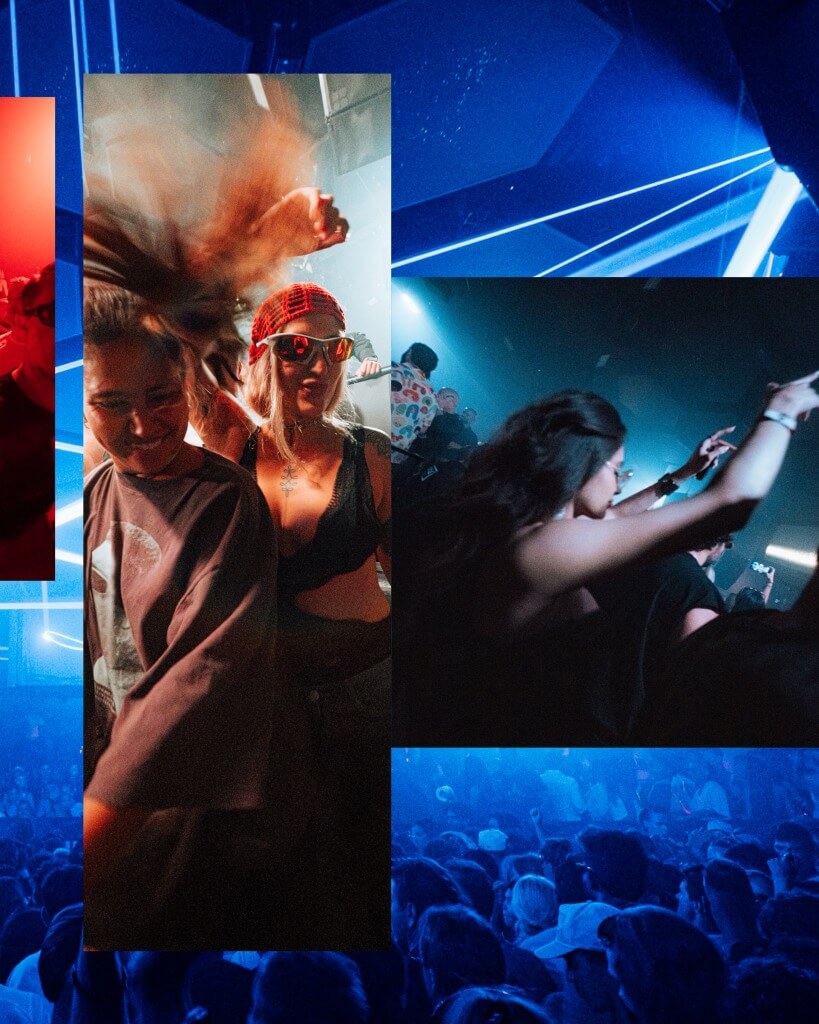
Across the next ninety minutes, the California DJ spun twenty-some tracks plus who knows how many blends—a new record every three-ish minutes, acapellas grafted onto instrumentals like organ transplants. Missy Elliott’s “RATATA” verse was stitched over “Leave Me Like This,” Megan Thee Stallion’s “Body” rode the Flowdan-voiced “Listen (Music Culture).” Skrillex’s pulls were satisfyingly global, too: UK bass from AC Slater’s Night Bass camp, Wiley’s “Boasty,” and a run of South Asian percussion—”Bass Dhol” with its rolling Punjabi drums, Panjabi MC’s “Mundian To Bach Ke” and its Knight Rider bassline—that peaked when he practically blew out the speakers with “TAKA,” his Ahadadream and Priya Ragu collaboration. I felt my tongue melt to mush as I tried to vocalize alongside it. I watched the girl beside me lose her voice in real time.
It’s often the case that, in VIP areas, the crowd ends up rather miserably dead—Gov Ball, for example, was particularly brutal—but not at Pacha. Bodies flung everywhere, the heat from the skin-friction rising into the air like steam. Save for one woman who seemingly underwent a rude awakening in discovering that people, in fact, dance at clubs (she spent the first hour glaring at the revelers around her and making bafflingly patronizing hand gestures, as if telling unruly schoolchildren to settle down after recess), there wasn’t a still soul in sight. The accompanying light show—hanging televisions, lasers, and all—only augmented it, pounding in time to the beat, but without ever redirecting attention upward to the LEDs or outward to the beams’ splash against the far walls. The music came first; that much was clear.
Solomun took over at 2:30 and the room dipped into blue light, bathing the crowd in cool ocean tones as the energy shifted from rapid-fire percussion to a lower, longer gear. Where Skrillex jump-cuts, Solomun dissolves, letting tracks breathe for whole minutes and carving his transitions so gradually you only notice the song has changed once it already has. It’s like watching a masterful card trick in 0.5x speed where you’re still unable to catch the moment of sleight-of-hand, the split-second cheat. The right card always appears like magic, pulled slow like taffy but settling into place with a prideful finality. Solomun has said in previous interviews that what matters to him is telling a story rather than just stacking dancefloor tracks, and that a set works the same way. From behind the booth, you can watch the story get told, his hands making small adjustments like a man trimming a sail.
He ensures, though, that the story can’t be re-told—that it can only be experienced once, in the moment. Try as I might—and believe you me, I tried, for over an hour at that—I couldn’t ID almost any of the songs I caught a few seconds of on camera. One track chanted something like “Rock to this beat / Motherfuckers bad as me” over a filthy bass breakdown; another built and built into an ecstatic release; another still pulsed like a heartbeat beneath a monotonous female voice. Shazam had no knowledge of any of them. In my desperation, I reached out to an online EDM scene chronicler to see if he could place the songs, and he came up blank too, informing me that the last time a Solomun number was ID’d, it took a village of Redditors and a bounty of twenty pounds for whoever could crack it first. (After weeks of research, a victor was crowned; the track lived on a small, back-alley Bandcamp page. How it was located I truly do not know.)
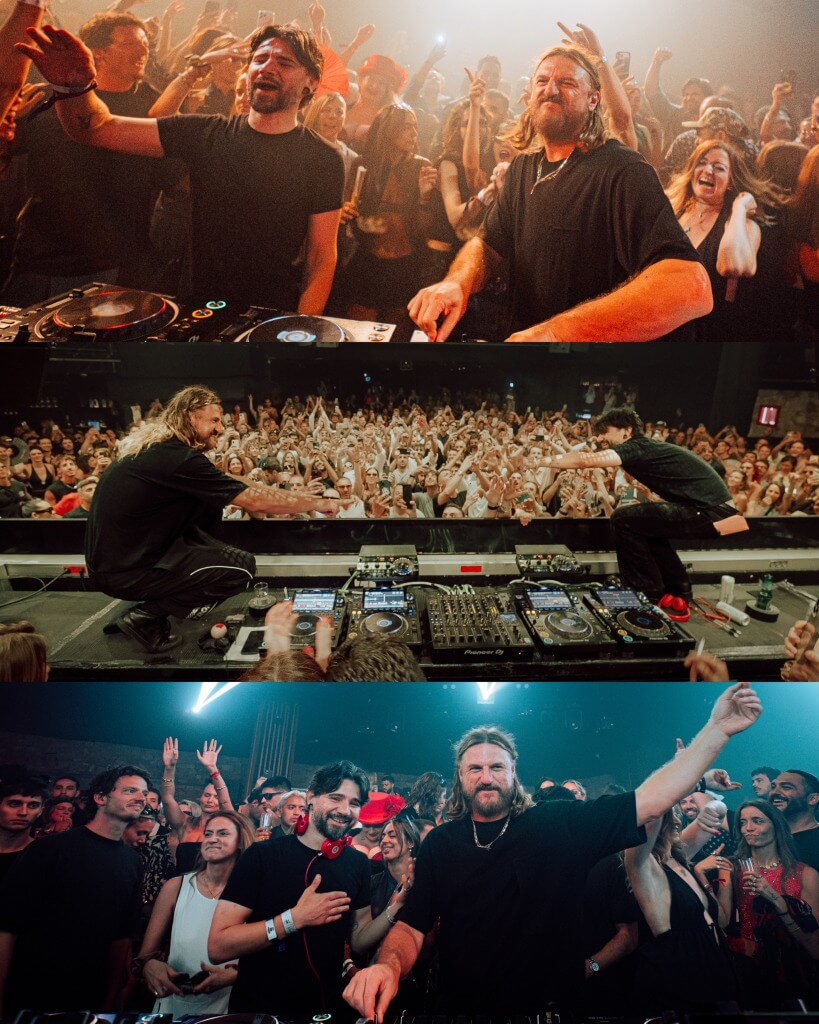
But that is, I think, part of the point. Solomun is rather notorious for being against phones at shows; at Pacha Ibiza’s opening party earlier this summer, he snatched a fan’s phone when they held it too close to the deck. His whole philosophy is best summed up by the flyer his team has handed out at the Pacha doors since 2017: “Dance first. Film later.” He expanded on it in an Instagram post earlier this summer: “We’re not here to set strict rules, and of course we’re not in a position to forbid anything. This is simply a friendly reminder…We’re all here to let go, to dance, to enjoy the music, and to live in the moment. And the vibe is always better when phones stay in the background or are used as little as possible.” While not everyone followed his advice and phones were not an infrequent presence throughout his +1 set, the mindset seemed to resonate more often than not—at least compared to sets I’ve seen at American festivals, this crowd felt positively luddite, and I do mean that as a compliment.
I confess I missed a chunk of the middle. An hour and change into Solomun’s solo set, the dancefloor heat, day-old jet lag, and my Doc Martens’ blister campaign formed a coalition against me, so some friends-of-the-night and I retreated to the garden for one of the great underrated genres of club experience: the breather. We sat on a concave bench below red-lit palm trees and a star-speckled sky and joked about the purse-clutcher who was rendered appalled and speechless by the crowd’s desire to dance. A London girl on her brother’s birthday trip plopped down and announced, “Sorry, I need to turn off for a minute,” before zonking her head back in total silence for five full minutes, only to resurrect and apologize—”I’m on, like, so much MDMA”—and offer me cooling spritzes from a water spray bottle she’d toted in. A horde of Austrians passed a baggie around with very little subtlety. An Italian guy told me he follows Skrillex to as many gigs as he can manage, a self-described groupie. The VIP bathroom line was endless, and the stalls, for reasons nobody could explain to me, were each named after one of the seven deadly sins with a matching framed stock photo. (Somewhere through the haze of five, six, or seven drinks, I found it in me to haughtily jot down the note: “clearly the branding guy who did the first bathroom gave his intern free rein on the second.”)
Sufficiently aired out, I limped back inside around 4:30 a.m. to catch the tail of Solomun’s set—and, as it turned out, its dissolution. There was no official changeover to speak of. As 5 a.m. hit, Skrillex simply rematerialized at the decks to raucous applause, and the last track of Solomun’s set bled straight into the first track of theirs, a woman’s voice chanting “give me ice, give me a break / give me all the things so I just can escape” as it carried the crowd across the threshold. One second there were two hands on the deck, the next there were four.
I don’t have the vocabulary to describe the B2B in great technical detail, so the best I can do is say that around five minutes in, I realized the experience I was having was less akin to a concert than a particularly rousing game of tennis. Solomun and Skrillex volleyed back and forth like a match, and I found myself feeling like Tashi in Challengers, techno music and all (minus, sadly, the homoerotic sexual tension). Solomun would lob a beat at Skrillex, who’d hit it right back with a record scratch and a rapid snare. They were creating an exquisite corpse of sound in real time, one that pummeled the floors and sent limbs into frenzies. Their selections ricocheted the same way, deep club history against internet-brain maximalism: Cajmere’s 1992 Chicago-house heirloom “Percolator” (in Chris Lake’s remix); a wink-wink doubleheader of C+C Music Factory’s “Gonna Make You Sweat” into Bob Sinclar’s “Rock This Party,” two tracks separated by sixteen years and united by the same “everybody dance now” hook; Skrillex’s Grammy-winning 2011 remix of Benny Benassi’s “Cinema,” a certified brostep fossil detonated in a house club as a self-aware callback. And, of course, “Rumpta,” four days old and played at its own christening. They closed on Armand van Helden’s rework of his own “I Want Your Soul” and an unreleased flip of Taylor Dayne’s 1988 freestyle confection “Prove Your Love”—and then five thousand people were sent into the sunrise, blinking strobe lights out of their eyes.
I was one of them, shuffling out with the herd past the black-wrapped cherries as the morning did something soft and pink over the distant marina. I stumbled across the street back to Pacha Hotel, thanking every higher power that I did not have to join the unlucky souls in line for a cab, and promptly passed out on top of the duvet with my makeup still on, ears ringing at what I can only assume was 128 BPM—a specific but not unwelcome form of tinnitus that outlasted the blisters, the jet lag, and even the flight home. I guess some baptisms do take.
Casey Epstein-Gross is Associate Editor at Paste and is based in New York City. Follow her on X (@epsteingross) or email her at [email protected].
 Keep scrolling for more great stories.