
Sparklehorse thanked a sad and beautiful world on the quietly hopeful It’s a Wonderful Life
Time Capsule: 25 years ago, Mark Linkous’ beloved cult project invited listeners on a hauntingly beautiful ride that chooses hope over despair with the help of friends like Tom Waits and PJ Harvey.
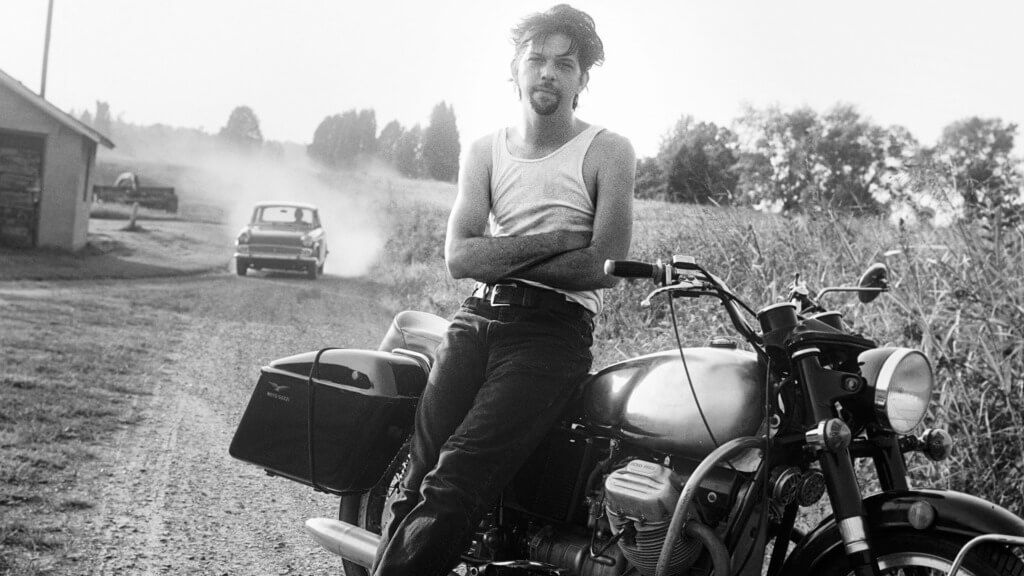
Photo by Danny Clinch, courtesy of marklinkous.com
Trying to describe a Sparklehorse album to the uninitiated feels like an exercise in futility. “Too slow, too soft, too sad,” might read a wry disclaimer stamped on an album sleeve. After all, nobody who emerged on the nineties alt-rock scene approached making music quite like Mark Linkous’ beloved cult project. The four records the Virginia native put out as Sparklehorse before taking his own life in 2010 brim with experimental production, delight in surrealism and literary allusions, and opt to mine for melodies in the quietest caverns of the heart and mind rather than embrace trendier rock fare. So, when critics dub 2001’s It’s a Wonderful Life the band’s most “accessible” or “cohesive” outing, that praise should be taken with a grain of glitter. While it might be a more streamlined record, distilled down to the essential elements of the Sparklehorse sound, it’s still far from a conventional listen. Those willing to immerse themselves in Sparklehorse’s hauntingly beautiful third full-length will find Linkous joined by a stable of friends as he endeavors to embrace hope over despair during even the darkest seasons.
The album’s opening title track rolls in on samples and organs as gently as a summer’s day. The atmosphere warmly crackles and dings, feeling at once old-timey and futuristically pastoral as whirs and blips buzz and chirp. Linkous’ signature hushed tones bring to life the types of odd images you might find discarded in a box of old polaroids in an antique store: a clump of dead bees, a bog of poison frogs, and a pooch pulling off a birthday cake heist. None of these visuals necessarily suggests, as the chorus insists, that life is all that wonderful. However, Linkous has explained that his accidental overdose a few years prior, which nearly took his life and the use of his legs, changed his perspective. He recalls beginning to notice the beauty of everyday sights—the sun, nature, babies, insects—he had once taken for granted but now felt lucky just to witness. Having drawn inspiration throughout his career from Romantic poet William Blake, these brighter moments of It’s a Wonderful Life might best be understood as Linkous’ own Songs of Innocence, though never quite turning a blind eye to pain and experience.
In that spirit of celebrating childlike wonder, “Gold Day” cradles the listener like a lullaby, but it’s actually a rise-and-shine song. Cardigans singer Nina Persson joins an avuncular Linkous on this glowing bit of chamber pop. It’s easy to imagine the song’s message (“May all your days be gold, my child”) cross-stitched and hanging on the wall of a nursery or child’s bedroom. Still, Linkous acknowledges that childhood can’t all be “a necklace of leaves” and “silver piles of smiles.” Sadly, time is fleeting, and scavengers and “skinny wolves” are howling at our doors. We hear that inevitable tension as a pulsing bridge emerges to counter the bright promise of the choruses and Persson’s ethereal, childlike voice. Linkous has always leaned into these types of dichotomies. Sparklehorse’s 1995 debut, Vivadixiesubmarinetransmissionplot, touchingly ended with the repeated mantra “It’s a sad and beautiful world.” In Linkous’ songs, life begets death, joy demands pain, and golden days of innocence must, at least on occasion, give way to the gloomy storms of experience. None of which he sees as being incompatible with the outlook that life can indeed be wonderful.
Linkous had cited “Sea of Teeth” as the closest he ever came to capturing how a Sparklehorse song sounded in his own head. It’s also a terrific litmus test for those first dipping a hoof into his music. Drummer Scott Minor and Mercury Rev bassist Dave Fridmann attempt to play slower and quieter than humanly possible as Linkous strums and whispers, a singing style he adopted to both combat shyness and not wake his wife during late rehearsals. “Can you taste the crush / Of a sunset’s dying blush?” he asks in a series of abstract queries that magically shrink the wonder of the cosmos, nature, and mortality into something we can hold and observe in our palms. Linkous seems to derive comfort from both the constant (“Stars will always hang”) and the inevitable (“Trees will turn to soil”) while all manner of keys (piano, Mellotron, and Chamberlin) drift in and out of earshot. His voice does a similar slow dance with violin, cello, and drum machine on the following “Apple Bed,” Linkous again sounding at his most content when painting these devastating, quiet landscapes a single brushstroke at a time, making sure to pause for the canvas to fully absorb the colors.
The harder-rocking inclusions on It’s a Wonderful Life scrimp on none of the nuance of Linkous’ more subdued musings while also adding a more visceral element to the record’s inner turmoil. On album standout “Piano Fire,” PJ Harvey’s electric guitar violently clashes with Linkous’ acoustic strumming and the song’s electronic backdrop, a collision that sparks to life a haunting, dreamlike image like “Fiery pianos wash up on a foggy coast.” The internal tension continues to ratchet up as their voices implore, “How do you feel?” Their response—a classic allusion to emotional detachment (“I can’t seem to see through solid marble eyes”) followed by Linkous’ own literary stab (“I can’t seem to breathe with rusted metal heart”)—again demonstrates just how emotionally resonant Sparklehorse’s surrealistic imagery can be. Similarly, the industrial-leaning “King of Nails” may have been recorded in a forge with guitars and synths rather than a studio, as Linkous toils and hammers it into shape like a blacksmith. “To sink or to shine / The nails are all mine,” he drones on the chorus, acknowledging that the decision to choose sunlight over shadow belongs to him, though all the struggle still lies ahead.
Sparklehorse’s first two records had been largely DIY affairs recorded in Linkous’ home studio. For It’s a Wonderful Life, he decided to trust others with helping him capture the project’s aesthetic. Nobody repaid that trust better than Harvey and her longtime collaborator John Parish, who join Linkous a second time on the more somber “Eyepennies.” Parish’s funereal piano and Harvey’s guitar and vocals form a dirgelike procession with Linkous’ voice, though gratitude (not grief) for having existed, endured, and even found peace in whatever comes next feels like the order of the day. The other guest whose talents will be instantly recognizable is Tom Waits. Linkous, a longtime admirer of Waits and his penchant for wringing “music” out of nonmusical objects, unleashes the beatboxing junkman on “Dog Door,” a song they co-wrote with Waits’ wife, Kathleen Brennan. Waits’ iconic vocal shuffles between a processed falsetto and a bearlike growl with what sounds like the musical accompaniment of a recycling plant. Of all the instruments listed on the album, none will likely bring more smiles and head scratches than Waits’ credit for having played “metal things” and simply “train.” It’s strange enough to make listeners overlook that he also added a beautiful piano part to the hidden track “Morning Hollow.”
Linkous detested how some dismissed Sparklehorse’s music as overly morose. As a result, so much of It’s a Wonderful Life quietly expresses gratitude and seeks out wonder in the natural order of things. However, Linkous also seems to draw hope from the comforts he seeks. That’s not a surprise, given his lifelong struggles with depression and the physical pain he endured for much of his time in Sparklehorse. The choruses of “Apple Bed” plead for a doctor to offer a remedy as fine as the cool lounging spots in nature that Linkous remembers from his youth. His titular request on the beautiful “More Yellow Birds” actually comes from receiving homemade yellow birds (a sign of hope) from a Sparklehorse fan. “Little Fat Baby” gives a lyrical nod to friend and fellow artist Vic Chesnutt, whose own health issues inspired Linkous to continue. Perhaps least cryptic of all, on “Comfort Me,” Linkous, in a role not unlike Ophelia, asks point-blank over a gorgeous blanket of sonic textures, “Won’t you come to comfort me?” The album’s appreciation for the totality of the human experience doesn’t dismiss the hardships that come with the gift of life. It’s a record that seeks out hope and often finds it.
“Babies on the Sun” sounds like it’s meant to close out It’s a Wonderful Life much as the title track begins. After slowly whirring and burbling to a start, Linkous pieces together an impressionist collage that keeps us guessing. A line like “your first burning breath was a symphony” sounds glorious but also turns terrifying when we think of innocence placed in such perilous proximity to fire and destruction. The track ends with actual babies babbling. On the original release, the hidden track “Morning Hollow,” largely thought to be a tribute to the artist’s deceased dog, emerges after three minutes of silence. That’s how It’s a Wonderful Life will always end for many of us. In a span of fifteen minutes, Linkous takes listeners from the hopeful promise of a child’s first breath to the sadness of a loyal friend’s final ones. That journey from cradle to deathbed might be too slow, too soft, or too morose for some tastes. For Sparklehorse, it’s one more thing to be thankful for in a sad and beautiful world.
 Keep scrolling for more great stories.