
A Noah Kahan copycat is surging up the Billboard Hot 100
Online critics say that Stella Lefty’s breakout hit depends too much on a melodic interpolation of Kahan’s “Stick Season.” But her fans don’t seem to care: “Boston” has surpassed 120 million streams.
Photo by Cris Slater and Geoff Mau
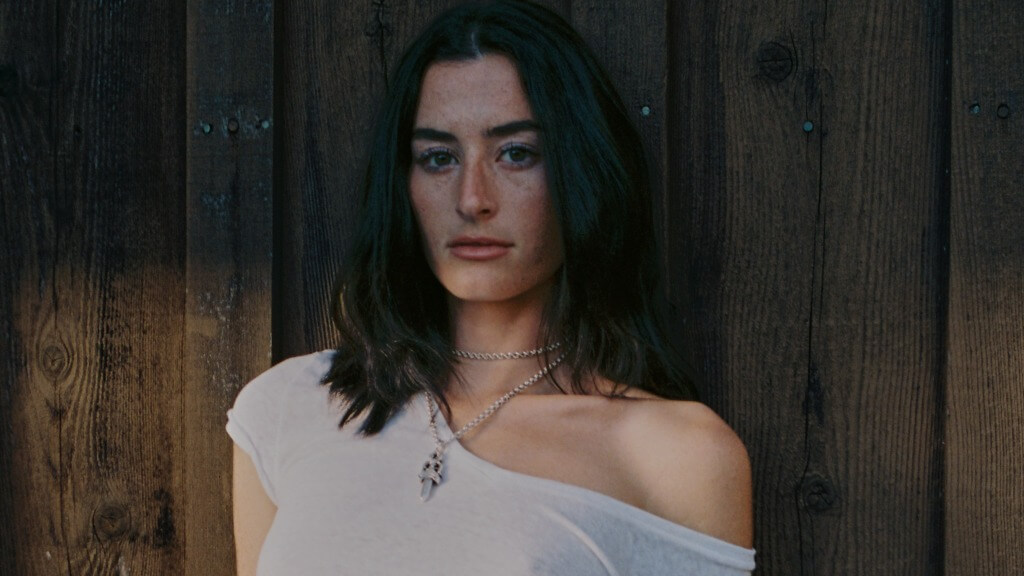
Stella Lefty, the 23-year-old singer-songwriter responsible for the now-controversial hit “Boston,” continues to dominate the pop charts. In fact, her breakout single is currently No. 6 on the Billboard Hot 100 and angling for a higher spot. People online aren’t too happy about the song’s success, though—in large part because of how much it depends on a melodic interpolation of Noah Kahan’s “Stick Season.”
Earlier this month, Lefty faced accusations that she was an industry plant—her father Eric Lefkosky, it turns out, is the billionaire founder of Groupon. It didn’t help that her manager’s response to the claim was “industry plants don’t exist,” a statement that only the manager of an industry plant would make. Since it’s a legal requirement to credit the sources of interpolated songs, Kahan is credited as a co-writer on “Boston” alongside Joe Reeves (Juice WRLD, Morgan Wallen) and Jacob “J Kash” Kasher Hindlin (Lady Gaga, Maroon 5). But sure, maybe she’s not an industry plant. The question, then, becomes: how exactly are we to make sense of an artist who, before “Boston,” released 10 non-charting singles, and now has a distinguished lineup of songwriters like Reeves and Hindlin behind her?
“My perspective on music has changed so much with this song,” Lefty recently explained in her Genius lyrics video, which also features such insights as: “What inspires the music that I make? Definitely, like, real life experiences.”
Kahan, at least, is from the New England area he sings about on his records; Lefty, for her part, has no obvious connection to Boston. She was born in Illinois, relocated to Los Angeles, and went to college in Louisiana. The song itself is your typical vertical-video fodder: rote, repetitive, and inoffensive music that hardly tries to differentiate itself from the recent flood of nu-stomp-clap that’s found reasonable chart success—thanks, in large part, to Kahan’s feel-good A-list popularity.
It’s also a poor imitation of Kahan’s “Stick Season,” the more sonically complex (if equally saccharine) single that rocketed the Vermont singer-songwriter to international fame. The argument usually made in these cases—that artists are allowed to like other artists, and to take inspiration from their favorite songs—falls a bit flat when the song that’s interpolated feels so much more legitimate than its copycat. But maybe originality and authenticity simply don’t matter anymore: Lefty has already been rewarded with 120 million Spotify streams and counting.
 Keep scrolling for more great stories.