
Terry Allen’s blood spans a thousand miles
The songwriter, artist, and patriarch discusses his family’s new 22-song album, Blood Sucking Maniacs.
Photos by Barbara FG
Three bronze anthropomorphic deer guard the Scioto River and its neighboring Rich Street Bridge in downtown Columbus. I walked by those sculptures a hundred times when I lived there, but I only recently learned that Terry Allen, the man who wrote the Texican badman obra maestra Juarez, made them. That was twelve years ago, when the city was trying to revive the area and invited Allen to propose an art installation. After three days wandering across Columbus and learning that “scioto” is Wyandot for “deer” or “hairy river,” he decided on a humanlike take on two stags and a doe. Columbus folk liked the sculptures so much they tried printing them on beer can labels and T-shirts.
I found out about Allen and his music because of his spoken-word monologue at the end of Hayden Pedigo’s Greetings from Amarillo tape. His songs hit me like gunfire on gasoline. Juarez, Lubbock (On Everything), Smokin’ the Dummy, Bloodlines is as good a run of albums as any, though Allen’s impact on the American Southwest’s musical history would be just as colossal had he only written “Amarillo Highway.” Since the seventies, he has found admirers among artists such as David Byrne, Sturgill Simpson, Lucinda Williams, and Guy Clark. I remember going down an Allen-shaped rabbit hole and reading a Rolling Stone piece that called his music “savage and beautiful, literate and guttural.” It was spot on.
Last year Juarez turned fifty, and in three years Lubbock (On Everything) will do the same. Five decades later, those records’ legacies are well-established in the pantheon of Texas music alongside the best of Willie, Waylon, Tubb, Townes, and Wills. How precious it is, then, that Allen, now eighty-three, has just submitted another LP to his home state’s canon: Blood Sucking Maniacs, which dropped this past April. I rang him up at his Santa Fe home a couple of weeks ago. We immediately got to talking about his 1980 song “The Lubbock Tornado”—specifically the line: “like a vampire over the Broadway, it showed no moral code / it’d take out a mighty church of God and leave a honky-tonk by the road”—because I said Blood Sucking Maniacs reminds me of it. That song came from Allen’s childhood fear of tornadoes, and the motivation to bring vampires into it stemmed from him needing a metaphor for a “spooky thing that comes out of nowhere and kills people,” like some kind of Great Plains Godzilla.
“The Lubbock Tornado” wasn’t on Allen’s mind when he coined the phrase “blood sucking maniacs,” but vampiric lore runs deep in his family anyway. When his son Bale was seven years old, Allen came home from his art studio and found two crosses strung up like Christmas lights with a twisted-up mirror in the middle. “What is that?” he asked his son. Bale responded, “It’s a vampire trap.” Allen thought it was “instantly brilliant” and considered stealing it, but he didn’t. His other son, Bukka, wanted to be a magician and then a ventriloquist, so Allen and his wife Jo Harvey bought him a Charlie McCarthy doll. “One of the first things he did was paint it up to look like a vampire, for whatever reason,” Allen recalls, chuckling. “He had it buried deep in his psyche.” When Allen shot the cover photo for Smokin’ the Dummy in 1980, he was sitting on a couch holding Bukka’s dummy, blowing smoke rings in his face. A nearby Bukka, who’s fifty-eight now, said the title out loud and it stuck.
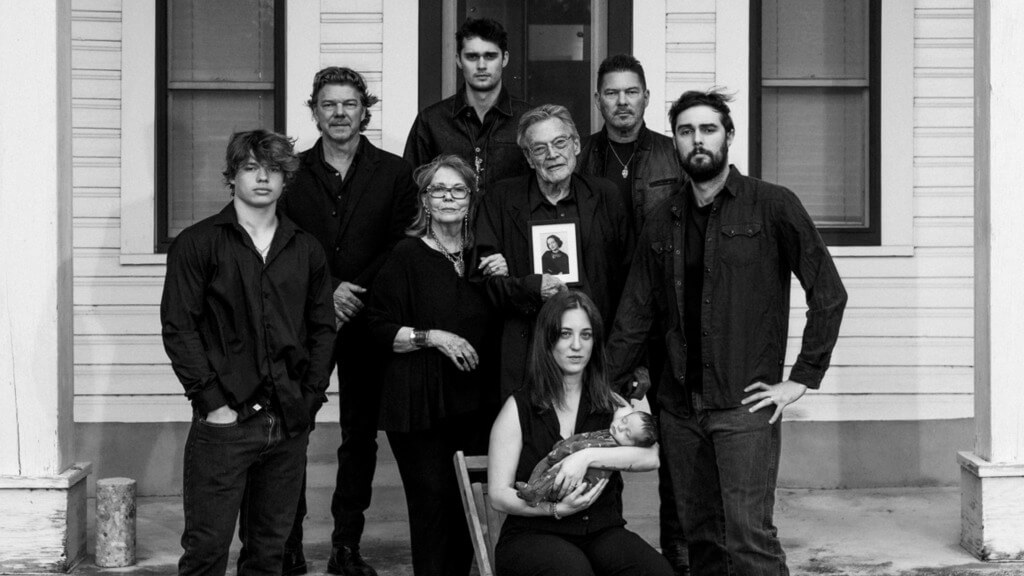
Getting the Allen family in one room, Terry says, was like “herding cockroaches,” because many of them live in different parts of the country. I didn’t bother trying to corral his kin onto one call, worried that putting this interview together would take as long as it took to make Blood Sucking Maniacs. The album really got started a couple of years ago, when Bukka wrote “These Four Rocks,” which he based on a bracelet he’s worn since he was sixteen. The Allens recorded all twenty-two songs during a big throw-down at Terry and Jo Harvey’s home in Santa Fe last summer. It was, as the title track suggests, like a movie in a dream. “It’s funny that the whole process was so easy and strangely mysterious and personal for all of us,” Terry chuckles. “When we all started doing it, it was amazingly comfortable.” Bukka’s son Calder, a twenty-three-year-old singer-songwriter himself, wrote a ton of material for the album. Bale, now fifty-seven, did, too. “Everybody was working with this family thread in mind,” Allen says of Blood Sucking Maniacs, a record stitched together from “a family full of disparate parts.”
Blood Sucking Maniacs is a living, breathing, wisecracking twenty-two-song genealogy chart. It’s like sitting around a dinner table, listening to a dozen stories coming at you from a dozen mouths. It’s got Terry and Jo Harvey’s children, their children’s children, in-laws, family friends, old collaborators from the Panhandle Mystery Band and the Sexton brothers, and transmissions from the afterlife. Together, the music they’ve made is a front-porch pageant of spoken-word fragments, old family recordings, and ramshackle country sing-alongs. Allen didn’t grow up listening to family bands like the Carters or Blue Sky Boys or Delmore Brothers, nor had he ever thought about starting one of his own. “And I’m not sure any of us were thinking that way yet,” he adds. “Everybody is so much of an individual, but, at the same time, I think whatever individualism we have feeds off of that group feeling from one another.”
To be fair, that’s not that different from what most families go through, but making Blood Sucking Maniacs became a sort of creative ritual for Allen and his loved ones. His grandson Kru (Bukka’s youngest son) is just a high schooler but plays the piano like he’s well into his forties, and he has two brief improvised solos on the record. Terry thinks that Kru shares a direct link with Pauline, Terry’s deceased mother, who appears on the album performing W.C. Handy’s “Blues” via an old tape demo. “Kru never met her; he wasn’t even born when she died,” he clarifies, “but that kind of connection went all through the record.” I ask him, “Do you think that link in your family is musical, or is it more difficult to describe?” He pauses, then speaks up. “I think music is the vehicle of it, but the link, I think, is the care and the love that you have for your family.”
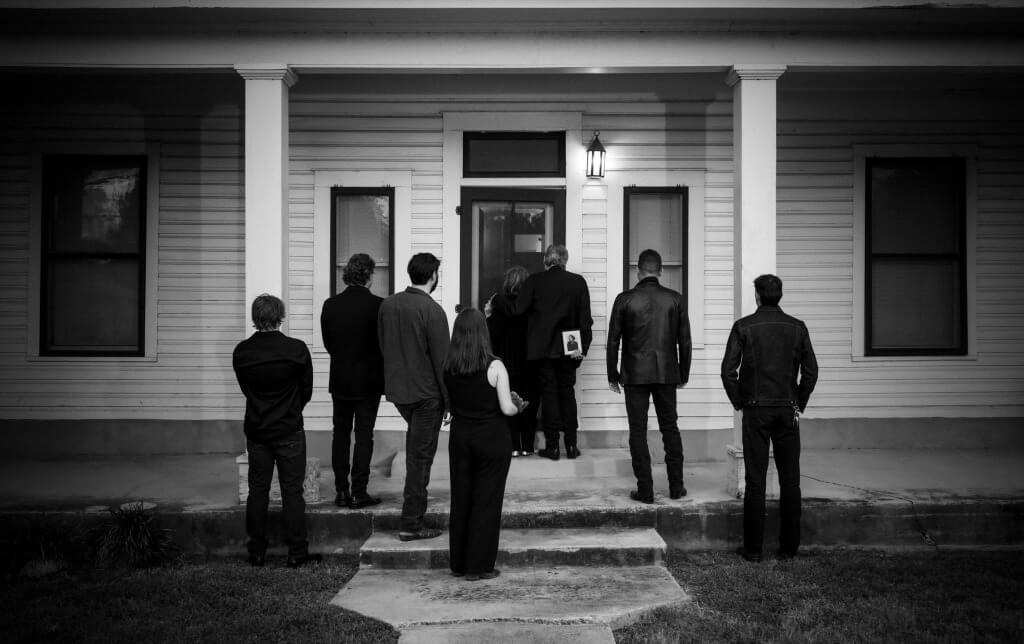
And so it’s perfect that Blood Sucking Maniacs begins and ends with the heartbeat of Sled’s son Lucky Marlo, the Allen family’s newest addition, who was born last July. Bale’s ex-wife Jennifer’s father was named Lucky, but he passed away five days before Lucky Marlo’s birth. “Lucky became part of the wheel of emotion, of generations moving on, going on,” Allen says. “That’s why it works really well, there’s a beginning and ending, because in one sense it’s brand new. In another sense, it’s so ancient.” The band’s membership spans 121 years, from Pauline to Lucky Marlo, with Terry and Jo Harvey near the top.
The spouses sing “When Things Go Wrong” at all their parties. The version of the old blues song they do is from an old Buster Brown record with “Is You or Is You Ain’t My Baby” on it. But the Allens have always liked “When Things Go Wrong,” because it’s the truth of two people staying together for a long time. “There’s bound to be some kind of Hell that happens, and you wade through it as best you can,” Terry says. “That song’s about that for us, about getting through hard times with one another.” He and Jo Harvey have been together for closer to a century than a decade. They met when he was ten and she was eleven. “I usually say that we didn’t screw until we were twelve,” Terry snickers, “but she doesn’t particularly like me saying that.”
But there isn’t a day that goes by that Terry doesn’t learn something new about his wife, an accomplished playwright and songwriter, and it’s why they’re together at all—that and because they’re both massive schizophrenics, he suggests, “so you wake up with a new person every morning.” On Blood Sucking Maniacs, Jo Harvey has her song “Down to the River,” the album’s sweet and spiritual paean. The world stops when she and Terry duet. Here, they’re lovers dreaming of all the destinations they haven’t reached yet. Terry sings the “come on, baby, let’s go” refrain while Jo recites the verses, filling us with stories about the Bay of Bengal, “bad microphones” blasting love songs, slow dark oxen, the Nile at Aswan, pickup trucks, dark secrets, that “mighty Mississippi,” and that “beautiful, beautiful Seine.” If not today, then tomorrow, Jo beckons, as she and Terry find shelter in each other, a piano harmonizing around them.
“Down to the River” is quiet as a lamb, just two good, curious people talking about going someplace prettier than a postcard. Years ago, the Allens got together every Christmastime to participate in their own version of the Exquisite Corpse literary tradition, joining a bunch of friends for nights of “music and messing around.” “We’d pick a subject, and then everybody would write a verse, and then we’d put it in a hat, scramble it up, pull it out, and glue it together to make a song out of it,” Terry explains. “It was during that climate that Jo Harvey wrote a part of [‘Down to the River’] as a poem, and then she started singing it.” He and Jo Harvey always thought it was an incredible love song, and the tapes wound up in their archives at Texas Tech. When Blood Sucking Maniacs started production, they pulled out the original demo and made a big thing out of it.
Allen started revisiting and re-arranging songs forty years ago, when he was putting Juarez songs on Bloodlines. He’s made it a habit to retool his own work ever since. On Blood Sucking Maniacs, he’s polished up “Bloodlines” and “Red Leg Boy,” the former being among the best family songs Allen has ever written. The latter, an ode to Terry’s dad’s Missouri childhood, was plucked from his Salivation record and redone with Bukka, Bale, Sled, and Calder. When Terry was born, his father, a pro baseball player-turned-wrestling promoter in Lubbock, was already in his sixties. Fifteen years later, the Allen patriarch was dead, which put a distance between them in memory. All Terry has left of his dad are his stories, which, he says, have become “the lifeblood of our family.” A quote of Terry’s from a long time ago sticks out to me: “The moment the present ends and memory begins, it becomes fiction.” I wonder aloud if Blood Sucking Maniacs is more present or more memory, but Allen suggests a third option: the future.
Blood Sucking Maniacs, to my ears, sounds like a response, either consciously or subconsciously, to the fact that a lot of Terry’s family elders were dead or too old to remember their own stories when he was young and curious. “What does it mean to pay tribute to the ‘arteries of ancestry and landscape’?” I ask him, citing a line from his biography, Truckload of Art. “Everybody in the whole family is a black sheep,” he says. “I’ve always thought of music as something that moves constantly through space. That’s what this record does a lot; it makes a motion through space from all these different angles that are together and apart at the same time. And that’s what we are as humans.” A critical line in the record is “there’s a thousand miles in-between.” What gets filled up in those thousand miles, Allen gestures, is “what each person does with that space and their life.”
Allen has spent decades arguing, implicitly and explicitly, that family isn’t an obstacle to artistic fulfillment. He’s in his eighties now and has excelled in all kinds of disciplines: visual arts, outlaw country music, even sculpting humanlike deer for an Ohio riverbank. I don’t know where Blood Sucking Maniacs falls on Terry’s path, but as the album reaches an hour in length, he sings, “May these limbs grow wild and free / May our hearts know that’s how this tree should be.” These poker games, fishing trips, and horn honks keep inviting me back in, back to music that preserves a portrait of the Allen bloodline and a few of its honorary members. I imagine it will be a story for Lucky Marlo to pass down to his children when they’re old enough because family, Terry says, is a privilege to have. And, in these tired, challenging days, “it’s a comfort to know that that blood’s out there somewhere.”
Matt Mitchell is the editor of Paste. They live in Los Angeles.
 Keep scrolling for more great stories.