
Peter Gill on “That’s Not Me”
Pet Sounds Project: Track three on Pet Sounds hangs suspended between the idea of the thing and the thing itself. It’s a song about displacement, and once you start inspecting under the hood, you find thematic reinforcement of this displacement around every corner.
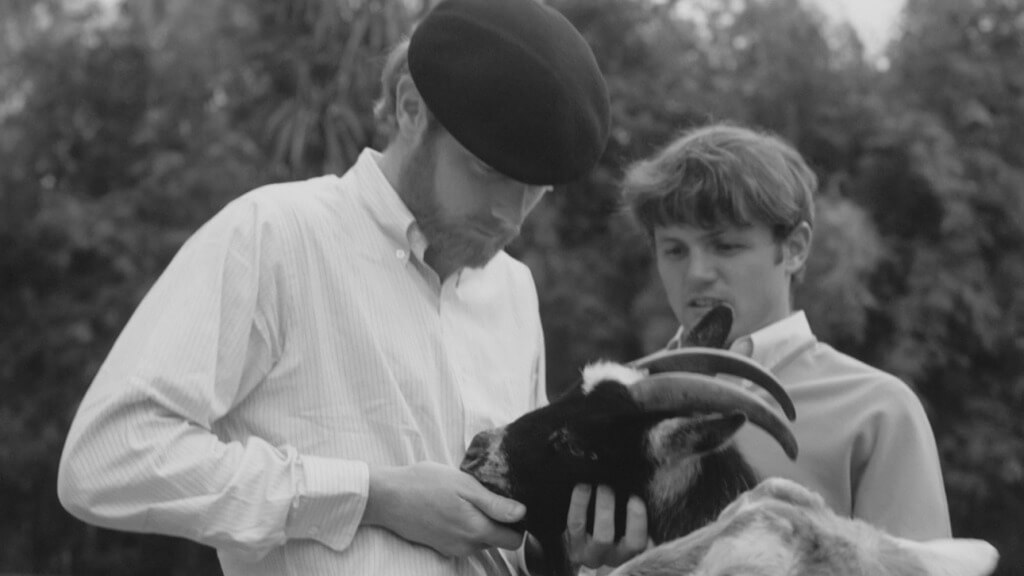
Photo courtesy of Capitol/UMG
The Pet Sounds Project is Paste’s two-week celebration of the Beach Boys’ eleventh album, which turns sixty years old on May 16, 2026.
For my first couple summers in Philly, around 2015–2017 or so, I listened to Pet Sounds front to back every single day. Leaving midcoast Maine and my post as a sternman on a lobster boat, I packed up and split for the city, and promptly found a new job renting out swan boats and flat-bottom dinghies to tourists on the Delaware River. I spent those long, humid days cultivating a deep farmer’s tan, giving crash courses in rowing technique to unprepared boaters, and tracking down stray swans in our rescue boat before they got swept out of the basin into the strong currents and freighter traffic of the Delaware. Pet Sounds was my constant soundtrack in those days. Of course, I was delighted by how very on-the-nose it all was, the sun and the water and “Sloop John B” and the crowds on the fake little boardwalk lining up for ice cream. I was also trying to internalize these songs like my hero Alex Chilton (of the Box Tops and Big Star) clearly had. I was very impressed at Alex’s ability to whip out “Wouldn’t It Be Nice” and “Solar System” off the top of his head when the power went out at his 1997 show in New York at the Knitting Factory, and I realized knowing this material inside and out could maybe help me become the kind of songwriter I wanted to be. It was the best homework in the world, listening to this beautiful album over and over. Now these songs are forever stuck in my head.
Of all the unforgettable melodies on Pet Sounds, it’s the opening hook of “That’s Not Me” that I most often find squirming around in my brain like a parasitic worm. In classic Brian Wilson form, it’s a poppy cascade of notes that won’t sit still, but something’s changed from his earlier work. This melody line forgoes the bubbly exuberance of “Don’t Worry Baby”, the hegemonic teenage grandeur of “I Get Around” and “California Girls”, and the suburbanized Chuck Berry-isms of “Fun, Fun, Fun” and “Surfin’ U.S.A.” Instead, the tune is retrofuturistic in a way that reminds me of the chic curves of a modern airport, the Jetsons, those commercials for vacuum cleaners and toasters. Come to think of it, I can’t say I’ve actually ever seen a commercial for a toaster—and that’s an important part of it too, how “That’s Not Me” hangs suspended between the idea of the thing and the thing itself. It’s a song about displacement, and once you start inspecting under the hood, you find thematic reinforcement of this displacement around every corner.
There’s the displacement described quite literally in the lyrics, of course. It’s your age-old grass-is-greener, if-only-I-had-a-time-machine, you-can’t-go-home-again series of missteps and maladjustments, couched in the vernacular of midcentury young America. “I miss my pad and the places I’ve known”? I mean, come on. It’s practically a national duty to relate to that at some point in your life. Further displacement can be found between the harmonic structure and the vocal performance itself. The chord progression is thoroughly souped-up with all the modern appliances, sleek and self-assured in its trip through various tonal centers, a complex highway interchange as dreamt up by M.C. Escher. (By the way, if you know some basic chords on an instrument, I’d encourage you to take a look at these chords sometime! No old-fashioned diminished sevenths or flat-fives here, which to me just heightens how inventive this progression is. It’s been a huge lesson for me on all the cool things you can do with the tools you probably already have.)
Navigating this sophisticated chord structure are the voices of Brian and Mike Love, who sound positively pubescent in the way their vocals blend and alternate and strain with effort to hang on amid the changes they’re being put through. The flawed humanity of it is a bit like watching Borat try to ride an escalator for the first time. Then consider the unexpectedness of the arrangement, with its whining organ drone and vaguely Latin limp that sounds like a busted preset on a child’s Casio keyboard. There are the awkward twelve-string guitar lines that decidedly weren’t made for those times, sounding texturally more like dinky synthesizers than twelve-strings as the Byrds or Beatles, or anyone else, were using them. Those guitar lines sound like weird little questions, the kinds of questions that might float around amoeba-like in the mind of “the child who does not know how to ask” that you hear about in the Haggadah, rather than the kinds of questions you imagine banging audaciously at the doors of perception. It’s a quirky arrangement that, along with 1977’s The Beach Boys Love You, truly bridges the gap between Phil Spector and the Magnetic Fields in a manner that some of the biggest geeks on God’s green earth must find extremely satisfying.
The sum product is a multilayered song that gives a young person a lot to think about—not that they need to think about it; theoretically, they’re living it, here in reality or off in our collective cultural imagination. It’s a curious thing to find the frazzled pop star and his ad copywriting sidekick using track three of their boundary-pushing masterpiece to pump the brakes on the accelerating Sixties. Apart from all the songwriting lessons I’ve picked up by studying the inner mechanics of this song, it’s perhaps this incongruous zeitgeist refusal that I find so appealing after all these years. I mean, here I am going a thousand words deep on an album cut from six decades ago, a song that has long lived in the shadows of its more illustrious side one neighbors. Ultimately, “That’s Not Me” isn’t the first, last, or best song about leaving home in the American canon, but it speaks with such an honest voice on how strange it really is to be almost young and lost out in the world.
Come back tomorrow to read about “Don’t Talk (Put Your Head on My Shoulder).”
Peter Gill is a Maine-born, Philadelphia-based musician & songwriter. He fronts the power-pop band 2nd Grade and has been a member of numerous groups over the past decade, currently playing in alt-country band Friendship and instrumental ensemble Hour. His most recent release was last year’s Redness & Swelling at the Injection Site, a collection of lo-fi folk and bossa nova pop songs under the name WPTR.
 Keep scrolling for more great stories.