
Mari Rubio on “You Still Believe in Me”
Pet Sounds Project: Full of dissonance, diatonic harmonies, and an outcast spirit, the second song on Pet Sounds was a massive leap forward into the Beach Boys’ new, burgeoning feelings of adulthood and responsibility.
Photo courtesy of Capitol/UMG
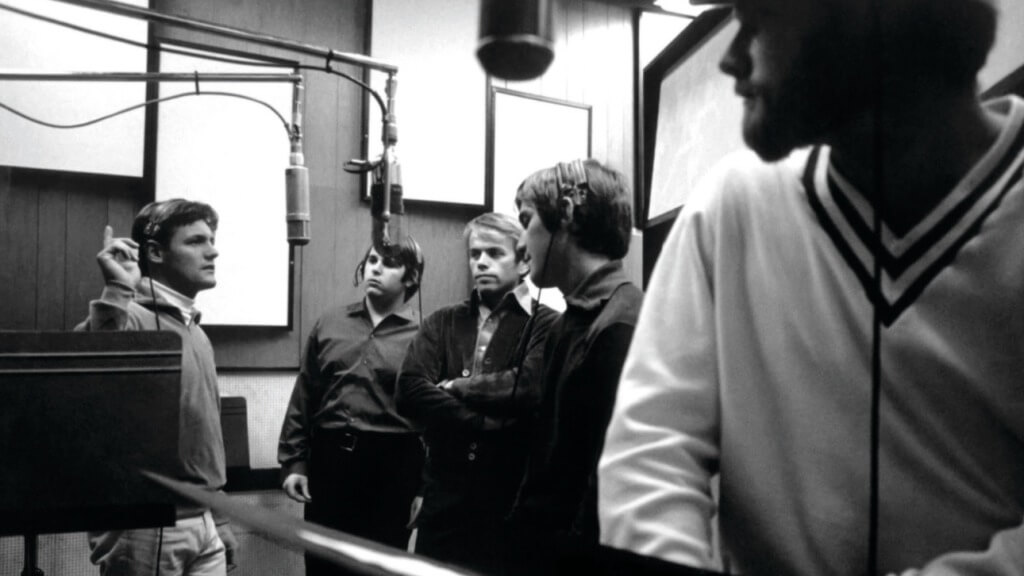
The Pet Sounds Project is Paste’s two-week celebration of the Beach Boys’ eleventh album, which turns sixty years old on May 16, 2026.
I’ve had multiple phases of total inundation with the Beach Boys’ music throughout my life, and the earliest one began when I was still a child. My mom had the Still Cruisin’ compilation, which became a soundtrack to our car rides through suburban San Antonio for years. My brother and I would absolutely lose our minds at the back-to-back of “Kokomo” and the band’s hilarious and deeply questionable rap collab with the Fat Boys on “Wipeout.” Insanely, the compilation also incorporated “Wouldn’t It Be Nice,” which improbably fit perfectly amid this collection of naive, often novel bangers.
For years, this was my main knowledge of the Beach Boys: bright, innocent songs about cars, surfing, tropical islands, and the occasional hints of childhood nostalgia and longing. This all changed in high school when, as a freshman, I began recording with my mentor Joe Reyes, who told me in passing that I “should really be listening to more of the Beach Boys, especially Pet Sounds,” and that “this is the perfect time in [my] life for that.” I immediately went out and bought Pet Sounds on CD. The sugary, carnival-like rush of “Wouldn’t It Be Nice” was nothing new to me, but I knew things were different when the opening notes of “You Still Believe in Me” came in. Thus began the second major Beach Boys phase of my life.
Joe was right—it was the perfect time in my life for this music. “You Still Believe in Me” is a massive leap forward into the band’s new, burgeoning feelings of adulthood and responsibility. The song marked my first “adult” phase of appreciating the Beach Boys and reflects how Pet Sounds signals the group’s move into emotionally complex territory. I can’t imagine what it must have felt like to hear “You Still Believe in Me” at the time of its original release in 1966.
All of a sudden, this band that mostly sang about surfing and cars came out with a strangely orchestrated ballad that presents Brian Wilson as a flawed partner overcome with emotion at his lover’s ability to look past his many indiscretions and dalliances. Placed directly after the dreamlike adolescence of “Wouldn’t it Be Nice,” “You Still Believe in Me” feels like the weight of reality crashing down. As a teenager, I was deeply moved by the way this song reflected the ugly parts of life—how much the record as a whole felt like a process of becoming something awkward and new. I have vivid memories of listening to Pet Sounds on my CD player while taking the bus to school and feeling wistful, comforted, and alien all at once. “You Still Believe In Me” manages to encompass that entire span of emotion within its brief runtime.
Every musical decision in the song reflects its lyrics, resulting in some of the finest text painting in pop music. There’s the haunting opening of the song, played on the inside of the piano’s strings and paired with deeply reverbed-out humming. Following this strange intro with the lyric “I know perfectly well I’m not where I should be” feels extremely intentional; we are dropped into a world where an instrument is literally not being played the way it “should be.” The following anchor of chiming harpsichords, twelve-string guitars, and mandolins also highlights the idea of what the song “should be.” At the time, this instrumentation and arrangement were highly unusual and truly baroque, even compared with many other rock and pop records that were experimenting with incorporating more orchestral instrumentation.
This instrumental palette follows a fairly standard cadence and, unlike many of the other Pet Sounds songs, does not modulate or change keys. However, when Brian Wilson incorporates notes from outside the key, they align closely with the song’s lyrics. Across Pet Sounds, the shifting first- and second-person perspectives play a central role in how the accompaniment and arrangements are treated, and nowhere is that more apparent than in “You Still Believe in Me.” Here, we get our first clear chromatic chord when Wilson sings, “Everytime we break up, you bring back your love to me,” with the chord specifically arriving on “me.” Because the narrator is someone who isn’t “where [he] should be,” the use of a chord from outside the key emphasizes “me,” deepening the lyrics’ big outcast spirit.
The biggest dissonance that occurs in the song is another “me,” now during the titular chorus. In a genius move, the lyrics for “You Still Believe in Me” are supported by diatonic harmonies and punctuated by a sour, half-diminished chord on the word “me”—almost as if the song simultaneously praises the speaker’s partner and negates the speaker themselves. As the song progresses, the consonant chords reappear almost as a way of emphasizing the sweetness and steadiness of Wilson’s partner, while the same curdled dissonance reappears in the second chorus, and the original chromatic chord crops up once more when Wilson sings, “I fail myself.”
The arrangements in the song further emphasize stability and instability as the form progresses into an absolutely anthemic outro. Strings and woodwinds drone and move minimally under the main chord progression, implying the kind of bedrock provided by Wilson’s partner. When the song explodes at the end, the majestic harmonies are punctuated by a slightly out-of-key bicycle horn. The horn’s protrusion into the grandeur becomes a lingering feeling of embarrassment over your choices, even though the situation has been smoothed over.
“You Still Believe in Me” was apparently composed as a song directly about childhood, which may explain the inclusion of the bicycle bell and horn throughout. It reads as a radical portrayal of childish and immature behavior intruding into bumbling first attempts at adulthood and being in love. It’s telling that this song is immediately followed by “That’s Not Me,” which directly tries to confront these clumsy first attempts at maturity. Taken together, Pet Sounds reaches a turning point: even though the songs concern themselves with growing pains, “You Still Believe in Me” captures the Beach Boys launching into full maturity and unfurling a new phase of listening and writing—both for themselves, and for fans across generations.
Come back tomorrow to read about “That’s Not Me.”
More Eaze is the project of Brooklyn-based sound artist and multi-instrumentalist Mari Rubio. She regularly performs in the duos Pink Must (w/ Lynn Avery) and whait (w/ Wendy Eisenberg) and is a regular member of the bands Water Damage and Iceblink. In 2026, she released the solo album sentence structure in the country on Thrill Jockey, produced Wendy Eisenberg’s self-titled LP, and collaborated with Florian TM Zeisig on the debut of The Thinking of the World Began Pounding in Our Ears the Moment We Hit Shore.
 Keep scrolling for more great stories.