
Johanna Sommer on “Caroline, No”
Pet Sounds Project: The song is built on the hollow thud of a water jug, the jangle of a wood block striking a tambourine, and a carnivalesque harpsichord, creating the tone of mystical levity that accompanies the speaker’s pain.
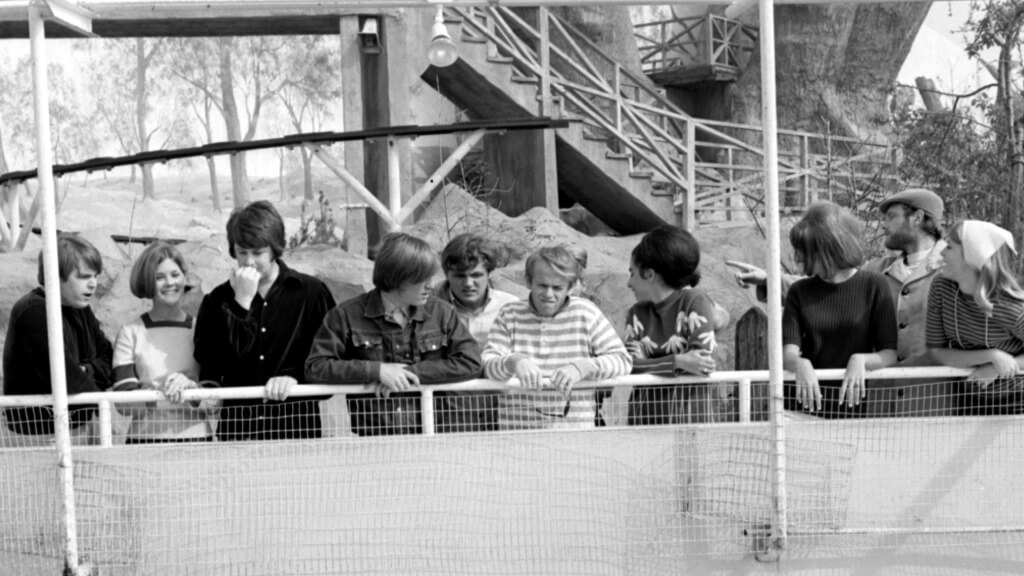
Photo by Earl Leaf/Michael Ochs Archives/Getty Images
The Pet Sounds Project is Paste’s two-week celebration of the Beach Boys’ eleventh album, which turns sixty years old on May 16, 2026.
The last song on Pet Sounds was the first to be released, but not as a Beach Boys record. “Caroline, No,” the just-under three-minute album closer, was originally Brian Wilson’s lone attempt at a solo release, put out two months prior to Pet Sounds amid feelings of estrangement and dissatisfaction with his life as a band member. The song peaked at a lowly #32 on the Hot 100, dampening his hopes of an album that could stand alongside the recently released Rubber Soul and deterring him from going solo.
“Caroline, No” is boyish in its disappointment with reality, in its realization that what was once simple and sweet—love, career, passion, familial relationships—has turned complicated. However, the rest of the album shows Wilson was compelled to change, dauntless in navigating the schism between what had been popular and what could become popular, with full faith in his visions of musical staffs dancing in the air. Two songs before “Caroline, No,” Wilson sings, “Every time I get the inspiration / To go change things around / No one wants to help me look for places / Where new things might be found,” evoking that familiar frustration with the general preference for predictability. In this way, “Caroline, No” becomes an acknowledgement of those who surrender to their calling, even when unpopular and met with criticism.
The origins of the song’s subject are disputed. One anecdote reports Wilson telling co-writer Tony Asher about a girl named Carol Mountain from high school, to which Asher responded, “Oh, Carol, I know.” Wilson, perhaps because he was high at the time, heard the phrase as “Caroline no,” resulting in the curious title. Another story indicates that the Carol in question was actually Asher’s former girlfriend named Carol Amen who moved to New York to become a Broadway dancer.
In a 1976 extended profile on Brian Wilson in Crawdaddy, Dennis Wilson is quoted saying the song is about a girl named Caroline whom Brian had loved in high school, and was prompted to write the song after running into her years later. Wilson’s wife, Marilyn, felt the track was directed toward her. In reality, the inspiration of the song is likely some combination of the above—but more than anything, “Caroline, No” speaks to a man in denial of change and chafing against its inevitability. “It’s so sad to watch a sweet thing die,” Wilson sings, his voice crooning in tandem with a saxophone that sounds like the soft tremble of a heart. Each word of the song, nearly all of which are monosyllabic, is stretched like a child learning to read, emphasizing a tone of genuine, if misguided, innocence.
“Caroline, No” opens like a sort of haunted version of “Be My Baby,” with isolated notes of indiscernible instruments hooking the listener in momentary suspense. In true Pet Sounds fashion, the song is built on the hollow thud of a water jug, the jangle of a wood block striking a tambourine, and a carnivalesque harpsichord, creating the tone of mystical levity that accompanies the speaker’s pain. On its surface, the song is a whiny complaint against a past lover’s recent attempts at individuation: “Where did your long hair go / Where is the girl I used to know?” Caroline’s changed demeanor leaves the speaker crushed and disillusioned by the process of aging. His heart isn’t broken because he was left by his sweetheart, but because reliving the past in all its initial glory is impossible, and the cumbersome texture of adulthood erodes immaturity’s ease. He wants to return to a place of ignorance, singing in the final, illuminating verse, “Could I ever find in you again / The things that made me love you so much then? / Could we ever bring ‘em back once they are gone?” He knows the answers to these questions, but doesn’t want to confront their sting, so instead he delivers a futile plea that borders on begging before he finally answers his own question. “Oh, Caroline, no,” he sings in a feathery falsetto, because regression isn’t an option. A chorus of flutes gently mirrors the melody as the instrumental fades, dissolving in tandem with the speaker’s fantasy.
It’s no secret that Wilson wrestled with the demands of his family’s business in 1966. He had already stopped touring with the Beach Boys after suffering a panic attack over his role’s mounting pressure. He was enduring the bitterness of his father, Murry Wilson, who had recently been fired as the group’s manager for his overbearing approach; his marriage was strained; he was struggling to communicate his vision to bandmates and studio execs wary of his sonic experiments. This is why Wilson uses the last forty seconds of “Caroline, No” to scrape away the melodic palette and smear a found sound collage across the album’s final notes. He wants to go out as a pop misfit, so he mixes a sample of the gallop and whistle of a locomotive train with the sharp barks of his dogs Banana and Louie (the titular pets of Pet Sounds). The train seems to circle the listener, chugging towards and then leaving them in the dust, whipping the wind in pursuit of some unknown place. I wonder if this was Wilson’s intention, to simulate the feeling of being a nomad dropped off suddenly in a strange setting, looking at the world anew.
I didn’t grow up listening to the Beach Boys. My father, who was the primary influence on my early music tastes, moved from New York to California at the age of 8 in December of 1962, two months after the first Beach Boys album, Surfin’ Safari, was released. My grandfather was undergoing one of many career changes, and traded the comic book stores and walkable streets of my father’s beloved Westchester town for four-lane highways and an ocean he was afraid to swim in. He hated the Beach Boys—to him they were California, and he hated California. He wanted Dion or the Ronettes, not some crushingly optimistic, pitch-perfect harmonies from a band whose first three albums had the word “surf” in them, something he didn’t know anything about and didn’t care to.
Now, over sixty years later, he’s back in New York and a father to kids well past adolescence. His distasteful association with the Beach Boys still hasn’t wiggled loose. His reaction to the band isn’t necessarily fair—not unlike the bitter way the speaker addresses Caroline in the song—though it doesn’t mean the feelings behind it are invalid. When childhood is disrupted or comes to a sudden end, rationality can feel out of reach; even the most charmed lives are still hard to grow up in. But “Caroline, No” shows how a perpetual disconnect lives at the intersection of those who sink into change and those who cower beneath its teeth. Wilson mourns his lost innocence and days when music and love were more play than pressure, but that doesn’t keep him from pushing through the ache. Sweet things may die, but only so something sweeter might be born. That’s how we got Pet Sounds, after all.
Johanna Sommer is a writer based in Queens. In addition to Paste, her work has been featured in Hell Gate, Byline, and Polyester, as well as her blog and a monthly column in the NYC-based zine Gunk.
 Keep scrolling for more great stories.