
Wendy Eisenberg on “I Know There’s An Answer”
Pet Sounds Project: “I Know There’s An Answer” is the rare song that tells you exactly how hard it is to disagree with somebody. It’s a miracle that we can sense its essential meaning in all its versions and in the fact of its revision.
Photo courtesy of Capitol/UMG
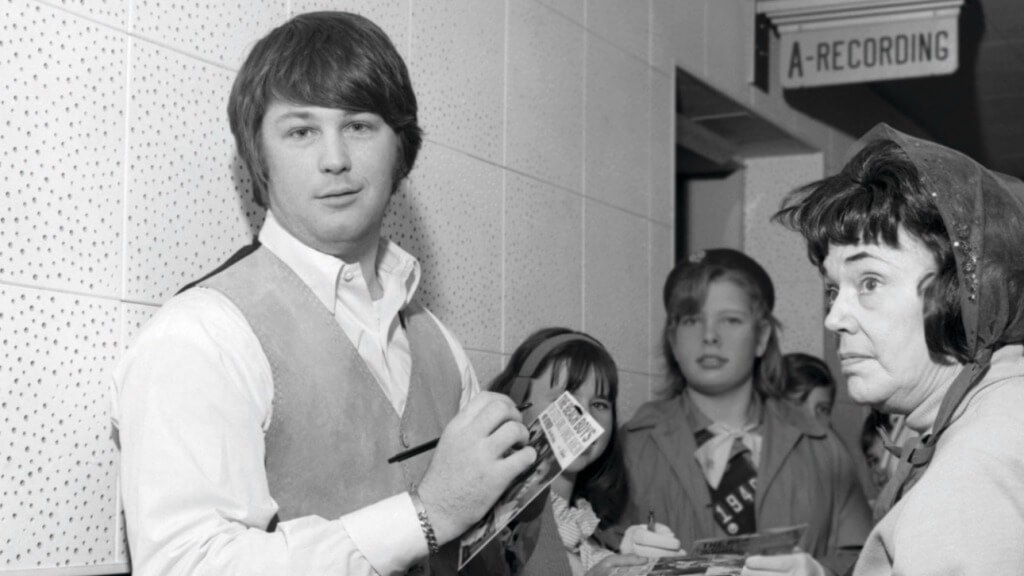
The Pet Sounds Project is Paste’s two-week celebration of the Beach Boys’ eleventh album, which turns sixty years old on May 16, 2026.
Some songs come out fully formed, while some face numerous iterations and versions, subject to the whims of your inner critic’s desires, or the whims of your collaborators’ taste. With every subsequent version, the song’s “essence,” (if you think songs have essences) might dilute, might strengthen, but always changes. Like people, songs have phases. They are born, they are changed with time, and while they tend to live on in(de)finitely, the forms they once took color how we receive them. I love “I Know There’s An Answer” for many reasons, but one of its miracles is in the way the changes of the song as they were written remain so perceptible in its form on Pet Sounds.
Like many people around my age, I heard Pet Sounds at the recommendation of a parent: my very sensitive, intelligent father. I had no idea at all what to make of it. There was a frilliness, a fanciness, that I didn’t know what to do about, being a moody, freakish middle-school fan of Morphine and Wes Montgomery. I liked deeper sounds, and didn’t know what to do with the trebly miracle of the CD my dad had burned for me. The more I listened, the more I started to unravel the psychic anxiety at the core of the record, and “I Know There’s An Answer” was a standout for me, because of the contrast of the heroic arrangement underneath the chorus, and how oddly meta the lyrics felt. They know there’s an answer, but they have to find it by themselves. They won’t tell you how to deal with anything, just that they figured it out. How withholding! How mysterious! How… paternal?
That same CD had the mono edition bonus tracks where I heard “Hang On to Your Ego,” which, being a tween pseudo-Daoist rather than an experienced psychonaut, intrigued the hell out of me. Later I’d learn that track nine of Pet Sounds actually had gone through three titles: “Let Go of Your Ego,” “Hang On to Your Ego”, and “I Know There’s An Answer.” In chronological order, they almost make a joke, like you’re sorting through what to do with your ego before you give up on knowing. As the story goes, Brian Wilson and road manager Terry Sachen wrote “Let Go of Your Ego” together inspired by Wilson’s experiences with LSD. When they changed it to “Hang On To Your Ego,” the song’s weird relationship to failure began to emerge. Not only was the original meaning changed 100-percent (“letting go” being the exact opposite of “hanging on”) but the chorus now ended with “hang on but I know you’re going to lose the fight;” a prechorus asked “how can I say it when I know I’m guilty?” The lyrics were dramatic, fraught, alive, and, amazingly, made Mike Love “nauseated.”
The edgy kid I was wanted to like “Hang On To Your Ego” more, because it had the druggy rock and roll danger thing going for it, but I think some future tripper in me realized that not only was that bad advice, but that both lyrics were really concerned with the difficult feeling of observing someone’s life, seeing its selfishness or something else that seemed not right, and not knowing how to communicate that to them. It doesn’t matter that one lyric is more explicitly about drugs than the other. It matters that Brian Wilson’s sweet concern that the original lyrics were too controversial resulted in that prechorus changing to “how can I come on and tell them the way that they live could be better,” which is so much more blunt, and makes the chorus somehow a little crueller in its own selfishness. “I know there’s an answer!”
This kind of self-other ricochet is borne out in the vocal arrangement: Mike Love sings the first line of the song, “I know so many people who think they can do it alone,” which, given what we know about his relationship with Brian Wilson, shines with a certain irony over those ultra-specific bass harmonica stabs. Al Jardine sings the next lines over some casual, gorgeous background vocals, and Brian belts the chorus. Their vocal tones are so similar but their ranges sing, in the arrangement as in life, from low to medium to high. I like how the song modulates up a minor third for the question that is the pre-chorus, unlike so many other songs on the record that descend a minor third. The chorus’ mysterious catharsis is so short but I believe Brian when he sings it. I relate to him, the inability to say what you know while trying your best to show how it feels through the music all around you.
And that music sounds both focused and frayed. Glen Campbell rips a banjo chord a little early, and it stays in. The chromatic descent of the winds into the bass harmonica solo feel so dreamlike, like slowing time, and the bass harmonica feels like you’re remembering the harmonica as something slowed down. When the winds descend again after the third chorus into the fadeout, you can hear Hal Blaine rush a little bit on the tambourine—was he excited? Was he remembering another tempo? I wonder about the winds in the outro; they sound like a vocal arrangement to me, but I don’t know what they’re saying. It’s my tendency to assume autobiography in Wilson’s arrangements, projecting something onto him, from what I know about his life, but what? I know there’s an answer…
“I Know There’s An Answer” is the rare song that tells you exactly how hard it is to disagree with somebody. It’s a miracle that we can sense its essential meaning in all its versions and in the fact of its revision. I rarely edit my songs, and I don’t have a low-voiced interlocutor laughing at my parts as he records my songs, telling me to edit out references to my psychedelic excursions for the sake of my uniquely grievous American band of traumatized dreamers—or, I do, but he’s not Mike Love. Genuinely: What can I tell my editor, myself? What can I say that won’t make them defensive? For a song about knowing that there’s an answer, the answer itself is always, necessarily, disappearing. Thank God!
Come back tomorrow to read about “Here Today.”
Wendy Eisenberg has spent the past decade as a fixture of independent music and an artist of inspired multiplicity. As a singer-songwriter, improviser, and virtuoso guitarist, the coordinates of their artistry are ever-shifting, from art-rock to jazz to blistering free improv and eloquent folk. On catalog highlights including 2020’s Auto and the 2024 free-jazz sprawler Viewfinder, they’ve made a signature of ambition. After spending the past five years experimenting in different bands, genres, and creative challenges, and following a period of self-confrontation that they liken to a personal exorcism, Eisenberg has arrived at a milestone. The poetic and formally daring folk songs of Wendy Eisenberg comprise their most certain vision yet.
 Keep scrolling for more great stories.