
“Eleanor Rigby” is a world you can start a band inside of
Revolver Revisited: “Eleanor Rigby” is a pop song first and a devastating Baroque masterpiece second. That you can smell the rain, see the incense haze, and hear the creak of ancient pews all in two minutes is miraculous. Not one note or word is false or out of place.
Photo by Michael Ochs Archives/Getty Images
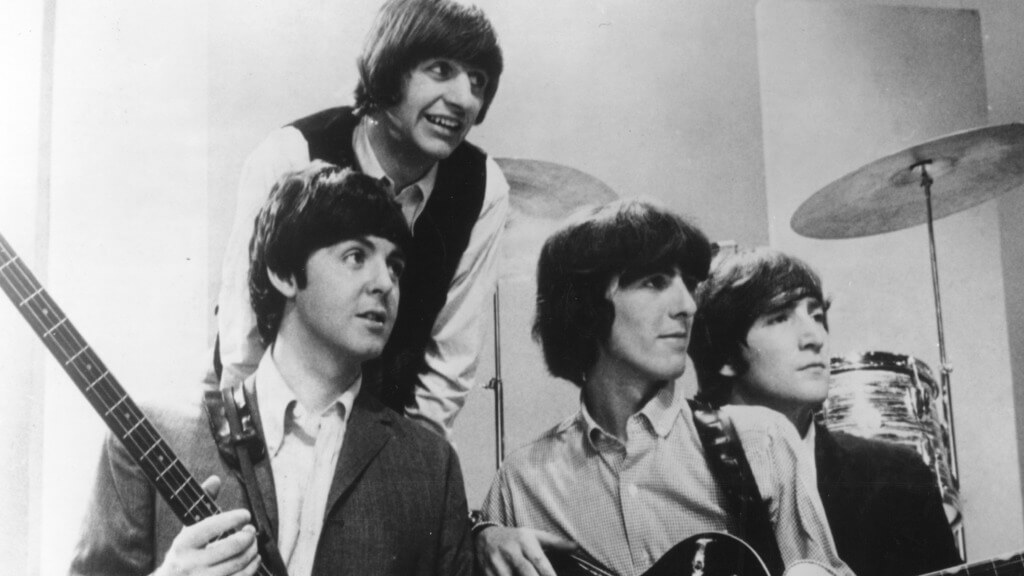
In celebration of its 60th anniversary on August 5, Paste will be publishing essays about The Beatles’ Revolver.
The secret to the Beatles—the reason I haven’t gone more than three days without listening to them for the last twenty-seven years—is that somewhere around A Hard Day’s Night, and reaching perfection with Revolver, they stopped making records you simply listened to. They started making worlds you could live inside: the nervy, razor-sharp postmodernism of “Taxman”; the lush romance of “Here, There and Everywhere”; the whirling surrealism of “Tomorrow Never Knows.” Most haunting of all, the tense Liverpool Gothic of “Eleanor Rigby.” A short story for cello and violin; a twilight interlude at the dark end of the street. The Beatles would construct more elaborate, wider-screened productions (“A Day In The Life”; “I Am The Walrus”), but never would they offer something so painterly—a missive in quite so perfectly-tailored a package.
“Eleanor Rigby” is a pop song first and a devastating Baroque masterpiece second. That you can smell the rain, see the incense haze, and hear the creak of ancient pews all in two minutes is miraculous. Not one note or word is false or out of place. I remember every detail about the first time I heard it, and by extension, the moment I found my Beatles—the instant I needed to make music. Pull on that thread long enough and it leads directly to my current band, Perennial.
I was thirteen, old enough to spend an afternoon turning the radio dial left and right while my mom finished an errand. I couldn’t tell you what played before “Eleanor Rigby,” and what came after hardly matters. What I remember is the string octet sawing away, and Paul McCartney’s voice slicing through it all, turning even the sharpest minor notes into hooks. It begins in media res. Not simply a pop song, but a world. It’s already there, it just happens to be the stop you’re getting off at today. I misheard the opening as “all the lonely people,” rather than “ah, the lonely people,” instantly transforming the song into a hymn for the desperate and unloved. It made the religious imagery even more dangerous, even more outré: “Eleanor Rigby picks up the rice in the church where her wedding has been / Lives in a dream / Waits at the window, wearing the face that she keeps in a jar by the door / Who is it for?”
For the first two bars, strings hack away on staccato quarter notes. In the next two, the violins double the heartbeat into eighth notes. The tension mounts, the desperation thickens. Legend has it McCartney and producer George Martin had Bernard Herrmann’s serrated score for Psycho in mind as they crafted the lean, taut bed of “Eleanor Rigby”. I probably couldn’t have named that connection at the moment, but I certainly could have told you that the song was cinematic to its bones. Its minimalism makes every change feel profound. It’s horror movie music, and McCartney—a profoundly underrated lyricist—knows exactly the kind of goosebumps evoked by “a face in a jar by the door” accompanied by that minor-key ice-pick sound.
The song is challenging in its way, but it’s also a melodic wonder: you only need to hear the lilt of “Lives in a dreeeam” once to have it become part of your brain’s electrical paneling. Think of it as the honey cutting the vinegar—McCartney’s gift for making the experimental not just accessible, but addictive. Those two years— from 1966 to 1967—find the Beatles at their most liberated and most playful, and the results are so exhilarating they’re almost overwhelming, even when all that sandbox energy is devoted to plumbing such dark depths.
Check out the studio outtake (“Eleanor Rigby (Speech Before Take 2)”) from the 2022 Super Deluxe Edition of Revolver—quite possibly the most “worth it” box set ever released. McCartney, Martin, and the assembled musicians debate whether the pulsing string section should remain tight and biting or bloom with vibrato, softening the attack. They choose restraint and lose the vibrato but keep the edge. The musicians—seasoned London session pros who probably cut sessions every day they went to work—begin to seem almost giddy as they dial in the precise, modern masterpiece taking shape through them. Everyone in the room knows they’re making something extraordinary. Everyone.
I somehow knew it was the Beatles the first time I heard it, the moment I fell hopelessly in love with the song and saw, with perfect impressionistic clairty, dark wood, guttering candles, damp sidewalks, and slivers of rain. Maybe my Catholic upbringing in New England shared just enough of the Gothic overtones that “Eleanor Rigby” was painting with. Maybe its artistic vocabulary—Dickens, Carroll, postwar Britain, kitchen-sink dramas—already felt strangely familiar through years of cultural osmosis. Whatever the reason, the song arrived already in focus. There’s nothing like the loyalty you feel toward art that makes sense even as some of it floats just a bit over your head. You feel sophisticated and rewarded in equal measure. I understood “Eleanor Rigby” the moment I heard it. I also realized there was no guitar. No bass. No drums.
This was art music—except it was also the kind of song you could whistle before the second verse was over. After hearing it, I was a completely different person. I wanted to do this. I wanted to make art this capacious, this tangible, this fulfilling. I discovered that the song’s author and lead vocalist plays bass, so I directed every volt and watt of mental energy toward getting one. I formed bands, joined bands, dreamed about the next band, and eventually formed Perennial. And whether we were writing a 70-second hardcore song, a garage rock dance number, or an ambient interlude, I measured every song against the same standard as “Eleanor Rigby.” It wasn’t finished until it was specific enough that someone else could step inside it. I’ll almost certainly never write something as great as it. But everything I’ve made that I’m proud of begins there.
Chad Jewett plays guitar and sings for Perennial, a mod punk band from New England. Their new album Modernism will be released on September 18 via Ernest Jenning Record Co. (US) and Safe Suburban Home Records (UK/EU).
 Keep scrolling for more great stories.