
Love is the promise of the brave: Return to Cookie Mountain at 20
On this day in 2006, TV on the Radio declared love to be bravery, tenderness to be grace, and howled their way into our hearts.

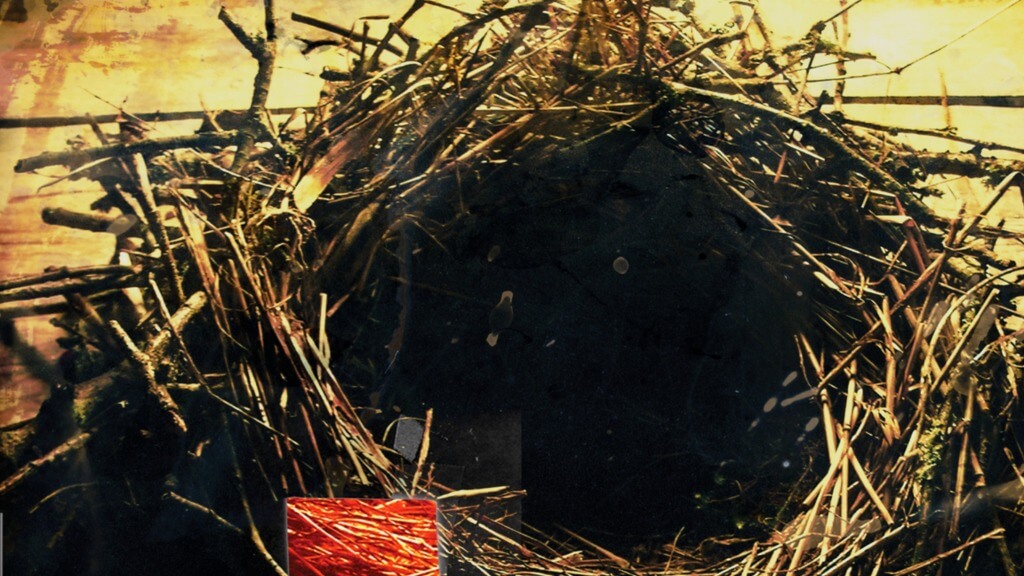
We’re in the middle of total NYC cultural domination: Geese, Zohran, Knicks in Five. The Big Apple has successfully shifted gravity enough to make itself the center of the known universe, as long as you don’t ask about the Mets. But that gravitational pull stretches back to the Y2K rawk revival, when The Strokes, The Walkmen, Interpol, and other hangers-on captured the imaginations of traditional media and nascent online critic circles. Great as those bands were, New York’s most fascinating group was lurking just outside the spotlight. TV on the Radio wouldn’t release their debut album until 2004, letting the strangest corners of the scene ferment.
TV on the Radio were different, in part, because they weren’t born-and-bred New Yorkers. Frontman Tunde Adebimpe hailed from St. Louis and went to college in Pennsylvania, while co-founder Dave Sitek grew up in Maryland and, in keeping with indie-rock tradition, met his future collaborators while working at a coffee shop. Adebimpe and Sitek teamed up on an EP, OK Calculator, together while Sitek was producing the Yeah Yeah Yeahs’ debut. They soon recruited another Pennsylvania transplant—and Sitek’s fellow barista—Kyp Malone, whose eerie falsetto and serrated guitar playing seemed tailor-made for the rising group. The one-two knockout punch of Young Liars in 2003 and Desperate Youth, Blood Thirsty Babes a year later introduced a group that was far ahead of its peers.
At the center of both releases sat “Staring at the Sun,” a thrumming, dread-filled slice of post-punk perfection. Adebimpe and Malone’s voices fused into something unlike anything else in indie rock, Malone vaulting into Minnie Riperton-worthy whistles while Sitek’s tremolo guitar blurred into a near-black-metal wall of sound over a speaker-rattling bassline. Much like how Wilco’s “Jesus Etc.” accidentally became a 9/11 song, “Staring at the Sun” found resonance after Hurricane Katrina, its diagnostic visions of a “storefront cemetery,” filthy, rising waters, and clangorous lightning turning it into one of the first and best climate-change apocalypse songs.
The reviews at the time, and in recent retrospectives, saw Desperate Youth, Blood Thirsty Babes as a blueprint: promising but flawed. However, the timing of TV on the Radio becoming the next buzz band was perfect. New York discards its old heroes quickly, and plenty of the aughts revival’s defining participants followed up their debuts with diminishing returns. After adding consummate glue guy Gerard Smith to the band, TV on the Radio promised to rekindle the flame. The paranoia that defined Blood Thirty Babes remained, but hope had begun creeping in around its edges. Twenty years ago, the band fulfilled the promise of “Staring at the Sun” with the unhinged, fractious, beautiful Return to Cookie Mountain.
The album honed in on the most melodramatic, hysteric moments of Blood Thirsty Babes. Even when The Walkmen were “bleeding on the wall,” they sounded like their suits were perfectly fitted. TV on the Radio, meanwhile, tore their clothes to shreds, screaming and yearning all over the place. They were vulnerable and honest, and if they didn’t carry themselves with such unrivaled confidence and talent, it would’ve been considered cringe at the time. Part of the band’s appeal came from its true love of pop music. Yes, nearly every band in the revival made music that all but confirmed Television as the CBGB titans, but TV on the Radio’s albums argued that Blondie deserved the silver medal before anyone else. And Adebimpe has long celebrated Siouxsie and the Banshees, embracing their mix of gothic drama and sex. After all, his first words on Return to Cookie Mountain are “I was a lover! Before this war!” while a mix of freaked-out falsetto and a Massive Attack sample bleeds lust and dread as he tries to make a bombshelter with a waterbed in it.
In the music, romantic collapse became inseparable from political collapse, especially the wanton destruction of George W. Bush’s wars. “I Was a Lover” questioned the purpose of tenderness in a world that’s trying to kill it. There was also the cruelty of the near-a cappella “A Method,” which taunts someone struggling to breathe through a panic attack before Adebimpe reminds them, “there is hardly a method you know,” as the steely percussion shatters like glass.
TV on the Radio had a rhythmic kinship with fellow revival breakouts Bloc Party, and Silent Alarm may be the only rock album of its era with more memorable drum riffs than guitar lines, from the thunderous bounce of “Banquet” to the gallop of “Like Eating Glass.” But TV on the Radio belonged in that conversation on Cookie Mountain, because polymath Jaleel Bunton had recently joined the band and brought a shuddering lurch to “Hours” and the thudding toms that propel “Wolf Like Me.”
Bunton also ignites the backdrop to Malone’s furiously sexy “Playhouses,” a marvel of perpetual motion. Its ever-changing groove accentuates Malone’s wails as he and an old flame hook up for one last time, both imagining better lives while settling for brief euphoria. “Beneath the cigarettes and sugar shit of alcohol breath / I can taste the ocean on your tongue,” he sighs, unable to tell if he’s savoring the present or mourning the past.
Malone and Adepimpe are both romantics, but Adebimpe, originally a cartoonist, loved playing with flashes of baffling images. “Dirty Whirl”—which is, to be clear, about blowjobs—becomes a ritualistic warning. “Her love is a violent spiral / Hurling in upon us,” he growls. The bridge briefly settles the song’s sealegs, and Adebimpe repeats, like a mantra, “All I ever wanted to be was destroyed at sea / Hurricane rescued me, salvaged calamity.” All-timer pillow talk.
Between the conjuring of typhoons and invoking lycanthropy, there’s something unknowable about Cookie Mountain. Its characters witness things they cannot, and should not, understand. “Broken plates on dirty highways / Pave the way for alien grace,” Adebimpe coos as the drums in “A Method” begin to splinter. The achingly beautiful “Tonight” functions as a healing koan for a friend trapped in heroin addiction, disguising itself as a vision of a dying garden. “My mind is like an orchard / Clustered in frozen portraits / Of blossoms that bloomed so fine / Just to drop from the vine,” sings Adebimpe while the bass starts to rise, gurgling beneath backward synths. Chris Taylor, of eventual Grizzly Bear fame, lends a snaking clarinet to the song’s outro, echoing the woozy beauty of Radiohead’s “Life in a Glasshouse.”
Return to Cookie Mountain is a cluttered, messy, completely overwhelming album. Production-wise, it has more in common with the iron galaxy of Cannibal Ox’s Cold Vein than any Strokes record, so it’s no wonder Def Jux boss El-P came in for a remix of “Hours.” There are individual moments that, when presented without context, should not work at all: the fluttering, backward horns stomping through “Hours” like a demonic marching band; “Dirty Whirl” secretly masquerading as a sea shanty; Malone’s coyote yelps ricocheting across the tracklist. Does anyone have a better “ooooh” than Malone and Adebimpe in tandem? Separately, they both have extraordinary falsettos. Together, locking into octave-spanning harmonies with Adebimpe’s gruff baritone anchoring the bottom and Malone’s lightness streaking overhead, they sound supernatural.
Sitek was careful in his production and guitar playing to let Adebimpe and Malone’s vocals flourish by not intruding on their harmonic spectrums. One of TV on the Radio’s first cover songs was David Bowie’s “Heroes,” and Sitek himself has always been an acolyte of Robert Fripp, thanks to a staunch refusal of guitar conventions. He stretched his notes like taffy, contorting them into smears of sound. Elsewhere, TV on the Radio droned as hard as a Sunn O))) at times; the endlessly ascending outro of “Playhouses” turns feedback into a melody. Sitek’s most traditional guitar figure, on autumnal “Province”—which features none other than Bowie—thinks rhythm first, weaving around Bunton’s restless percussion. Even “Wolf Like Me,” the band’s biggest song, has Sitek focusing on texture and pace.
Future Islands’ Letterman performance is the canonical late-night star-making moment, but in the mid-2000s, nothing short-circuited normie minds like TV on the Radio tearing through “Wolf Like Me” mere feet away from David. Malone dressed like a math professor, Adebimpe looked like a Portlandia extra (a role he would later literally fill), and Sitek and Smith refused to face the camera. But you could taste the sweat through the TV, feel the stage shaking, see the audience silently looking at each other: “What. The. Fuck?”
TV on the Radio probably feel about “Wolf Like Me” the way The Walkmen feel about “The Rat”: an obligation, a guaranteed royalty check. But goddamn if it isn’t pure hedonic strength personified. One of the band’s earliest singles, “Young Liars,” described carnal desire as “fucking for fear of not wanting to fear again” and “Wolf Like Me” is that fear transformed into liberation. “Mirror my malady / Transfer my tragedy,” Adebimpe howls, as if the world’s anxieties might briefly evaporate through sheer physical force and willpower. Then come the random flashes of violence and viscera—“gotta bust that box / gotta gut that fish!”—that elevate the danger and complete stimulus overload. It’s remarkable this became the hit, especially when Sitek, again, cares more about momentum than melody. Adebimpe rampages through a gish gallop of lyrics too fast for any traditional hook—an outpouring of pure emotion on the verge of tearing itself apart.
Twenty years later, no one has managed to copy TV on the Radio’s sound. Their greatest descendants are genre omnivores: Scotland’s Young Fathers inherited their three-headed songwriting core, raucous live shows, and adoration of Massive Attack and Bad Brains; Algiers’ fusion of raw political rage, gospel, and post-punk couldn’t have existed without Return to Cookie Mountain; Aussie star Genesis Owusu’s Redstar Wu & the Worldwide Scourge is the closest spiritual sequel to TV on the Radio’s second album, especially “Most Normal American Voter,” whose title alone sounds like something Malone would’ve been all over.
When Return to Cookie Mountain came out, many critics landed on “Wolf Like Me”’s “gonna teach you tricks that’ll blow your mongrel mind” line as a final word on the album. Twenty years later, it’s “Province” that sums up the record’s legacy: “Suddenly, all your history’s ablaze / Try to breathe, as the world disintegrates / Just like autumn leaves, we’re in for change / Holding tenderly to what remains.” The end times of “Staring at the Sun” transform into a prayer of hope. As Dave Sitek unleashes one final squall of guitar and Bowie—knighting Cookie Mountain as a worthy successor to Low—joins the chorus to knight Cookie Mountain as a worthy successor to Low, TV on the Radio arrive at the album’s destination: “love is the promise of the brave.”
Nathan Stevens is a musician, archivist, and podcaster whose work has appeared in Spectrum Culture, Stereogum, and Popmatters. He currently runs the music interview website Woodhouse.
Watch Peter Gabriel perform “Sledgehammer” and “Red Rain” at Woodstock 94 below.
 Keep scrolling for more great stories.