
youbet are the best of what’s next
RIYL: Guitar music from Van Halen to Francisco Tárrega, the Vertigo soundtrack, late-bloomer perfectionism
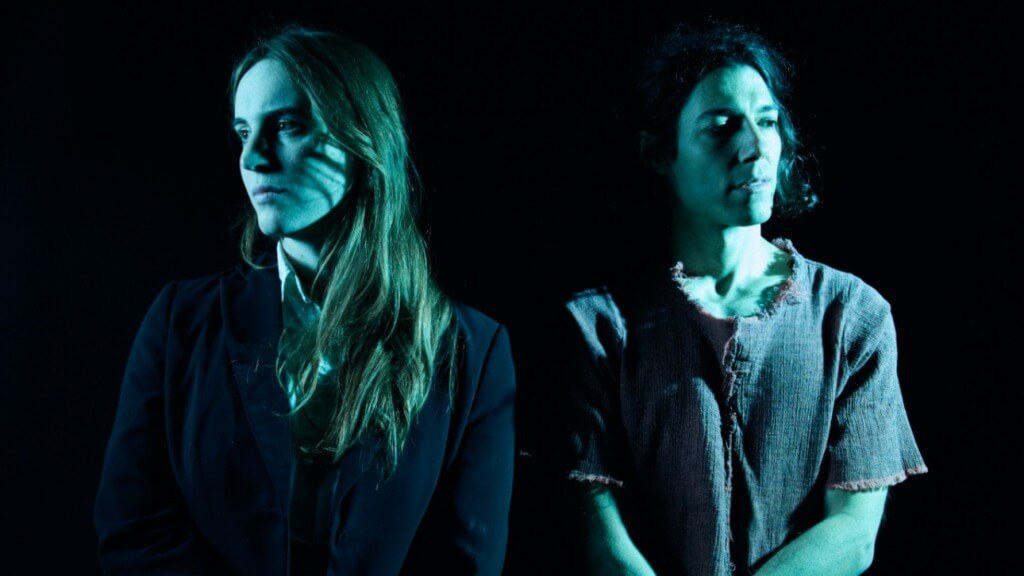
Photo by Eleanor Petry
The Best of What’s Next is a profile column that highlights upcoming acts with big potential—the artists you’ll want to tell your friends about the minute you first hear their music.
Nick Llobet might be thirty-six years old and two decades deep into teaching guitar, but his career is just beginning. Tracking success in the music industry in 2026 is hazy, but some of his band youbet’s achievements—an “Artist You Need to Know” profile in Rolling Stone, a handful of placements on official Spotify playlists, and a slew of opening slots with major alt-rock projects like This is Lorelei and Friko—suggest that the many years spent toiling away at the guitar in his bedroom have begun to pay off. “I gave up so many times in my mind and somehow started back up again,” Llobet (pronounced yo-bet) says. “It was like this little speck that would get a little bigger every time I’d get writing and it grew to be this universe, and now I’m in that universe and it’s so exciting.”
Llobet talks frenetically, eyes darting beneath obscuring bangs. He sometimes worries that he’s saying too much or is being incoherent, his passion wrangled by self-consciousness. His shyness is balanced out by twenty-nine-year-old bassist Micah Prussack, the other half of youbet, who charms crowds with her tight-five-esque stage banter and immediate conviviality. youbet is the first album that Prussack contributed to as a full-time band member, solidifying the act as a duo and creating their strongest body of work yet.
youbet fuses the playful with the dark, influenced by Llobet’s childhood favorites—Nintendo 64 games and the Edward Scissorhands soundtrack—and adulthood discoveries—flamenco, hill country blues, and the poetry of Leonard Cohen (whose first album didn’t come out until he was thirty-three). Produced and mixed by Katie Von Schleicher and Julian Fader, youbet is replete with hooks and moments of cinematic splendor: the psychedelic guitar fuzz and synth blend on “Embryonic”; the mesmerizing riff of “Bad Choice,” whose chorus opens up like a parachute. Llobet’s voice is hard to pin down. He also struggles to describe it, but acknowledges his conscious effort to sing more provocatively. It’s a little raspy, a little breathy—urgent yet floating, aloft within fantastical compositions yet anchored by lyrics imbued with the messiness of living.
The writing on youbet focuses on travel and touring, evident in lyrics like “Honest job it don’t pay / Teach our kids in some way” (“Receive”) and “I’m as gone as the road” (“Worship”), as well as in compositions intentionally crafted to be fun to play live. Any themes of darkness are often brightened by the surrounding instrumentation—finger-picking that is sometimes twinkly, sometimes crunchy, but always deft, and eerie pop melodies stabilized by a hearty rhythm section. While there are moments of heaviness on their records, the youbet live act plays distorted versions of their songs. Llobet loves all the ways that performing departs from his obsessive writing practices. It’s visceral, spontaneous, and brief. He always pretends he isn’t nervous, wielding a Stratocaster with real flowers sealed in the body, letting his dark, wavy hair fall across his face.
When I spoke to Llobet and Prussack three weeks into touring youbet, they both felt the band’s dynamics were at their strongest ever, both emotionally and musically, sustained by current players Adam Berkowitz on drums and Jolee Gordon (Houndsteeth/Jolee Go) on keyboard and harmonies. When Llobet lost his voice on the second night of the tour, Gordon and Prussack took turns singing leads and harmonies. Over the next five shows, the altered setup was successful; the band sold more merch than ever. This scenario had once been Llobet’s biggest fear, but now, with the skill and support of those around him, it’s a worry he can let go of. “My dad would always say, ‘Build it and they will come,’ and I built it over years,” he says, unaware that his dad was using a Field of Dreams line. “I was in my room alone, no one knew who I was for like fifteen years. People eventually came along for the ride and helped me build it, and we are making these decisions together now. It’s an epic story that I hope never ends.”
Born and raised in South Florida, Llobet was the oldest of three children. Determined to please his parents, he did well in school and stayed out of trouble. “I felt like I was kind of the test rat or something of my family, I was very nervous, very shy, and overprotected,” he says. His family loved watching American Idol, leading him to believe singing was a skill you either had or you didn’t—and for most of his life, he figured he didn’t. Though Llobet felt sheltered, he wasn’t when it came to culture. He grew up listening to Limp Bizkit and AC/DC and watching raunchy horror films. The provocative media Llobet consumed as a child made its way into his musical impulses in subtle ways—in lyrics and chord changes—and flamed his desire to challenge the audience.
When Llobet was fourteen, his dad took him to Metallica’s St. Anger tour with backstage passes. The show changed his life. Seeing a band in their forties touring the world on original music opened up his perspective. He traded his skateboard for a guitar and began playing persistently. He enrolled at Berklee College of Music for a few semesters, and, though he felt like he didn’t quite fit in, Llobet found the musicians he met there deeply inspiring.
Llobet calls himself a late bloomer because, for much of his life, he was paralyzed by his dad’s opinion. Only after shedding that dynamic could he find his sound. A few years after Llobet relocated to New York at twenty-three, he became absorbed by the city’s DIY scene, which sparked a series of lightbulb moments about politics and queerness, turning his songwriting into what it is today. “I was twenty-six when I cracked the code of liking my own music,” he says. At the first youbet show, the atmosphere differed entirely from Llobet’s previous experiences playing to empty rooms. A buzz was created, and he knew he’d found something at last.
Fader, the producer who also played the drums on youbet, remembers when Llobet first came to him with an 8-track cassette machine tucked under his arm. “At that time, I was recording all kinds of people, and I remember being like, ‘Wow, this person’s songs are amazing.’ It totally tripped off my alarms,” he says. This was before youbet formed, but Fader would contribute drums, production, and mixing to all three releases.
Prussack describes Llobet as an intensely disciplined player with a contagious work ethic. She admires how, even though Llobet doesn’t see himself as someone with natural talent, he has a strong vision for what he wants to do and works every day to get there. His approach differs from the contemporary notion of going viral or having a song “blow up,” which sets artists up for disappointment if they’re not in the algorithm’s favor. Instead, Llobet trusts that if one song doesn’t reach an audience, he’ll just write ten more. “That mindset is like fresh air,” Prussack says. “It’s beautiful to work with.”
She compares Llobet to a fairy—head in the clouds, totally immersed in his own world—while she mediates between the artistic and business sides of the youbet operation. “I’m somebody who has the bug to create and can sit for up to eight to twelve hours straight working on a song in my room alone,” Llobet says. “I’ve always wanted somebody to bounce ideas off of, who has the itch to travel and arrange songs, and do the grueling band practices together. I feel like Micah basically fills all the gaps that I have and vice versa. We are a wonderful team—I was looking for what we have for a really long time.” Prussack says that Llobet is the first to fold the bedding whenever the band crashes with someone on tour, and he insists on paying anyone who does any work for the band. “We are broke as hell, and it’s like, if our friend wants to play shaker on a couple of songs, we don’t have to pay them. But Nick’s just like, ‘Oh, I don’t want to operate like that.’”
Llobet has taught guitar since 2007—first in Denver, where he lived for six years, and then at School of Rock since 2011. Through his job, Llobet says he’s learned hundreds, if not thousands, of songs across all genres, absorbing tricks and tools to make music approachable for his students, including, at one point, Geese bassist Dominic DiGesu. “That adaptability, and being malleable, has led me to be very open-minded as a songwriter,” he says.
Beyond teaching, youbet is Llobet’s full-time priority. He has gained recognition from his personal mentors and guitar heroes, including Palehound’s El Kempner, whom he now calls a friend. Kempner was recommended youbet’s debut, Compare and Despair, during the pandemic and later worked with Llobet on a brief flamenco guitar lesson. In 2024, youbet opened for Palehound and Ratboys, giving Kempner an up-close look at youbet’s growth. “I think their songwriting is growing, which is really cool,” Kempner says. “I think they’re experimenting more with their guitar stuff. They get better and better at guitar, even though some of my favorite guitar parts ever are on their other records. [youbet made me say], ‘Damn,’ because they continue to top what they’re capable of.”
As for what’s next for youbet, Llobet and Prussack say sustainability is the main goal. When I ask about their hopes and dreams, Llobet insists that he’s living them. The duo repeats the phrase “this is our life,” centering their gratitude for being able to live and work as musicians (Prussack also teaches bass full-time). After years of trial and error, Llobet is proud of the music they’re creating. And people are responding to it, which would have seemed like a small miracle for most of his life. “It’s just about making the music,” he says. “Having that mindset has always saved me.”
youbet is out now on Hardly Art.
 Keep scrolling for more great stories.