
Reading the Room: What Drives the Bitcoin Price
Image credits: Adobe Stock
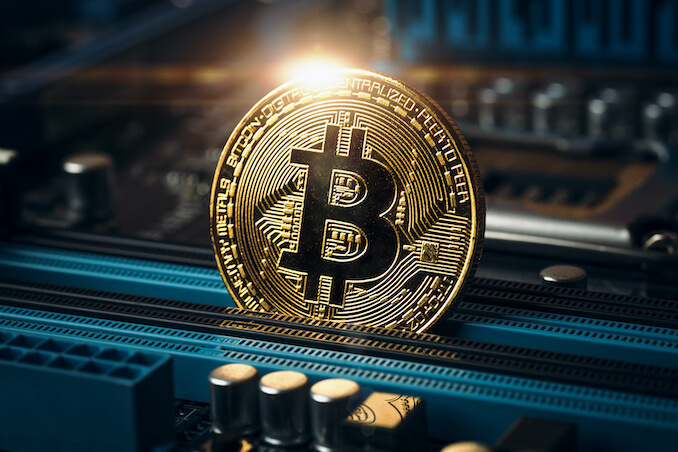
Bitcoin’s price can feel like a constantly moving target. It reflects both a blend of deep, fundamental adoption and immediate, short-term market reactions. To understand why its value goes up or down against the fiat dollar and other assets, you first have to look at a mix of global laws, the simple economics of mining, and how investors are currently feeling. That’s a lot of reading the room to discover why the Bitcoin price does what it does, but it’s worth the investment. You’ll find yourself in a place where limited supply, technology, and global money all meet.
The Math of Rarity
The main impetus behind Bitcoin’s value is its designed scarcity. Unlike government-issued money, there will only ever be 21 million Bitcoins, and this fixed number is its defining feature and the reason it’s often referred to as “digital gold.”
The network’s automatic halving mechanism helps to further this scarcity. Investopedia explains it thus: “Bitcoin halving refers to an event that takes place about every four years and reduces the block reward by 50%. This lowers the supply of bitcoins entering the market, which increases scarcity and can act to raise its price if market conditions remain the same.” The halving schedule is both an important and predictable part of the network’s design, signaling a slowing of inflation.
The Attraction of Global Money
In the last few years, Bitcoin has been evolving from a niche technology to an asset that’s deeply connected to the global financial system. As a result, its price is no longer an island unto itself. It now tends to react more dramatically to big macroeconomic forces such as decisions by central banks, high inflation reports, interest rates, money printing, and shifts in global monetary policies.
When traditional currencies show weakness or instability, people will often turn to Bitcoin as a backup store of value. That is, a way to potentially protect their wealth from currency devaluation. This characteristic of Bitcoin puts it in the category of a major global asset, and as such, it’s increasingly moved by the broader sentiment of how investors “feel” at any given time.
The Wall Street Effect
Another major factor that adds some stability to Bitcoin’s price is the continuous influx of big financial players and the development of new market tools. When large institutions enter the arena, it fundamentally changes how the asset is being viewed and traded.
For instance, the launch of Bitcoin Exchange-Traded Funds (ETFs), secured custody solutions, and those dedicated crypto trading exchanges made the asset more accessible while bringing in a new level of regulatory oversight. That, in turn, allowed large pools of capital, such as retirement funds and money managers, to buy Bitcoin more safely, and the sudden flood of capital and market liquidity helped establish higher price floors and increase trading volume. In the end, it cemented Bitcoin’s status as a recognized asset class.
The Impact of Regulation
The effect of regulation creates both market fear and, after some time, clarity, making it a large influence on Bitcoin’s price. When major organizations, like the US Securities and Exchange Commission (SEC), make announcements about new financial products or explicit government regulations regarding cryptocurrency taxes, price swings can happen quickly and significantly.
Uncertainty in the rules tends to push prices down, as institutions and nervous investors keep their money sidelined. But clear regulations are a big boost for growth. When countries create a stable, predictable legal environment, it can build confidence and encourage investment, thereby accelerating institutional involvement, which can lead to upward price momentum.
The Health of the Network
However, the well-being and activity of the Bitcoin network itself is another factor that goes beyond the broad economic and regulatory aspects. It can provide crucial hints about potential future price movements. These “on-chain metrics” provide data that traditional markets just don’t have.
Analytics track various indicators, including how many people are using the network daily, the creation of new wallets, and how miners are moving their coins around. Metrics such as these can shift market feelings or technical pressure.
Further, sophisticated traders often keep a close eye on the activity of “whale addresses,” that is, wallets that hold huge amounts of Bitcoin. They also monitor the money flowing onto and off exchanges to guess whether big players are buying up coins or getting ready to sell, which can quickly cause changes in investor mood.
Driven by Sentiment
The main drivers might be scarcity and technology, and that might steer the market’s long-term direction, but short-term volatility is still driven by what the public thinks and what the media is reporting. Mainstream news stories, prominent celebrity endorsements, major crisis headlines, or just the general investor mood can all trigger sudden, intense buying or selling.
At the end of the day, Bitcoin’s price is a complex dance of different factors. It’s fundamentally supported by programmed scarcity and global monetary trends, but its value is likewise constantly shaped by the growth of institutional tools and world events. Different factors, often working together, are what define its value in the modern financial world, and it behooves the wise investor to be able to read the room before proceeding.
The Paste editorial staff was not involved in the creation of this content.
 Keep scrolling for more great stories.