
Apple TV’s Ambitious Sci-Fi Series Pluribus Is Weird and Wonderful
(Photo: Apple TV)
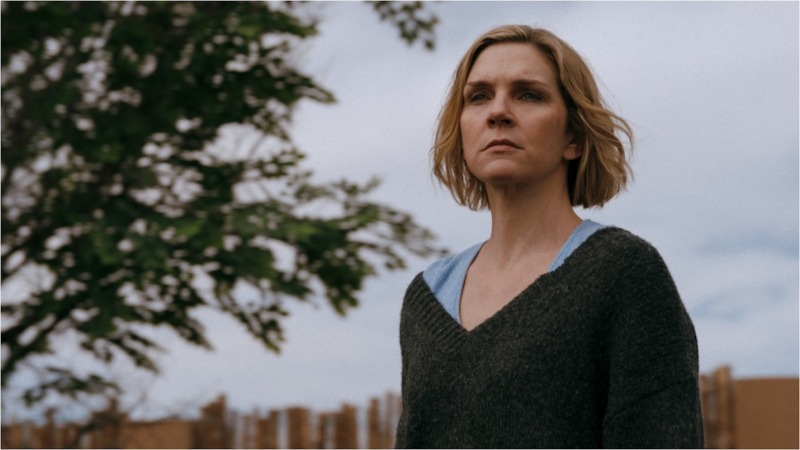
The bulk of the entertainment industry these days consists of well-known quantities. Familiar IP. Sequels, spinoffs, revivals, and reboots that tell origin stories of characters we know, flesh out the secrets of events we’ve already seen, or introduce a new generation with remarkably similar problems to one that came before. It’s a genuinely rare thing, nowadays, to find a series that feels not just original but wholly surprising, a refreshingly necessary reminder of what this medium can do when it tries. I’m not sure if Apple TV’s Pluribus is the best show of the year—only seven of its nine episodes were available to screen for critics, so the question of whether it can stick the landing remains an open one — but it certainly seems safe to say it’s already a darn close thing.
And the best part is? I can’t tell you about most of it. There’s a long list of rules we’re meant to follow when it comes to talking about this show before folks have had a chance to really watch it, and most of them involve dancing around almost every significant element of it. But you know what? For once, I don’t actually mind that much. Pluribus is at its most rewarding when taken on its own terms and at its own pace, and knowing relatively little about what you’re in for is a bizarre bonus that actually enhances your overall experience rather than detracts from it.
The series hails from Breaking Bad and Better Call Saul creator Vince Gilligan, and though at first glance Pluribus couldn’t seem more different than those series, it ultimately contains similar complex depths. A show that wrestles with big philosophical questions of morality, contentment, purpose, and meaning through the lens of a character who is repeatedly described in the show’s marketing materials as the most miserable person in the world, it’s genuinely one of the weirdest and most strangely satisfying things on television at the moment, simultaneously heartbreaking, hopeful, and disturbing by turns. It couldn’t have possibly arrived at a better moment.
In its most basic sense, the show is the story of the apocalypse, but it won’t look like any you’ve seen before. There’s no Sudden Departure or other rapture-like event here and no kaiju rising from the sea, Godzilla-style. Instead, the bulk of the series takes place in the wake of a world-changing event that spreads happiness and peace throughout all humanity. Well, almost all of humanity. Everyone is suddenly and miraculously content, except Carol Sturka (Rhea Seehorn), a bestselling romantasy writer who recently finished a book tour that forced her to mix and mingle with the fans she secretly hates. She’s distinctly unhappy with the new status quo and immediately sets out to find a way to reverse it. What follows is an odyssey through multiple countries and her own psyche, as Carol sets out in search of answers, some of which involve questioning whether she is indeed somehow the architect of her own misery and isolation.
The show deftly balances heavy dramatic arcs and bizarre sci-fi themes with surprisingly light-hearted humor, resulting in a show that’s often as full of unexpected laughter as it is creeping dread. Refusing to restrict itself to any particular genre, Pluribus is science fiction at its most strange and expansive, a fully ambitious swing that offers no easy answers or explanations and simply trusts its viewers enough to allow them to come along for the ride.
Of course, it practically goes without saying that nothing about Pluribus works without Seehorn, whose complicated and compelling central performance is the glue that holds everything about this series together. The former Better Call Saul star is a revelation throughout, in a role Gilligan conceptualized and wrote specifically for her, frequently forced—thanks to the isolation of Carol’s condition—to essentially carry the entirety of the show’s emotional arc on her back. (What I’m saying is that Seehorn will absolutely deserve every award nomination that’s undoubtedly headed her way next year.)
Carol herself is surprisingly resilient, strangely frustrating, deeply sympathetic, and occasionally infuriating. A flawed and reluctant heroine, she regularly hides deep personal truths from both herself and those around her. But despite the outlandish and frequently confusing situation, she’s also deeply human, and her reaction to what is objectively an insane situation is a relatable one. As she struggles to answer the age-old question of whether hell is other people or a prison of our own making, Gilligan constantly adds tantalizing new layers to Carol’s character—and to our understanding of the journey we’re seeing unfold onscreen—and Seehorn is both our guide and our avatar through a world that often isn’t very easy to understand.
Pluribus will undoubtedly draw lots of comparisons to Apple TV’s other successful existential (and, now, finally award-winning) sci-fi odyssey, Severance. But though there are certainly some big narrative questions that need answers—what the heck is actually happening, preeminent among them—Gilligan is less concerned with plotting puzzle box mysteries than he is in poking at broader universal truths. Is freedom worth sacrificing your sense of community? How badly do we, as people, want to belong, and how much of our individuality are we willing to give up in service of a(n allegedly) greater end? Is humanity’s whole greater than the sum of its parts, or is it those distinct, often prickly pieces that give our species its worth? Pluribus doesn’t have all the answers. But maybe that’s part of the point.
Pluribus premieres on Apple TV on November 6.
Lacy Baugher Milas writes about TV and Books at Paste Magazine, but loves nerding out about all sorts of pop culture. You can find her on Twitter and Bluesky at @LacyMB
For all the latest TV news, reviews, lists and features, follow @Paste_TV
 Keep scrolling for more great stories.