
Five of Our Favorite “Fever Dream” Films

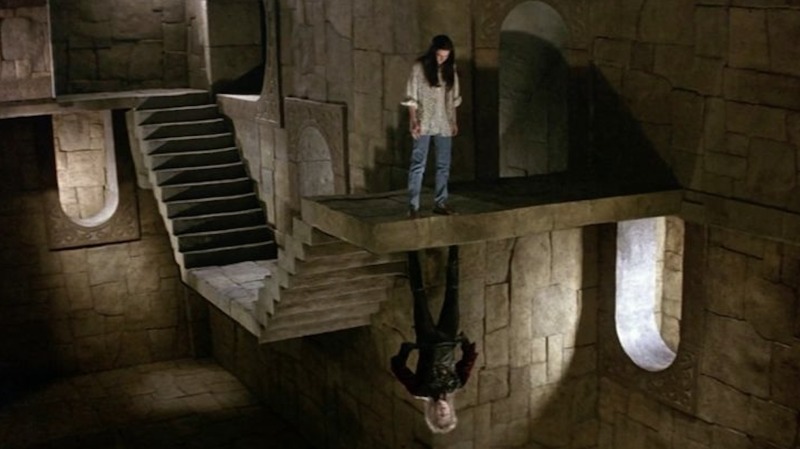
Time and time again, I find myself drawn to films that make me say: I have absolutely no idea what’s happening right now…but I think I love it. Every time I surrender to a warped and twisted narrative, filled with nightmarish imagery and ominous character arcs, spiraled timelines and a deep dive into the uncanny, I come out on the other side feeling a sensational blend of uncomfortable and wholly recognized. These are films that feel like waking up at 4 a.m. from a dream you almost understand, slipping out of your conscious grasp by the second.
I call these films “Fever Dreams Flics,” but this is more of a feeling than a set of criteria. The feeling is one of a spiral, of one’s subconscious mind being split open and danced inside of. Fever dream films bend consciousness, tugging at the thread between reality and the subconscious, then pulling at it until it frays. These films are often described as surreal, but surrealism isn’t the whole picture here. They are not merely strange for strangeness’s sake–many are actually deeply emotional, even vulnerable, precisely because they refuse the safety of structure. The world inside them moves according to desire, dread, memory, paranoia, the inner weather of the psyche.
Think of the anxious loop of Martin Scorsese’s After Hours, a night that refuses to end; or the dissolving identities of David Lynch’s Lost Highway; or the fluorescent horror-pop ache of Jane Schoenbrun’s I Saw the TV Glow, where adolescence feels like possession. These are films that you fall into, like a dark void, rather than follow in a straight line.
So, although I call them fever dream flicks, the category isn’t defined by genre, style, or narrative theme. It’s defined by feel. A fever dream film leaves you with:
1. A sense of time slipping off its axis.
2. A reality that is slightly too bright, too dark, or too close.
3. A body-deep recognition that something is being revealed, even if no one can say what.
4. The lingering impression that the film watched you back.
If I were to write an actual definition, it might look like this:
A fever dream film is one in which narrative logic gives way to psychological logic; where mood governs movement; where the film seems to emerge from the same place dreams do: a hidden and humid room inside us.
I have compiled a list of five films that don’t just tell stories, but instead pull you inside their dreamlike haze.
1. Lost Highway (1997)
Director: David Lynch

Lost Highway exists in the dissolving seam between the self we present to the world and the shadow self we bury deep beneath the surface, a self so hidden that perhaps it isn’t even us anymore. On its surface, the film follows Fred Madison (Bill Pullman), a jazz saxophonist consumed by suspicion that his wife Renee (Patricia Arquette) is cheating on him. Their marriage is emotionally airless and flat, but then come the videotapes: mysterious surveillance recordings left on their doorstep showing the interior of their home, filmed while they were sleeping. The implication is chilling because of who might have seen them, or who might have been there with them all along.
When Fred is arrested and sentenced for Renee’s brutal murder, the narrative splits into pieces. Fred dissolves, literally, and re-emerges as an entirely different person: Pete Dayton, a young mechanic with no memory of how he arrived in the prison cell Fred once occupied. The world continues from there as though this were perfectly natural. Characters reappear under new names, identities warp, lovers duplicate or mirror one another. Arquette returns, now as Alice, a blonde femme fatale Pete becomes dangerously obsessed with. Every answer leads to another question, and every reveal reveals nothing.
This is where the fever dream begins. Lynch refuses the stabilizing comfort of cause and effect. The film is operating on psychological logic alone. What is happening is less important than how it feels. The same characters return, but shifted, recognizable but there is something uncanny and sinister at play here. Spaces look familiar but behave differently. Time is circular, and what you think is progression may be return. The fever dream sensation comes from the film’s refusal to confirm whether we are watching a supernatural reality-bending event, Fred’s psychotic break under the weight of jealousy and guilt, a looping nightmare of self-denial, or all of the above simultaneously
The horror and dread here is not that something outside of yourself is a haunting force, but that you are haunting yourself. The film ends as it began, the loop tightening into an infinite spiral. A fever dream film is one that seems to emerge from the same subconscious terrain that dreams do, ungoverned, pulsing up from beneath language.
2. Perfect Blue (1997)
Director: Satoshi Kon
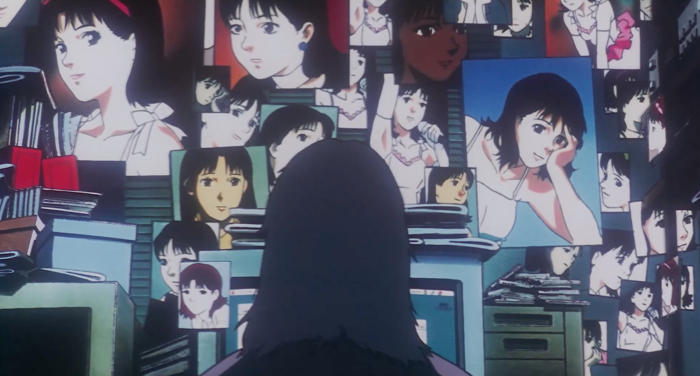
The anime Perfect Blue is pure, dark disorientation. It begins rather grounded with Mima Kirigoe, a young pop idol, who decides to leave her bubblegum J-pop girl group to pursue acting. The shift seems harmless at first, like a natural career progression, but the world she enters is far less forgiving than the one she leaves. The girl-group’s glittery performances had a seeming innocence to them. Acting, particularly in the industry Mima steps into, asks her to expose parts of herself she is not ready to see. The roles become darker, more violent, and more adult. The line between performance and self begins to thin.
What makes Perfect Blue a fever dream is the story of a young woman being watched, consumed, and projected upon until she no longer knows where her own thoughts begin. It is the dissolution of her sense of self, a self no longer in her own hands. Mima’s sense of self fractures into mirrors: Mima as she is, Mima as the public wants her to be, Mima as the media constructs her, and Mima as her stalker fantasizes her. She slides into a space where she only exists inside of the gaze of others, and rather than coexisting, these versions of Mima feel like they’re competing with each other.
As the film progresses, Mima becomes stalked by a fan who claims the real Mima is the one she left behind, the smiling pop idol she no longer plays. He writes blog posts in her voice, recounting her days in detail she never shared. He claims to know her, better than she knows herself, and the horror here is ingrained in the way his imagined version of her begins to seduce her into doubting her own reality. The world of the film begins to mimic her dissociation.
Decades before social media turned everyone into both commodity and spectator, Perfect Blue understood the terror of becoming a version of yourself that is no longer yours. This is what makes Perfect Blue feel so feverish. Having a single self is not a stable pursuit.
3. Enter the Void (2009)
Director: Gaspar Noé
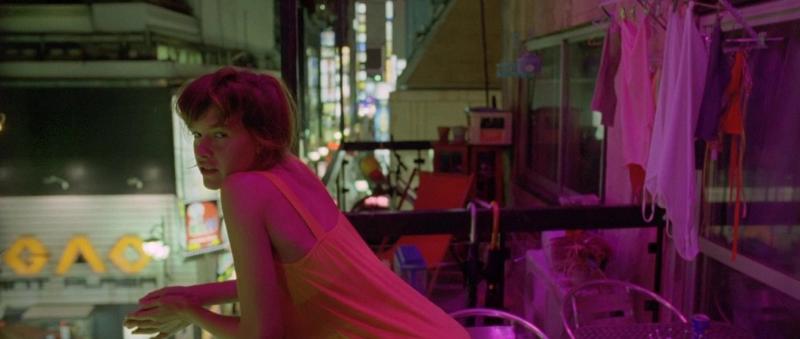
Enter the Void is a first-person odyssey through Tokyo, life, death, memory, and the hallucinatory lingering of consciousness after the physical body is gone. We begin inside the eyes of Oscar, a young American drug dealer living in Tokyo with his sister, Linda. Within minutes, Oscar is shot and killed during a police raid, but his death serves as an opening into the feverish subject matter of the film. The camera detaches from Oscar’s body, drifting through space, time, and memory, hovering over the city like a ghost.
The film mimics the way memory loops, repeats, distorts, and condenses. The camera floats through walls, ceilings, and bodies, following pulses of neon light and journeying through emotional resonance rather than plot. We are feeling Oscar’s longing, regret, fear, and unfinished attachment to Linda.
Noé constructs this world through pure sensory saturation. Tokyo becomes a series of bright flashes, and the boundaries between city and dream collapse. The film feels like being inside a burning mind that cannot separate past from present, desire from grief, and self from ether. The world is alive with too much color and too much sound.
Enter the Void lacks the comfortable distance of movies that exist primarily for entertainment. There is no clear frame or comfortable outside vantage point. The film pushes you inside Oscar’s consciousness so fully that your own begins to feel porous. The screen becomes the inside of a skull, making the viewing experience hypnotic and suffocating in its intimacy.
Beneath the visual excess is something fragile and unbearably human. This is ultimately a story about grief. Oscar and Linda are bound by childhood trauma, a promise never to abandon one another, and a love that is not entirely healthy but is deeply real. It is the agony of wanting to return to a life that has already ended.
4. Labyrinth (1986)
Director: Jim Henson
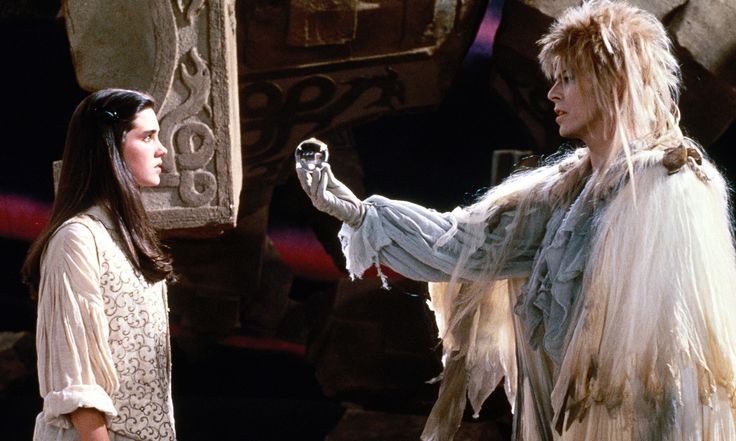
Labyrinth may look like a children’s fantasy film, but its emotional atmosphere is far more disquieting than that label implies. This is a dream in the most literal sense. Sarah, a teenage girl caught somewhere between childhood and adulthood, accidentally wishes her baby brother away and must navigate a vast, shifting labyrinth to rescue him from Jareth, the Goblin King, played by a shapeshifting, seductive, and unsettlingly charismatic David Bowie. The story is simple, but the world it takes place in is governed by longing, fear, petulance, desire, and the volatile emotional turbulence of adolescence.
This is what makes Labyrinth feel like a fever dream. The obstacles Sarah encounters are reflections of her internal state. Each puzzle, trick, and character she meets is a psychological confrontation. The walls shift when she insists she knows what she’s doing. Paths open when she admits she’s scared. The world responds to her interiority. That’s dream logic at its finest.
The film’s imagery is childlike and haunting at once. For instance, the puppets are whimsical, but their smiles are too wide. The colors are bright, but in that way dreams are bright, oversaturated, slightly unreal, charged with meaning you can feel but cannot name. Jareth himself carries the strange, complicated magnetism of first desire, a figure that is both alluring and threatening. He is the embodiment of the terrifying thrill of growing up.
This is what makes Labyrinth so distinctive. It understands that childhood is not entirely light or innocent. Childhood is full of anger, fear, longing to be taken seriously, longing to escape, longing to return. The film lives in that emotional borderland. Fantasy is still possible, but consequences matter. The feverish quality comes from the film’s refusal to clarify itself. When you try to explain it, something slips and clicks and pops out of place, just like in dreams.
5. Under the Skin (2013)
Director: Jonathan Glazer

Under the Skin communicates through temperature, silence, atmosphere, and the aching emptiness of alien perception. It follows an unnamed woman, an extraterrestrial being in the shape of Scarlett Johansson, who roams the wet, fog-drenched streets of Scotland in a white van, luring men to their deaths. The film immerses us inside her gaze. We move through the world as she does, exteriorly watchful and unreachable on the inside, void of interiority, processing human life as a series of shapes, sounds, bodies, and unfamiliar emotional cues.
At first, she plays the role of predator with absolute detachment. She selects men based on availability, vulnerability, their willingness to be seduced not by desire, but by being seen. They follow her into a black, liquid void, an abstract space where their bodies are absorbed and erased. These sequences are hypnotic and horrifying. Johansson’s character begins as pure observation, untouched by human feeling, but cracks begin to form. In the beginning: the world is wide, empty, clean, geometric. She is the hunter; Scotland is cold and quiet. As she changes, the camera begins to lurk uncomfortably close to skin, eyes, and breath. Sensation replaces detachment. She begins to have a body, but a body is a frightening beast to maintain.
Under the Skin is a fever dream because it refuses to explain the meaning behind of any of this as according to time. It never names the creature, nor clarifies her mission. The film ends the way dreams do, with an ache and a sense of grief, for something entirely vague.
Fever Dream Films don’t ask you to understand them. They just open a door and leave you standing in a room you recognize without knowing why. They put time and identity under a funhouse mirror-shaped microscope. These films linger around in your senses like deja vu, like recalling a feeling you had in a house you no longer live in.
Audrey Weisburd is an arts and culture writer from Austin, Texas, currently living in Brooklyn. She also writes short fiction and poetry. She shares her work on instagram @audrey.valentine.
 Keep scrolling for more great stories.