
How You Can Count on Me Let Mark Ruffalo Be His Combustible Best

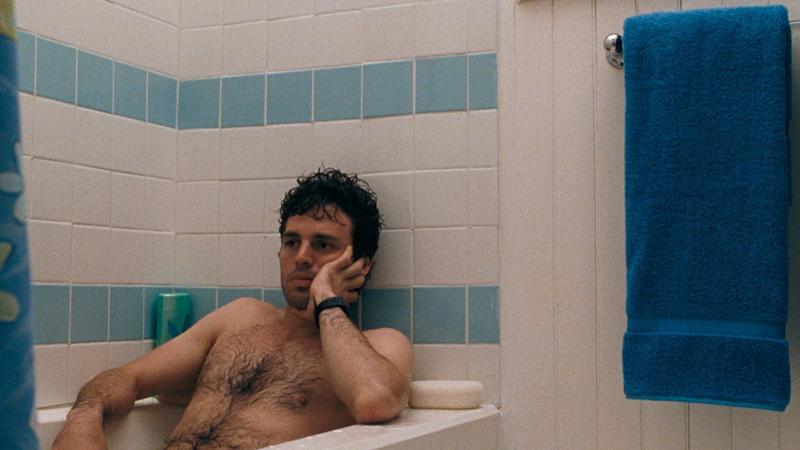
For a minute there—a terrifying minute—it really did seem like Mark Ruffalo, one of the most compelling actors of his generation, might’ve been irrevocably subsumed into the Marvel franchise vortex of creative extinction, where curiosity and ambition go to die miserable, whimpering deaths. The run of soulless cash grabs and cynical cameos was looking bleak. There were a handful of projects like Spotlight that were worthy of his talent scattered amongst the blazing trash heap, sporadic spears of light emanating from the desolate lacuna, but those years of superhero hegemony have left an indelible mark—there’s now an entire cohort of moviegoers who know him exclusively as the Hulk, a soporific special effect sleepwalking his way to a ludicrous fortune.
Mercifully, over the past few years, we’ve since emerged from the depths of the trenches. With the Marvel juggernaut on its way down from its abhorrent apotheosis, Ruffalo has wasted no time in throwing himself into adventurous, varied projects that stretch the limits of his range: in Todd Haynes’ quietly apocalyptic Dark Waters, he embodies the existential horror of a man burdened with sifting through five lifetimes’ worth of reports on poisonous corporate evil; in Yorgos Lanthimos’ Poor Things, he careens in a completely different direction, playing a raging mass of rampant horniness; and in Bong Joon Ho’s turgid, woefully scattershot Mickey 17, he takes another full-blooded, perhaps somewhat inelegant swing with what’s essentially an absurdly hammy Donald Trump caricature, which can be faulted for being misguided, but certainly not for being cautious or conservative.
Ironically enough, out of all these roles, it’s actually the Hulk, a character famously capable of destructive eruptions of rage, that taps into one of Ruffalo’s stealthier, more unsung qualities. For all the disarming sweetness and unthreatening charm that made him such an effective romantic comedy heartthrob early in his career, for me Ruffalo’s absolute best work has come whenever he’s been allowed to feel genuinely dangerous—when that warmth that he so effortlessly emits decomposes into powder keg combustibility. Myriad directors have made Ruffalo feel eminently, inoffensively appealing by taking advantage of his natural sincerity and vulnerability, but only a minuscule minority have plumbed further and excavated his ability to evince a more brittle, jagged brand of masculinity. Jane Campion wielded that edge to uncomfortable effect in her psychological thriller masterpiece In the Cut, in which Ruffalo’s Detective Malloy is at once irrepressibly sensual and corrosively scummy, never once losing his mystique or air of latent danger in the movie’s paranoid haze.
[ad]
But for me, Ruffalo was never more perilously unpredictable, and never better, than in Kenneth Lonergan’s directorial debut You Can Count on Me—which turns 25 this year—in which Ruffalo plays the inflammatory, peripatetic Terry Prescott, whose aimless, erratic wanderings are in stark contrast to the inertia of his sister Sammy (Laura Linney), who is inextricably, and in Terry’s eyes debilitatingly, attached to their hometown. Terry is totally rudderless, a restless soul who seems unable to find meaning anywhere he wanders. Early in the movie, we learn that he’s recently served a short spell in prison for being embroiled in a bar fight, and although he insists that he wasn’t the instigator, it becomes increasingly difficult to put any amount of trust in his version of events the more we watch him provoke, torment, and lash out at the people in his orbit.
Indeed, from the very first moment we meet him in his barebones apartment, preparing to visit Sammy after months of no communication in order to ask her for money, Terry feels tangibly volatile, capable of swerving from plain conversation, to pyrotechnic hostility, to stuttering remorse, to icy remoteness, all within the space of a couple of minutes. He seem almost entirely unreceptive to, and even disinterested in, the aches and anxieties of his girlfriend Sheila (Gaby Hoffmann), whom he first asks for money, then snaps at when she goes down a line of questioning he disapproves of, and whose expression of love he reacts to with palpable discomfort.
Ruffalo feels liable to turn any scene on its head in an instant, charmingly boyish one moment and volcanically hostile the next, all coiled shoulders, paranoid tics, and untethered aggression. The movie really ignites whenever he shares the room with Laura Linney, whose Sammy is the immovable object to Terry’s unstoppable force. Ruffalo and Linney make the siblings feel agonizingly close yet frustratingly discordant—unbreakably bound by the shared trauma of their parents’ tragic deaths, desperate to connect with each other, yet never quite on the same wavelength, never more than a couple of words away from a confrontation or an intervention. They’re the spark to each other’s gunpowder, each just lying in wait to destructively detonate at the slightest provocation.
Their inherent incompatibility rears its head almost immediately upon their reunion when Terry confesses to spending time in prison, and then allows his anxiety and aggression to spill over into a diatribe defending his actions when an exasperated Sammy probes for more information. Ruffalo’s twitchiness makes it feel as if Terry is constantly teetering on the precipice of a fresh paroxysm, all too ready to unleash his nasty streak. After Sammy withdraws money to lend to Terry, his expression is hangdog, sincerely contrite about making his long-awaited return feel coldly transactional. But again he finds an injustice to latch onto, responding to the crestfallen Sammy’s monosyllabic disappointment by aggressively offering to get out of town as soon as possible since his presence is clearly unwanted, which in turn causes Sammy to snap. Ruffalo is more than capable of landing Terry’s seismic hammer blows, but he’s also a master of minutiae, making Terry feel palpably prickly and emotionally stunted in the less explosive moments when he’s processing his indignation and calculating his response. Just watch the way Ruffalo keeps his eyes glued to the floor whenever Terry receives even the slightest criticism, as if he’s a child being subjected to a protracted lecture on his playground misconduct. Watch how his jaw muscles twitch and tense, how his eyes flicker to the side and then sink back down again—you can practically see him cogitating each venomous syllable like a scolded, vindictive adolescent constructing the perfect comeback.
It’s glaringly obvious that Terry is far from the ideal masculine role model—the vulnerability that makes Ruffalo such a comforting and endearing presence elsewhere, comes across here as the sort of spiky masculine fragility that lacerates to the touch. And yet Ruffalo still somehow manages to make us believe, in all too ephemeral moments, that Terry is a suitable candidate to seize the paternal mantle and help Sammy’s son Rudy (Rory Culkin)—whose father isn’t in the picture—negotiate the rugged terrain of manhood. Ruffalo makes Terry’s unevolved childishness feel almost like a virtue in Rudy’s company, purging the tension from Terry’s body language as he effortlessly strikes up a rapport with the kid, sharing pearls of masculine wisdom in streams of unedited logorrhea. You Can Count on Me is replete with wholesome moments in which Terry feels like exactly the sort of presence that Rudy needs, showing him how to do handiwork, play pool, go fishing—the sorts of formative moments, including that first thrill of youthful transgression, that have obviously been absent from Rudy’s life, and at which the kid is eager to pounce.
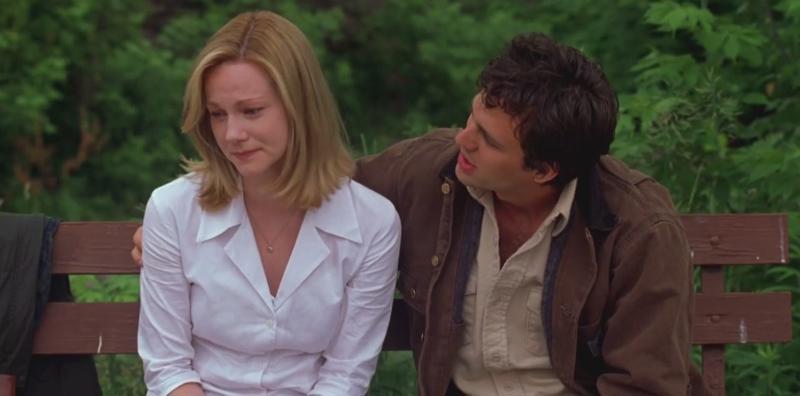
Still, even this sweetness is harshened by a drop of acid—there’s an unshakeable sense that Terry’s actions are less to do with filling a void in Rudy’s life than they are about Terry using Rudy as a release valve for his own estrangement, imprinting his specific sense of self-righteousness onto an impressionable, plastic brain. There’s a pernicious undercurrent to the way in which Terry tries to warp Rudy’s mind under the guise of noble honesty, using the child as a pawn in order to poke holes in his sister’s parenting methods. Terry manages to convince himself that his acrid barbs aimed at Sammy, his vulgar sermons aimed at Rudy, and his cruel manipulations, are merely his superior form of sincerity, cutting incisively through all the illusory bullshit peddled by the naive, stagnant sheep of the village. Even more odious still is Terry’s use of Rudy as an excuse to confront Rudy’s father (Josh Lucas), and the petty pleasure Terry takes in stoking the flames of ancient grudges. Ruffalo reserves his widest, most devilish smile of the movie for the moment in which Terry baits Rudy’s father into a fistfight—the toothy, gnashing, shit-eating grin of a person who smells blood in the water, who knows exactly which buttons to push and which wounds to pour salt over. Etched all over Terry’s face is a sense of relish, seemingly oblivious to the fact that he’s about to emotionally scar a child, all for the sake of showing him how ruthless and fucked up the world is—which, as Sammy points out, he’ll go on to learn anyway as everyone does, without the help of an ulcerative uncle.
And yet for all his blemishes, for all the stunts and outbursts, Terry still feels painfully sympathetic—an individual torn apart by a childhood apocalypse, unfavored by fortune, desperately grasping for meaning in an unforgiving world that resists easy answers. The moments that stick most vividly in my mind are Ruffalo’s small gestures of softness: the way his face suddenly collapses when Terry learns of Sheila’s suicide attempt; the way he clinches Rudy’s head as the kid clings to him in a farewell embrace; the tremulousness of his face as Terry chokes back tears while reassuring Sammy that he’s going to be alright heading into his uncertain future. In a career brimming with stellar work, for me Terry is still Ruffalo’s most complex character and greatest feat of acting, a mercurial presence who’s genuinely impossible to pin down—at once a lethal attack dog and wounded puppy, too volatile to keep around, but too tender to send away.
[ad]
Cian Tsang is a UK-based film writer, whose pieces have appeared in The Guardian, Little White Lies, Polygon, and more. You can find his work here.
 Keep scrolling for more great stories.