
The 100 greatest songs of the 1970s
Waste your summer praying in vain for a savior to rise from these streets…
Photo by Echoes/Redferns
10. Milton Nascimento & Lô Borges: “Tudo Que Você Podia Ser” (1972)
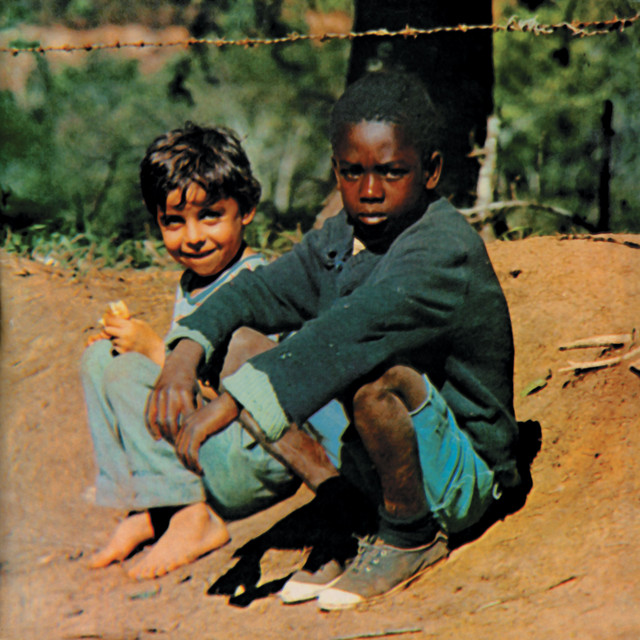 From its first mournful nylon-string guitar strum, “Tudo Que Você Podia Ser” punches you right in the solar plexus And over the next three minutes, it never lets up. Clube da Esquina is a legendary record, as long and complex and winding as an epic poem. That “Tudo Que Você Podia Ser” is its pace-setter, and such a successful one at that, is perhaps the greatest proof of its magic. That album, and that song, began a renaissance of Brazilian culture: its tropical guitars, psychadelia-infused folk songs, the brilliant artwork created in response to Brazil’s brutal military dictatorship. Milton Nascimento’s voice cuts through any language barriers, its emotion a universe unto itself. The song’s lyrics depict a young boy caving to the regime’s mores, and its instrumentation does an eerily good job of depicting the hopeless reality in which he lives. The song flutters up and down, from Borges’ light thrums to Nascimento’s crackling, range-spanning refrains, before bursting into near-nonsense, all tongue and caxixi (a sort of maraca on steroids) as it fizzles furtively out. It is a revelatory piece of music: quick and sly and brave. It’s also one of those songs that, if you allow it to, might just change your music taste forever—it certainly did mine. —Miranda Wollen
9. Bruce Springsteen: “Thunder Road” (1975)
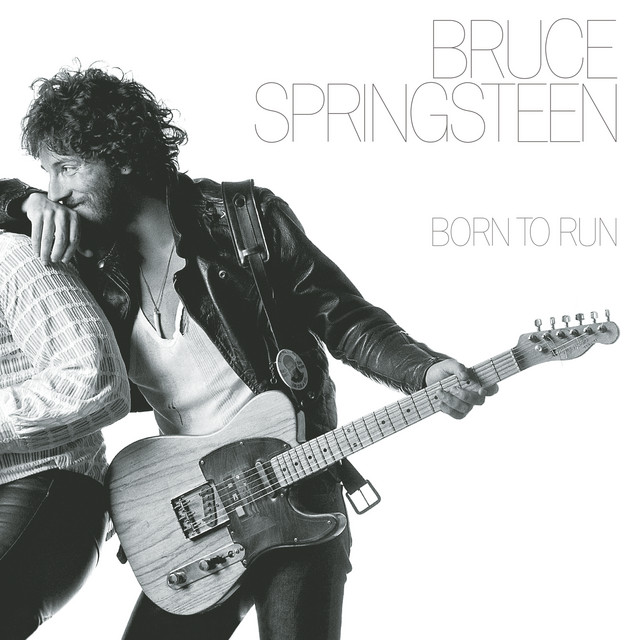 You can see it before he even starts singing. Just as soon as you hear the wheeze of that harmonica, you know what’s to come: the screen door slams, Mary’s dress waves. On this, the opening track of the best record he’d ever make, Bruce Springsteen is painterly. He renders the minutiae of life with incomparable attention and feeling, knowing as he does that it is these small moments that lead to the bigger ones. “Thunder Road,” as the name suggests, is a song of motion. Without a verse or chorus to speak of, it feels just like a highway, a simple straight line cutting through the world that you drive down without wavering, shifting gear only to speed up. And this is a song that’s built to go fast and far. From the first few seconds, Roy Bittan’s piano is never still, shifting and tinkering constantly—it is the engine of the song, anchoring it as it races towards some unknown destination. Not just its own brilliant and exhilarating finale, the E Street Band playing full-tilt, Clarence Clemons’ tenor saxophone hooting joyfully at each turn. Not even the destination of its protagonist, desperate to grab his girl and run towards their “one last chance to make it real.” But something else, something bigger. That great big wide expanse of nothingness, the beautiful blank space that rolls and rolls out until it disappears into the horizon—it is the seeking of that space that drives Springsteen, and all of us. “Thunder Road” doesn’t just sound like driving off into the distance, it sounds like freedom. —Mariam Abdel-Razek
8. Fela Kuti / Africa ‘70: “Zombie” (1976)
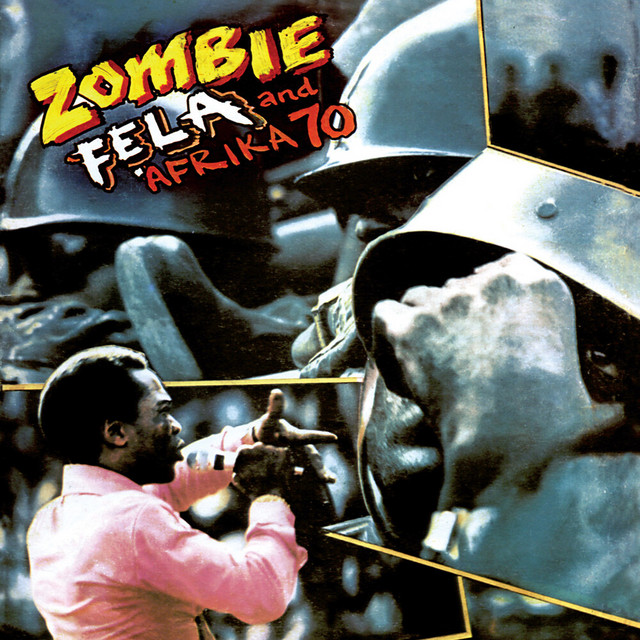 Fela Kuti’s music is gospel, and no one does fusion like him. In 1975, he and Africa ‘70 made Expensive Shit, the greatest Afrobeat album of all time—a product of the Nigerian police state repeatedly targeting Kuti. His ire turned toward the country’s military a year later on “Zombie.” Kuti, with his dozen-man backing ensemble, launched a scathing attack against complacent “zombie” soldiers across fifty-four minutes of tribal rhythms, funk saxophone, vocal chants, and chugging, interlocking guitar lines. The title track is tense and volatile, mocking drill compliance with overwhelming horn attacks and rubber-band snares. Most American protest music lasts without consequence, but “Zombie” enraged the Nigerian government. It retaliated against Kuti’s music by destroying his Kalakuta Republic commune. Kuti himself was beaten and his mother Funmilayo Ransome-Kuti was killed by defenestration. Kuti’s studio, master tapes, and instruments were lost in the fires, so he and Africa ‘70 holed up at Crossroads Hotel before giving a fabled performance in Accra in 1978, where riots broke out. “Zombie” is dangerous music. Every groove is a scar. —Matt Mitchell
7. Suicide: “Frankie Teardrop” (1977)
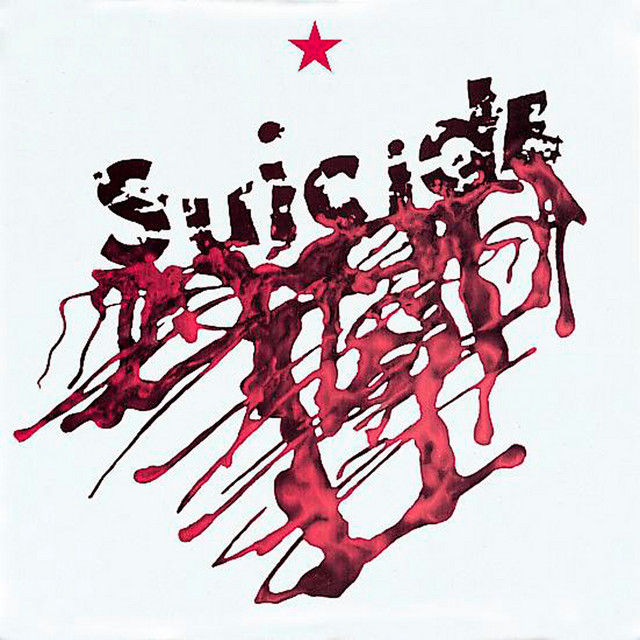 The influence of Alan Vega and Martin Rev spans nearly fifty years, in songs from acts like Human League, Spacemen 3, LCD Soundsystem, M.I.A., and Dirty Beaches. But maybe the ultimate homage came from Bruce Springsteen in 1982, when he channeled Vega’s “Frankie Teardrop” yawp in his own “State Trooper.” As Stuart Berman excellently said ten years ago, Suicide “took the rotting corpse of rock and roll, threaded it with electrical circuitry and zapped it back to life.” Suicide weren’t like the other CBGB bands at the time; their work eluded categorization then and still does. They weren’t punk, nor were they post-punk. “Electronic” feels half-fulfilled. “No wave” is too easy. That Suicide came out the same year as Trans-Europe Express proves that Vega and Rev were perfect American counterparts to out-of-this-world freaks like Kraftwerk. “Frankie Teardrop” is the record’s ten-minute centerpiece—the tale of a young factory worker so consumed by poverty that he goes insane and kills his wife and child after work before killing himself. But Vega and Rev don’t stop there, sending their keyboard and drum machine into Hell with him. “Frankie Teardrop” is violent, radical; its “let’s hear it for Frankie” refrain is terrifying. Bands are still writing afterwords to Suicide’s vision. Even Lou Reed regretted having not written it himself. —Matt Mitchell
6. Joni Mitchell: “A Case of You” (1971)
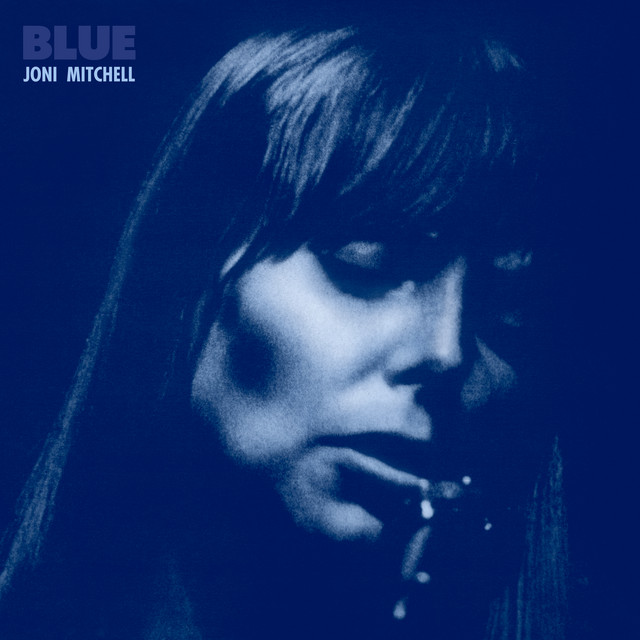 No text is more foundational to the notion of the “singer-songwriter” than Joni Mitchell’s Blue, unfortunately binding an ever-evolving, exploratory artist to a folky archetype she quickly outgrew—and tying to her to every other woman singer who has tried to recapture her brilliance, of which there have been many. Still, from the first strum of the appalachian dulcimer, you simultaneously wonder how something like “A Case of You” hasn’t always existed and how anyone besides Mitchell could ever pull this off as she wields the sharp edge of her pristine soprano coo like it’s chasing the chaotic love lost she can’t quite wrangle. Before she could stretch the possibilities of the genre she elevated for good, taking more challenging, oblique stabs at similar source material as the seventies rambled on, Mitchell had to (pardon the pun) draft an unimpeachable blueprint. With “A Case of You,” she hit on her own modern standard, allowing her to rip her perfect creation up and start again with each record that followed. —Elise Soutar
5. The Meters: “It Ain’t No Use” (1974)
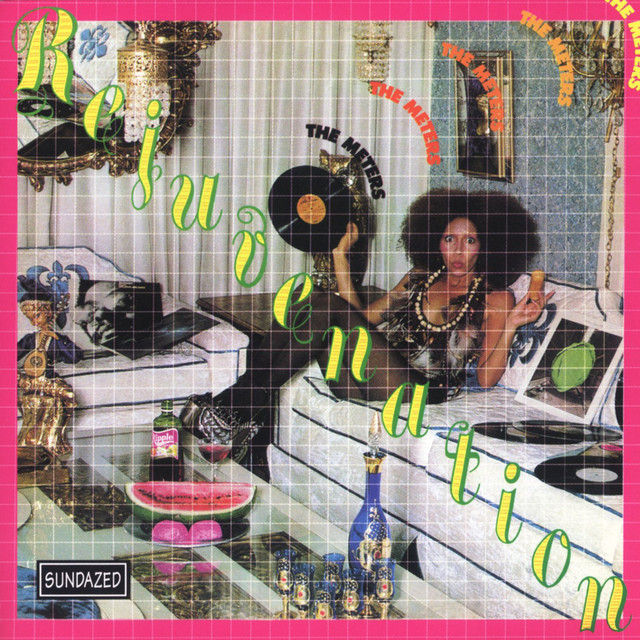 Like clockwork, the “What’s the greatest American band?” prompt shows up on my social media feeds. And like clockwork, everyone forgets The Meters. They changed funk music forever when Zigaboo Modeliste, George Porter Jr., Leo Nocentelli, and Art Neville emerged from New Orleans in 1965 before backing up acts like Allen Toussaint and Dr. John. When Mick Jagger saw them play at the release party for Wings’ Venus and Mars, he asked them to open for the Rolling Stones. I’m of the opinion that Rejuvenation is among the greatest records ever made, and “It Ain’t No Use” is the earthquake that splits me in two. The song spills into me like a nocturnal Mardi Gras parade. The Meters gift us twelve minutes of Nocentelli beating the brakes off the groove with insane figures. He had the finesse of a superstar and the talent of a session hero—a combination that powers “It Ain’t No Use” like a V8 engine until the rest of the band falls back into perfect unity. There’s simply no pocket like this in all of rock and roll. —Matt Mitchell
4. Nina Simone: “Stars” (1976)
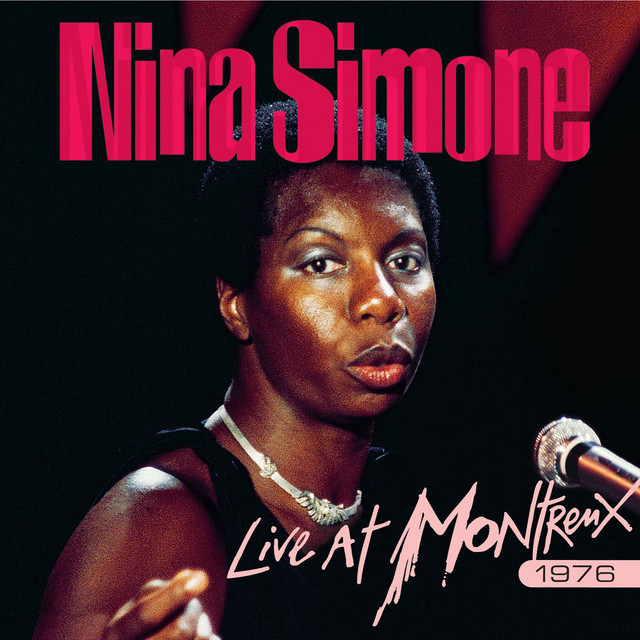 I have yet to hear “Stars” without tearing up. This might be in part because I will always associate it with being depressed and fifteen and watching season three of BoJack Horseman for the first time, which ends with “Stars” soundtracking BoJack’s silent decision to kill himself—speeding ahead on the highway, taking his hands off the wheel, closing his eyes, preparing for the crash—before opening his eyes, seeing something, and swerving to a sudden stop. In front of him is a pack of (anthropomorphized) horses running, an unspoken reference to a message imparted from his hero as a kid (“When you get sad, you run straight ahead, and you keep running no matter what”), as the music swells and Nina Simone bellows above wild piano, ragged and enormous and defiant, “We always, we always, we always have a story.” He gulps, his eyes widen with something like hope, and the season ends. It is possibly the best needledrop I’ve ever seen. Because ”Stars”—written by Janis Ian and taken up by Simone in the mid-seventies, most indelibly in her 1976 Montreux performance—is a song about fame and its aftermath, about the ones who “shine so bright” before the light moves on and leaves them in the dark, playing to rooms that used to be full. In anyone else’s hands it might read as showbiz melodrama. In Simone’s it becomes something closer to testimony, to prophecy, even. After all, by then she was living it: the classical prodigy once denied her due, the star who’d fallen out of favor, singing about the cruelty of an audience’s short memory to the audience themselves. She takes her time with the song, almost unbearably so, stretching syllables past their breaking point, letting the piano wander and crash where it wants. When she sings about people who “give you all they’ve got” and get nothing back, you understand she means herself, means every artist ever chewed up and spat out. And in that utterly heart-wrenching climax, there’s no glory, but there is survival—there is a life beyond burning bright and crashing out, so long as you resolve yourself to live it. “We always have a story,” she belts, again and again. “So if you don’t lose patience with my fumbling around / I’ll come up singing for you, even when I’m down.” —Casey Epstein-Gross
3. Stevie Wonder: “As” (1976)
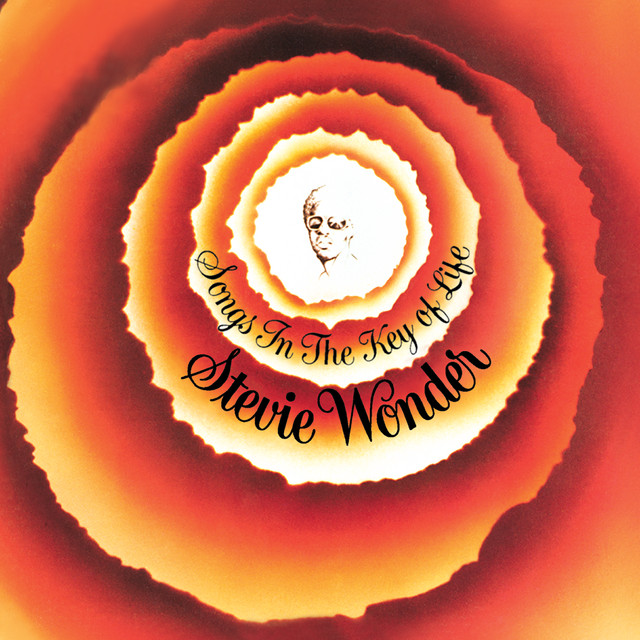 Of all the stars in the constellation that is Songs in the Key of Life, “As” is the one that burns most blisteringly bright. It is not a love song in the traditional sense: like all great writers, Stevie Wonder knew that love can be felt not just from person to person but in a broader, bigger, and better sense. It is the thing that makes us human and that, for better or worse, guides our lives. Nowadays our knee-jerk reaction to the sentiment of loving humanity is an eye-roll—it feels trite, affected. But the cure to cynicism will always be this glorious hymn of a song. One of Wonder’s greatest achievements of instrumentation, “As” reveals new sounds and riffs with each listen, giving exactly the feeling of infinity that its lyrics express. With a certain Herbie Hancock on keyboard and what sounds like a full choir of backing vocalists, it loops in and around itself with unwavering certainty, dipped in disco and soul, full to the brim with feeling. It is a huge track, sprawling and beautiful, just like life itself. Wonder sings with the conviction of someone who knows something that we don’t. “Did you know that true love asks for nothing?” he asks. “Did you know that life has given love a guarantee / To last through forever and another day?” If we didn’t know before, we do by the time he’s done singing. —Mariam Abdel-Razek
2. Carly Simon: “You’re So Vain” (1972)
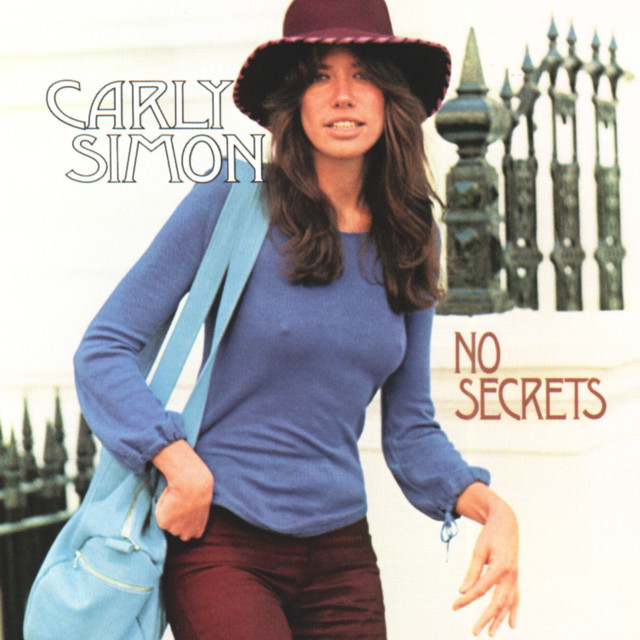 “You’re So Vain” has been the subject of speculation and theories for fifty-three years. Everyone wants to know the true subject of Carly Simon’s diatribes. Some suspects have included David Bowie, David Cassidy, Cat Stevens, David Geffen, and James Taylor, among others. Simon’s husband Jim Hart said it’s not about a celebrity. Eventually, Simon confirmed that the second verse was about Warren Beatty. And, apparently, Taylor Swift knows who it is. Look, debunking drama and mystery is a fun game to play. But the older I get the less concerned I am with who or what Simon was singing about. These days, I get a lot of miles out of Mick Jagger’s uncredited backing vocals and Jimmy Ryan’s guitar solo. Ryan had been a member of the Critters but found his lane as a session musician. He played the “You’re So Vain” solo on a Gibson ES 335 and producer Richard Perry covered the licks in multi-tracking and reverb. It’s an uncomplicated solo, but Ryan’s vibrato is tasty. Radio-friendly soft rock was full of vibe-y guitars in the 1970s, but “You’re So Vain” has so much more bite than whatever flaccid, milquetoast chart strata was leaking out of John Denver. It’s a track with excellent body language and an even greater groove, thanks in some part to Jim Gordon’s thunderous tom fills and breathless snares. And when Ryan comes in with a whole new pocket, he bends the ax until it wails. Monstrous tones. As catchy as the day is long. —Matt Mitchell
1. Funkadelic: “Maggot Brain” (1971)
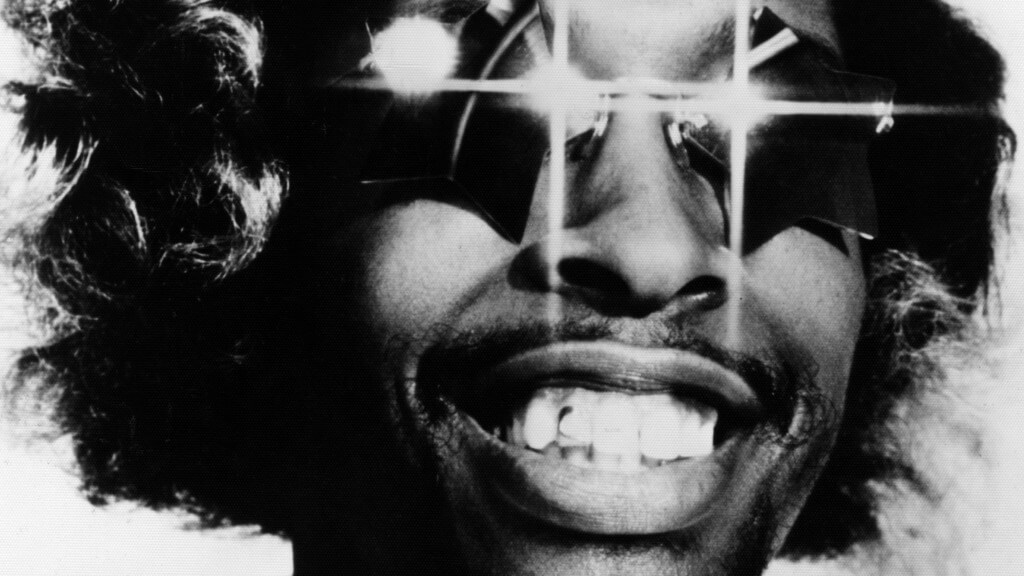
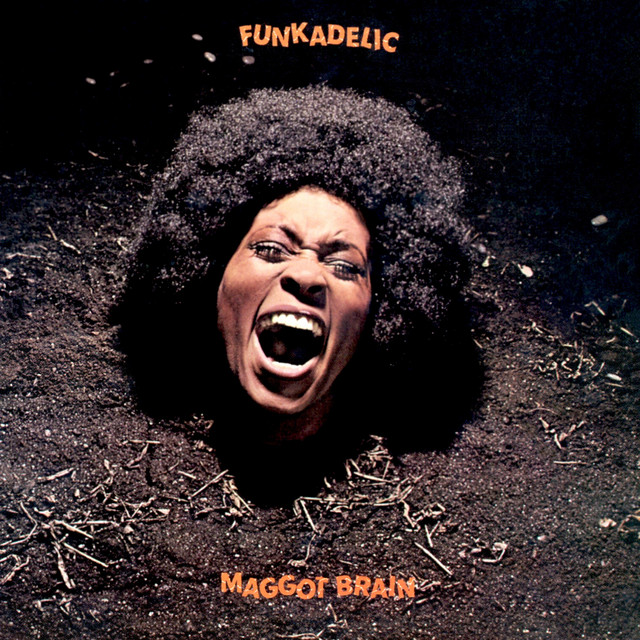 When Funkadelic recorded “Maggot Brain,” George Clinton told guitarist Eddie Hazel to play as if his mother had died. He wanted Hazel to imagine the day, his feelings, and how he would carry on after such an unimaginable tragedy. For nearly ten minutes, that’s what Hazel did. After, Clinton immediately knew what had just happened was incredible. The song, the album-opening title track of Funkadelic’s 1971 album, starts with Clinton offering a brief spoken-word verse. He discusses a pregnant Mother Earth and drowning in his own shit, as one does. From there, Hazel’s guitar has the floor for nearly ten minutes, almost exclusively. The song originally had a fleshed-out arrangement, but Clinton opted to leave just the guitar and some nearly inaudible percussion. This was Hazel’s moment. He delivered one of the most stirring, virtuosic, evocative, and engaging guitar solos in music history, up to that point and still. Hazel died from internal bleeding and liver failure in 1992. “Maggot Brain” was played at his funeral. There couldn’t have been a dry eye in that room. —Derrick Rossignol
 Keep scrolling for more great stories.