
Dijon’s Coachella debut is this decade’s Stop Making Sense
When the Baby singer and his troupe gathered onstage in a horseshoe formation and began to assemble every song from scratch in real time, I got the sense that I was witnessing something historic.
Images by Isaiah Johns, courtesy of Coachella
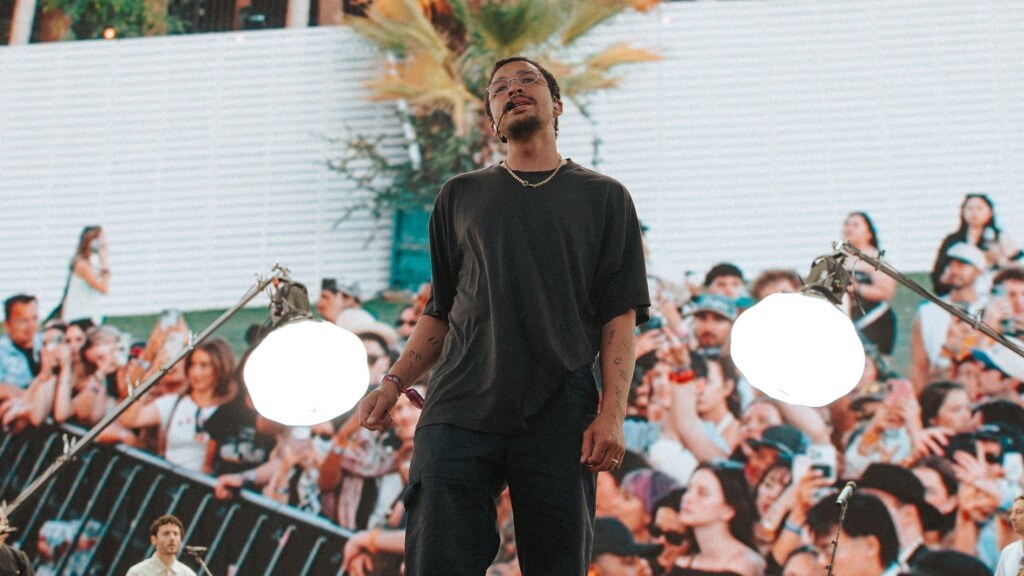
My favorite album of 2026 so far isn’t even an album, but a bootlegged MP3 of Dijon’s Weekend 1 Coachella livestream. I don’t have the audio tracked out, but I’ve memorized the important parts: at the 7:45 mark, the band kicks into “Yamaha.” Eight minutes later, “The Dress” happens. At 26 minutes, “FIRE!” begins. Around 28:11, Dijon yells, “Even if I kill myself right now, well, the last laugh’s all on me!” Mk.gee’s distorted guitar escorts the rest of the band through a “Many Times” speedrun at 39:10, the song not accelerating so much as being pulled out of frame. Coachella livestreams exist in a vanishing window. Dijon’s 6:40 p.m. set on April 10th was only viewable on YouTube until 4 p.m. on April 11th, but you could rewind it infinitely in the hours between. Thankfully, people screen-captured the performance and tucked it into Google Drive folders or covert subreddit threads. I won’t link them here, but they’re easy to find.
I have an aversion to music festivals. Piss-hot air, cattle-herded pits, and bloated concession prices are a turn-off. But I also resent the idea of watching an artist perform from 200 feet away or more, and I don’t have the stamina to camp out for barricades. I went to this year’s Coachella Weekend 1, but a knee injury left me stranded at my caravan’s Airbnb while everyone else took molly and ate chicken sandwiches for nine hours. It wasn’t all for naught: I spent most of Friday cooking in the Indio sun, watching private planes tow advertisements across the sky, and writing this 14,000-word story on Saturday. When I tuned into the Dijon livestream on Friday night, my audience was a crowd of one. A steady thud of bass enfolded the property as Dijon and his troupe gathered onstage in a horseshoe formation, cables strewn around them, pedalboards curled like halos below drumkits and keyboard stands.
Dijon is a world-class performer. Case in point: the film accompaniment to Absolutely, taped around a dining room table set up on a soundstage. I’ve seen him perform once, when he was a then-unknown opening act at boygenius’ summer Re:SET shows in 2023, alongside Bartees Strange and Clairo. At the time, his credits were still limited: a dissolved post-R&B group, contributions to Brockhampton’s Saturation II, a co-producer credit on Charli XCX’s “pink diamond,” and a single with John C. Reilly, Tobias Jesso Jr., Dan Reeder, Becky and the Birds, and Sachi. Absolutely was already two years old, but Dijon’s live sets didn’t quite match the looseness of the record’s YouTube film. He did, however, play “coogie,” which remains one of this decade’s best one-off singles. Dijon’s second album, the fatherhood opus Baby, arrived last year without any all-encompassing visuals or choreography. Instead, he took it on the road, reshaping songs in real time with live remixes, doctored arrangements, and fan favorites sped up or turned inside-out. In other words: the concert theater of Baby matched its homespun, many-roomed production.
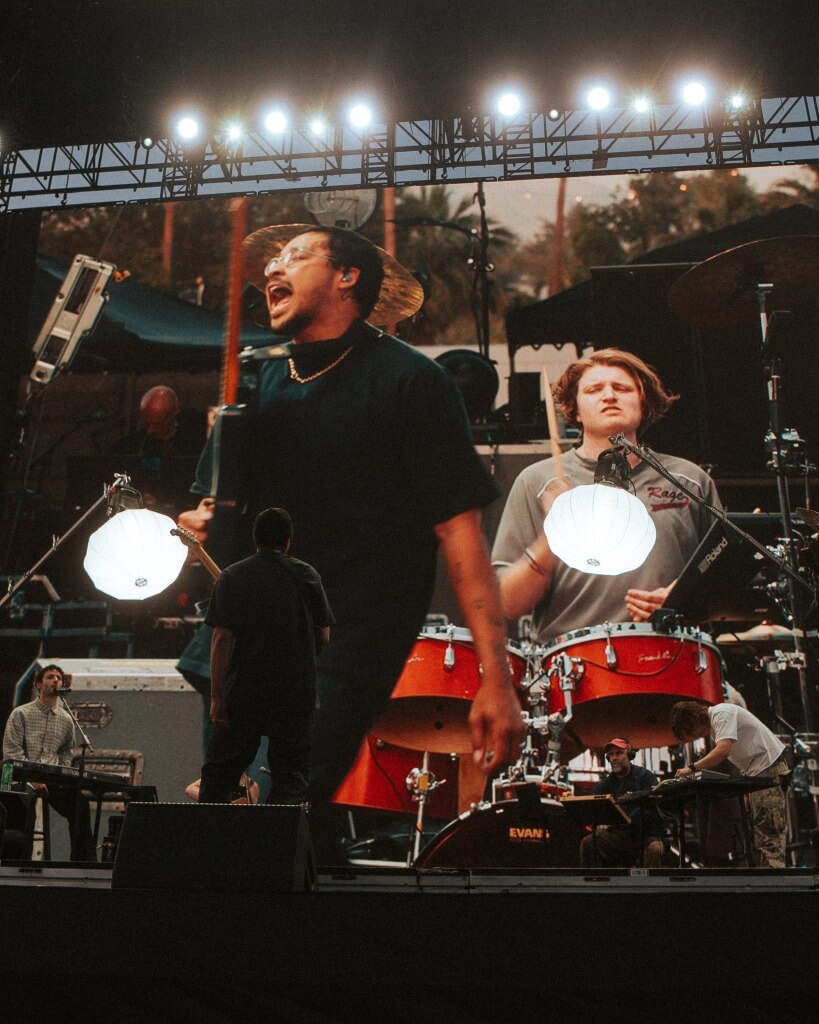
Before April 10th, I’d never tuned into a festival livestream, because I never had a reason to. It’s rare that a live performance of anything blows me away more than its studio recording, but the dusty gales in Indio carry an aroma of illegible singing, muffled guitar strokes, and distant crowd roars. And because the Empire Polo Club grounds’ phone reception is unreliable, attendees can’t reliably post Instagram highlights in real time. The faraway blowouts elicit catastrophic FOMO. So, in a concession of intrigue, I double-checked Coachella’s daily schedule and pulled up the Outdoor Theatre livestream. A 30-minute intermission passed the baton from Lykke Li to Dijon, just in time for the festival’s enviable sunset slot.
Dijon had the best walkout of the weekend: a pitched-up recording of the Family Guy theme song ushering him and his plainclothed cadre onstage, with the camera panning to a mother swaddling a newborn against her chest. Dope and topical. The set itself spanned 12 songs (13, if you count the snippet of “Annie” that bridged “Automatic” and “Big Mike’s”), with no expensive set pieces—a far cry from the exorbitant “Sabrinawood” installations that Sabrina Carpenter would use to stage her headlining set two and a half hours later. Instead of using Coachella’s standard camera setup of one zoomed-in stage shot and a couple of side angles, videographers filmed Dijon from the stage with a roving camera that captured each song in motion, occasionally panning into the crowd. Dusk washed the livestream in smoky, warm tones; I swear a close-up of Dijon messing with a drum sampler during “FIRE!” had a layer of grain over it. Maybe it was just desert dust.
I gave Baby a 10.0 last August. At that point, it was only the second perfect score at Paste in 18 years. I called Dijon “R&B’s past, present, and future,” labeling his music “meteoric proof that his debut was star-making and his soul will command the genre’s next destiny without leaving any of its ancestry behind.” I’ve doled out a lot of high review scores I’ve later regretted, but the Angeleno singer’s spell hasn’t broken yet. When I was writing the review, a Paste contributor emailed me saying they wanted to pan the album. By December, Baby was in the top ten of their AOTY ballot. The album is not just a deeply textured experience, but one that grows on its listeners through exploratory detail and spacious nuance.
Dijon’s Coachella performance was similarly fruitful, but only for anyone who didn’t pay $600 to see it. When my partner returned to our Airbnb at 2 a.m., she was visibly disappointed by the staging of his slot. Coachella livestreams are built for “Couchella” viewers to notice details some standing a football field away could never catch—but they are, at their core, still ephemeral. Just like the Absolutely film being posted to YouTube for free, Dijon making his set accessible and worthwhile for anyone who tuned in wasn’t a requirement by any means. I do wonder what Dijon’s program means for the future of Coachella livestreams—whether artists might begin treating them as an art form, and what the growing disconnect between attendees and at-home viewers will become. But, as my partner wisely pointed out: most people at the barricade of Dijon’s show were watching it through their phones anyway.
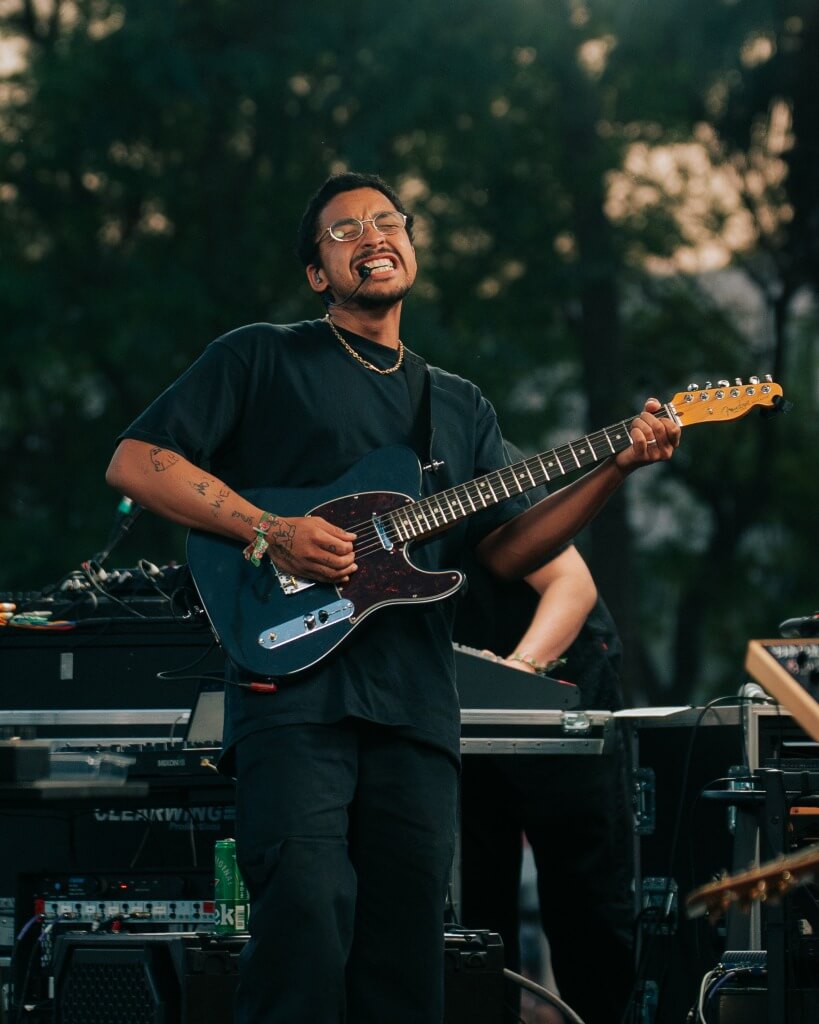
I’ve listened to Dijon’s Coachella performance no less than ten times since it happened. We’re in a drought right now: live recordings, good ones, are an endangered species. There’s this week’s new Florry tape, and before that MJ Lenderman & The Wind released Live and Loose!, which rocked. But, outside of Beyoncé’s Homecoming, Wilco’s Kicking Television, and, walk with me, Ween’s Live in Chicago, the live album feels like a lost art. And look, Dijon’s Coachella show only counts as a live album because I’ve pirated it into one. Still, I haven’t felt this way about a concert recording since watching Stop Making Sense for the first time. The Coachella rendition of his Prince-meets-Bonnie Raitt tribute “The Dress” ignites the gospel of my soul like the lamp-assisted “This Must Be the Place,” when the romance of “we should go out and hold hands like lovers hold hands” starts to parallel the romance of “I got plenty of time, you got light in your eyes.”
No one else in the world can perform songs like this, just like how no one else in the world could perform those Stop Making Sense songs like Talking Heads. Dijon is not a vampy, Stretch Armstrong type like David Byrne. Instead, he moves delicately around the stage with a headset microphone curled across his cheek like Janet Jackson. He doesn’t move his body to the rhythm so much as sing like he’s doing chores around the house. The filmmakers favor medium shots with wide accent angles. We follow Dijon around as if there is nowhere else to look. Rewatching the performance earlier this week, I was reminded of something Scott Plagenhoef wrote about Stop Making Sense 22 years ago: “It’s the snapshot of one live document with the camera playing the role of a punter, trained completely on the band in an attempt to recreate the experience of attending the show… it’s almost jarring when the camera finally closes in on audience members dancing in the aisles during the show’s finale.” A brief shot of audience members dancing a smidge too hard to “The Dress” still cracks me up.
But Plagenhoef’s point is important. The Coachella filmmakers don’t make livestream viewers feel like they’re in the audience, but like they are onstage with the players. Dijon and his band lock into “Automatic,” the guitar riffs sound like synth splashes and the beat dissolves into a falsetto harmony that, if you close your eyes, feels like it’s been dropped into the song by God. The camera follows the action, zooming in on details you wouldn’t see from the barricade, like the interplay of expressions between Dijon and his bandmates. Much of the production is visually distinct yet deliberately subdued. I’m a fly on the wall of a private, eight-man jam session. The band is lit from behind by tron shots of the crowd; the canopy of palm trees lining the grounds slowly dim to black as “Big Mike’s” turns into “Many Times” and, lastly, “Kindalove.” The distance between memory, presentation, and attendance collapses. Hearing Dijon and his co-conspirators assemble every song from scratch, with Jack Karaszewski mixing it all instantaneously, I got the sense that I was witnessing something historic—something meant to, in 24 hours, vanish for good.
Matt Mitchell is the editor of Paste. They live in Los Angeles.
 Keep scrolling for more great stories.