
A near-death experience delivers transcendence on Ibrahim Alfa Jnr.’s Infinite Black Inside
The rave scene vet provides wonky excellence and, thankfully, not a final testament.

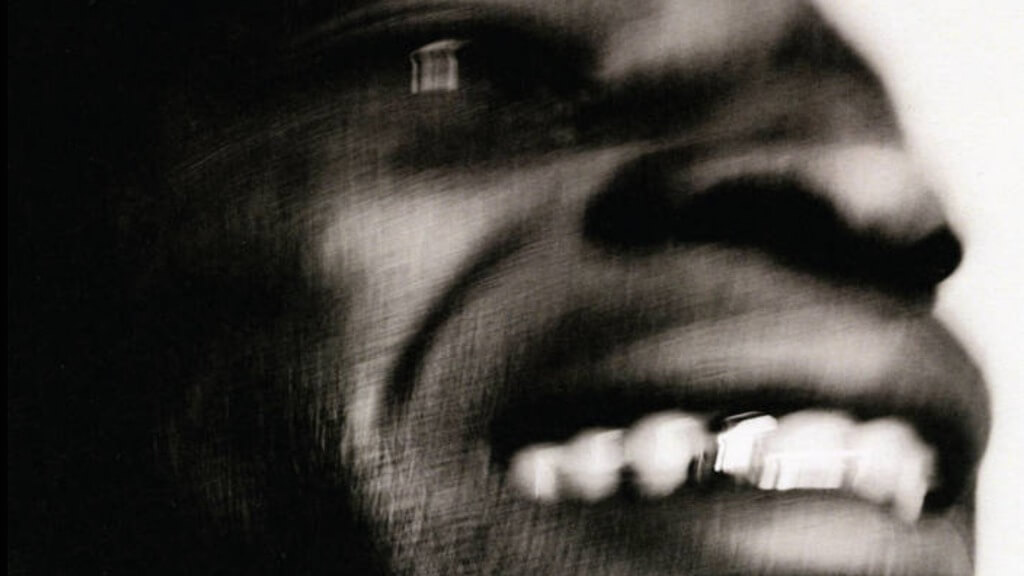
Ibrahim Alfa Jnr. was dying. Paralyzed by anaphylaxis and multiple heart attacks, the veteran of the British rave scene felt he was looking death in the eye. He locked himself away for months and cut back on whatever food might be triggering his allergic reactions, living on “porridge and lettuce leaves” instead. He dove into making music, perhaps as a final testament. But Alfa Jnr. survived and found “a home in my head.”
Infinite Black Inside, the result of those harrowing months, is meditative and eerie at times, but above all, thoughtful. Despite growing up in England, Alfa Jnr.’s first influence was American techno, particularly from Detroit. And as the years have gone on, his tracks have convergently evolved with the Detroit and L.A. scenes. J Dilla looms large over Infinite Black Inside, due to its hyper-fixation on percussion and the light touches of jazz at its edges. Alfa Jnr.’s music seems far away from most U.K. electronic, more in line with Flying Lotus’ trippy empire on Brainfeeder Records or drum master Karriem Riggins.
Alfa Jnr. is so focused on percussion perfection that it occasionally creates oddball discrepancies in fidelity. Opener “Subutrax” could’ve slotted right into DJ Rashad’s footwork opus Double Cup, with a flourishing, frenetic burst of both analog and digital drums bounding in from every direction. But the core melodic element is a simple, soft synth line that sounds like it was ripped straight from the Cassio demo. It’s a clever trick: the straightforward melodies act as anchoring points when thrumming, drumming madness threatens to take over the songs. See “Naked Lunchbreak,” built on a manic drum break that’s continuously chopped and resampled over itself, like Neil Peart’s kit was placed into a washing machine. But the clear, calm keyboard gives “Naked Lunchbreak” an emotional and tonal center.
Alfa Jnr. also loves uneasy recontextualization of his samples and loops. Take the malfunctioning air condition groove of “Capture,” which starts as a beat that wouldn’t have been out of place on Beck’s Odelay. Then an eerie, shivering synth rises up like a ghost, making the previously easy-going feel suddenly odd and uncomfortable. The same goes for “Ova Abi Yard,” which begins as a truck-rattling speaker destroyer, interrupted by a disassociating synth line and chattering percussion like an ATM malfunctioning. As Matt Mitchell wrote in Paste’s best albums of 2026 so far list, “songs living here start a different kind of rave.” With a few exceptions, there’s little here that would serve a dancefloor in any straightforward direction. Much of the album seems to fuse mind and body, meant for late-night walks and deep thoughts.
Alfa Jnr. returns to motifs, stitching the album into an inward-looking, cyclical piece. “Naked Lunchbreak” and “Drum Slinger (Other Version)” share the same frantic drum pulses, while “Inwards Reverse” and “Marine” repeat blocky patterns that harken back to eighties R&B. Those latter two are the only times that Infinite Black Inside feels backward-looking, though it’s a welcome reprieve from the dark and frenetic mood of the rest of the album. “Marine” is a delight, living somewhere between R&S Records’ rave melodies and New Jack Swing. “Inwards Reverse” nods to Vaporwave, a wall of dour keyboards enclosing around a cluttered synth, occasionally sounding like perfect fodder for Luthor Vandross.
When Alfa Jnr. wants to, he can thrill through melody and texture as well. There are the interrupted radio transmissions of “Ikoyi” that shudder with static; the headphone warping low end of “Black” that’s liable to blow out speakers. There are also intriguing, brief keyboard moments that sound like a digitized Thom Yorke sighing into the song. “Iyaka” starts as an unnerving, disorienting ambient piece before a pulsating synth arpeggio bursts out, the album’s catchiest moment and something Flying Lotus would’ve killed for.
In fact, the best comparison might be Flylo’s underrated, nocturnal meditation Until the Quiet Comes. Both albums pair long stretches of restraint and thoughtfulness with all-consuming bursts of bass and percussion. The closing portion of “Iyaka” clatters and hums like Alfa Jnr. sampled ball bearings pinging around in a thermos, the exact sort of textural wonder Flylo takes delight in. Both have a hazy, dreamlike quality to them, labyrinths of sound you’re certain to get lost in. In a recent Guardian interview, Alfa Jnr. said, “Before, with music, I was always trying to get to the center of the maze, but now I’m just happy appreciating its beauty and how it’s constructed.” And the reverence in Infinite Black Inside seems to come from a wonder of creation itself, like we’re alongside him as he surprises himself with the strange paths these songs blaze. Here, Alfa Jnr. is sculpting marble, finding the form within the stone. [FO]
Nathan Stevens is a musician, archivist, and podcaster whose work has appeared in Spectrum Culture, Stereogum, and Popmatters. He currently runs the music interview website Woodhouse.
 Keep scrolling for more great stories.