
A band drowned by the flood: The story of Ramones
Tales about New York City, punk rock, and the people who made it, loved it, and wanted it dead.
Photos courtesy of Danny Fields, Tom Hearn, Michael Ochs Archives, Keystone/Hulton Archive, Getty

In the late 1960s, four boys all lived near each other in a middle-class neighborhood of Forest Hills, Queens. A 14-year-old Mickey Leigh and a 20-year-old John Cummings were in the Tangerine Puppets together, a band that 21-year-old Tommy Erdelyi later joined. Leigh’s older brother, Jeff Hyman, was about to graduate from Forest Hills High School but hung around and got to know John and Tommy. A teenaged Douglas Colvin, who’d just moved to the area from Germany, lived right across the street. The boys came from different cliques, different classes, and different grades, but they were outsiders in the neighborhood, Leigh says. “We were the kids who weren’t listening to our fathers just so we could get a car when we graduated.”
Hyman was the singer in a glam band called Sniper (at least until Alan Turner, formerly of Age of Reason, replaced him). He went by Jeff Starship then and wore his and Leigh’s mom’s scarves, spandex, and gloves. He’d scream and howl on stage with Sniper, massaging knots of sexual frustration in songs like “Cocksucker.” T. Rex’s Mark Bolan was an influence, as were Bowie, Mott the Hoople, and Lou Reed. “It was an avenue for him to really get out of himself,” Leigh says. “That was what that whole scene was about, right? ‘We can all be pretty and we can all be stars.’ Those things made everybody feel not so alone, not so weird.”
When Hyman left Sniper in 1974, he started writing songs in a different, cruder tone, including “I Don’t Care” and “Here Today, Gone Tomorrow.” Around that same time, Cummings and Colvin had started a two-guitar band together with bassist Richie Stern and Erdelyi as their manager. Since Colvin was doing lead vocals, they invited Hyman to play drums for them. “It’s not like they put ads in the Village Voice and strangers came,” Leigh chuckles. “I think that was part of what made it happen for them so quickly. We were already part of this outer circle, and that was part of the chemistry. Not too many bands could say that they knew each other that well before they even formed. They were all melded by rock and roll.” Colvin, inspired by Paul McCartney’s Paul Ramon pseudonym, changed his name to Dee Dee Ramone and convinced everyone but Stern to do the same. Hyman went by Joey Ramone and Cummings went by Johnny Ramone. Richie Stern went by Richie Stern—at least for the two or so rehearsals he actually went to. Then he was unceremoniously booted from the band for being utterly abysmal at playing bass.
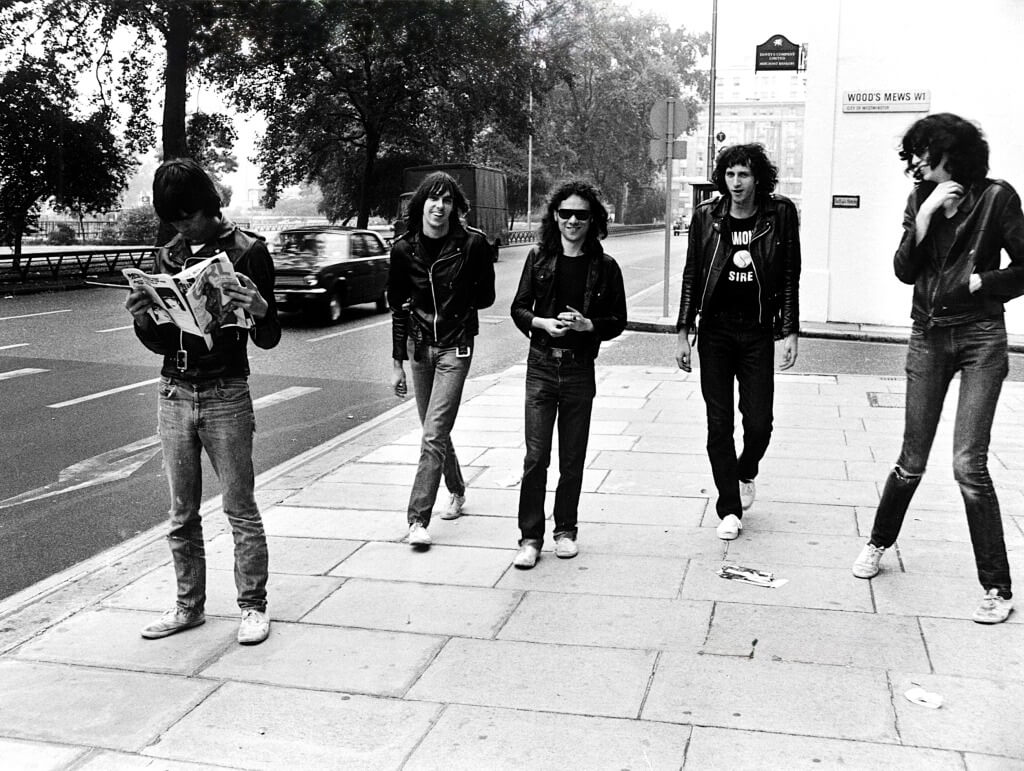
It wasn’t long before Monte Melnick, a friend of the band and their future tour manager, booked rehearsal time for the Ramones at Performance Studios on 23rd Street in Manhattan. That was the band’s first road trip, with Leigh as their chauffeur and roadie. They would throw their guitars in the trunk of Johnny’s Chevy Vega and drive west. They played their first “gig” there on March 30th, 1974, but Dee Dee couldn’t sing for shit and, with Tommy’s encouragement, passed the baton to Joey. Leigh knew what his brother could do, so it was not that much of a shock when he saw him singing with the Ramones for the first time. “He was what I expected him to be,” he says. “Nothing against Dee Dee, but Joey had a much stronger voice. And having a singer who could just focus on singing made a lot of sense and worked for them. When I first heard him with the band playing instruments through amplifiers, not just sitting around the house, that was really an epiphany. I’d heard him sing in the basement of our mom’s art gallery. But never as a lead singer.”
But Joey wasn’t Levon Helm. He couldn’t sing and drum at the same time. So the Ramones held auditions for a new drummer in the art gallery basement. Guys would come in and play rolls, but none of them got it. “Tommy would have to explain to them how to play the hi-hat with the same pulse as John’s downstrokes,” Leigh says. “He had to explain that structure to these drummers, but drummers don’t want to be limited to that.” At some point, the guys gave up and put Tommy behind the kit. He dropped Erdelyi and went by Tommy Ramone. The only problem was that Tommy had only ever played guitar, so now he actually had to learn how to play drums.
The Ramones, believe it or not, didn’t always play fast. In the beginning, they were slow as hell—out of sheer necessity, because none of them were good enough to play fast yet. “If you heard early versions of ‘Now I Wanna Sniff Some Glue’ now, you’d say, ‘Wow, that was really slow,’” Leigh says. “These songs became really fast. But it worked that way. If they got a good drummer that was already experienced, it would not have been an equal playing field. I don’t think it would have worked if any of them were any more experienced than the other.” The shows then were—as Leigh, Craig Leon, and Roberta Bayley would all agree–loose and odd. “They would start songs, stop songs, take off their jackets at intermittent times,” Leigh says. “John and I would drive back to Queens and talk about how they can make their show go faster, be more seamless.”
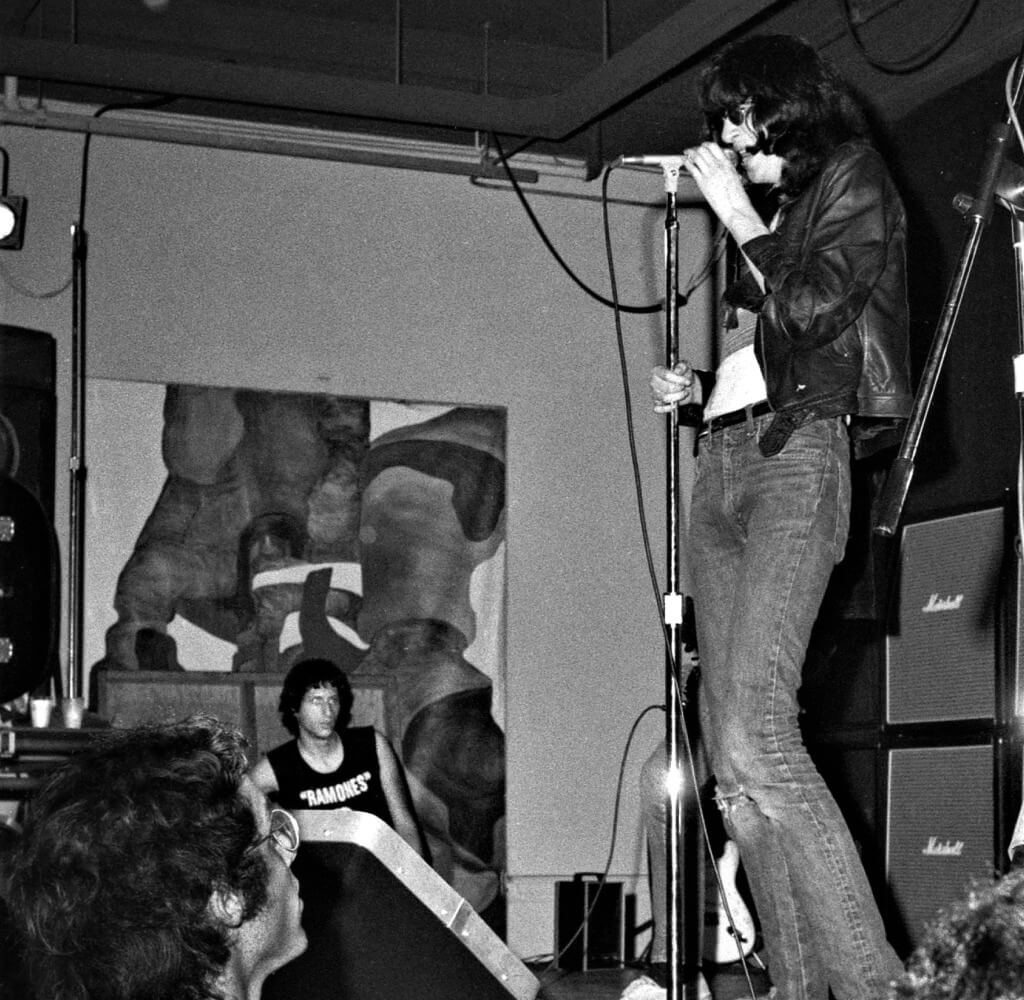
The Ramones’ first CBGB performance was just as baggy and strange. Leigh had to tune Johnny’s guitar by ear back then, because they didn’t have tuning pipes. A dial tone sounded like an A440. He’d get the guitars straightened out in the CBGB kitchen with the lights guy, a Mexican graphic designer named Arturo Vega who was friends with Dee Dee and let the band crash at his loft a block away on E. 2nd Street (which is now called Joey Ramone Place). The band paired black leather jackets with white and silver spandex, and Johnny wore a chinchilla coat. Joey still did his Sniper glam rock moves then, writhing all over the floor. But Johnny, Leigh says, quickly made the decision to have everybody “stand their ground, hold their space, and be forceful from that space.” He and Dee Dee didn’t want Joey to be David Johansen, because Johansen was already trying to be Mick Jagger. So Joey and his faux siblings became stewards to a more working-class wardrobe.
“And that was huge, them accepting that they should just look like the guys in our neighborhood,” Leigh says. “John said, ‘More people would probably come from Forest Hills if you guys aren’t wearing satin spandex pants,’ because that was more of a disco look at that point. But if they could just appeal to everybody, that was what it took. The New York Dolls had faded out a bit already by that time. The whole glam scene was fading. I think the Ramones realized it was time to let that go. It was just so much more obvious when they did let it go.”
 Keep scrolling for more great stories.