
A band drowned by the flood: The story of Ramones
Tales about New York City, punk rock, and the people who made it, loved it, and wanted it dead.
Photos courtesy of Danny Fields, Tom Hearn, Michael Ochs Archives, Keystone/Hulton Archive, Getty

In December 1974, Tommy was run over by a taxicab and Johnny was hospitalized for appendicitis on New Year’s Eve. Come February the band was gigging again, and New York started to catch up. Lisa Robinson, who co-founded Rock Scene with her husband Richard and wrote for Creem, Interview, and the New York Post, saw the Ramones play at CBGB and immediately got in Danny Fields’ ear about them. Danny—who managed Iggy and the Stooges, signed the MC5, ran around in Warhol’s Factory circle, and did publicity for Elektra Records—caught a set not long after, and was immediately hooked. “When Lisa took Danny to see the Ramones, he immediately wanted to manage them,” photographer Roberta Bayley recalls. “He had a real instinct for rock and roll. That’s why Lisa said, ‘Danny, you have to see this band.’ Then he saw them in their most cryptic state, in their most unevolved thing, where they could barely play.”
It didn’t matter. Danny started singing their praises almost immediately. He strolled through New York like a town crier of old, extolling the band’s virtues to anyone and everyone who would listen. As he once put it, “The Ramones had everything I ever liked. The songs were short. You know what was happening within five seconds. You didn’t have to analyze and/or determine what it was you were hearing or seeing. It was all there.” He was, in essence, the Ramones’ biggest messenger, their “John the Baptist” figure. But in order to actually become their manager, the band told him he would have to buy them a set of drums. So Danny called his mother and asked to borrow $300.
Eventually, Fields’ effusive praise made its way to the ears of Craig Leon, an A&R man at Sire Records—a label that, in 1974, no one had ever heard of. Sire’s first business model involved distributing tapes from European labels in the United States. “That’s how they existed,” Leon chuckles. “They didn’t have any money. They were basically taking imports and hustling them through Richard Branson, who worked with an associate of Sire to get the imports into America.” There was one hit on Sire that enabled Leon and a few others to get hired, and it was “Hocus Pocus” by the prog-rock band Focus. But the hit was an accident, Leon says, “with guys yodeling and all of that stuff.”
But even when Sire decided to try to find bands in New York, to pluck young stars out of that nascent rock scene, it wasn’t the Ramones they were looking for. It was Patti Smith. So Craig Leon started, naively, going to CBGB to find her. But when he arrived, the club’s founder, Hilly Kristal, told him Smith had already finished her set. Kristal threw Leon a bone, though, saying that Terry Ork—Television’s manager, who also ran the Cinemabilia film bookstore—was booking the club’s shows and had a new band coming in that Kristal “personally didn’t like that much”: the Ramones. “They weren’t [Hilly’s] cup of tea, but he thought there must be something to them and I should check them out,” Leon remembers.
And check them out he did: “They didn’t even bloody finish a song, I don’t think.” “Who could tell?” Bayley chimes in. “It was one big blur,” Leon responds. “They’d start a song and then they’d stop; someone would say, ‘You’re playing it wrong.’ They got maybe three songs done in 20 minutes, with a lot of stopping and starting. And I thought, ‘This is the band of the future.’ Rock and roll became such shit at that time, so overblown and full of itself. And Sire was part of that. We had all kinds of prog-rock bands.” But Leon had his sights set on the Ramones.
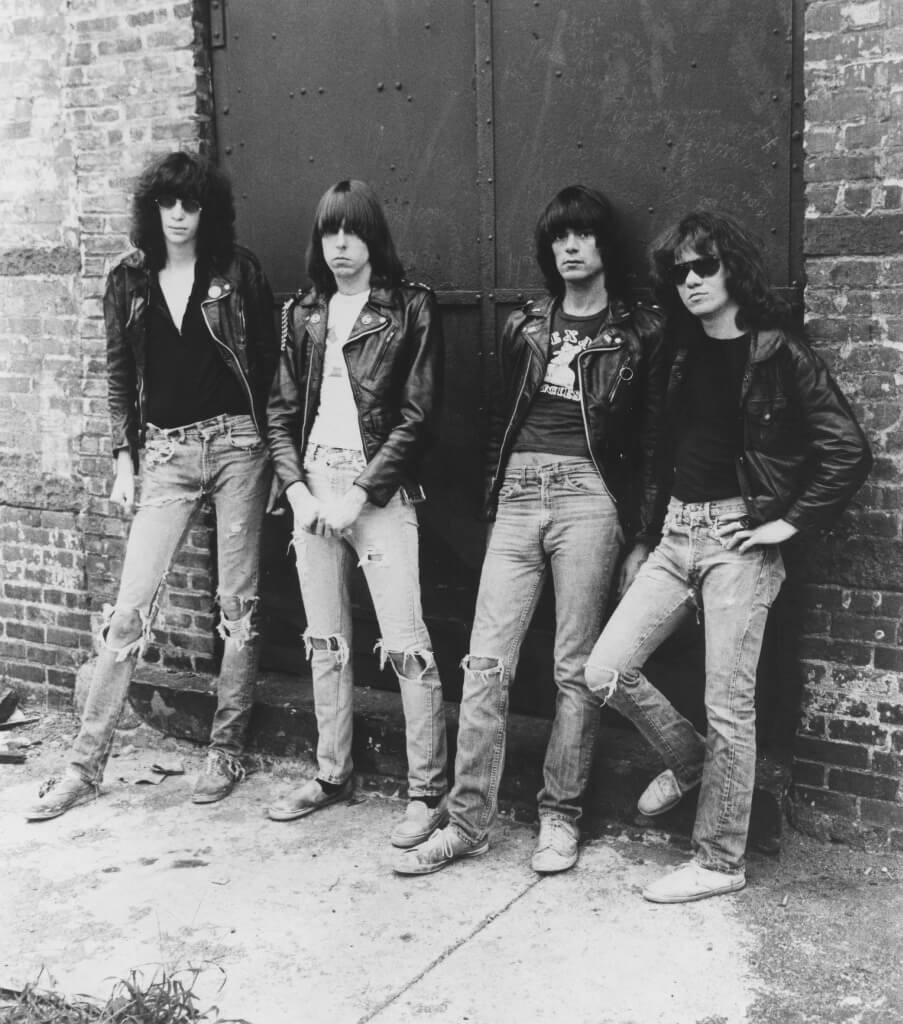
That night at CBGB, Tommy Ramone—who had then officially relinquished his manager title to Danny Fields but was still doing managerial tasks—handed Leon what reminded him of a Sun Ra business card. Leon made an appointment with Tommy, who came uptown to the Sire office, a brownstone near Central Park at a time when Central Park was as neglected as Needle Park. The drummer had a tape in hand, but not the “remarkable first Ramones demo” that the band made with Marty Thau. No, this was a crappy demo made on the desk at Performance Studios—a hissy reel-to-reel of all their songs. “He was like, “How do I copyright this stuff? I don’t want anybody to steal it,’” Leon recalls. “I said, ‘Anybody that would want to steal “beat on the brat with a baseball bat” is my kind of guy, you’re absolutely right. You need to copyright this immediately.’ But Tommy had this miscalculation that a lot of people had at one time, that if you made a tape and mailed it to yourself, you’d be publishing your songs or copyrighting them with Washington D.C. It wasn’t the case. You had to have lead sheets, I told him.”
So Leon asked Tommy to write out all the lyrics on Sire stationary and make a copy of the cassette at Dick Charles Sound. Tommy paid Mickey Leigh $15 a song to write out the music notation. They sent the cassette and Leigh’s lead sheets to the Library of Congress and registered it from Sire’s office. And that was the first money that Sire Records co-founder Seymour Stein ever spent on the Ramones: unwittingly, because Leon and Tommy used his stamp machine. The Dick Charles demo, which featured 15 tracks, was better than the Ramones were live, Leon concedes. “They actually ended songs all together. It didn’t have the performance art element, which is kind of a shame but good if you’re talking about making a record.” Everybody said the Ramones were great but couldn’t make a record. Leon always rebutted with, “Well, I think they can make a record.” The Dick Charles tape wasn’t the greatest demo in the world, but it did get the Ramones’ songs copyrighted.
Tommy would come to Leon’s office a lot in those days. The Ramones had three albums worth of material before any label offers, and Leon and Tommy came to the conclusion that “Blitzkrieg Bop” was among the top three of what tracks would be on their first record. “I used to drive people crazy listening to it, because I had an Ampex two-track and JBL speakers in a 10×12 room at the Sire office,” Leon says. “And I’d play ‘Blitzkrieg Bop’ at the volume you’d want to hear it at when you’re 25 years old.” He thought the Ramones needed a “calling card” song that not only gave the band its identity, but could get them into small clubs and in-store signings in Cleveland, Philadelphia, and Boston. The other top songs would go into “some sort of rotation on some bizarre planet where they played your kind of music,” Leon gestures. But no band on Sire in 1974 was going to have a hit, least of all a band as out-there as the Ramones. It wasn’t the way the record business worked in those days.
Hit or no hit, Sire took months to officially sign the Ramones. “I thought that, according to the dialectic that always rules everything,” Leon says, “they’d rule the world one day. It may not be fast, because they’re absolutely uncommercial and they can’t even end a song, but the band has something really great. But it’s too early to even present them to my boss. He’ll kick me out.” The band invited Leon to Vega’s loft for a showcase in late 1974. “Aside from Arturo, there was nobody else there,” he recalls. “I don’t think Danny Fields was even there. They had the backdrop, the first Ramones logo on a sheet. It looked like a ransom note. But I thought, ‘Well, this is something that’s seriously important.’”
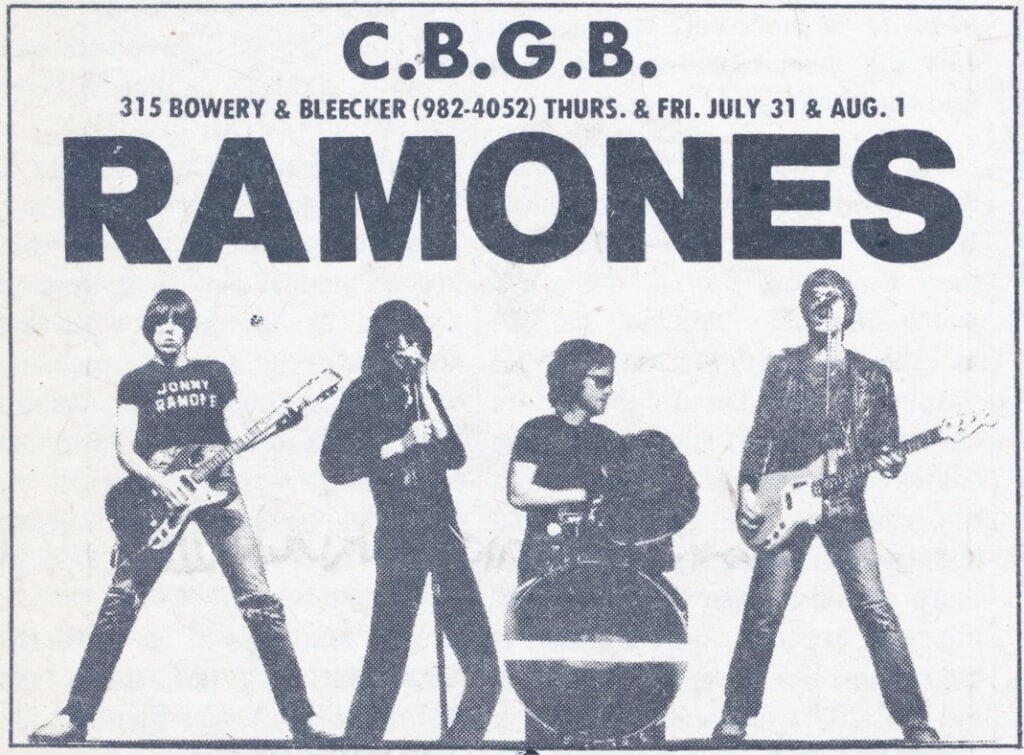
Roberta Bayley’s first encounter with the Ramones was at Performance Studios in 1975, when the band’s audience was no bigger than 20 people. Richard Hell, Bayley’s boyfriend at the time, brought her. For some reason, Debbie Harry came by. Dee Dee’s mother was there, as was his girlfriend Pam Tent, a cabaret singer who did a short opening set before the Ramones came on. Bayley hit it off with Tent at the show, learning about her performances at the Bowery Lane Theatre with Gorilla Rose and Tomata du Plenty. Tent was previously in the Cockettes, a San Francisco hippie thing. “They did midnight shows at the Palace Theater,” Bayley remembers. “They were an ambi-sexual, multi-sexual, pan-sexual crazy group that wasn’t punk or anything like that. They did Broadway showtunes. Acid heads. It was just bizarre.”
The Ramones weren’t some pub band entertaining drinkers. They were shock-doctors doing brief, chaotic sets. “I’d never seen anything like it, and I had seen a lot of rock and roll in my life,” Bayley tells me. She used to work the door for Television at CBGB. She’d seen the Beatles perform three times, but Beatle concerts were all screaming girls and flash bulbs. They’d do 28-minute shows and no one in the audience would have lasted a second more. “We couldn’t have taken it. We would have had heart attacks.” If John, Paul, George, and Ringo were making teenage girls pee their pants, then the Ramones would have turned their skin inside out. The question of “Can this really be happening?” wafted through the room. Bayley thought it was a joke, that they were a Puerto Rican band from uptown.
“I wasn’t prepared for them,” Bayley continues. “But it really wasn’t a matter of being into the sound. It was a matter of being shocked that they even existed. They were not like anybody else. The short songs, the stopping and starting, sometimes arguing on stage. It was just odd.” She reacted the same way at age 19 when she saw the Stooges for the first time. “Iggy was just completely bizarre and unusual. I saw the Rolling Stones. I saw Elvis Presley. That doesn’t prepare you for seeing the Stooges when they’re in front of these huge Marshall amps and there’s just this incredible feedback. And then Iggy is there, in his Cuban heels, wearing silver gloves, no shirt, and low-cut jeans, turning his back to the audience. The Ramones were like that. It was an onslaught of something you couldn’t believe you were seeing. I was mesmerized and confused by them.”
But Bayley never thought, “Man, this is the greatest band I’ve ever seen.” The Ramones weren’t the New York Dolls—who, in 1974, were the biggest band downtown. “They were superstars,” she says of David Johansen and Johnny Thunders’ crew. “They ruled Max’s Kansas City. They got more attention than if the Stones were at Max’s.” But the Dolls weren’t that proficient. Thunders certainly wasn’t Eric Clapton. If the band had had better luck and taken fewer drugs, they might have made some money. But what they did do was make everybody around them say, “If we work hard, we could be successful.” The Ramones weren’t superstars, but they were angling for a hit record.
 Keep scrolling for more great stories.