
Young Jeezy: The Recession

A self-inflicted recession
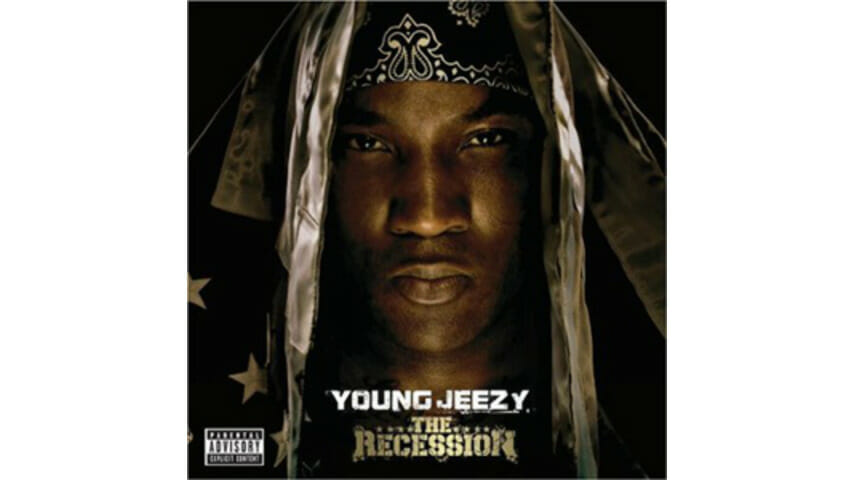
“It’s the recession / everybody broke” Young Jeezy proclaims on the title track of The Recession, an album about economic hardship that’s light on self-righteousness yet ends up as impoverished as the subprime mortgage market.
Young stays in the spotlight for his third album with only a few feature tracks like the Kanye West-featured stint in street-heater “Put On.” Nas leapfrogs from Untitled’s Obama anthem to the stellar “My President” here, and mines his hustler spirit to crow about “22 inch rims like Hulk Hogan’s arms” while Jeezy muses that “Bush robbed all of us / does that make him a criminal / then he cheated in Florida / does that make him a Seminole?”
His muscular brand of ATL hip-hop is still solid, yet Jeezy frequently ditches trap-star swagger to play defense and pre-empt criticism. The album is frontloaded with disjointed stabs at social commentary, and the production of the first seven tracks makes them sound nearly indistinguishable. The second half is passable, but sags with dystopic bangers and rote club beats that Jeezy’s already-lethargic flow can barely overcome.
The Recession‘s singles are exceptional, but the filler suffers from a detached and dispirited sound. Like the American economy it’s not technically a recession, but the downturn is impossible to ignore.
 Keep scrolling for more great stories.